AI Search Visibility
6 Ways to Gain Visibility on Perplexity Shopping
Find out how to show up in Perplexity Shopping and improve your e-commerce product visibility, conversions, and recommendations using AI-driven strategies.

Kanishka Thakur




Shopping behavior is changing faster than most e-commerce roadmaps can keep up with. Shoppers are no longer starting their journey on category pages or marketplaces alone; they’re asking AI engines what to buy, why, and from whom. Perplexity Shopping sits right at that moment of decision, where curiosity turns into intent.
For high-growth ecommerce and DTC brands, this shift introduces a new challenge and a new opportunity. Learning how to show up in Perplexity Shopping isn’t about chasing another traffic source; it’s about influencing purchase decisions before shoppers ever land on your website.
This article explores how Perplexity Shopping works and the steps e-commerce teams can take to improve visibility, recommendations, and conversion readiness in an AI-driven shopping flow.
Key Takeaways
Structured data and complete product details are important for AI citation and visibility on Perplexity Shopping.
Optimizing PDPs for use cases, visuals, and context drives higher conversion from AI-driven discovery.
AI discovery influences pre-click behavior; understanding shopper intent helps improve funnel performance.
Tracking AI mentions, referral traffic, and query-specific engagement is essential to measure ecommerce impact.
Consistency in pricing, inventory, and reviews ensures Perplexity recommendations are accurate and actionable, supporting retention and repeat purchases.
What is Perplexity Shopping?
Perplexity Shopping is Perplexity’s AI-driven shopping experience that helps shoppers research products and decide what to buy by generating answers that include product suggestions, comparisons, and purchase-oriented guidance based on a user’s prompt.
Instead of a shopper starting on your PLP or browsing categories, they start with a question like “best vitamin C serum for sensitive skin” or “lightweight running shoes for flat feet,” and Perplexity responds with recommended products plus supporting context (key features, trade-offs, and why each product fits the request).
For marketers, lifecycle teams, and UX specialists, this changes where influence begins. Instead of optimizing only for clicks, brands now compete to be cited, trusted, and recommended by AI, often before ads, PLPs, or PDPs come into play. Figuring out how to show up in Perplexity Shopping means recognizing that AI now acts as an early-stage product curator.
Also Read: Best Ecommerce Site Search Practices & Examples to Increase User Experience
To understand why this matters operationally, it helps to look at how Perplexity Shopping works.
How Perplexity Shopping Works
Perplexity Shop functions by combining real-time product data, structured sources, merchant signals, and contextual understanding of shopper queries. It narrows options rather than merely listing them, in contrast to traditional discovery.
Query Interpretation: Perplexity analyzes conversational queries like “best running shoes for flat feet under $150,” extracting intent, constraints, and use cases.
Product Synthesis: It pulls structured product data, reviews, availability, and pricing from trusted sources and merchants.
Contextual Ranking: Products are ranked based on relevance to the query, trust signals, and consistency across sources, not paid placement.
Citation-Based Recommendations: Products appear with explanations, comparisons, and references, influencing shopper confidence early.
For e-commerce teams, this means discovery is now shaped before the shopper reaches a homepage or PDP. Winning here directly affects activation, conversion quality, and downstream retention.
For growth and lifecycle marketers worried about wasted ad spend because AI-driven discovery is invisible, Nudge’s AI Search Visibility shows exactly where your products appear on AI search, how AI ranks them, and which queries you’re missing, giving teams the clarity to capture high-intent shoppers before they bounce.

Next, let’s compare traditional ecommerce shopping journeys against AI-led shopping flows and where intent gets shaped differently.
Traditional Shopping vs. AI-Led Shopping Experiences
AI-led shopping changes how discovery, evaluation, and purchase decisions happen online. The comparison below highlights how shopper journeys differ when AI guides intent instead of static category browsing.
Traditional Shopping | AI-Led Shopping (Perplexity) |
Shoppers browse PLPs and filters | Shoppers ask intent-rich questions |
Discovery starts after a click | Discovery happens before site visits |
Rankings influenced by ads and SEO | Rankings influenced by relevance and trust |
PDPs drive evaluation | AI summaries pre-frame evaluation |
Attribution is click-based | Influence is multi-touch and indirect |
Also Read: How to Grow AOV Post-Purchase and Increase eCommerce Profits?
With that foundation, the next step is understanding what actually earns visibility and sales inside Perplexity Shopping.
6 Ways to Get Cited on Perplexity
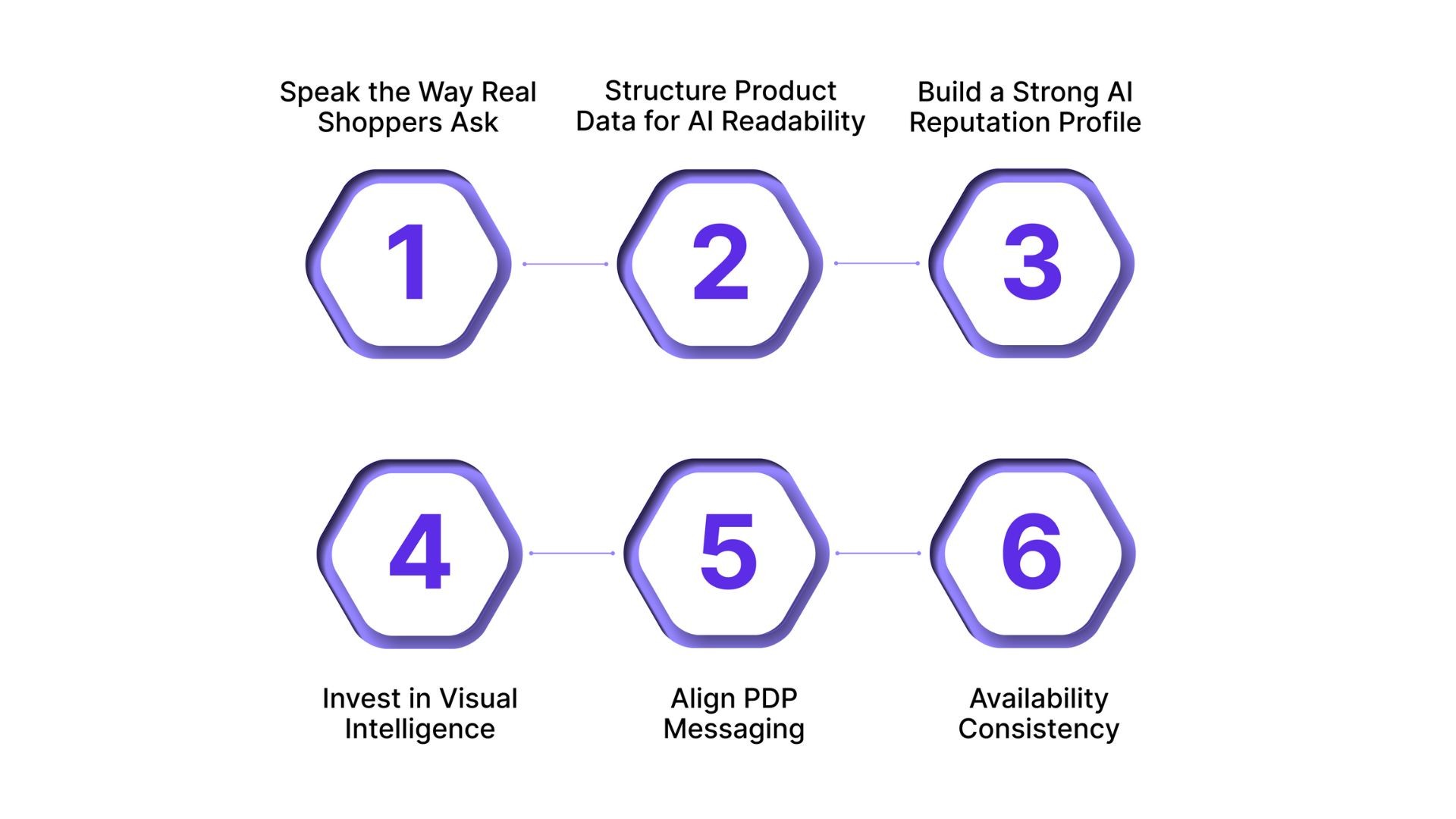
Visibility in Perplexity isn’t accidental. It’s earned through alignment between shopper language, product data, reputation, and experience quality across your ecommerce stack. Here's how you can gain Perplexity visibility:
1. Speak the Way Real Shoppers Ask
Perplexity favors content that mirrors how shoppers naturally phrase questions. PDPs and landing pages should reflect use cases, constraints, and outcomes.
For marketers optimizing paid traffic, this alignment reduces friction when AI-driven users land on-site. Matching conversational language improves activation rates and time-to-value, especially when combined with context-aware PDP messaging.
2. Structure Product Data for AI Readability
Structured data is no longer just an SEO requirement; it’s an AI visibility requirement. Clean schema across PDPs, PLPs, carts, and checkout ensures Perplexity understands pricing, availability, variants, and reviews.
Consistency across the funnel improves citation accuracy and reduces mismatches that hurt conversion. Teams focused on how to show up in Perplexity Shopping see higher-quality traffic because AI expectations align with on-site reality.
3. Build a Strong AI Reputation Profile
Perplexity evaluates trust through brand mentions, review consistency, and third-party validation. This mirrors how shoppers think, but at machine speed.
Brands with consistent product narratives across reviews, social proof, and merchant feeds earn stronger AI confidence. That confidence translates into higher-quality recommendations and improved conversion efficiency once shoppers arrive.
4. Invest in Visual Intelligence
AI shopping engines increasingly evaluate images and text. High-quality, consistent product imagery improves how AI explains and compares products.
For UX teams, this reinforces the importance of visual continuity from AI summaries to PDPs. Better visual alignment improves shopper confidence, lowers bounce rates, and supports higher AOV through bundled recommendations.
Also Read: 6 Top Retail Marketing Automation Tools to Increase E-commerce Sales
5. Align PDP Messaging With AI-Framed Comparisons
Perplexity often presents products alongside alternatives. PDPs should acknowledge common comparisons, use cases, and decision criteria directly. This reduces friction when shoppers validate AI recommendations on-site and improves activation and conversion lift.
6. Maintain Price and Availability Consistency
Perplexity cross-references merchant data, reviews, and third-party listings. Any mismatch in pricing or stock status erodes trust and lowers recommendation confidence. Consistency here protects conversion rates and reduces abandoned sessions.
Lifecycle and growth teams can use these insights to refine PDP content, personalize landing pages, and prioritize experiments that improve LTV and retention. Knowing how to show up in Perplexity Shopping also means knowing when and why you disappear.
For UX and conversion specialists frustrated that AI-referred shoppers abandon high-intent sessions, Nudge’s Shoppable Funnels convert Perplexity queries into context-aware flows aligned to ad source, session behavior, and product intent, ensuring shoppers progress seamlessly from AI prompt to PDP to checkout.

Next, let’s cover how e-commerce brands can increase recommendations on Perplexity Shop for high-intent prompts.
How Ecommerce Brands Can Increase Recommendations on Perplexity Shop
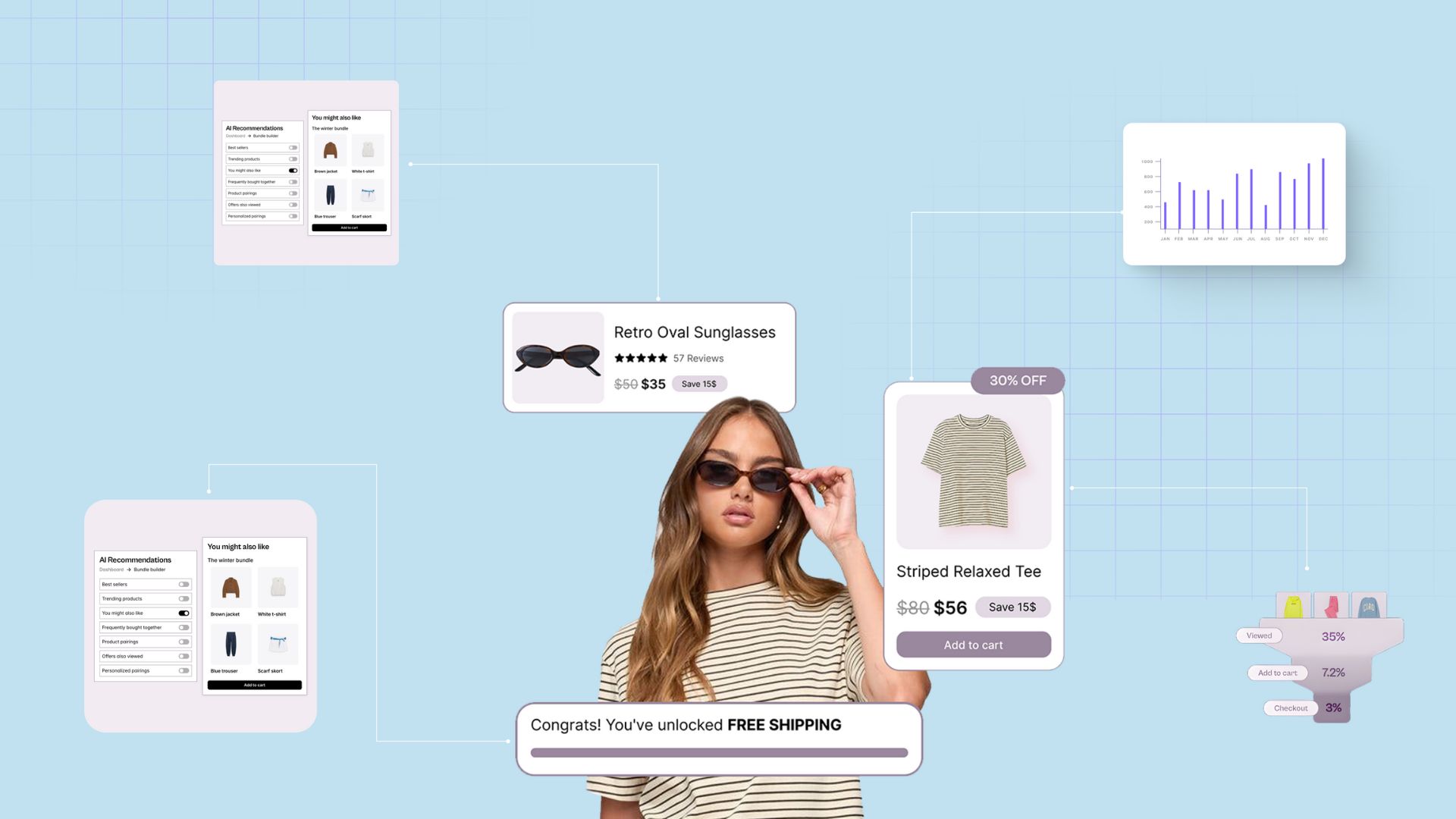
Perplexity doesn’t recommend products randomly; it evaluates clarity, relevance, and credibility signals. Below are the practical tactics e-commerce teams can use to improve product inclusion and influence AI-driven recommendations.
1. Product Detail Page Optimization That AI Understands
PDPs remain the source of truth for AI interpretation, even if shoppers don’t start there.
Product Details: Ensure titles, variants, pricing, and availability are accurate and consistent. This reduces AI confusion and improves citation reliability, which directly impacts conversion uplift.
Product Descriptions: Descriptions should answer real shopper questions, including listing features. This improves relevance scoring and aligns AI summaries with on-site messaging.
Product Images: Images should be high-resolution, consistent, and contextual. Visual clarity helps AI comparisons and supports better engagement when shoppers land on PDPs.
2. Build Reviews Across Channels
Reviews on multiple platforms reinforce credibility. Perplexity cross-checks sentiment and consistency, not volume alone. For lifecycle teams, this improves retention by setting accurate expectations upfront, reducing returns and churn while increasing repeat purchase confidence.
3. Join the Perplexity Merchant Program
Merchant participation gives Perplexity direct access to accurate feeds, inventory, and pricing. This reduces misrepresentation and improves recommendation confidence. Brands serious about how to show up in Perplexity Shopping treat this as foundational infrastructure, not an optional channel.
4. Expand Use-Case Coverage Across PDPs and Guides
Perplexity favors products that clearly map to multiple use cases. Brands should extend PDP content and buying guides to address varied shopper intents, improving visibility across a wider range of AI-driven queries.
5. Optimize for Contextual Fit, Beyond Category Fit
AI recommendations prioritize relevance to context, budget, location, preferences, and constraints. Ecommerce teams should reflect these variables in PDP copy and structured attributes to improve recommendation accuracy and downstream conversion quality.
Also Read: Why Personalization Matters More Than Discounts This Black Friday?
Now, let’s address the key challenges of Perplexity Shopping and how to resolve them without adding friction.
5 Key Challenges of Perplexity Shopping

Perplexity Shopping introduces a new discovery layer that changes control, measurement, and optimization dynamics. Below are the most common challenges and how high-growth teams can mitigate them.
1. Loss of Control Over Product Framing
Perplexity rewrites product value propositions in its own language, often prioritizing utility over brand storytelling. This can dilute differentiation if PDP messaging, reviews, and specs aren’t tightly aligned.
Solution: Strengthen structured data, PDP clarity, and review narratives so AI interpretations stay aligned with intended messaging.
2. Attribution Blind Spots in AI-Driven Journeys
AI-driven influence occurs upstream, before shoppers ever click through to a PDP. This makes Perplexity’s role invisible in last-click or channel-based attribution models.
Solution: Use assisted CRO analysis, branded search lift, and cohort-based performance tracking to measure AI impact indirectly but accurately.
3. Data Inconsistencies Across Merchant Sources
Perplexity pulls from multiple sources, and even minor data mismatches can reduce confidence in a product. Outdated pricing, specs, or reviews can quietly suppress recommendations.
Solution: Centralize product data governance and ensure real-time sync across PDPs, feeds, and third-party platforms.
4. Increased Competition at the Recommendation Layer
AI sharply narrows options, often surfacing only two or three “best” products per query. Brands without clear use-case relevance risk being excluded entirely.
Solution: Differentiate through clearer use cases, richer visuals, and stronger trust signals rather than a broader assortment alone.
Also Read: Personalization Maturity in Ecommerce: What it Means for Brands?
5. Slower Feedback Loops Compared to Paid Media
Changes in Perplexity visibility don’t map cleanly to daily performance dashboards. Teams must wait longer to observe downstream effects on branded search, conversions, or demand.
Solution: Monitor AI citation trends, query coverage, and downstream engagement metrics over time instead of relying on instant performance signals.
For product managers and ecommerce teams struggling with low engagement despite AI visibility, Nudge’s Product Experiences adapt in real time across PDPs, carts, and landing pages, delivering personalized recommendations, bundles, and nudges based on shopper behavior, UTMs, and session depth to lift retention and AOV.

Next, let's see how AI discovery turns into conversions with Nudge’s funnel and experience capabilities.
How Nudge Integrates AI Product Discovery to Checkout Conversion
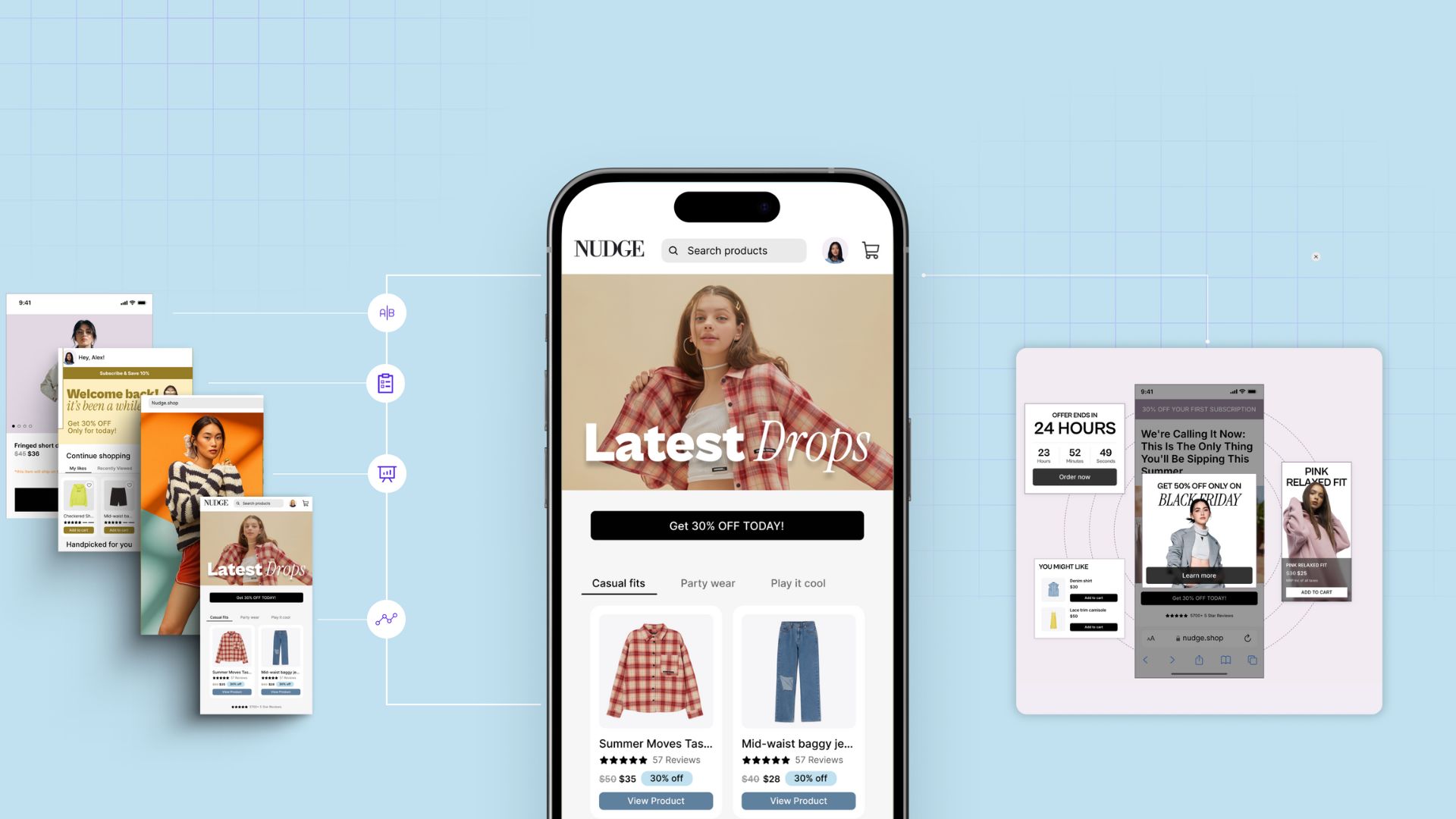
Perplexity Shopping is rewriting the rules of ecommerce discovery, creating opportunities for brands to influence buyers before they even land on a PDP. For high-growth DTC and e-commerce teams, visibility is only valuable if it drives action, conversion, and retention. Nudge allows marketers, UX specialists, and product teams to control how AI finds, evaluates, and presents their products, ensuring AI-driven intent translates into measurable revenue.
Here’s how Nudge can help you dominate Perplexity Shopping:
AI Search Visibility: Instantly track where AI mentions your brand and products, detect citation gaps, and identify opportunities to capture high-intent queries before competitors.
Shoppable Funnels: Convert AI-driven intent into actionable flows by building prompt-specific funnels that match the shopper’s query criteria and guide them seamlessly to PDPs and checkout.
Product Experiences: Deliver adaptive, real-time experiences across PDPs, carts, and landing pages that reflect shopper behavior, session depth, and contextual intent for higher conversion rates.

With Nudge, more than showing up on Perplexity Shopping, you’re turning AI discovery into predictable revenue, actionable insights, and a fully optimized shopper journey from query to checkout.
Conclusion
Perplexity Shopping represents a fundamental shift in how shoppers discover and decide. Brands that adapt early gain influence before competition even begins. Learning how to show up in Perplexity Shopping means speaking shopper language, structuring data for AI, building trust across channels, and aligning on-site experiences with AI-driven intent.
For high-growth ecommerce brands, this isn’t about replacing traditional funnels; it’s about strengthening them upstream. Those who invest now will define how AI commerce works tomorrow, not react to it later.
For high-growth DTC brands needing both actionable AI insights and conversion lift, Nudge provides prompt-specific landing pages with automated experimentation, letting teams continuously optimize content, layouts, and offers based on real-time data, turning AI discovery into measurable revenue growth and performance benchmarks.
Book a demo with Nudge to see how we can help convert AI visibility into conversion-ready demand.
FAQs
1. How can I ensure my products are cited accurately by Perplexity Shopping?
Ensure consistent, structured data, complete product details, and accurate pricing across all platforms so AI can reliably reference your products in its responses.
2. How do AI-driven queries affect my PDP optimization strategy?
Shoppers arrive with pre-formed intent; optimizing PDPs for clarity, use cases, and visuals increases engagement, reduces bounce, and drives conversion from AI referrals.
3. Can Perplexity Shopping impact my average order value (AOV)?
Yes, AI can surface complementary products; structuring bundles, recommendations, and cross-sells enhances AOV and encourages repeat purchases from high-intent AI traffic.
4. What metrics indicate success in Perplexity Shopping visibility?
Track AI mentions, query-specific referral traffic, engagement on recommended products, PDP conversion, and repeat purchase rates to measure Perplexity-driven impact on ecommerce goals.
5. How can I manage pricing and availability for AI-driven recommendations?
Centralize product feeds and synchronize stock, pricing, and variants in real time to prevent AI from showing outdated or incorrect information, preserving trust and conversions.