AI Search Visibility
8 Tips to Choose the Best AI Visibility Tools
Choose the best AI visibility tools by aligning goals, checking model coverage, and ensuring brand tracking. Prioritize ease of use and security. Get started now!

Gaurav Rawat
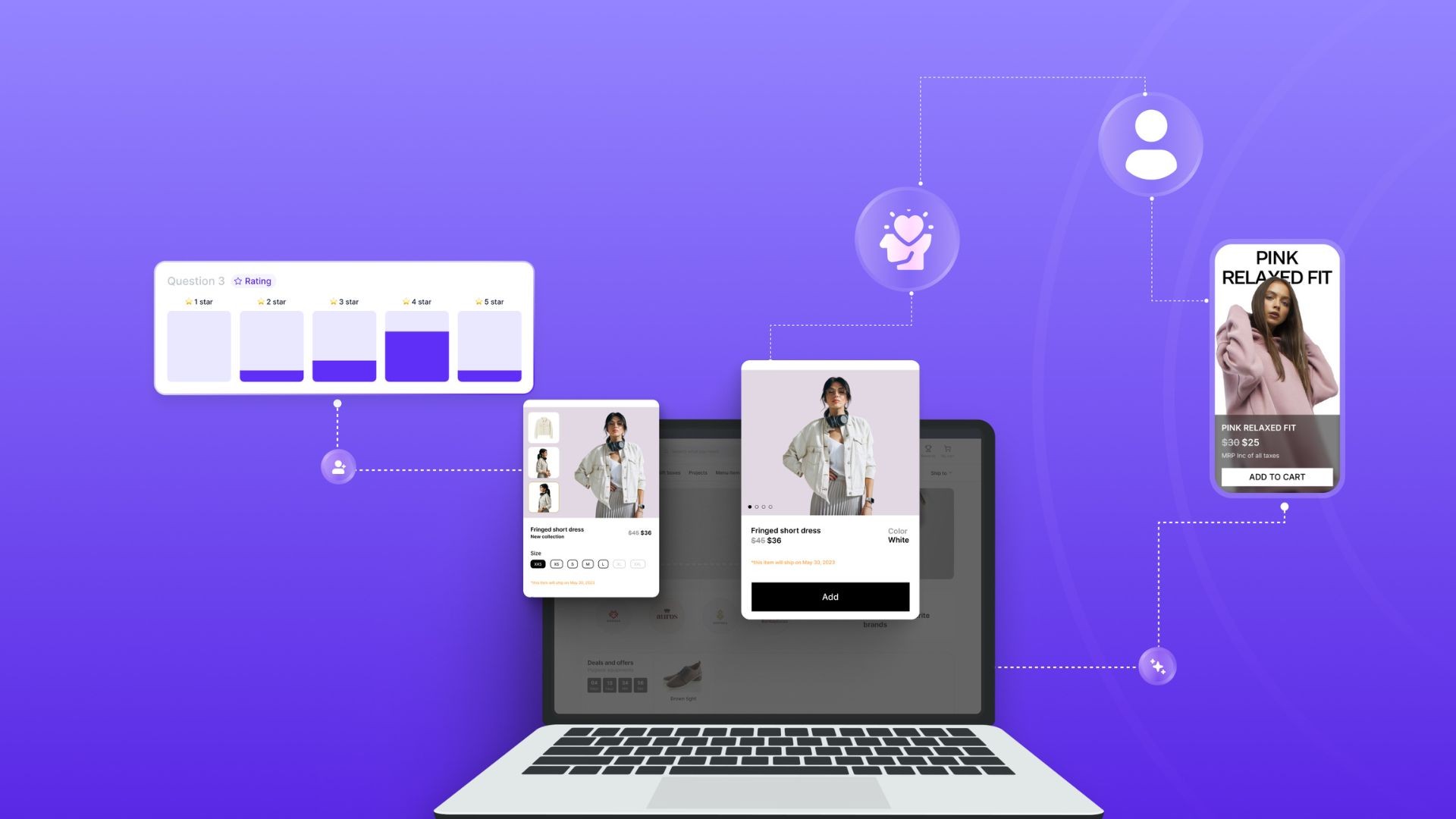




If you oversee growth, lifecycle, or user experience for a high-velocity DTC brand, the fact is that consumers now ask AI tools instead of just using Google search. Before they even get to your homepage, PDP, or checkout, customers are now receiving product recommendations, brand comparisons, and purchasing advice through ChatGPT, Perplexity, and Google's AI-powered search.
In fact, U.S. shoppers ask AI platforms like ChatGPT over 84 million shopping-related questions each week, showing how conversational discovery is steadily replacing traditional search behavior and is gradually rewriting the rules of product visibility.
This guide breaks down how to choose the right AI visibility tools with a clear focus on conversion, retention, and measurable revenue impact across homepages, PLPs, PDPs, carts, and checkout experiences.
Key Takeaways
AI visibility tools help e-commerce teams align discovery insights with PDP, PLP, and checkout experiences for higher conversion.
Tracking AI mentions by query, ad source, and location informs precise optimization strategies.
Personalized shoppable funnels and product experiences turn AI-driven intent into revenue across the funnel.
Competitive benchmarking and content gap analysis reveal opportunities to outperform rivals in AI-driven discovery.
Metrics like CAC, AOV, repeat purchase rate, and experiment velocity quantify the impact of AI visibility on growth.
What are AI Visibility Tools?
AI visibility tools help brands understand how AI-powered search and recommendation engines discover, interpret, and cite their products and content. Unlike traditional SEO platforms, these tools focus on how large language models and AI search interfaces surface brand information across the shopper journey.
For growth teams managing paid acquisition, PDP optimization, and post-click personalization, this matters because AI engines increasingly influence shopper expectations before the first click. When AI answers shape intent, your on-site experience must align instantly.
At a practical level, AI visibility tools monitor how your brand appears across AI-driven search results, product recommendations, and citations. They connect that visibility back to performance metrics like conversion uplift, retention, and AOV, especially for teams optimizing bundles, recommendations, and context-aware nudges.
Also Read: 20 Best Practices For E-commerce Landing Page Optimization
Once you understand what these tools do, the next question becomes why AI search visibility directly impacts revenue.
Why is AI Search Visibility Important?
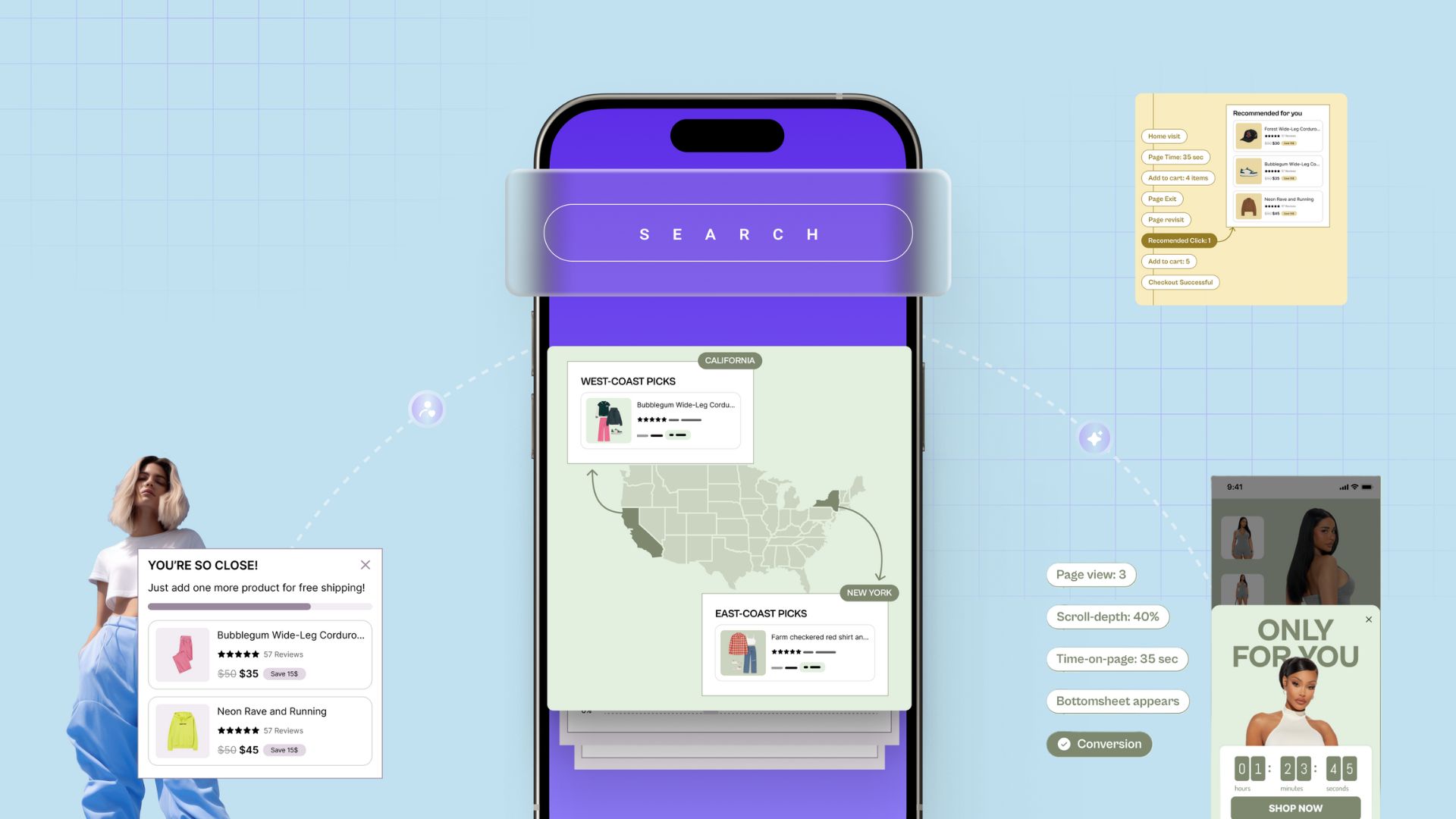
Being mentioned is only one aspect of AI search visibility; another is influencing conversion behavior across all touchpoints and shaping high-intent traffic. For e-commerce brands investing heavily in ads, AI-driven discovery often acts as a pre-filter for trust and relevance.
Here’s why it matters for growth and UX teams:
Faster activation of high-intent traffic: AI visibility insights help align landing pages and PDPs with the exact intent shaped by AI answers and paid campaigns. This reduces bounce rates and accelerates add-to-cart actions from the first session.
Smarter product recommendations and bundles: By combining AI discovery context with shopper behavior and affinity data, teams can surface more relevant recommendations and bundles. This increases engagement, lifts AOV, and improves cross-sell performance.
Improved cart recovery and checkout conversion
AI visibility signals inform context-aware nudges, exit-intent offers, and checkout messaging tied to what shoppers saw before arriving. This helps recover abandoned carts without disrupting the buying flow.Lower CAC through better traffic alignment: When AI visibility aligns with ad messaging and on-site experiences, traffic converts more efficiently. This reduces wasted spend and improves the value created per acquisition dollar.
Higher retention via personalized journeys: Visibility data supports personalized post-purchase experiences, recommendations, and offers that change with shopper behavior. This drives repeat purchases and increases lifetime value over time.
Improved experiment velocity and time-to-launch: Clear visibility into AI-driven discovery reduces guesswork, allowing teams to test, iterate, and launch optimized experiences faster. This accelerates learning cycles across PDPs, bundles, and checkout flows.
For marketers and growth teams struggling to understand where AI surfaces their products, Nudge offers AI Search Visibility, which gives you a clear map of mentions, prompts, and category coverage. It shows exactly how AI positions your SKUs, helping you align PDPs, PLPs, and cart experiences with shopper intent. By identifying citation gaps and optimization signals, teams can proactively refine content and improve visibility across AI-driven shopping sessions.

With the importance established, the focus shifts to selecting the right provider for your growth stack.
8 Tips to Choose the Right AI Visibility Tool
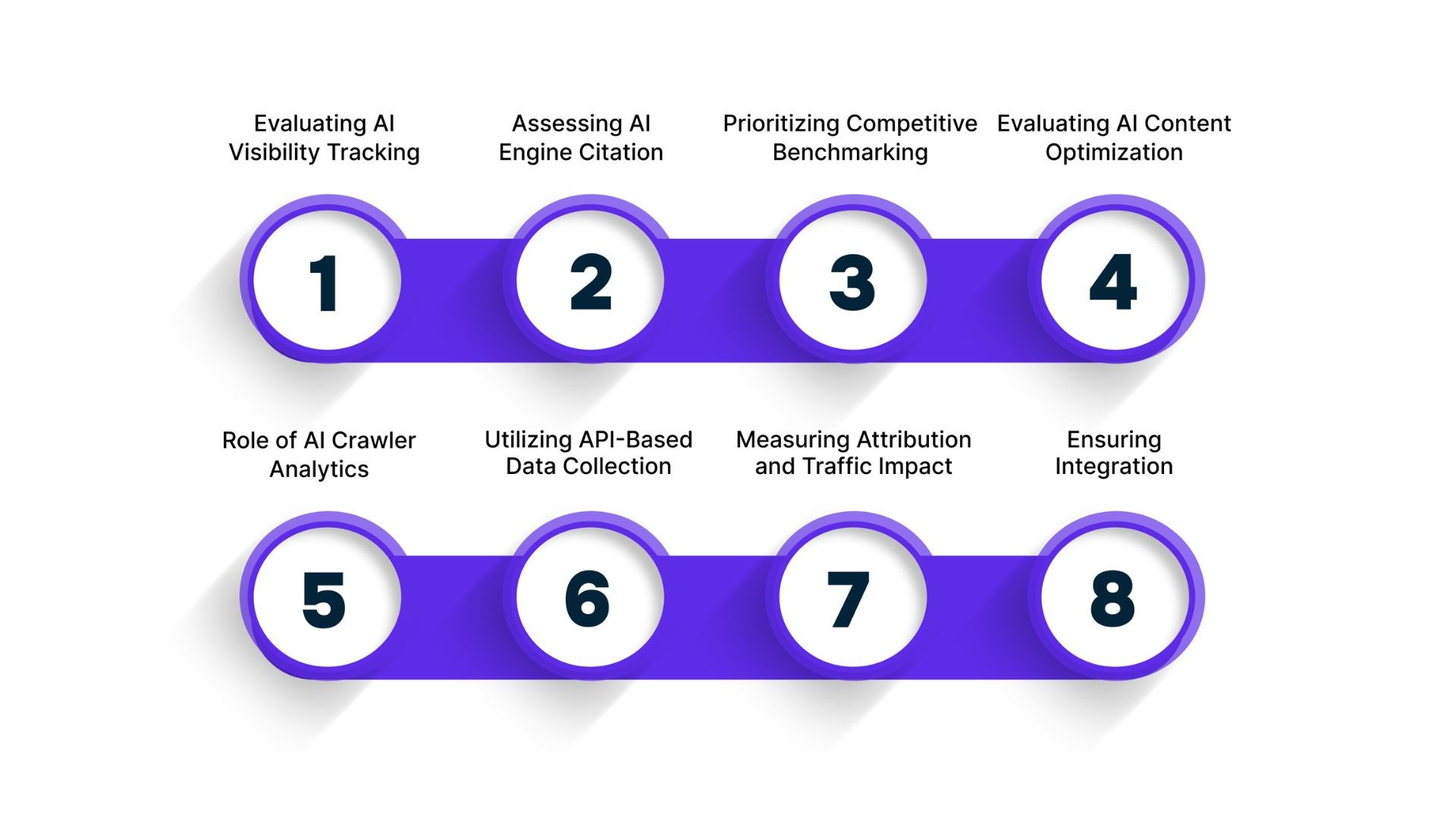
The right AI visibility platform should support experimentation velocity while integrating cleanly into your existing analytics, product, and personalization stack. Below are the core capabilities that matter most for high-growth ecommerce brands using AI visibility tools.
1. Evaluating AI Visibility Tracking and Brand Monitoring Capabilities
AI visibility tracking is the foundation for understanding how AI-driven discovery influences e-commerce performance. This capability directly supports faster experimentation, lower CAC, and stronger conversion performance across homepages, PDPs, carts, and checkout. When done well, it connects AI exposure to measurable growth outcomes.
Category-Level Brand Presence – Brand presence across AI answers tied to specific product categories
Traffic & Location Context – Visibility shifts based on ad source, geography, and query type
Messaging Alignment Gaps – Detection of gaps between AI messaging and PDP content
Revenue Impact Mapping – Tracking AI-driven exposure against conversion and retention metrics
Performance Risk Alerts – Alerts for sudden visibility drops that may impact paid traffic performance
For UX and conversion teams, this insight helps align homepage messaging, PDP layouts, and bundles with how shoppers first encounter your brand.
2. Assessing AI Engine Citation and Source Intelligence
Citation and source analysis determine if AI engines see your brand as authoritative enough to reference in buying-oriented answers. For e-commerce teams, this capability helps connect trust signals to PDP performance, especially for high-intent shoppers validating products before purchase. Strong citation visibility supports conversion confidence and reduces drop-off across paid and AI-influenced traffic.
Source-Level Attribution – Identification of citation sources influencing AI answers
Competitive Source Comparison – Visibility into competitor citations within the same category
Content-Type Mapping – Mapping citations to content types such as PDPs, guides, and reviews
Authority Gap Detection – Insights into missing or underperforming source signals
Trust-to-Traffic Correlation – Correlation between citation presence and traffic quality
3. Prioritizing Competitive Benchmarking That Drives Action
Competitive benchmarking in AI visibility should highlight practical gaps that affect conversion and revenue, not surface-level rankings. For high-growth ecommerce brands, this insight supports smarter PDP updates, bundle strategies, and merchandising decisions.
Category-Level Comparisons – Side-by-side AI visibility comparisons by category or SKU
Merchandising Advantage Detection – Detection of competitor advantages in bundles or PDP depth
AI Share of Voice – Share-of-voice analysis within AI-generated recommendations
Trend-Based Benchmarking – Trend tracking tied to promotions, pricing, or inventory shifts
Performance-Linked Benchmarks – Clear benchmarks linked to conversion and AOV performance
Also Read: Ultimate Guide To Best Landing Page Optimization Tools For E-commerce
4. Evaluating AI Content Optimization Capabilities
AI content optimization connects discovery language to on-site activation. For ecommerce teams, this ensures PDPs, PLPs, and landing pages immediately validate the intent shaped by AI answers and paid campaigns. Effective optimization reduces bounce, increases add-to-cart rates, and strengthens repeat purchase behavior. The focus is precision, not volume.
PDP-Specific Optimization – PDP-specific recommendations aligned with AI discovery language
Behavior-Led Suggestions – Optimization suggestions based on shopper behavior and affinity
Page Support – Support for content across landing pages and PLPs
Cross-Channel Messaging Alignment – Alignment between ad creative, AI answers, and on-site messaging
Revenue Impact Validation – Measurable links to conversion uplift and repeat purchase rates
5. Understanding the Role of AI Crawler Analytics
AI crawler analytics reveal how AI systems interpret your site structure, product relationships, and content depth. For growth and UX teams, this insight helps balance discoverability with performance across PDPs and PLPs. It also supports faster launches and cleaner experimentation by identifying structural issues early.
Crawler Interpretation Visibility – Visibility into how AI crawlers parse PDPs and PLPs
Structural Issue Detection – Detection of structural issues affecting discoverability
Internal Linking Analysis – Analysis of internal linking for bundles and recommendations
Crawl Behavior Monitoring – Monitoring crawl frequency during promotions or launches
Launch Velocity Diagnostics – Diagnostics tied to time-to-launch and experiment velocity
6. Utilizing API-Based Data Collection
API-based access ensures AI visibility insights are usable across personalization, analytics, and experimentation systems. For enterprise e-commerce teams, this flexibility supports faster activation without data silos. It also allows visibility data to inform real-time shopper journeys. Scalability and cleanliness are essential.
Real-Time Data Access – Real-time visibility data for personalization engines
Stack Integration Support – Integration with analytics and experimentation tools
Custom Reporting Enablement – Support for custom dashboards and reporting
Peak Traffic Scalability – Scalable data access during traffic spikes
Lifecycle Workflow Handoff – Clean handoff to lifecycle and retention workflows
Also Read: 11 Best Strategies for Ecommerce Search Personalization
7. Measuring Attribution and Traffic Impact
Attribution modeling connects AI visibility to actual business outcomes. Without this layer, optimization decisions lack revenue accountability. For growth teams, attribution clarifies how AI-driven discovery influences CAC, conversion, and lifetime value. This insight strengthens prioritization and stakeholder alignment.
AI-Influenced Session Tracking – Tracking AI-influenced sessions through conversion
Cost-to-Value Mapping – Mapping visibility changes to CAC and LTV shifts
Traffic Source Differentiation – Differentiating AI-driven traffic from paid and organic
Basket Impact Measurement – Measuring impact on AOV and upsell rates
Executive-Ready Reporting – Clear reporting for cross-functional stakeholders
8. Ensuring Integration and Enterprise Scalability
Enterprise readiness determines how well AI visibility tools can support sustained growth. For high-volume ecommerce brands, platforms must scale across traffic, regions, and product catalogs without slowing teams down. Strong integration ensures visibility insights turn into action quickly.
Ecommerce Stack Compatibility – Seamless integration with ecommerce platforms and tools
Multi-Brand Support – Support for multi-brand or multi-store environments
Peak Performance Stability – Performance stability during high-traffic campaigns
Role-Based Access Control – Role-based access for cross-functional teams
Future-Ready Roadmaps – Roadmaps aligned with AI search development
When high-intent AI-driven queries don’t convert, Nudge’s Shoppable Funnels turns discovery into action. Each funnel is built around the shopper’s question, decision criteria, and ideal product fit, guiding them from prompt to PDP and checkout. For lifecycle and retention marketers, this bridges the gap between AI insights and measurable revenue. It also reduces friction for first-time visitors, increasing AOV while maintaining CAC efficiency across paid campaigns.

Next, let’s review the leading platforms in this space.
Top 5 AI Visibility Platforms
AI visibility platforms vary significantly in how they support discovery, personalization, and measurement. For high-growth ecommerce and DTC teams, the right choice depends on which of the immediate priorities is activating paid traffic, improving PDP conversion, or understanding how AI engines influence brand perception.
Platform | Key Capabilities | Pricing |
Nudge | AI visibility & answer tracking, prompt-specific shoppable funnels, PDP & landing personalization, contextual nudges, gamification, 1:1 personalization | Custom pricing based on traffic volume, feature adoption, and enterprise requirements |
AI answer monitoring, brand presence tracking, query-level visibility, trend analysis, early-stage optimization insights | Tiered plans with usage-based limits; enterprise options | |
Profound | Deep AI citation & source analysis, content performance insights, authority signal diagnostics, competitive content benchmarking | Custom pricing depending on data scale and analysis depth |
Rankscale | AI visibility tracking, competitive benchmarking, share-of-voice analysis, trend monitoring, performance comparison dashboards | Subscription-based, scaled by feature access and usage |
Semrush | Traditional SEO extended with AI visibility insights, keyword & content performance, competitive intelligence across channels | Tiered subscription plans with add-ons; enterprise available |
Below is a practical breakdown of leading platforms and where they fit best.
1. Nudge
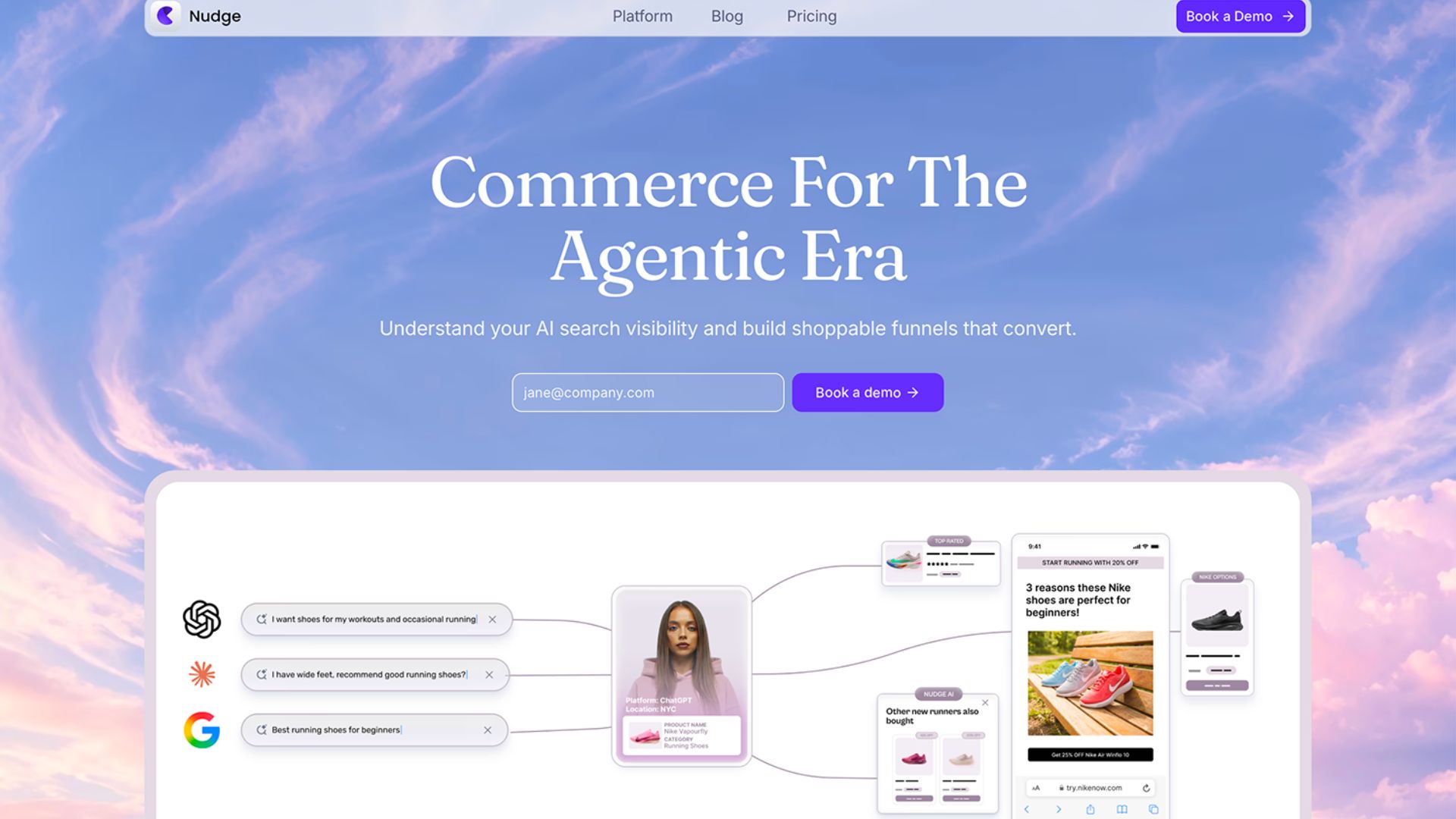
Nudge helps e-commerce teams improve AI visibility and convert AI-driven intent into revenue through shoppable funnels and real-time personalized product experiences. It connects AI discovery signals with on-site behavior, enabling brands to adapt PDPs, carts, and checkout flows. This makes it especially effective for high-growth DTC brands running paid traffic and optimizing post-click performance.
Key Features
AI Search Visibility: Track exactly where and how AI engines mention your brand and products in shopping-intent queries. Analyze narratives, prompt coverage, and citation gaps to understand AI positioning and identify actionable visibility optimization opportunities.
Shoppable Funnels: Convert AI-discovered prompts into guided shopping flows aligned with shopper intent. These funnels use AI visibility insights to match decision criteria and use cases, driving add-to-cart and checkout directly from AI-driven discovery.
Product Experiences: UX specialists and conversion-focused teams often struggle to deliver personalized journeys across the funnel. Nudge’s Product Experiences adapts offers, recommendations, and interactive content in real time, ensuring shoppers see products aligned to their behavior, ad source, and category affinity.

Best For: High-growth ecommerce and DTC brands seeking to get visible in AI-driven discovery and build shoppable funnels and fully personalized on-site experiences informed by AI visibility search & the prompts you want to track.
Pricing: Starts at $499/ month for the starter plan & custom pricing for enterprise brands
2. Otterly.AI
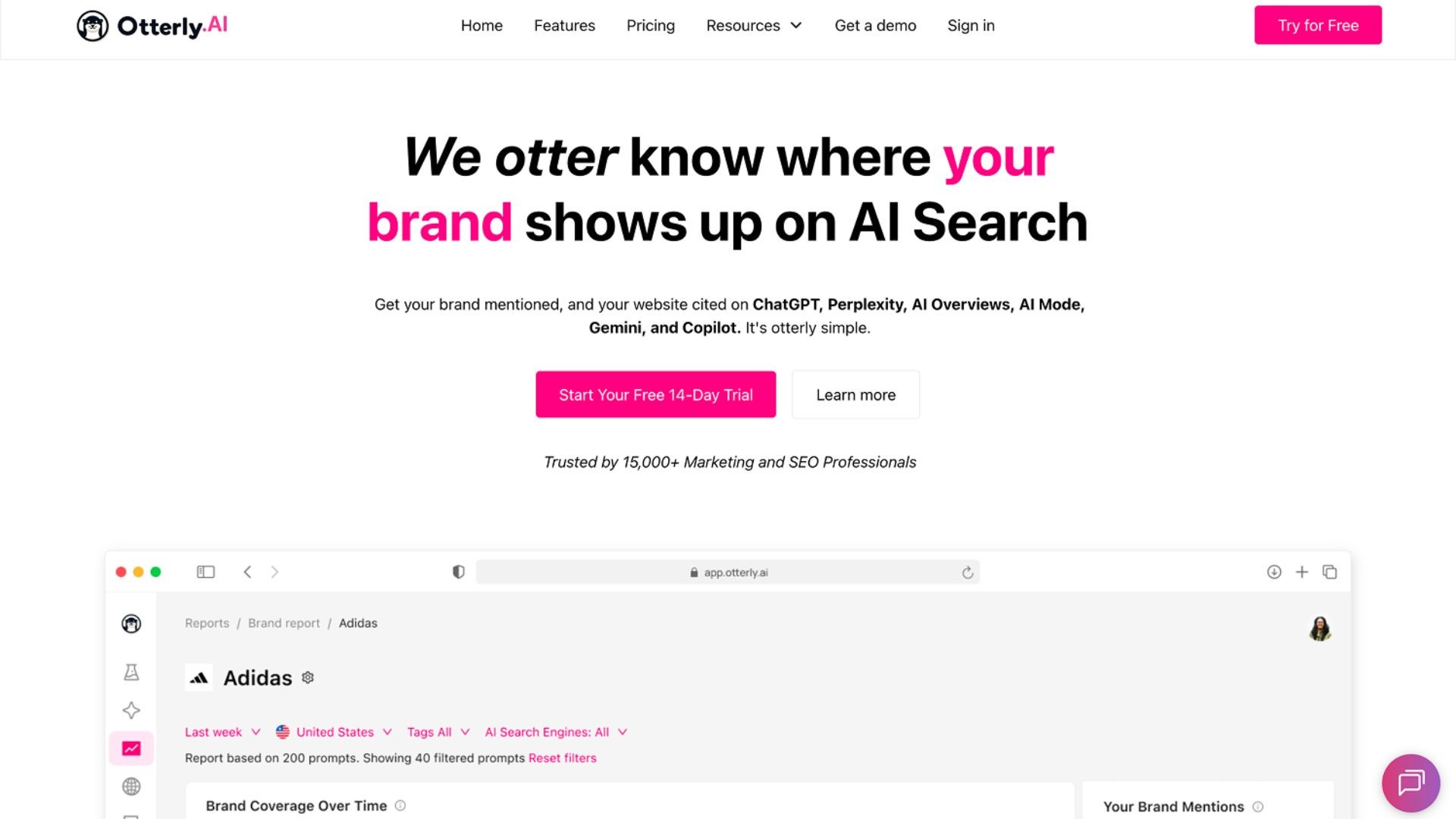
Otterly.AI centers on monitoring brand visibility across AI-generated answers and search experiences. It provides a clear view into how AI engines reference brands and products during early discovery stages. This makes it useful for teams building foundational AI visibility strategies before activating on-site personalization.
Key Features
AI Answer Monitoring: Track where and how AI engines mention your brand and products in shopping-intent queries.
Query-Level Visibility Tracking: Monitor prompt-specific visibility across AI search interfaces.
AI Discovery Trend Analysis: Identify visibility shifts and emerging patterns over time.
Competitive Visibility Comparison: Compare brand presence against key competitors in AI answers.
Best For: Ecommerce teams focused on understanding AI discovery patterns and building early-stage AI visibility benchmarks.
Pricing: Tiered plans with usage-based limits; enterprise pricing available.
Also Read: A/B/n Testing: What It Is, How It Works, and Its Benefits
3. Profound
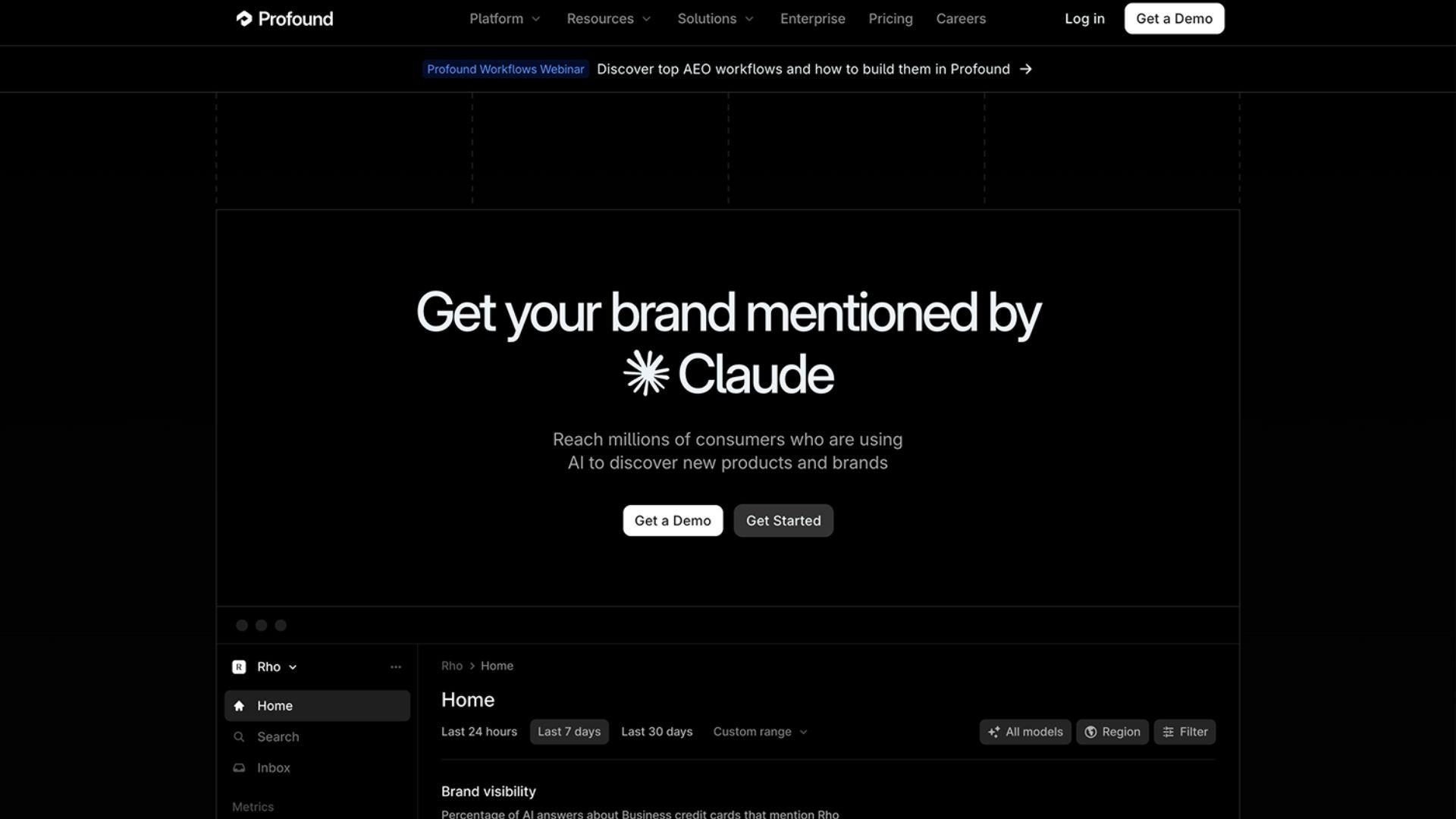
Profound offers deep insight into how AI engines interpret, rank, and cite e-commerce content. Its strength lies in content performance analysis and citation intelligence, helping brands understand which assets influence AI-driven recommendations.
Key Features
AI Citation Tracking: Identify which pages and assets AI engines cite in shopping-related answers.
Content Performance Analysis: Measure how content contributes to AI visibility and influence.
Authority Signal Diagnostics: Analyze trust and expertise signals impacting AI rankings.
Content-Level Benchmarking: Compare citation and visibility performance against competitors.
Best For: Brands investing in content-led discovery strategies and wanting to strengthen AI authority and trust signals.
Pricing: Custom pricing, typically aligned with content scale and analysis depth.
4. Rankscale
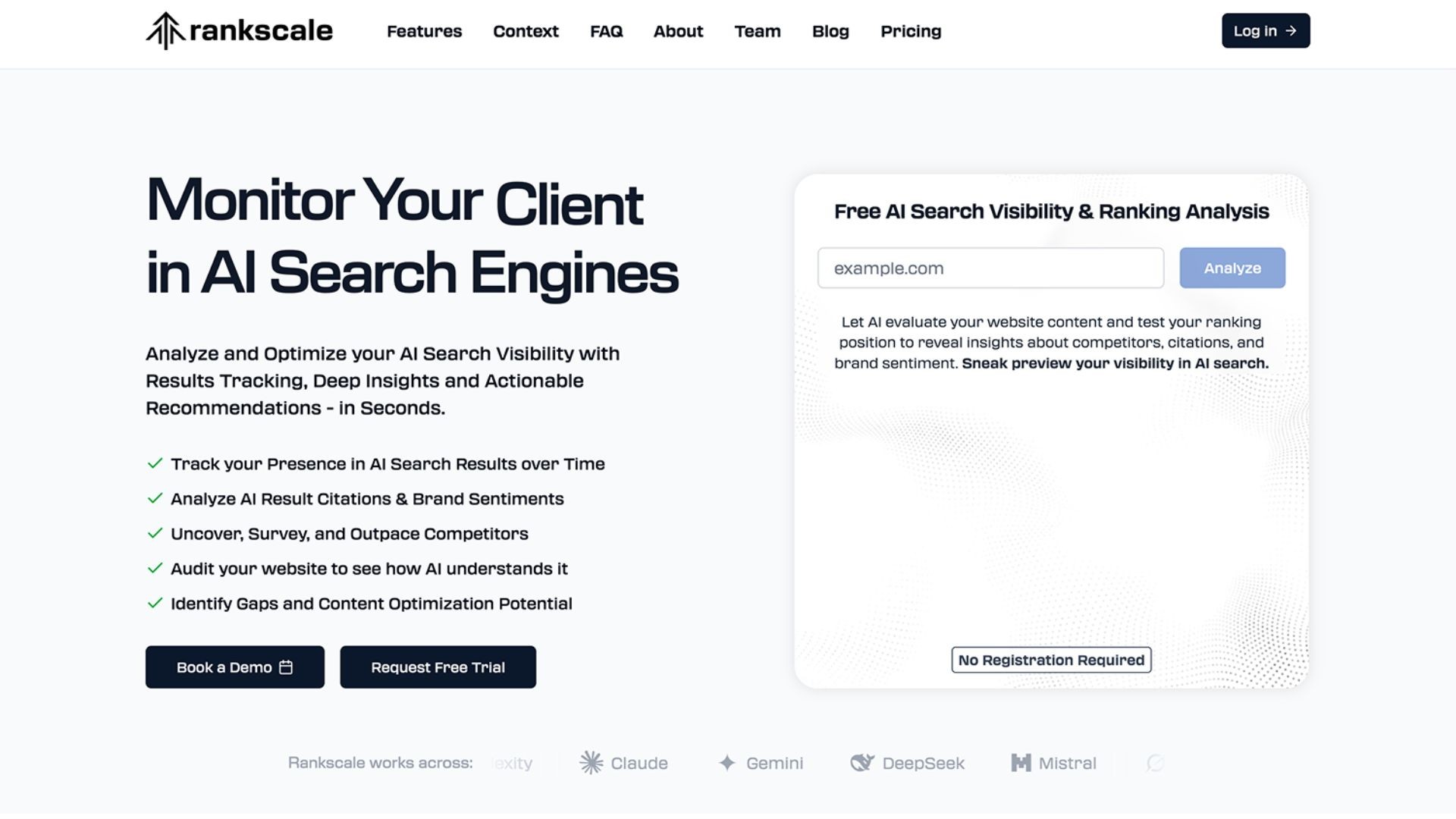
Rankscale balances AI visibility tracking with competitive benchmarking to help teams understand relative performance. It focuses on comparing how brands appear in AI-driven search and recommendation contexts. This makes it useful for teams that need clear, comparative insights to guide optimization priorities.
Key Features
Category-Level Visibility Tracking: Measure AI visibility by category and keyword group.
Competitive Share-of-Voice Analysis: Compare AI presence against competitors.
Visibility Trend Monitoring: Track changes in AI-driven visibility over time.
Comparison Dashboards: View side-by-side performance across AI discovery surfaces.
Best For: Growth teams that prioritize competitive analysis and visibility benchmarking over deep personalization workflows.
Pricing: Subscription-based pricing, with plans scaled by feature access and usage.
5. Semrush
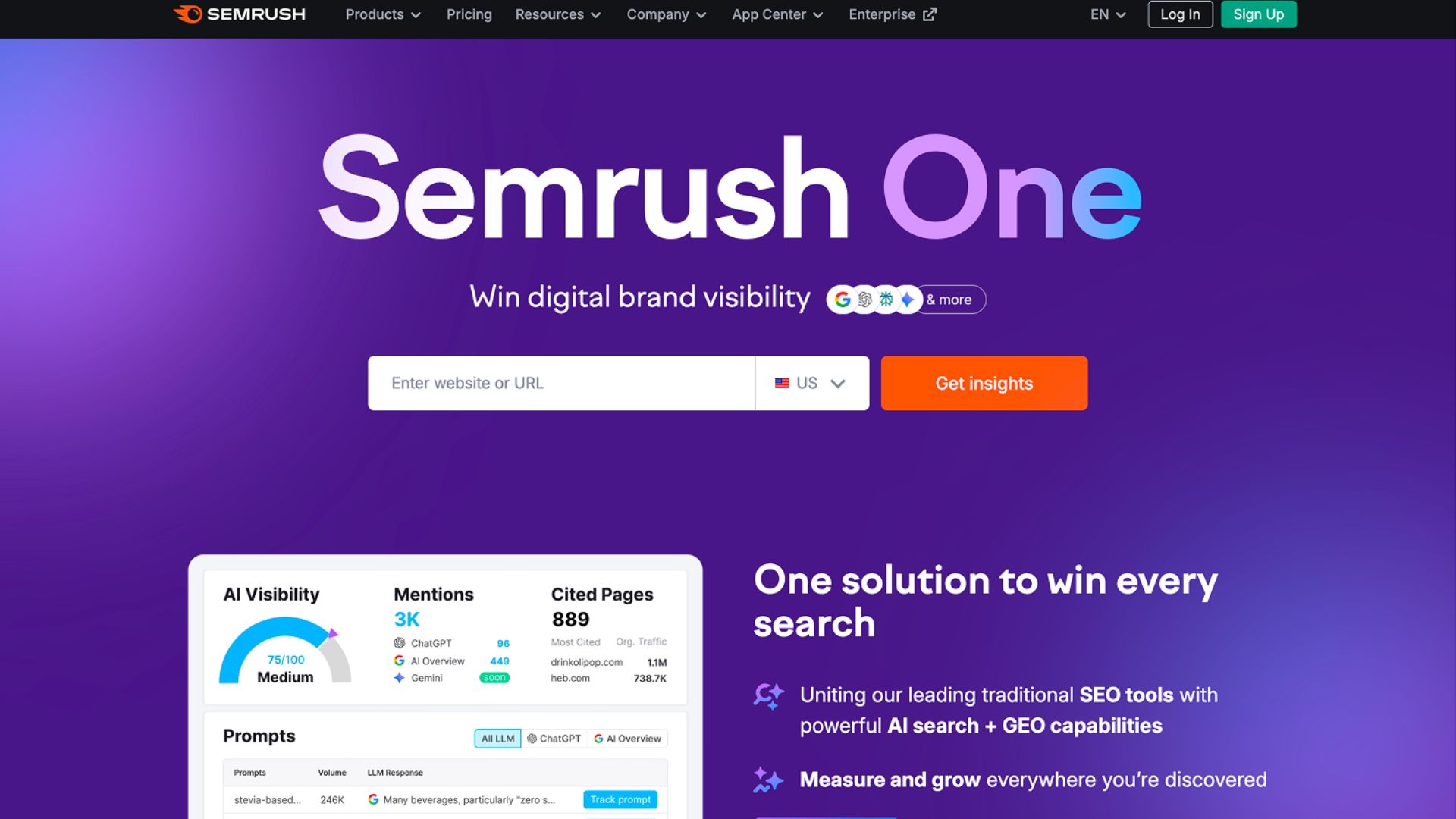
Semrush extends its traditional SEO capabilities into AI visibility and AI-driven search insights. For teams already using Semrush, this provides a familiar environment to explore how AI engines influence discovery alongside classic SEO metrics. It works best as part of a broader search optimization stack.
Key Features
AI Search Visibility Insights: View how AI-driven results intersect with keyword and search performance data.
Keyword & Content Analysis: Analyze content relevance and keyword coverage influencing AI discovery.
Competitive Search Intelligence: Compare visibility and performance across traditional and AI-influenced search.
Reporting & Integrations: Use familiar dashboards and integrations to track AI visibility trends.
Best For: Ecommerce teams are already embedded in the Semrush system and looking to extend SEO workflows into AI-driven discovery.
Pricing: Tiered subscription plans with add-ons; enterprise plans available.
Also Read: Optimize CRO and UX with Search Intent for Better Conversions
Choosing the right AI visibility platform enables e-commerce teams to track, optimize, and improve product discovery, ensuring every AI-driven shopper journey maximizes engagement and conversions.
Conclusion
The right AI visibility tools do more than track mentions; they turn insights into action by connecting AI visibility to real-time personalization across PDPs, carts, checkout flows, and shoppable funnels. Given this, teams can increase AOV, recover abandoned carts, reduce CAC, and strengthen lifetime value.
For teams aiming to convert AI-driven discovery into consistent revenue, Nudge delivers end-to-end optimization. Track AI mentions, fill prompt and category gaps, and convert insights into high-performing PDPs, carts, and checkout flows. Lifecycle marketers can recover cart abandoners, UX specialists can optimize engagement, and product teams can align inventory to live demand.
Book a demo with Nudge to ensure the shopper journey is personalized and aligned with AI intent.
FAQs
1. How do AI visibility tools integrate with PDP personalization workflows?
AI visibility tools feed real-time insights into PDPs, enabling recommendations, context-aware messaging, and adaptive bundles aligned with shopper behavior and ad source.
2. Can these tools track AI-driven discovery for multi-channel campaigns?
Yes. They monitor AI mentions across search engines, chat assistants, and social feeds, linking exposure to traffic source, campaign, and shopper intent for actionable optimization.
3. How do AI visibility tools support retention strategies?
By analyzing shopper behavior post-click, they enable personalized recommendations, adaptive content, and exit-intent nudges that increase repeat purchases and lifetime value.
4. What metrics indicate ROI from AI visibility tools?
Key metrics include add-to-cart conversion, PDP activation, checkout completion, AOV uplift, CAC reduction, experiment velocity, and repeat purchase rate per campaign.
5. Can AI visibility tools identify content gaps compared to competitors?
Yes. They provide prompt-level benchmarking, citation gap analysis, and competitive visibility mapping to pinpoint underperforming content and opportunities for optimization.