AI Search Visibility
13 Strategies to Get Your Product Discovered by ChatGPT
Learn actionable strategies for high-growth ecommerce brands on how to get your product discovered by ChatGPT, improving AI-driven visibility and conversions.

Sakshi Gupta
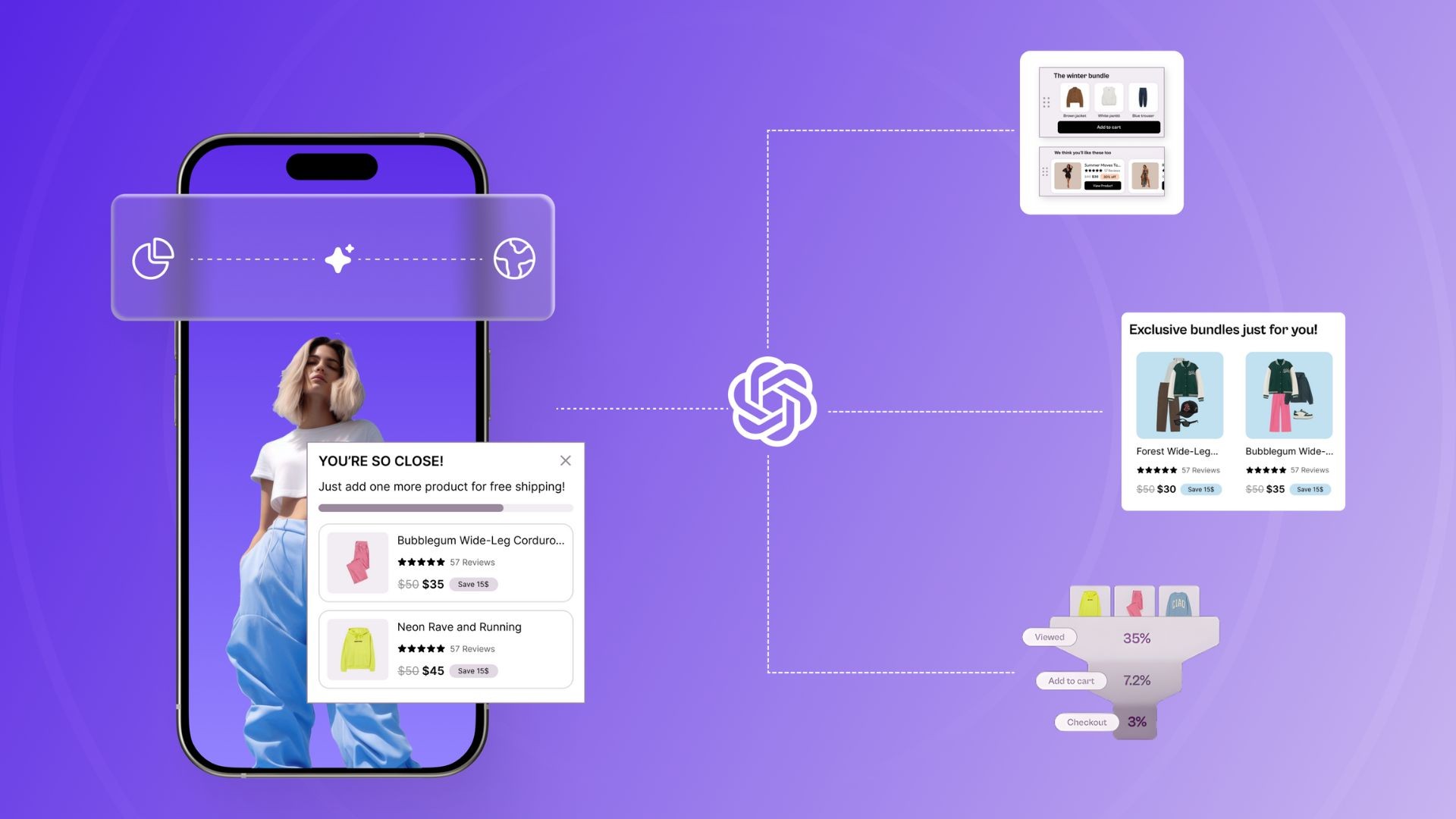





E-commerce product discovery no longer begins and ends with search ads or marketplaces. Shoppers increasingly ask AI tools what to buy, which product fits their needs, and which brand they can trust before they ever land on a homepage or PDP. This shift is quietly changing how product visibility, conversion, and retention work together.
Understanding how to get your product discovered by ChatGPT is now a growth factor, not a technical curiosity. When AI-driven answers influence purchase intent upstream, your PDPs, PLPs, carts, and checkout flows must reinforce that intent with relevance, clarity, and speed, especially for paid traffic entering mid-funnel.
This article explains how ChatGPT surfaces e-commerce products, what signals shape that visibility, and how teams can align on-site experiences to convert AI-influenced demand into measurable revenue.
Key Takeaways
ChatGPT discovery shapes shopper intent before they land on PDPs, making data accuracy and content clarity essential for conversion outcomes.
Structured data, clean feeds, and consistent PDP messaging are foundational to reliable AI product recommendations.
AI-driven visibility should be measured through influence and quality of traffic, instead of just direct attribution.
Conversion performance improves when ChatGPT discovery aligns tightly with personalized PDPs, carts, and checkout flows.
Brands that treat AI discovery as part of the shopper journey, not a standalone channel, gain long-term CAC and retention advantages.
5 Optimization Requirements for AI-Based Product Discovery
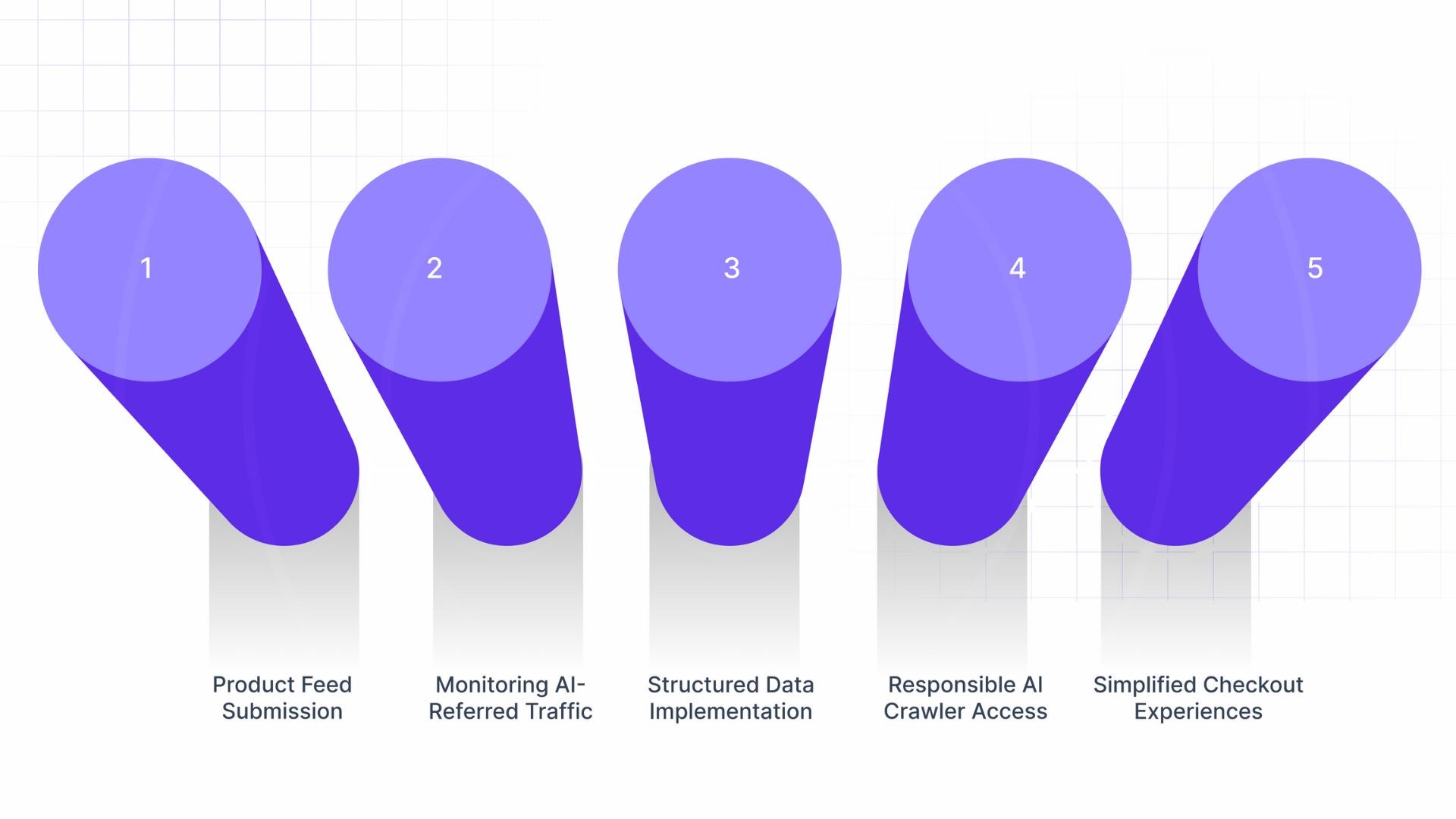
Before advanced visibility tactics work, e-commerce teams need a reliable infrastructure that allows ChatGPT to access, interpret, and surface products accurately. Below are the core optimization requirements that support consistent product discovery in ChatGPT and protect downstream conversion performance.
1. Product Feed Submission and Validation
Submitting and maintaining clean product feeds ensures ChatGPT reflects accurate pricing, variants, and availability in its responses. Feed consistency prevents outdated recommendations and aligns AI expectations with live PDP content, supporting higher conversion rates.
2. Monitoring AI-Referred Traffic Sources
Tracking ChatGPT-influenced traffic helps teams understand how AI-driven intent differs from paid or organic sessions. These insights inform PDP personalization and lifecycle messaging to improve activation and repeat purchase behavior.
3. Uniform Structured Data Implementation
Consistent schema across PLPs, PDPs, carts, and checkout reduces ambiguity for ChatGPT when synthesizing product information. Uniform structured data improves response accuracy and stabilizes the conversion flow across devices.
4. Enabling Responsible AI Crawler Access
Blocking AI crawlers limits ChatGPT’s ability to discover and recommend products accurately. Allowing responsible access ensures products remain part of AI-driven shopping conversations and supports long-term acquisition efficiency.
5. Fast and Simplified Checkout Experiences
ChatGPT-driven discovery often creates high-intent sessions that expect low friction. Streamlined checkout flows preserve that intent, reducing cart abandonment and improving conversion uplift.
If your growth team’s biggest pain point is not knowing if ChatGPT even surfaces your products at all, Nudge’s AI Search Visibility gives you a clear view into where your brand appears, how products are framed, and which shopping-intent prompts you’re missing. With visibility mapped, you can prioritize the prompts that influence real buying behavior.

With the basics in place, brands can apply advanced strategies that connect discovery to revenue growth.
13 Strategies to Increase ChatGPT Visibility for Ecommerce Products
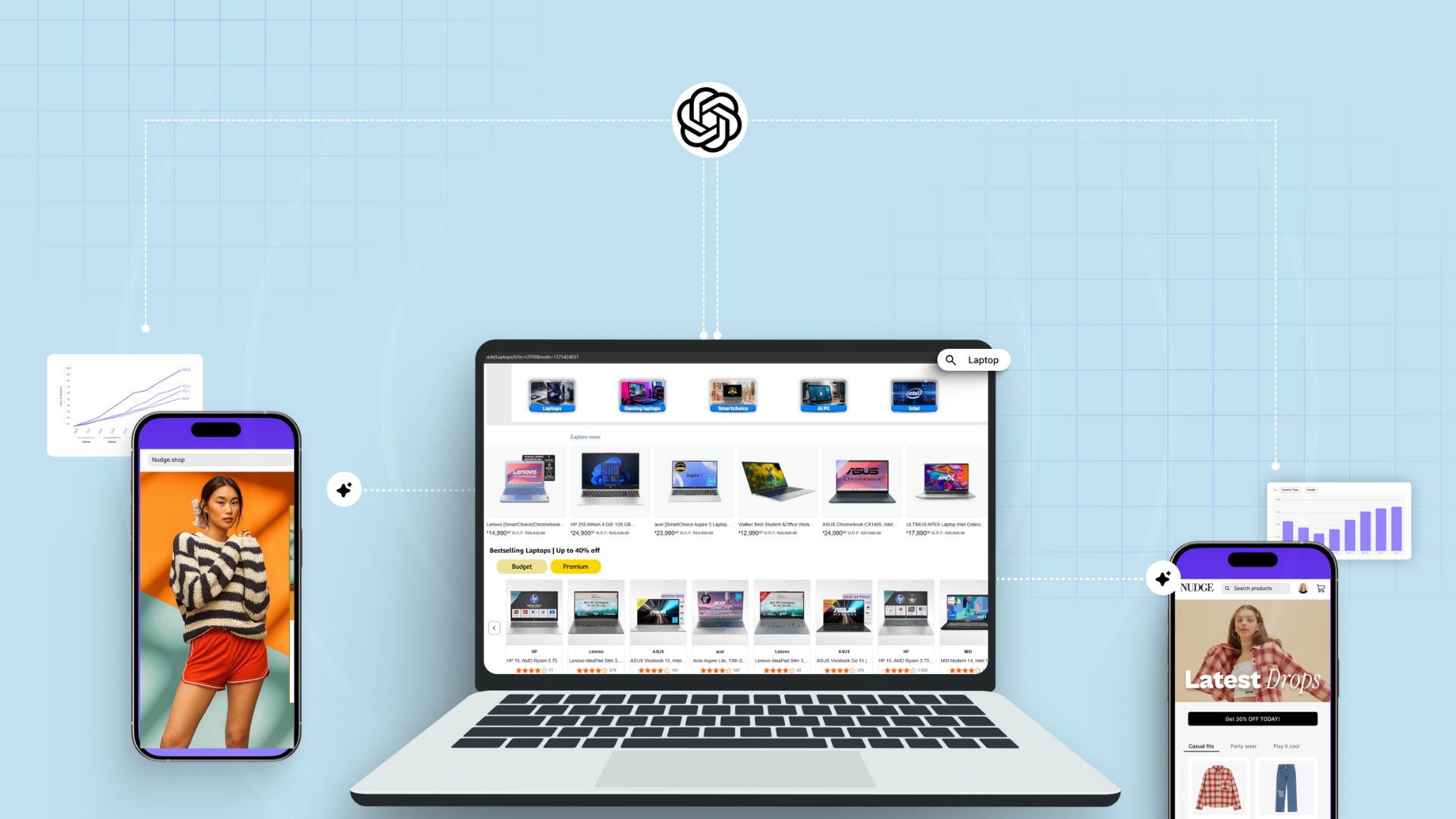
Once foundational signals and technical readiness are in place, advanced strategies help e-commerce teams move from surface-level AI visibility to sustained, high-quality product recommendations. The tactics below connect AI discovery with PDP performance, merchandising logic, and retention outcomes across high-intent shopper journeys.
1. Utilize User Review Integration
Integrating authentic customer reviews directly into PDPs helps AI systems understand real-world usage, satisfaction drivers, and objections. Reviews provide contextual trust signals that AI often summarizes when recommending products. For e-commerce teams, this improves conversion uplift while reducing friction for first-time shoppers arriving from AI-assisted discovery.
2. Incorporate Related Product Recommendations
Context-aware related product recommendations show AI systems how products relate within a catalog and buying journey. When driven by browsing behavior, cart context, and category affinity, they reinforce relevance. This strategy supports higher AOV, stronger engagement, and improved repeat purchase behavior.
3. Implement Multimedia Elements
High-quality images, videos, and product demos add clarity that text alone cannot provide. AI systems increasingly rely on visual context to understand differentiation and use cases. For shoppers, multimedia reduces uncertainty and accelerates add-to-cart decisions on PDPs.
4. Use Structured Data on Product Pages
Structured data enables AI platforms to interpret product information without ambiguity or inference. Schema ensures consistency between AI responses and live PDP content. This alignment reduces misinformation and supports trust-driven conversions.
What to include:
Product Name: A consistent product name helps AI systems correctly identify and reference the item across queries. Stability across PDPs, feeds, and listings improves citation accuracy. This consistency also reinforces brand recall during consideration.
Product Images: Structured image data provides AI with visual confirmation of product appearance and variants. Images should be high resolution and consistent across platforms. This improves AI confidence and shopper engagement.
Offer Details (price, currency): Accurate pricing and currency data prevent AI from surfacing outdated or misleading information. Alignment with live PDP pricing builds trust. This transparency supports smoother checkout completion.
Product Availability (currently available or out of stock): Availability signals prevent AI from recommending unavailable products. Regularly updated availability builds reliability. This reduces shopper frustration and bounce rates.
Product Reviews: Structured review data allows AI to summarize sentiment and credibility accurately. Reviews reinforce social proof at the discovery stage. This improves conversion confidence and reduces post-purchase regret.
Also Read: How to Create Successful Personalized Marketing Campaigns
5. Clean URLs & Metadata
Clean, readable URLs help AI and shoppers understand page intent immediately. Consistent metadata reinforces relevance across discovery channels. This improves visibility and long-term indexing stability.
Keep Product URLs Readable and Stable: Stable URLs preserve trust and indexing over time. Readable URLs also increase shopper confidence when shared or referenced. Stability supports attribution and long-term discovery.
Align Page Titles With Shopper Intent: Page titles and descriptions should reflect how shoppers naturally search and ask questions. Alignment improves AI interpretation and click-through behavior. This consistency supports higher engagement.
6. Conversational Content That Mirrors Shopper Language
AI favors content that answers questions naturally. PDPs written in conversational, problem-solving language align better with how shoppers phrase prompts. This improves engagement metrics like scroll depth, time on page, and add-to-cart rates, especially for ad-driven sessions.

What Is It?
Clearly explain what the product is in simple, direct language. This establishes immediate context for both AI systems and shoppers. Clarity reduces early-stage confusion.
Who Is It For?
Defining the ideal user helps AI match the product to relevant prompts. Shopper-facing clarity improves relevance and personalization. This increases conversion rates from high-intent traffic.
What Problems Does it Solve?
Explicitly stating pain points positions the product as a solution. AI systems rely on this context when recommending products. For shoppers, it shortens evaluation time.
What are the Specs?
Technical specifications support informed comparisons and advanced queries. AI uses specs to answer detailed prompts. This reduces uncertainty and post-purchase dissatisfaction.
What’s Included?
Listing inclusions sets clear expectations about value and packaging. AI summaries often reference this information. Transparency reduces returns and improves satisfaction.
What’s Shipping/Returns Like?
Clear shipping and return policies build trust at the decision stage. AI systems may surface these details in recommendations. Transparency improves checkout completion and retention.
7. Publish Buying Guides That Feed AI Context
Buying guides provide educational context that AI frequently references. When guides link directly to PDPs, they strengthen internal relevance signals. This improves discovery while driving qualified traffic.
“Best [category] for [use case]”: These guides help AI match products to specific shopper needs. They also support comparison-driven decision-making. This format improves engagement and conversion quality.
“X vs Y: which should you buy?”: Comparison content clarifies differentiation and trade-offs. AI often summarizes this content for shoppers. This reduces indecision and supports confident purchases.
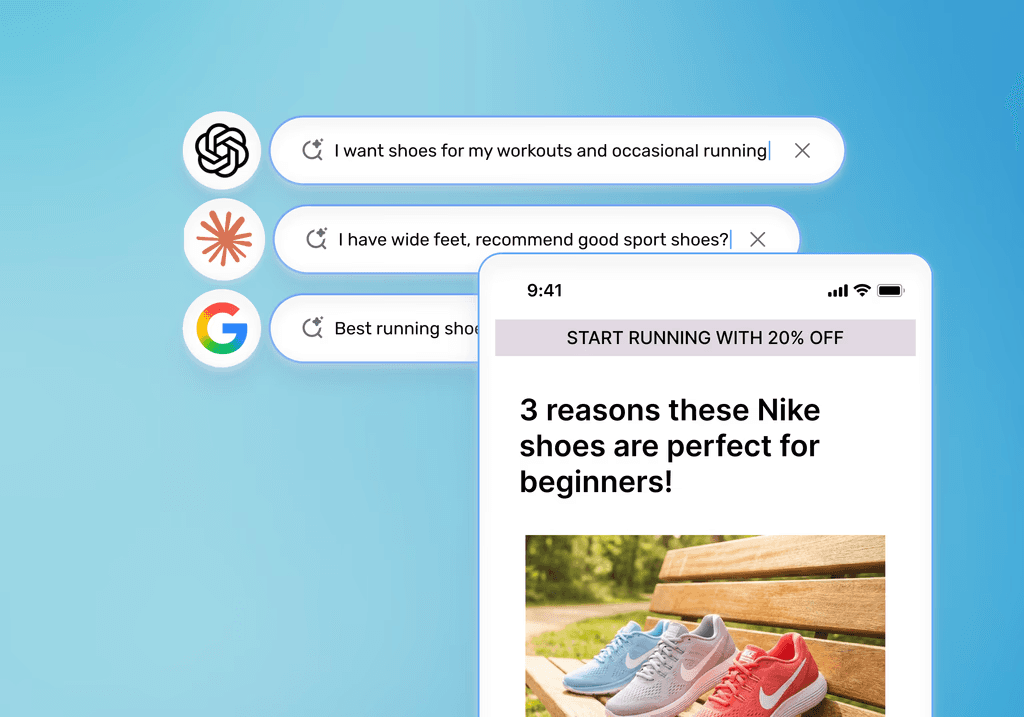
“Beginner guide to [problem] + recommended products”: Beginner-focused guides capture early-stage intent. AI uses them to explain categories and suggest entry-level products. This supports activation and long-term retention.
8. Establish Direct Merchant Feeds
Direct merchant feeds give ChatGPT and other AI systems access to clean, authoritative product data straight from the source. Keeping feeds updated with pricing, availability, variants, and specs reduces AI dependence on scraped or outdated third-party data. This improves product accuracy in AI answers and minimizes mismatches between AI recommendations and live PDPs.
9. Drive Product Data Precision with Google Merchant Center
Google Merchant Center acts as a central validation layer for product accuracy across discovery channels. When product titles, images, pricing, and availability stay aligned with PDPs, AI systems inherit stronger confidence signals. This consistency helps AI engines surface products more reliably for shopping-intent queries. For growth teams, it translates into cleaner attribution paths and lower CAC leakage from misaligned data.
10. Optimize Page Load Performance
Fast-loading pages signal quality and reliability to both AI systems and shoppers. High-intent traffic coming from AI-assisted discovery has low patience for delays, especially on PDPs and carts. Improving core web vitals reduces bounce rates and preserves intent through checkout.
Also Read: Guide to Understanding and Reducing Abandoned Baskets
11. Design Mobile-First Experiences
AI-driven shopping journeys overwhelmingly land on mobile devices, often mid-funnel. Mobile-first design ensures PDPs, carts, and checkout flows adapt seamlessly to smaller screens and varied connection speeds. Clear layouts, touch-friendly CTAs, and frictionless navigation preserve intent from AI recommendations.
12. Strengthen HTTPS Infrastructure
Secure HTTPS connections are a baseline trust requirement for AI platforms and shoppers alike. AI systems are less likely to confidently reference or recommend insecure pages. For shoppers, visible security reassures them during payment and data entry. Strong HTTPS implementation reduces checkout friction and supports higher conversion confidence.
13. Clarify Implementation Timelines
Clear delivery timelines, setup expectations, and support details reduce uncertainty at the decision stage. AI summaries frequently surface logistics and implementation clarity when answering comparison-based queries. Transparent timelines help shoppers and business buyers commit faster.
When AI-driven traffic arrives but fails to convert, Nudge’s Shoppable Funnels turn discovery into action. Using prompt-specific funnels built around the shopper’s original question and decision criteria, Nudge generates landing experiences that dynamically adapt across landing pages, PDPs, and shopping bags. With embedded commerce widgets like product grids and personalized offers, teams eliminate intent mismatch and guide shoppers through higher-converting paths.

Next, let’s explore AI visibility methods that help e-commerce teams assess how products appear across prompts, categories, and ChatGPT queries.
10 AI Visibility Methods for Ecommerce Product Discovery on ChatGPT
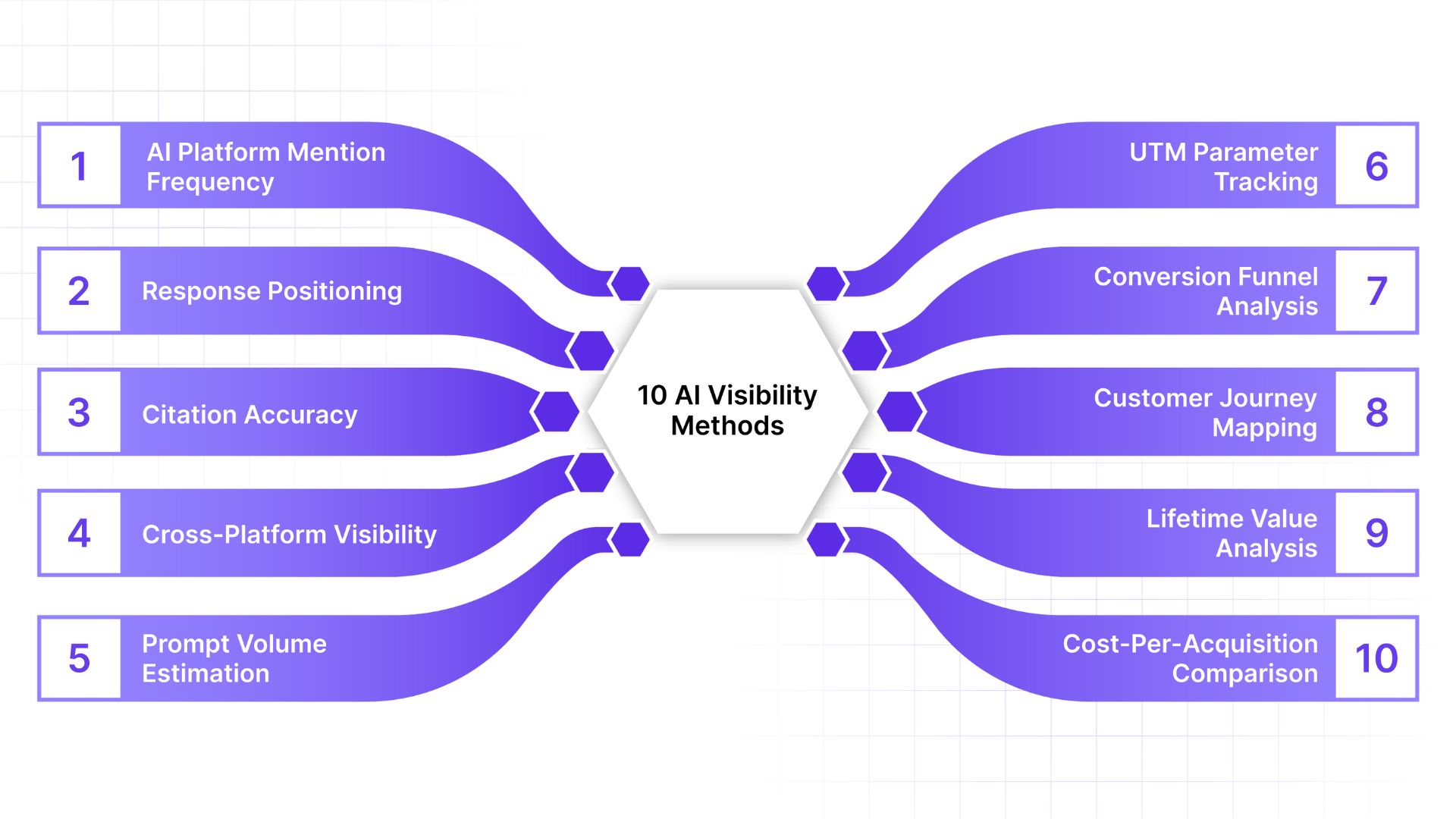
The methods below focus on analyzing prompt behavior, category inclusion, product representation, and recommendation logic in AI-driven shopping conversations, helping teams improve discovery quality before a shopper ever reaches a PDP.
1. AI Platform Mention Frequency
AI mention frequency tracks how often your products appear in ChatGPT responses for category, use case, or comparison prompts. Higher frequency indicates stronger authority signals, clearer product data, and better alignment with shopper intent.
2. Response Positioning
Response positioning measures if your product appears as a primary recommendation or a secondary option in ChatGPT answers. Primary placement has a disproportionate impact on trust, click-through, and downstream PDP engagement.
3. Citation Accuracy
Citation accuracy evaluates if ChatGPT reflects correct pricing, availability, variants, and product descriptions. Inaccurate citations break trust quickly and can reduce conversion rates when shoppers land on PDPs expecting something else.
4. Cross-Platform Visibility Consistency
This metric compares how your products are represented in ChatGPT versus search results, marketplaces, and brand PDPs. Consistent representation reinforces credibility and reduces friction during shopper validation.
5. Prompt Volume Estimation
Prompt volume estimation assesses how frequently shoppers ask ChatGPT questions related to your product category or use case. Higher prompt demand signals a stronger discovery opportunity and helps prioritize content and merchandising investment.
6. UTM Parameter Tracking
UTM tracking helps identify sessions influenced by ChatGPT referrals, even when AI is not the final touchpoint. While directional, this data provides early insight into conversion quality and CAC impact.
7. Conversion Funnel Analysis
Funnel analysis compares ChatGPT-influenced sessions with paid and organic traffic across PDP views, add-to-cart, and checkout completion. Strong mid-funnel engagement often reflects higher intent shaped by AI discovery.
8. Customer Journey Mapping
Journey mapping identifies where ChatGPT plays its biggest role: early discovery, product comparison, or purchase validation. This insight helps teams align PDP messaging and personalization to shopper readiness.
9. Lifetime Value Analysis
LTV analysis measures whether ChatGPT-influenced shoppers show higher repeat purchase rates or basket expansion over time. Strong LTV indicates that AI discovery is attracting better-fit customers.
10. Cost-Per-Acquisition Comparison
CPA comparison evaluates how efficiently ChatGPT-driven discovery contributes to revenue relative to paid channels. Lower CPA paired with stable LTV signals a scalable discovery advantage.
Also Read: 8 Ecommerce Remarketing Strategies to Boost E-Commerce Conversions
The next section covers emerging challenges and measurement considerations in ChatGPT product discovery.
6 Challenges in ChatGPT Product Discovery

As ChatGPT becomes a more common product discovery layer, e-commerce brands face new challenges around accuracy, control, and measurement. Here are the challenges teams encounter when optimizing products for ChatGPT discovery, along with practical mitigation approaches.
1. Algorithmic Volatility
ChatGPT responses change as models update and training data shifts, which can change visibility patterns unexpectedly. Brands should focus on durable signals like structured data and authoritative content to reduce volatility risk.
2. Content Saturation
As more brands optimize for AI discovery, generic PDP copy becomes interchangeable. Specific use cases, clear differentiation, and real shopper context help products stand out in ChatGPT responses.
3. Accuracy and Trust Risks
Outdated pricing, inventory mismatches, or unclear product positioning can lead ChatGPT to surface incorrect information. Regular audits and feed consistency help protect shopper trust and conversion performance.
4. Data Privacy and Compliance
ChatGPT discovery depends on accessible data, but e-commerce brands must still meet US privacy and compliance standards. Balancing openness with responsible data handling is essential for long-term credibility.
Also Read: The Ultimate Guide to Ecommerce Email Marketing Strategies
5. Attribution Complexity
ChatGPT often influences decisions without generating a direct click, complicating attribution. Blended attribution models help capture AI’s assistive impact across sessions and devices.
6. Emerging AI Platforms Beyond ChatGPT
Product discovery is expanding across multiple AI assistants, besides ChatGPT. Preparing content and data for cross-AI visibility reduces dependency and future acquisition risk.
If growing AI mentions still aren’t lifting AOV or repeat purchases, Nudge’s AI Product Recommendations adapt content, bundles, and offers in real time based on behavior, cart context, and affinities. From smart upsell bundles and contextual nudges to cart abandonment recovery, each shopper sees an experience tailored to their needs, driving higher order value, stronger retention, and more consistent revenue lift.

Now we'll look at future considerations shaping AI-based ecommerce product discovery and competitive positioning.
5 Considerations for the Future of AI-Driven Product Discovery
ChatGPT is only the beginning of how AI will shape product discovery, personalization, and buying decisions across e-commerce journeys. Below are the key future-facing considerations e-commerce teams should plan for to maintain visibility and conversion impact.
1. Voice Search Optimization
As shoppers use voice-based AI queries, product content must align with natural, spoken language. Clear use cases and conversational PDP copy improve match accuracy in voice-driven discovery.
2. Image and Video Content Optimization
ChatGPT and adjacent AI systems increasingly rely on visual context for recommendations. Optimized images and videos improve both AI understanding and shopper confidence.
3. Personalization Data Integration
Future AI discovery will factor in context like location, browsing behavior, and past purchases. Brands that personalize PDPs and recommendations in real time will convert AI traffic more effectively.
4. Real-Time Inventory and Pricing APIs
Accurate, real-time inventory and pricing reduce the risk of misinformation in ChatGPT responses. Live data builds trust and improves conversion readiness.
5. Cross-Platform Content Syndication
Consistent product messaging across websites, feeds, marketplaces, and AI platforms reinforces authority. This consistency strengthens discovery, retention, and lifetime value.
Also Read: Understanding the Ecommerce NAICS Code 454110
To bring it back to control and outcomes, we’ll examine how to own AI discovery and conversions using Nudge.
Drive AI-Assisted Product Discovery and Conversion With Nudge
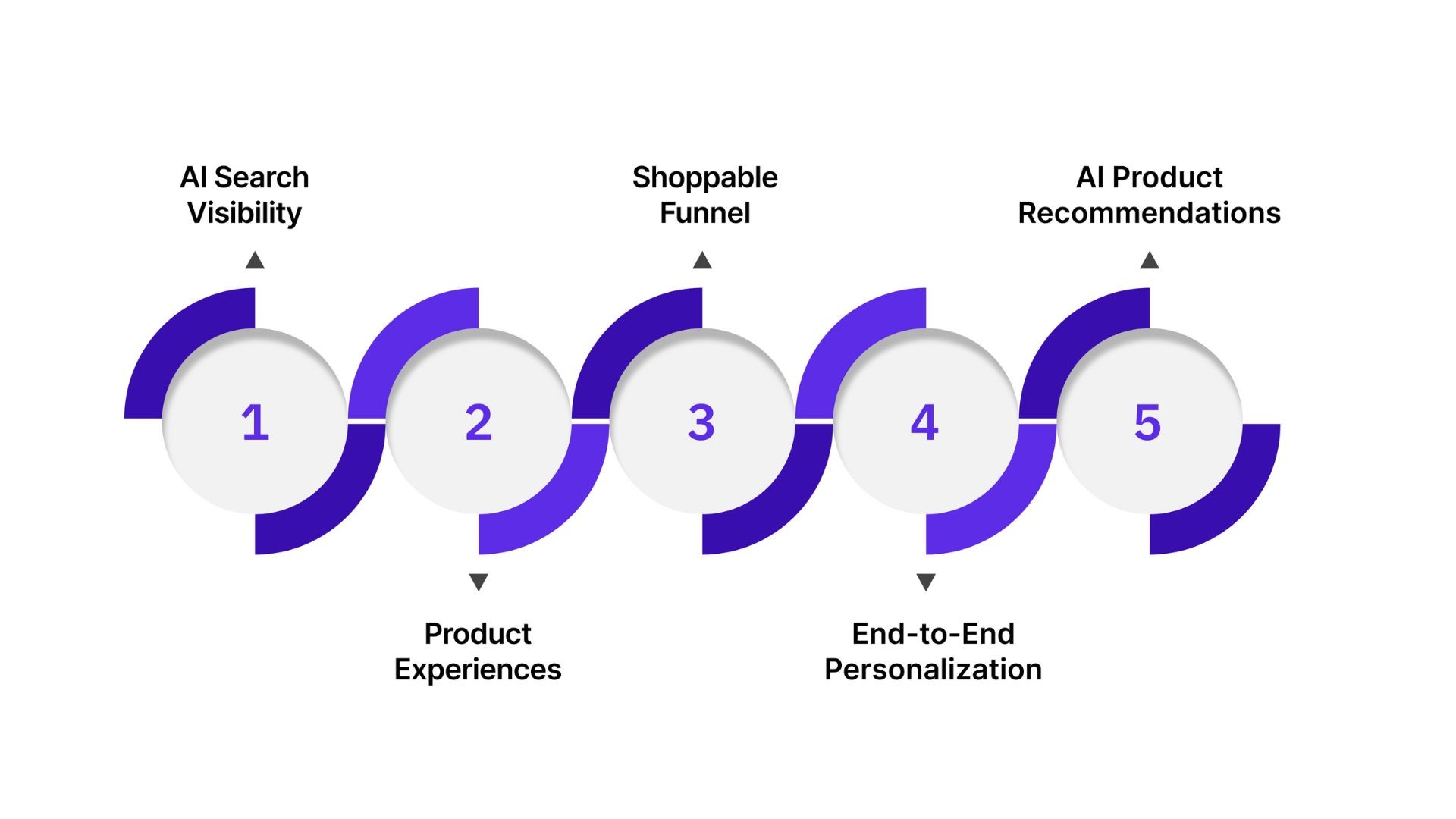
AI discovery is already shaping how shoppers shortlist, compare, and decide. ChatGPT doesn’t just mention the brands that win; they control what happens after that moment of intent. Nudge helps e-commerce and DTC teams turn AI visibility into measurable revenue by connecting discovery, experience, and conversion into one continuous shopper journey. If your PDPs, carts, and checkout aren’t built to capitalize on AI-driven intent, you’re leaving conversion and retention on the table.
Here’s how Nudge helps you operationalize how to get your product discovered by ChatGPT and convert that discovery at scale.
AI Search Visibility: Track where AI mentions your products, how your brand is positioned, and which shopping-intent prompts matter most, so marketers can optimize PDPs and landing pages for real AI demand.
Shoppable Funnels: Turn ChatGPT queries into conversion-ready funnels by aligning landing pages, product grids, and bundles to the exact criteria shoppers express, improving activation rates and post-click efficiency.
Product Experiences: Personalize product messaging, recommendations, and offers based on UTMs, ad source, location, and behavior, ensuring AI-driven traffic lands on experiences built for intent, not averages.

If AI is becoming the front door to ecommerce discovery, Nudge ensures your brand doesn’t just show up; it converts, retains, and scales with every AI-driven interaction.
Conclusion
AI-driven discovery now shapes how shoppers find, evaluate, and trust products. For US-based high-growth ecommerce and DTC brands, mastering how to get your product discovered by ChatGPT means aligning visibility with conversion, personalization, and retention across every touchpoint, from ads to PDPs to checkout.
Brands that treat AI discovery as an extension of shopper experience design will see lower CAC, higher AOV, stronger retention, and faster experimentation.
And when the core challenge is scaling AI discovery without hurting conversion efficiency, Nudge offers automated experimentation that continuously tests AI-influenced experiences against conversion, AOV, and LTV. This removes reliance on slow manual optimization cycles. Growth and UX teams can iterate faster while protecting performance.
Book a demo with Nudge to turn AI discovery into measurable revenue.
FAQs
1. How does ChatGPT discovery impact e-commerce performance if it doesn’t always drive direct clicks?
ChatGPT discovery influences early consideration, shaping product expectations before PDP visits, which affects conversion quality, return rates, and long-term retention rather than immediate click volume.
2. Can ChatGPT surface outdated or incorrect product information from e-commerce sites?
Yes, but only if PDP content, pricing, and availability remain consistent; inconsistencies reduce trust, weaken recommendations, and can negatively impact attribution and shopper confidence overall.
3. How quickly can brands expect results after optimizing for ChatGPT discovery?
AI discovery optimization typically shows measurable impact within weeks once structured data, feeds, and PDP clarity improve, especially for categories with strong existing demand signals.
4. Who should own ChatGPT discovery optimization inside an ecommerce organization?
Growth, lifecycle, and UX teams should own execution collaboratively, since ChatGPT discovery spans data quality, on-site experience, and post-click conversion optimization across the e-commerce funnel.
5. Does optimizing for ChatGPT reduce the importance of paid acquisition channels?
No, AI discovery complements paid media by pre-qualifying shoppers, improving intent alignment, and increasing post-click efficiency rather than directly replacing performance marketing channels entirely today.