CRO & Experimentation
E-Commerce Conversion Rates Benchmark
Learn the latest eCommerce conversion rate benchmarks, factors affecting conversions, and proven strategies to optimize your online store's performance.

Sakshi Gupta
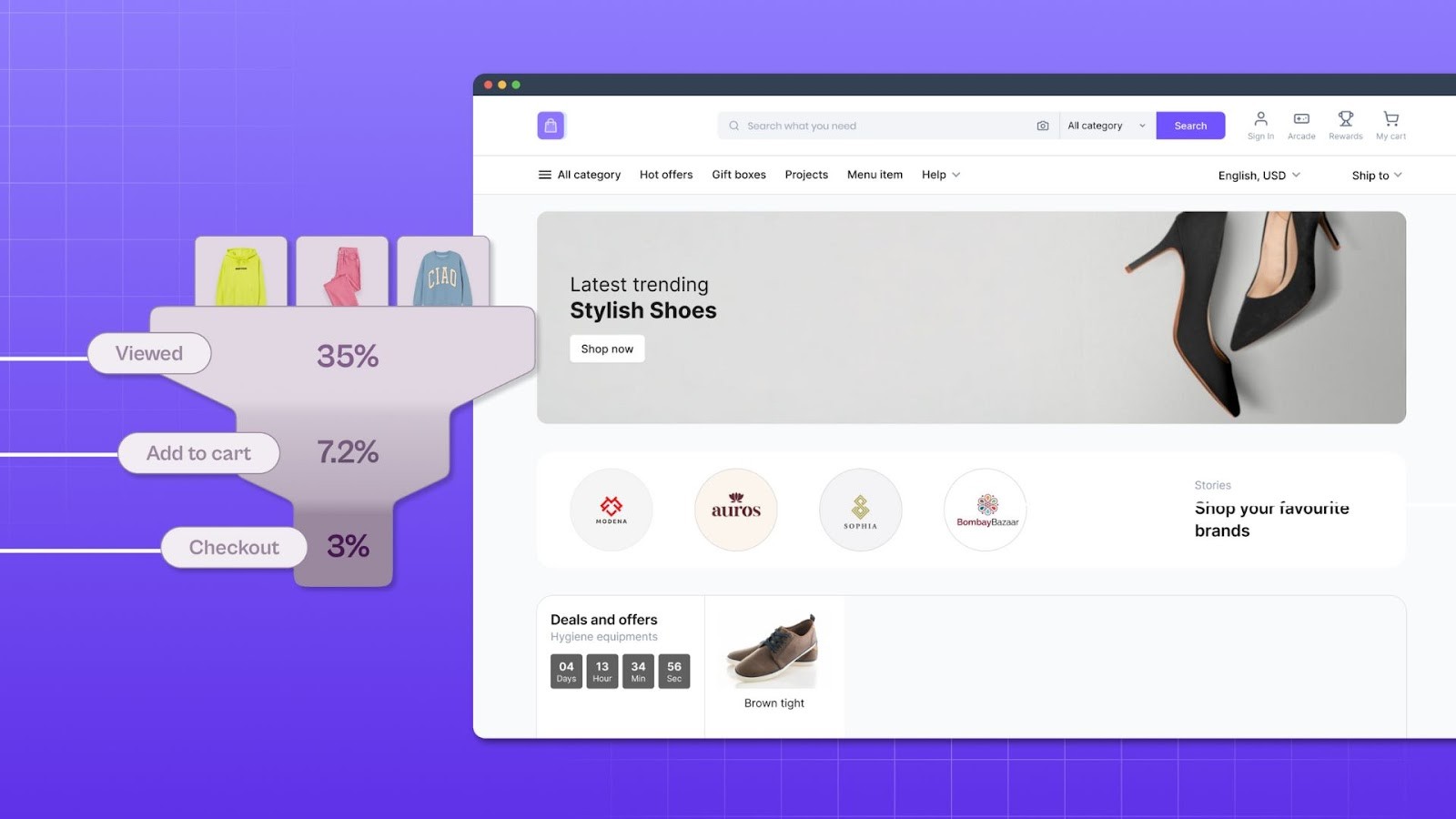





Ecommerce conversion rates are a critical metric that directly impacts revenue, customer acquisition, and retention, making them a key focus for businesses aiming to improve their bottom line. With ecommerce conversion rates rising by 3.18% from 2024 to 2025, it’s clear that adapting to changes in consumer behavior is essential for growth.
If you're a UX specialist, lifecycle marketer, or retention manager, optimizing conversion rates through personalized experiences, unique product recommendations, and effective post-click engagement strategies is essential for driving success and building long-term customer relationships.
In this guide, we’ll walk through the key factors that influence ecommerce conversion rates, benchmarks across industries and devices, and the strategies you can implement to improve your ecommerce conversion rate.
Key Takeaways
Ecommerce conversion rates vary by industry, device, and shopper behavior, offering benchmarks for optimization.
CRO enhances sales and retention by personalizing user experiences across landing pages, PDPs, and checkout.
Industry benchmarks provide insights to help marketers optimize conversion strategies.
Device optimization is crucial, as conversion rates differ across mobile, tablet, and desktop.
Nudge’s AI personalization increases conversion rates with dynamic recommendations and targeted landing pages based on shopper behavior.
What is Conversion Rate Optimization?
Conversion rate optimization (CRO) is the process of improving your e-commerce website to convert more visitors into paying customers. For e-commerce marketers and conversion specialists, CRO means focusing on the entire customer journey, from landing pages to checkout flows. By optimizing product recommendations, using context-aware nudges, and ensuring seamless user experiences, you can drive higher ecommerce conversion rates.
Also Read: How to Optimize Your Conversion Funnel for Success
The following section will explore what constitutes a good conversion rate and help you gauge where your e-commerce site stands.
What is a Good Conversion Rate in E-Commerce?
A good conversion rate in e-commerce typically falls between 2% and 5%. However, this varies by industry, device, and even shopper intent. Marketers and growth teams working in high-growth DTC brands may aim for higher benchmarks depending on the personalization efforts made in aligning product recommendations, upselling, and improving the customer experience across landing pages and PDPs.
Now, let’s look into why CRO is essential for your e-commerce business and how it can drive overall growth.
Why is CRO Important for E-Commerce Websites?
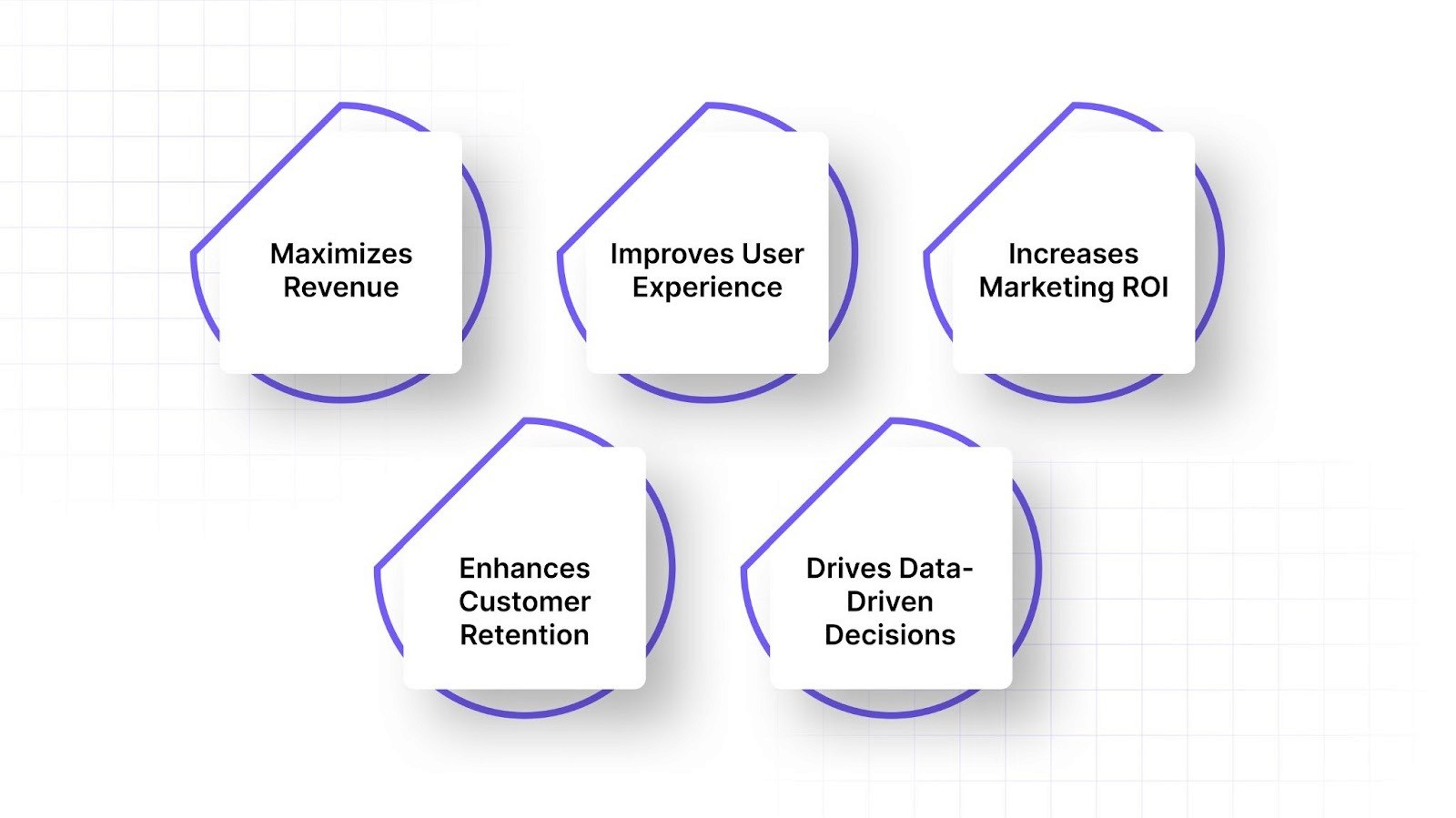
For retention marketers and UX specialists, focusing on conversion rate optimization helps create a seamless shopping experience that drives higher sales and also long-term customer loyalty. The following points will explain why CRO is crucial to improving your ecommerce conversion rate and how it can drive overall growth:
Maximizes Revenue: A high conversion rate directly increases revenue by turning more visitors into paying customers.
Improves User Experience: Streamlining navigation and simplifying checkout increases customer satisfaction and repeat visits.
Increases Marketing ROI: By optimizing for conversions, you make better use of paid traffic, reducing CAC and improving the profitability of campaigns.
Enhances Customer Retention: Personalization techniques like dynamic recommendations and contextual nudges improve customer engagement, leading to higher retention rates.
Drives Data-Driven Decisions: CRO gives you the data to make informed decisions on improving the customer journey, from landing pages to checkout.
To maximize your ecommerce conversion rates, Nudge’s AI-powered Commerce Surfaces dynamically personalize landing pages, PDPs, and checkout experiences based on each shopper’s behavior. For growth teams, this means delivering personalized, optimized experiences that turn every click into a conversion. Embed dynamic product grids, offers, and shoppable videos to create a seamless, engaging customer journey.

Next, we’ll explore conversion rates across various industries to provide benchmark insights and set expectations for your business.
Ecommerce Conversion Rates by Industry
E-commerce conversion rates differ across industries, with some sectors performing better due to factors like customer intent, product complexity, or purchase frequency. The conversion rates by industry for 2025 are shown in the table below, giving you a better idea of where your company stands.
The following sectors experienced growth in 2025 compared to 2024:
Rank | Ecommerce Market | 2025 (As of September) | 2024 | Growth |
1 | Food & Drink | 1.30% | 1.00% | +30.05% |
2 | Baby & Child Care Products | 0.83% | 0.72% | +14.70% |
3 | Kitchen & Home Appliances | 3.55% | 3.14% | +13.03% |
4 | Sports and Recreation | 1.41% | 1.33% | +6.06% |
5 | Arts and Crafts | 4.32% | 4.25% | +1.69% |
6 | Pet Care | 2.45% | 2.42% | +1.07% |
7 | Toys, Games & Collectables | 1.89% | 1.88% | +0.76% |
Other Industries:
Rank | Ecommerce Market | 2025 (As of September) |
8 | Health and Wellbeing | 2.83% |
9 | Cars and Motorcycling | 1.15% |
10 | Fashion Clothing & Accessories | 1.26% |
11 | Electrical & Commercial Equipment | 0.60% |
12 | Luxury & Jewelry | 0.86% |
13 | Beauty and Personal Care | 4.59% |
14 | Home and Furniture | 1.22% |
Also Read: Understanding Click-Through Rate (CTR): Definition and Importance
5 Factors Influencing Conversion Rates for Ecommerce Industries
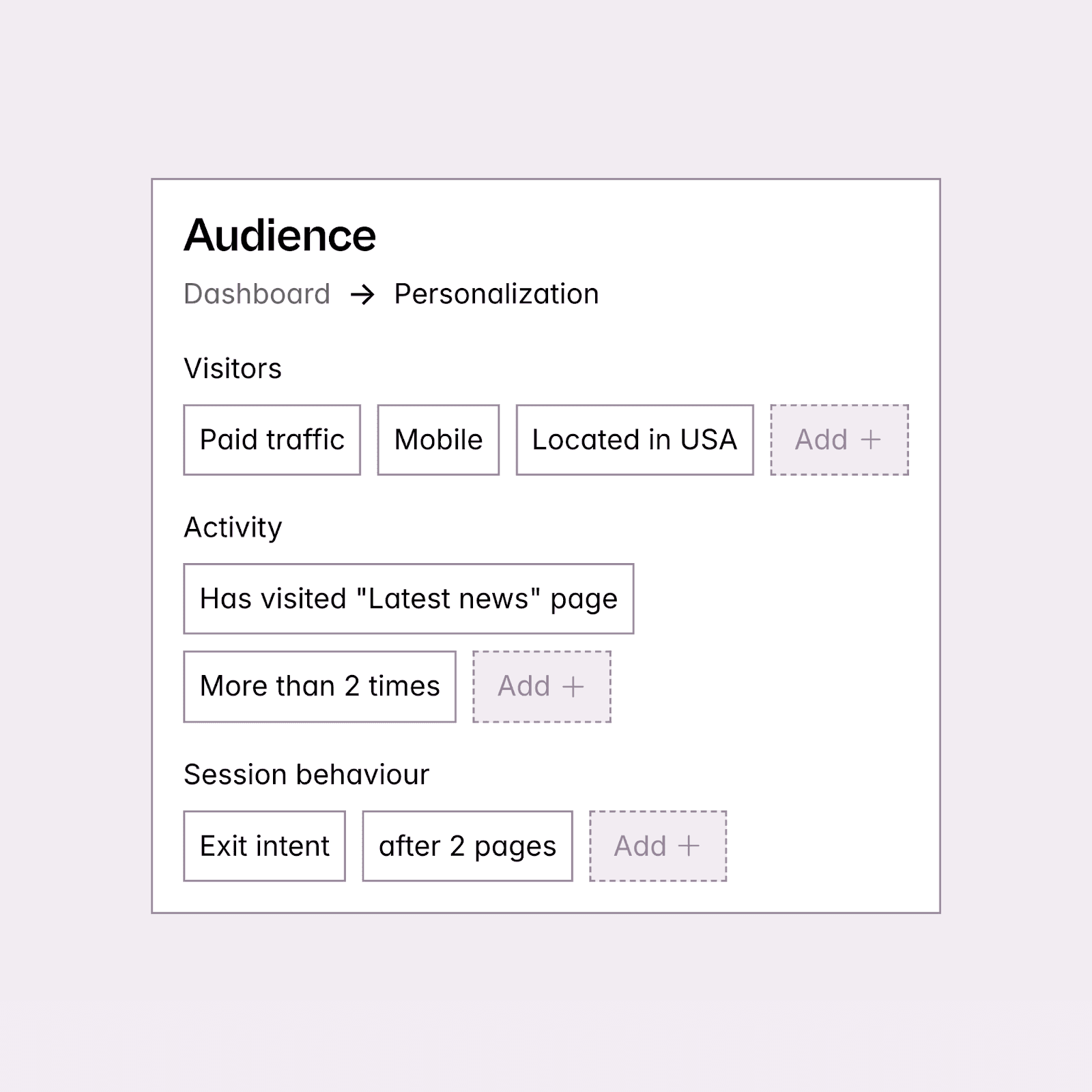
Industry-specific factors, such as product complexity, buyer intent, and price sensitivity, can significantly affect conversion rates for various e-commerce markets.
Product Complexity: Products requiring more research, like kitchen appliances, often have lower conversion rates. For UX specialists, simplifying product pages and improving navigation can help reduce friction.
Price Sensitivity: Price-sensitive markets, such as baby & child products, tend to have lower conversion rates unless paired with personalized promotions. Marketers can target this pain point by offering relevant discounts.
Customer Trust & Reputation: Luxury goods and high-end fashion require strong brand trust for higher conversion rates. Growth teams should focus on enhancing the brand experience through reviews and trusted content.
Traffic Source & Shopper Behavior: Conversion rates improve with targeted ad traffic. For marketers and retention teams, understanding past shopper behavior and ad source context helps align the experience to increase conversions.
Industry-Specific Buyer Intent: High-intent industries, like food & drink, see higher conversion rates due to immediate purchasing decisions. For growth marketers, aligning the user journey to match this intent is key to maximizing conversion.
Increase AOV and drive repeat purchases with Nudge’s AI Product Recommendations, which deliver dynamic product suggestions that correspond to shopper behavior, purchase history, and cart contents. For UX specialists and marketers, this ensures a hyper-relevant shopping experience, placing the right product recommendations across cart, PDPs, and checkout, ultimately increasing conversions and improving customer retention.
Following this, we’ll break down the average e-commerce conversion rates by device, so you can identify areas where mobile or desktop optimization is necessary.
Average E-Commerce Conversion Rates by Device
Device type plays a significant role in ecommerce conversion rates. Understanding how conversion rates vary by device is essential for UX specialists and marketers aiming to optimize the user experience across mobile, desktop, and tablet. Here’s how conversion rates break down by device for September 2025:
Tablet: 2.88%
Mobile: 2.72%
Desktop: 2.83%
Also Read: Understanding Landing Page Conversion Rates in 2025
5 Factors Influencing Conversion Rates by Device
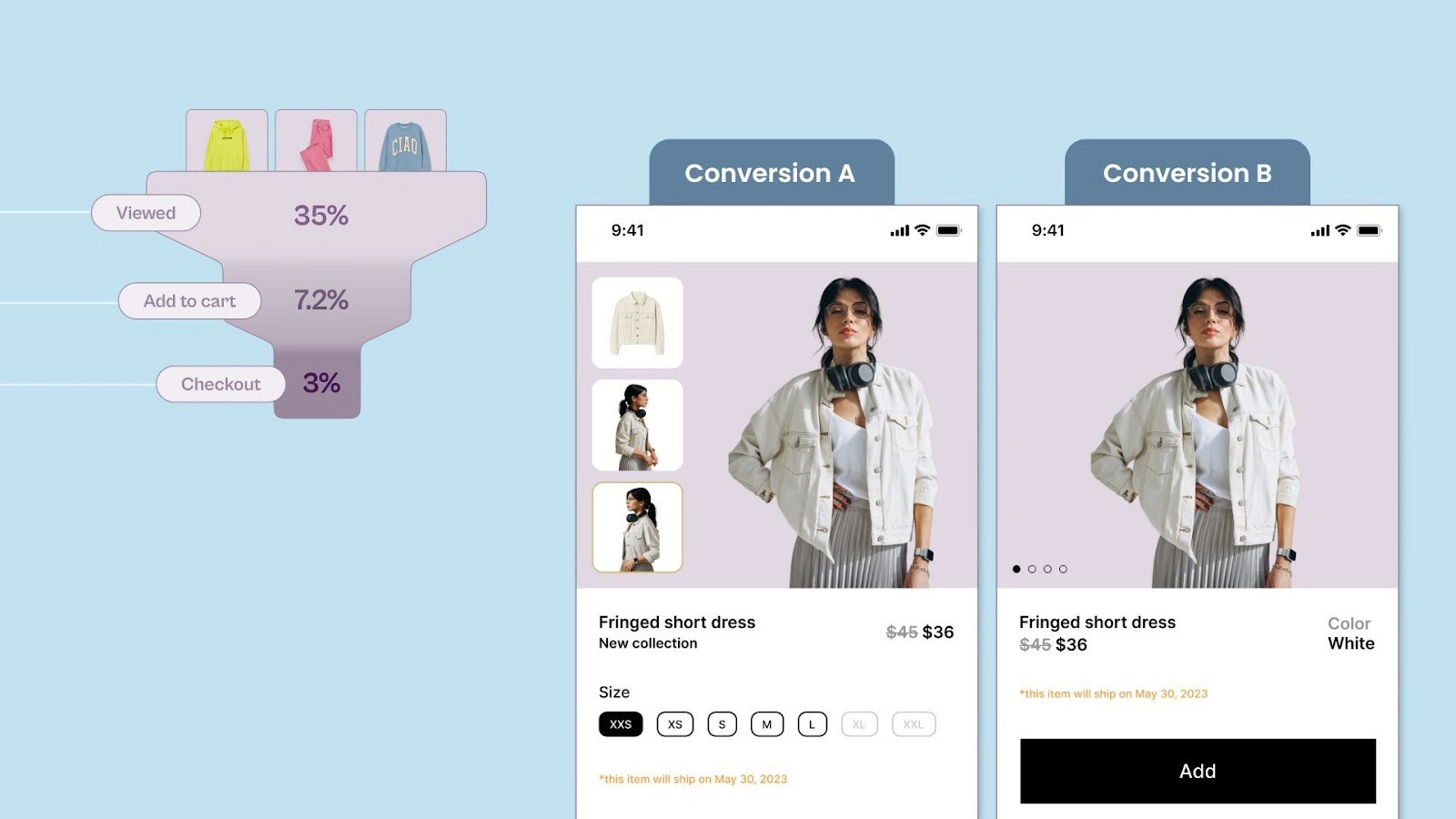
Device-specific behavior, optimization, and user experience can impact conversion rates, making it important to modify the experience for mobile and desktop users.
Mobile Optimization: Mobile users often convert faster with optimized, easy-to-use mobile sites. UX specialists must ensure seamless mobile navigation to improve ecommerce conversion rates for growth teams.
Device-Specific Behavior: Desktop shoppers typically spend more time researching before purchasing. Conversion specialists should optimize desktop pages with more detailed information and targeted product suggestions for better engagement.
Page Load Speed: Mobile shoppers are especially sensitive to slow load times. Growth teams should prioritize fast loading speeds across all devices to reduce bounce rates and improve conversion rates.
Ease of Navigation: Desktop users may tolerate more complex navigation. For UX teams, ensuring simple and clear paths to purchase on mobile can improve conversions for DTC brands.
Checkout Process: Mobile checkout can lead to cart abandonment. Marketers and conversion specialists should streamline the checkout process on mobile to make it easier and quicker for shoppers to complete purchases.
Now that we know the factors, let’s explore how to accurately calculate your conversion rate to measure your success.
How to Calculate a Conversion Rate?
Calculating your ecommerce conversion rate helps you understand how well your website converts visitors into customers. Here’s how you can calculate the conversion rate:
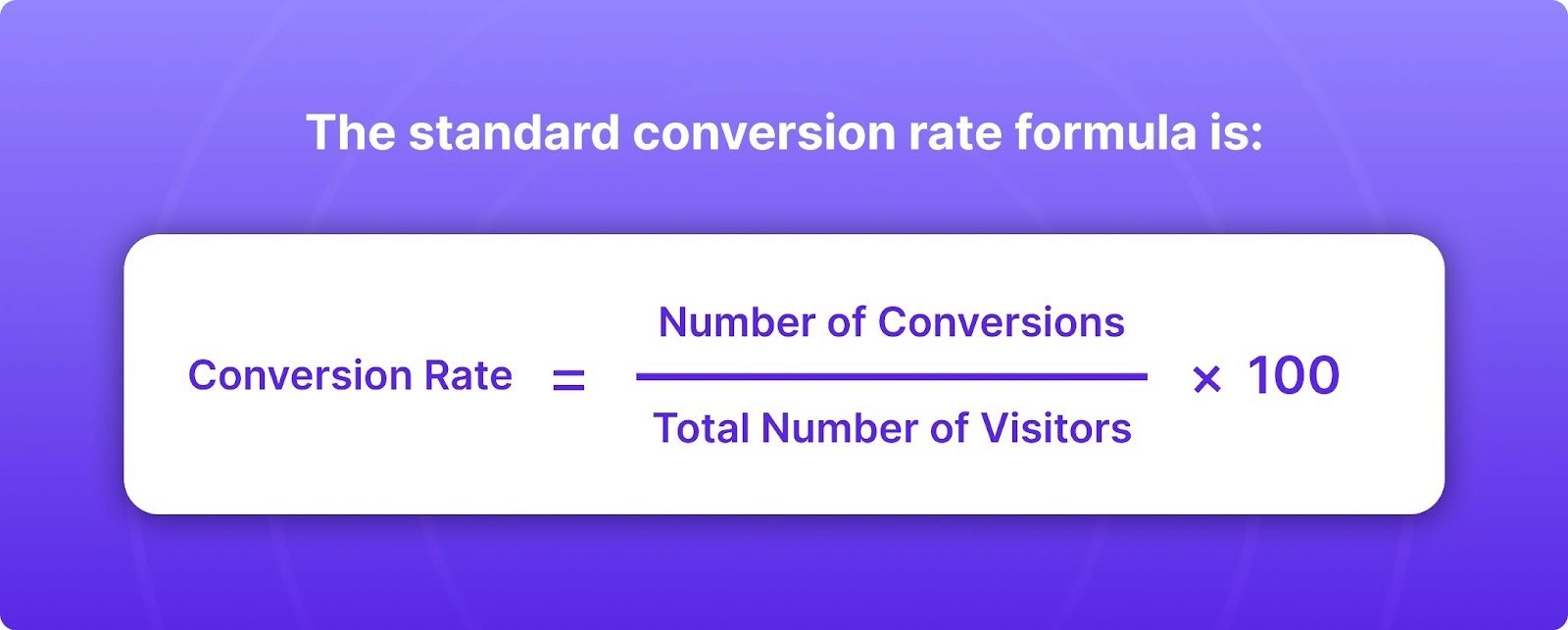
Formula:

Steps to Calculate:
Identify Total Conversions: Determine what counts as a conversion for your site (e.g., purchases, sign-ups).
Count the Visitors: Track how many people visited your site during the period you’re measuring.
Divide Conversions by Visitors: Calculate the ratio of visitors who completed a conversion to the total number of visitors.
Multiply by 100: To get the conversion rate percentage, multiply the result by 100.
Example:
Let’s say your website had 10,000 visitors and 500 purchases in a month. The conversion rate is calculated as:
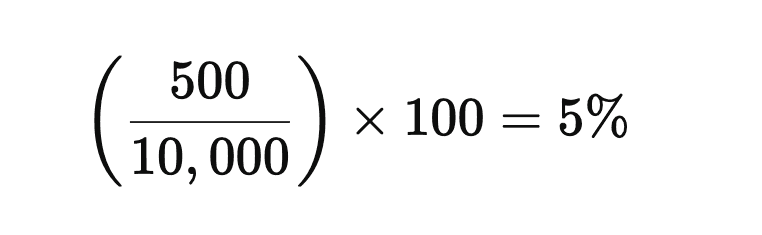
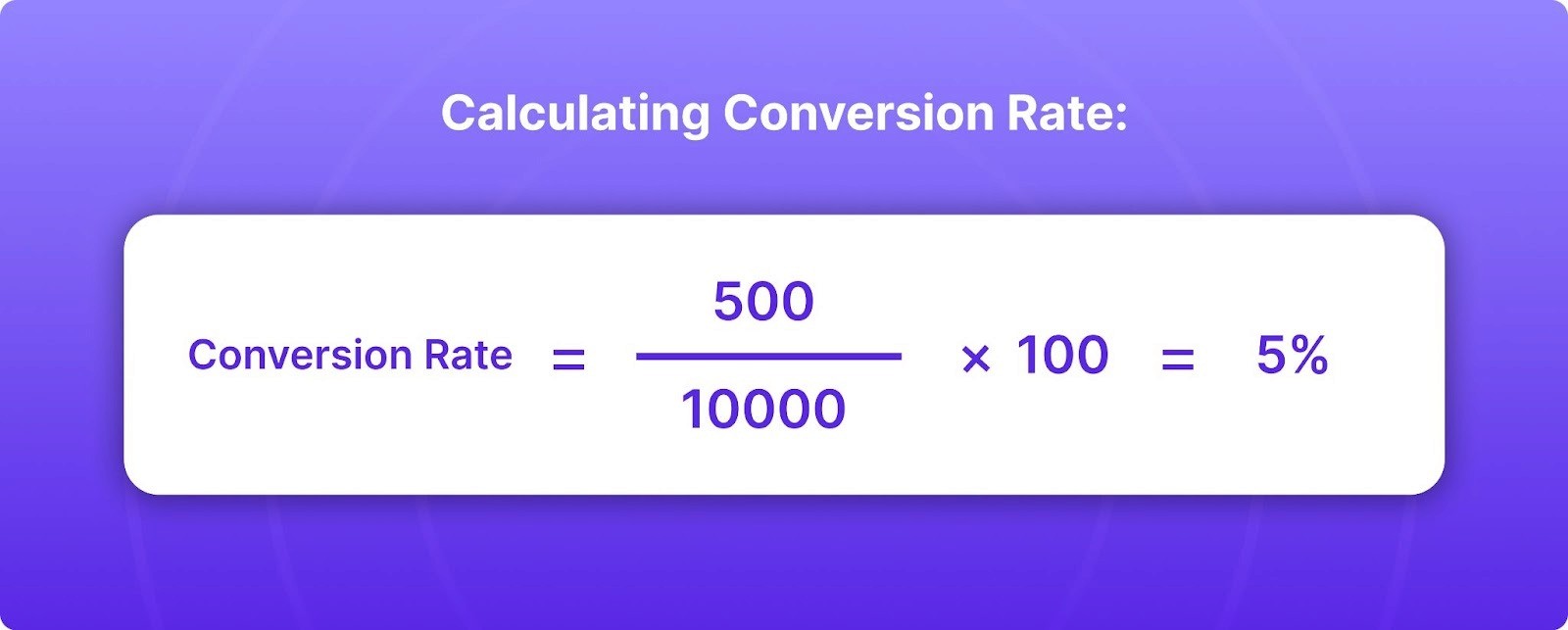
This means your ecommerce conversion rate is 5%, a solid benchmark for e-commerce stores.
Also Read: AI Guide to Conversion Rate Optimization
Next, we’ll explore key e-commerce benchmark metrics that can help you further measure and analyze conversion rates.
What Are Some E-Commerce Benchmark Metrics That Help Measure Conversion Rates?
Several additional metrics help measure the effectiveness of your conversion rate optimization strategies. Marketers and growth teams in high-growth DTC brands should track the following benchmarks:
Bounce Rate: A high bounce rate may indicate that landing pages are not engaging enough. A lower bounce rate means more visitors are interacting with your content.
Average Order Value (AOV): Measures the average amount spent per order. Increasing AOV through bundling or upselling increases revenue.
Also Read: Actionable Tips to Increase Checkout Conversion Rates
Click-Through Rate (CTR): Tracks how often visitors click on links within your website, indicating engagement levels and interest.
Customer Acquisition Cost (CAC): Measures how much it costs to acquire a new customer. Lowering CAC improves profitability and marketing ROI.
Cart Abandonment Rate: The percentage of customers who add products to their cart but don’t complete the purchase. A lower rate indicates better post-click engagement.
With Contextual Nudges, you can recover lost sales. Nudge trigger real-time messages, like exit-intent popups or urgency notifications, based on shopper behavior to guide them toward key actions. For lifecycle marketers managing post-click engagement, this feature ensures that no opportunity is missed, helping you turn hesitant visitors into loyal customers.

Finally, to further enhance your ecommerce conversion rates, let’s take a look at how Nudge can help optimize the entire customer journey.
Take Your E-Commerce Conversion Rates to the Next Level with Nudge
To drive higher e-commerce conversion rates, Nudge enables your team to create seamless, personalized shopping experiences at every stage of the funnel. As marketers and growth teams working for high-growth DTC brands, Nudge provides an easy-to-use, AI-powered platform that enables you to personalize landing pages, PDPs, and checkout flows without the need for coding, streamlining the process of improving conversion rates across your website.
Here’s how Nudge helps improve your ecommerce conversion rate:
Commerce Surfaces: Nudge's AI-powered landing pages dynamically personalize the entire shopping journey, from landing pages to checkout. By embedding personalized product grids, offers, and shoppable videos, marketers can ensure that customers see exactly what resonates with them, increasing engagement.
AI Product Recommendations: Nudge delivers smart product recommendations based on real-time shopper behavior, product affinities, and purchase history. Growth teams can use dynamic recommendations across cart, checkout, and even exit-intent flows to increase AOV, drive upsell opportunities, and improve customer satisfaction.
Contextual Nudges: With Nudge, you can launch personalized messages that prompt key actions based on real-time behavior like exit intent, scroll depth, and time on page. This allows UX and conversion specialists to deploy exit-intent popups or urgency nudges that recover abandoned carts and push customers towards conversion.
Cart Abandonment Recovery: Nudge triggers personalized offers and upsell nudges for customers who abandon their carts. By leading them to targeted landing pages that align with their previous shopping behavior, you recover lost sales, improve conversion rates, and drive higher customer retention.

Funnel Personalization: Nudge helps you personalize funnels, guiding customers from the moment they land on your site to checkout. If they arrive from an ad campaign or have specific browsing behaviors, marketers can ensure that their journey is seamless and optimized for conversion.
Bundling & Recommendations: Nudge’s dynamic bundling features allow you to offer smart product bundles that adapt to real-time shopper behavior and purchase history. This helps enhance AOV and increase basket size, driving better results from high-intent traffic and encouraging larger orders.
1-1 Personalization: Nudge delivers a unique experience for each shopper, using detailed behavioral insights. Marketers can personalize product recommendations, content, and offers, ensuring customers always see the most relevant options and feel a stronger connection to your brand.
No Dev Bottlenecks: Nudge’s no-code platform enables marketers to launch, test, and iterate without relying on developers. This freeing up of engineering time means faster experimentation, quicker updates to your website, and faster improvements to conversion rates.
Compounding Advantage: Nudge delivers more relevance, faster execution, and less manual effort, ensuring that personalized content is deployed at the exact moment when shopper attention is at its peak. This helps you drive engagement and conversion rates in real time.
Higher CVR, AOV, LTV & Lower CAC: With Nudge’s personalization, you drive stronger customer engagement, reduce drop-offs, and encourage repeat purchases, all while improving conversion rates and lowering customer acquisition costs (CAC).
Continuous Learning: Nudge’s AI model continuously learns from every interaction, adapting offers and product suggestions to future-proof your personalized experiences. This ensures your e-commerce site remains competitive and conversion-friendly, even as customer behaviors change.
Modular UI Elements: Nudge’s modular UI elements let you optimize images, content blocks, and layout dynamically, ensuring you can test and iterate quickly without code. This makes it easier to fine-tune your site for maximum conversions.
Nudge takes your ecommerce conversion rates to new heights by using real-time data, AI-driven personalization, and context-aware nudges. Start optimizing your shopper journey and watch your conversions soar.
Conclusion
Achieving a higher e-commerce conversion rate is essential for the growth of any online business, especially for marketers and growth teams at high-growth DTC brands. By optimizing each stage of the customer journey, from personalized landing pages and product detail pages (PDPs) to the checkout experience, your team can drive more conversions and enhance customer retention.
Monitoring industry benchmarks and device-specific performance and applying conversion rate optimization (CRO) techniques will ensure measurable success and continued growth for your business.
To take your conversion optimization even further, Nudge offers AI-powered features designed specifically for marketers and UX specialists focused on optimizing ecommerce conversion rates. With dynamic product recommendations, contextual nudges, and personalized landing pages, Nudge enables you to tailor every step of the customer journey, increasing engagement and improving retention.
Book a demo with Nudge and drive your conversion rates to new heights. Start today to maximize your website's potential.
FAQs
1. How do dynamic product recommendations affect ecommerce conversion rates?
Dynamic product recommendations improve relevance and engagement by suggesting products based on shopper behavior and affinities, resulting in higher conversion rates and increased AOV.
2. What role does funnel personalization play in improving conversion rates?
Funnel personalization aligns the shopping experience with user behavior, ensuring visitors receive relevant content, product suggestions, and offers, which drives conversions and reduces drop-offs.
3. How can cart abandonment recovery impact conversion rates?
Personalized cart abandonment strategies, such as targeted offers and exit-intent nudges, effectively recover lost sales by re-engaging customers and guiding them back to complete their purchase.
4. What device-specific strategies can maximize ecommerce conversion rates?
Optimizing mobile experiences with quick checkouts, alongside desktop strategies focusing on detailed product information, can improve conversion rates across both devices.
5. How do real-time contextual nudges increase conversions on ecommerce sites?
Real-time nudges, like urgency prompts and product recommendations, activate based on user behavior, enhancing engagement and prompting immediate action, leading to higher conversion rates.