Retention & Engagement
6 Top Retail Marketing Automation Tools to Increase E-commerce Sales
Explore the best retail marketing automation tools to improve sales, improve customer experience, and grow your e-commerce brand effectively.

Sakshi Gupta
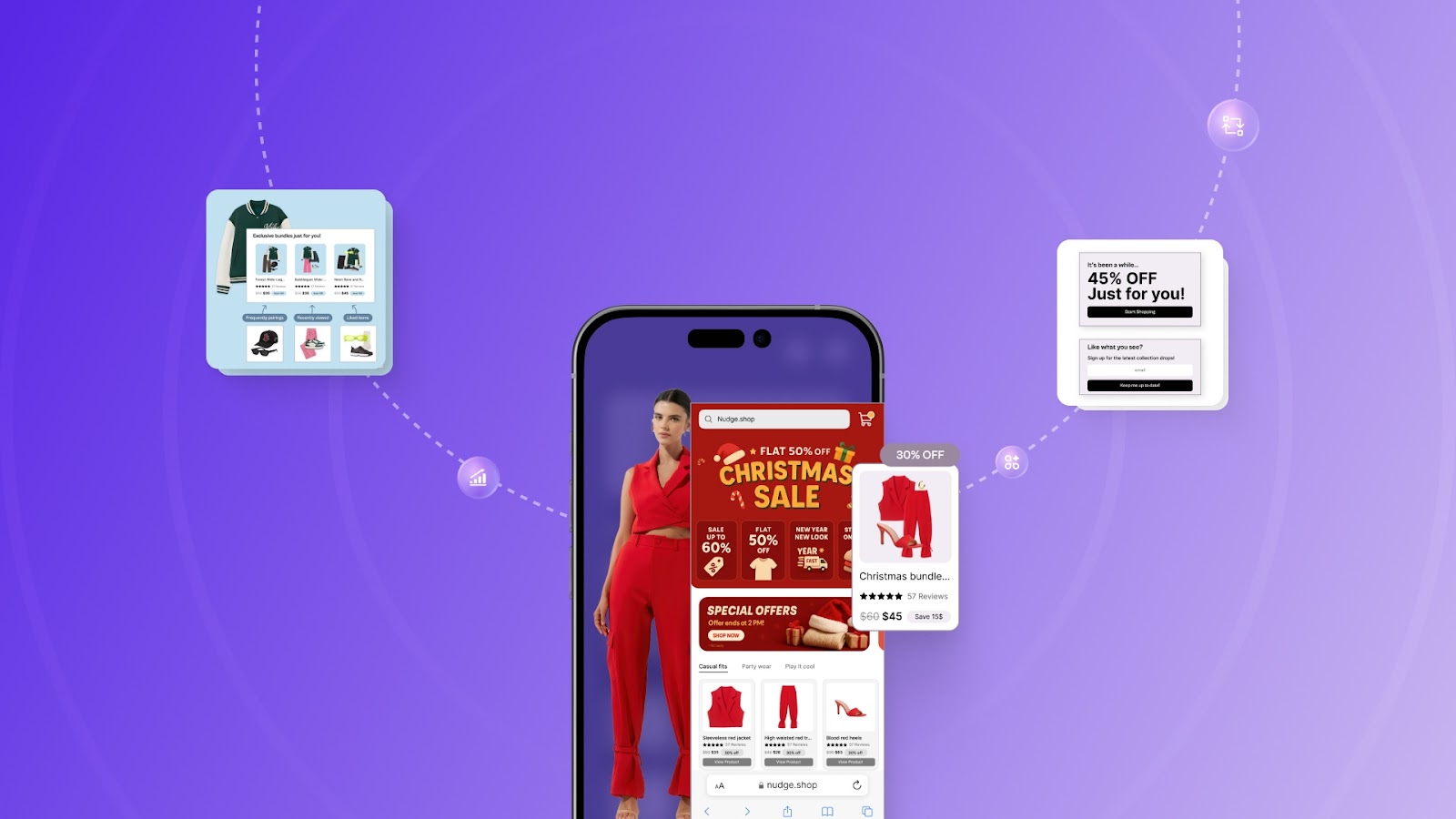





Many e-commerce shoppers leave before completing their purchases, leading to significant lost revenue. Recently, cart abandonment rates are projected around 70%, and even top-performing sites face a global average conversion rate of only 1.7%.
Retail marketing automation tools address this challenge by automating responses to shopper behavior. They personalize product recommendations, trigger context-aware messages, and streamline checkout flows based on real-time data.
By using these tools, brands can recover lost sales, improve average order value, and increase customer engagement. Automation also reduces manual workload for marketing teams, allowing them to focus on strategy rather than repetitive tasks.
This article highlights the top retail marketing automation tools that high-growth e-commerce and DTC brands can use to enhance shopper journeys, increase conversions, and drive measurable results.
Key Takeaways
Automation enables personalized experiences by adapting websites, product pages, and checkout flows to individual shopper behavior.
Understanding customer habits improves engagement and helps predict needs for higher conversions and repeat purchases.
AI-driven recommendations and contextual nudges improves results like average order value, retention, and click-through rates.
Cross-channel automation ensures consistent experiences across websites, apps, and other touchpoints without manual effort.
Data-driven insights support continuous optimization, enabling brands to test campaigns, layouts, and messaging in real time.
What Are Retail Marketing Automation Tools and How They Work?
Retail marketing automation tools are software platforms that help brands understand customer behavior and automate actions across their website or app.
They track what customers do, like which products they view, how often they add items to their cart, and what pages they leave. Using this data, these tools create personalized experiences in real time.
For example:
Behavioral Tracking: The tool records how users browse your site, which products they click on, and how long they spend on pages.
Automated Recommendations: Based on past behavior or current browsing, the tool suggests products customers are most likely to buy.
Contextual Messages: Pop-ups, banners, or prompts appear at the right time to guide users like showing a discount when someone hesitates at checkout.
Segmentation: Customers are grouped by habits, location, or preferences so messages and offers feel relevant.
Performance Insights: The tool provides data on which products, pages, or campaigns drive engagement, clicks, and sales.
These insights help brands see patterns in how customers behave, identify friction points, and make decisions to improve engagement and conversions.
For instance, if a product is frequently added to carts but rarely purchased, brands can adjust pricing, show reviews, or add urgency messages to increase sales.
Nudge is one of the top Retail Marketing Automation Tools that enables ecommerce and DTC brands to deliver personalization at scale.
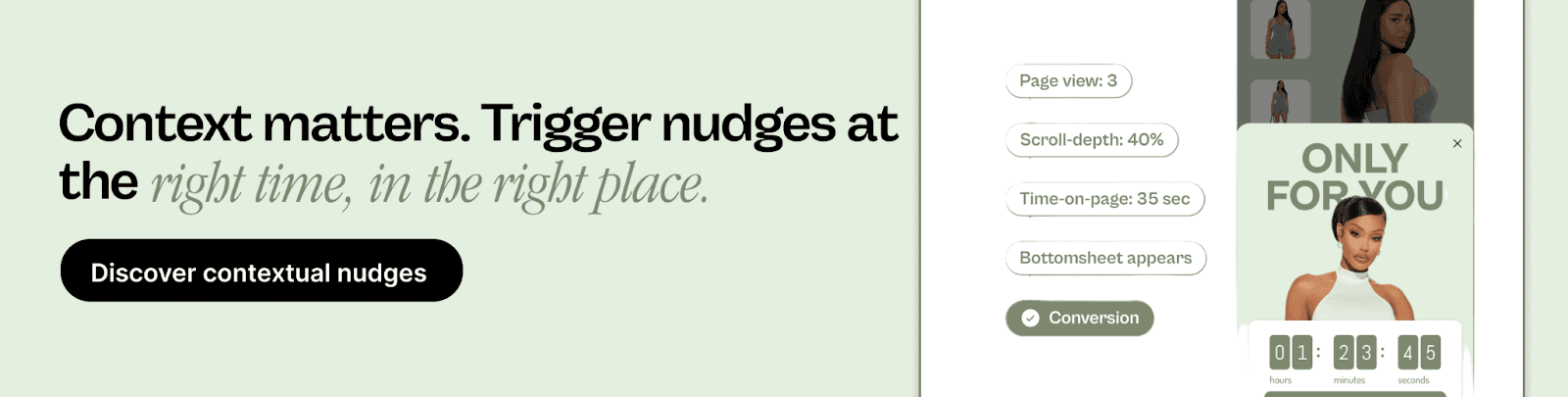
Using features like AI Product Recommendations and Contextual Nudges, Nudge analyzes shopper behavior on your site, including scroll depth, session activity, and purchase history, to deliver the right product suggestion or promotional message at the right moment.
With a clear understanding of their purpose, let’s look at the top retail marketing automation tools that high-growth brands rely on.
Top 6 Retail Marketing Automation Tools You Must Try
For high-growth ecommerce and DTC brands, staying ahead means delivering experiences that feel personal at every touchpoint. Customers expect content, offers, and product recommendations that match their interests and shopping behavior.
Marketing automation platforms make it possible to adapt pages, carts, and product journeys in real-time while reducing manual effort for your team.
Here are five marketing automation tools that leading retail brands rely on to increase engagement, conversions, and repeat purchases.
1. Nudge
Shoppers are more likely to engage when every page feels built just for them. Generic pages or one-size-fits-all recommendations often lead to lower conversion rates.
Nudge creates real-time personalized journeys across homepages, product listings, carts, and checkout pages. Every session adapts to shopper behavior, campaign source, and browsing intent.
Benefits:
Funnel personalization: Deliver content, offers, and reminders that match subscriber or shopper intent at every touchpoint.
Commerce Surfaces: Dynamic landing experiences with personalized grids, bundles, and interactive content enhance discovery and engagement.
AI Product Recommendations: Suggest complementary products or add-ons based on past purchases and behavior, improving satisfaction and average order value.
Contextual Nudges: Trigger behavior-based notifications to encourage renewals, highlight features, or recover abandoned carts.
No Dev Bottlenecks: Launch, test, and refine personalization quickly without engineering delays.
Continuous Learning: Insights from shopper behavior improve recommendations over time, keeping experiences relevant and future-proof.
Context Signals Including Location: Adapt offers and layouts based on device, location, or referral source for timely, relevant experiences.
Modular UI Elements: Dynamically optimize layouts, visuals, and content blocks to test and improve engagement continuously.
1-1 Personalization: Group customers by behavior, value, or loyalty to create highly relevant campaigns.
Funnel Personalization: Guide customers from discovery to repeat purchases with smart product bundles and offers.
Nudge deliver personalized AI product recommendations that adapt to each shopper’s behavior and preferences.
By customizing product suggestions and upsell bundles across PDPs, carts, and checkout, these tools create relevant shopping experiences and drive higher conversions.
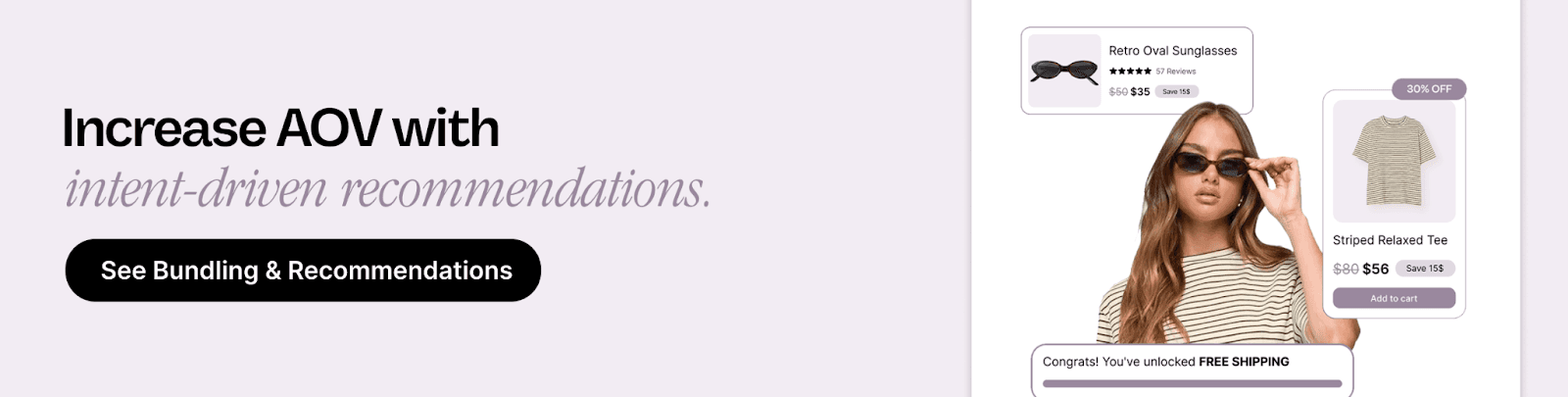
With Nudge, retailers create personalized experiences at scale, making every shopper interaction smarter, faster, and more profitable across all touchpoints.
2. Insider
Running campaigns across multiple channels without central coordination often leads to inconsistent messaging and missed opportunities.
Insider consolidates websites, mobile apps, push notifications, and messaging channels into a single automation platform. This lets marketing teams design cross-channel campaigns that respond to shopper behavior.
Benefits:
Automate customer journeys across web, app, and notifications in one platform.
Access a full view of shopper interactions and preferences in real-time.
Personalize content automatically at every touchpoint to improve engagement.
Brands like Adidas and Lexus use Insider to create seamless experiences that increase revenue while saving time.
3. Braze
Messages that arrive at the wrong time or feel irrelevant can frustrate shoppers and reduce engagement.
Braze focuses on sending context-driven messages across push notifications, and in-app channels. Campaigns are personalized based on browsing behavior, purchase history, and engagement patterns.
Benefits:
Multi-step campaigns guide shoppers through their journey with relevant content.
Behavior-based triggers ensure messages reach the right audience at the right time.
Brands maintain engagement and encourage repeat purchases through timely interactions.
Retailers such as Glossier and SoulCycle use Braze to keep shoppers engaged and increase loyalty.
Also Read: How to Start Onsite Personalization That Actually Drives Conversions
4. Salesforce Marketing Cloud
Retailers often struggle when customer data is spread across systems, making personalization slow and error-prone.
Salesforce Marketing Cloud brings customer data, campaign orchestration, and reporting together. Marketing teams can create campaigns that feel personal while tracking performance across channels.
Benefits:
Centralize data to understand shopper behavior and preferences.
Automate campaigns across push, and social media.
Manage loyalty programs and nurture long-term customer relationships.
Many large retail brands rely on Salesforce to drive engagement while improving efficiency and conversion rates.
5. Adobe Experience Cloud
Managing personalized campaigns at scale is challenging without a comprehensive platform.
Adobe Experience Cloud combines automation, personalization, testing, and content management to help teams deliver relevant experiences.
Benefits:
Marketo Engage automates lead nurturing, segmentation, and messaging.
Adobe Campaign orchestrates cross-channel campaigns to ensure consistency.
Adobe Target allows testing and personalization to optimize engagement and sales.
Retailers like Walgreens and Dick’s Sporting Goods use Adobe Experience Cloud to better understand shoppers, optimize buying journeys, and increase loyalty and revenue.
6. HubSpot Marketing Hub
Marketing teams often struggle to align workflows and automate campaigns while maintaining consistent personalization.
HubSpot Marketing Hub offers visual workflow automation for live chat, and on-site interactions.
Benefits:
Conditional workflows allow marketers to automate user actions effectively.
Integration with CRM and third-party tools enables seamless campaign execution.
Ensures consistent, timely communication that matches customer intent.
Brands use HubSpot to simplify automation, align marketing teams, and enhance the customer journey.
These tools enable retail brands to reduce manual effort, make every shopper interaction relevant, and grow engagement and sales at scale.
Also Read: How to Optimize Your Conversion Funnel for Success
Now that we know the tools, let’s explore practical examples of how retail marketing automation drives conversions.
5 Retail Marketing Automation Examples That Drive Conversions
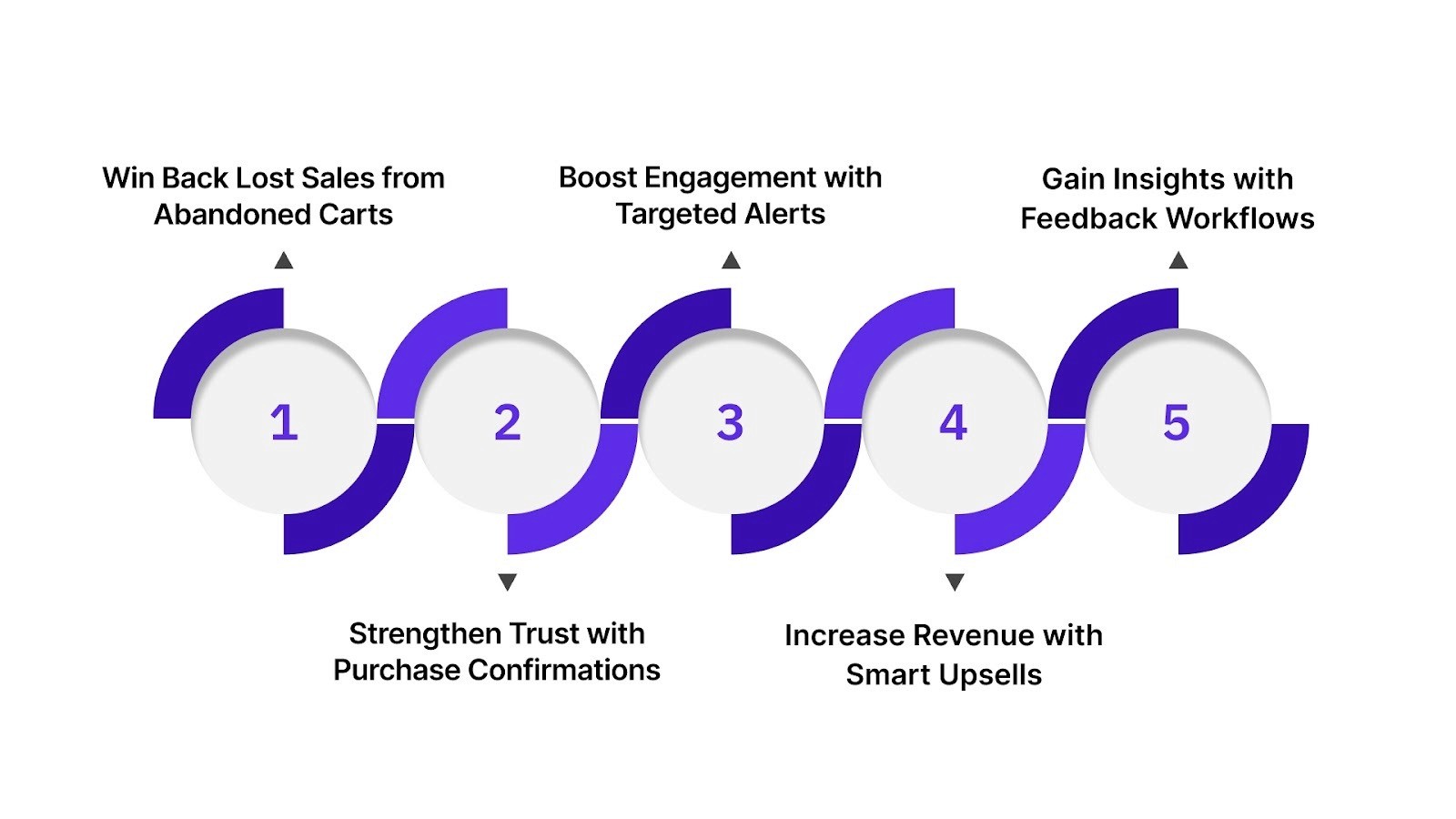
High-growth ecommerce and DTC brands often face the challenge of delivering personalized experiences to each shopper at scale while maintaining operational efficiency.
Traditional static funnels cannot adapt to real-time shopper behavior, which can result in missed revenue opportunities. Marketing automation solves this by ensuring that every shopper receives messages and offers tailored to their interests, timing, and intent.
The following five workflows show how automation can help brands maximize conversions, increase average order value, and strengthen customer lifetime value.
1. Win Back Lost Sales from Abandoned Carts
Cart abandonment is one of the biggest sources of lost revenue for online retailers. Automated workflows allow brands to identify shoppers who leave items in their carts and send relevant reminders that encourage them to complete their purchase.
How it works:
Personalized on-site banners or pop-ups appear for shoppers based on their browsing behavior.
Product recommendations can be included in notifications to increase the likelihood of purchase.
Multi-channel recovery campaigns are triggered through push notifications, in-app and messages.
Benefit: Shoppers receive timely and relevant prompts that guide them back to their carts, improving conversion rates and recapturing potential revenue.
2. Strengthen Trust with Purchase Confirmations
Transactional confirmations are more than just a notification, they are an opportunity to reinforce trust and encourage additional purchases. Automation ensures that confirmation messages are delivered consistently and across multiple channels.
How it works:
Messages are triggered immediately after a purchase is completed.
Delivery occurs via website banners, push notifications, or in-app messages, ensuring shoppers are informed promptly.
Follow-up communications can highlight complementary products or related offers.
Benefit: Shoppers feel confident in their purchase while brands create opportunities for additional conversions in the post-purchase phase.
Also Read: Why Calculating Customer Retention Rate is Critical for Your Business
3. Drive Engagement with Targeted Price and Stock Alerts
Shoppers are more likely to engage with offers that match their preferences and behavior. Automated workflows for price reductions and restocked products ensure that notifications reach the right shoppers at the right time.
How it works:
Individual shopper behavior and preferences are tracked in real-time.
Notifications are sent when previously viewed products are back in stock or when prices drop.
Alerts can be targeted to shoppers who are most likely to respond, improving efficiency.
Benefit: Timely, relevant alerts increase engagement and drive conversions without overspending on discounts or notifications.
Retail Marketing Automation Tools like Nudge help you create personalized shopping experiences for every customer. By using real-time data, you can suggest products, send timely messages, and simplify checkout. This increases engagement, increases sales, and encourages customers to return.
4. Improve Revenue with Smart Upsells and Cross-Sells
Upselling and cross-selling increase average order value and enhance long-term customer value. Automation enables these recommendations to appear at strategic points in the shopper journey, maximizing their impact.
How it works:
Related products are suggested on product pages, during checkout, or in the cart.
Follow-up messages can be scheduled days or weeks after a purchase to present new offers.
Recommendations are personalized based on prior browsing and purchase behavior.
Benefit: Shoppers are presented with products they are more likely to purchase, increasing revenue while maintaining a seamless and relevant experience.
5. Gather Valuable Insights with Feedback Workflows
Collecting shopper feedback is essential for refining personalization strategies and improving engagement. Automated workflows make it easy to gather zero- and first-party data without disrupting the shopping experience.
How it works:
Surveys and feedback forms are triggered after purchase or at key journey touchpoints.
Interactive survey formats allow shoppers to respond directly without leaving the page or app.
Insights collected are used to refine product recommendations, messaging, and overall shopper experience.
Benefit: Collecting feedback improves engagement, strengthens brand loyalty, and helps brands optimize future marketing efforts.
Even the best tools can underperform if challenges aren’t addressed. Recognizing these pitfalls ensures automation delivers results.
Retail Marketing Automation: Challenges and Best Practices
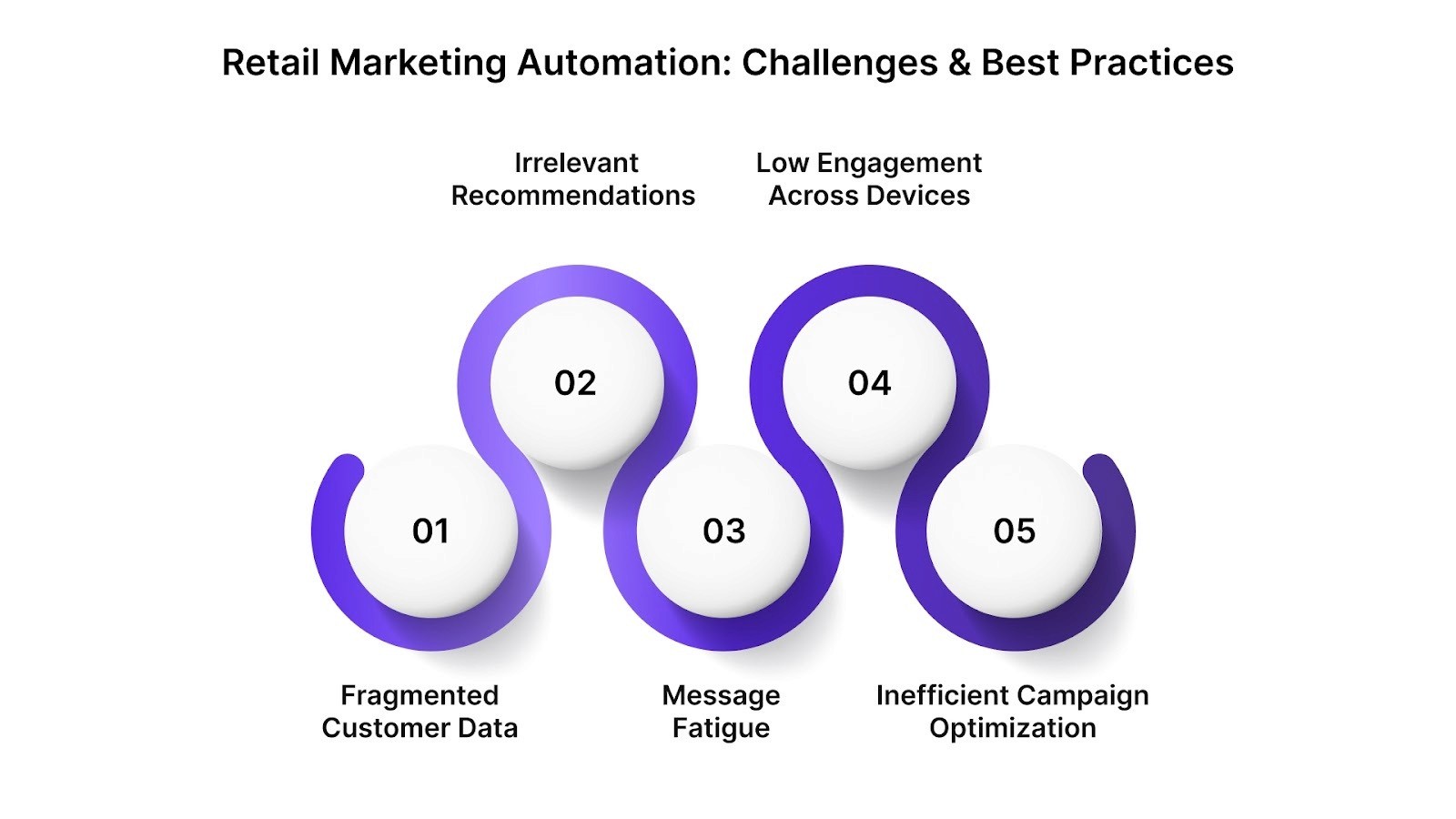
Even with the most advanced retail marketing automation tools, brands face hurdles that can limit engagement, conversions, and ROI. The key to success is recognizing these challenges and applying practical strategies to turn friction into opportunities.
1. Fragmented Customer Data
One major challenge is fragmented customer data. When information is scattered across platforms, personalization suffers and automation loses impact.
Best Practice:
Centralize data sources, creating unified customer profiles that allow AI to deliver personalized experiences across web, push, and in-app channels.
2. Irrelevant Recommendations
Another common issue is irrelevant product recommendations. Generic suggestions fail to resonate, lowering clicks and purchases.
Best Practice:
The solution is behavior-based personalization, use AI to recommend products in real-time, based on browsing patterns, purchase history, and context.
3. Message Fatigue
Retailers also struggle with message fatigue. Over-communicating or sending untimely notifications frustrates users and drives disengagement.
Best Practice:
To counter this, deploy contextual nudges that reach customers only when aligned with their habits, cart activity, or current browsing behavior.
4. Low Engagement Across Devices
A further challenge is inconsistent experiences across devices. Mobile, desktop, and app journeys often don’t match, leading to drop-offs.
Best Practice:
The best approach is to ensure omnichannel consistency, adapting campaigns and recommendations seamlessly across all touchpoints for a unified shopper journey.
5. Inefficient Campaign Optimization
Finally, many brands face inefficient campaign optimization. Without actionable insights, improving conversions or average order value becomes guesswork.
Best Practice:
The solution is continuous testing and analytics track funnel metrics, micro-conversions, and engagement patterns to refine campaigns and maximize ROI.
By addressing these challenges with smart, data-driven practices, retail brands can use automation to deliver personalized, timely, and high-converting experiences at scale, exactly what Nudge enables across every shopper journey.

Final Thoughts
Consumer habits shape every step of the retail journey, from product discovery to repeat purchases. These patterns provide a blueprint for using top retail marketing automation tools to create personalized, efficient experiences that drive real results.
Leading retailers know that aligning marketing campaigns, product recommendations, and offers with shopper behavior builds relationships that feel natural and valuable. When automation matches customer habits, conversions improve across category pages, product pages, and checkout flows.
Nudge helps modern shoppers expect experiences tailored to their preferences. Top retail marketing automation tools help you turn browsers into loyal customers across every touchpoint.
Book a demo today and see how these tools can transform your retail marketing strategy!
FAQs
1. What are retail marketing automation tools?
Retail marketing automation tools help businesses streamline repetitive marketing tasks, manage campaigns, and engage customers efficiently across multiple channels. They save time and improve targeting and personalization.
2. Why should retailers use marketing automation tools?
These tools enable retailers to deliver personalized promotions, track customer behavior, and optimize campaigns based on real data. The result is higher sales, stronger retention, and improved customer loyalty.
3. Which metrics should I track using marketing automation tools?
Track metrics such as conversion rate, customer engagement, average order value (AOV), and click rates, and ROI. Focus on metrics that directly impact revenue rather than vanity metrics.
4. Can I automate multiple channels at once?
Yes. Most retail marketing automation platforms support campaigns across social media, and push notifications, helping maintain consistent messaging across all touchpoints.
5. How can retail marketing automation tools improve customer engagement?
Marketing automation tools like Nudge enable you to deliver personalized experiences, trigger context‑specific nudges, and track shopper behaviour in real time. By automating these processes, you increase relevance and drive stronger engagement and retention.