AI Search Visibility
AI Platform Citation Patterns: How E-commerce Brands Get Referenced in 2026
Understand AI platform citation patterns and how they shape e-commerce conversion, trust, and on-site experiences across the homepage, PDP, and carts.

Sakshi Gupta
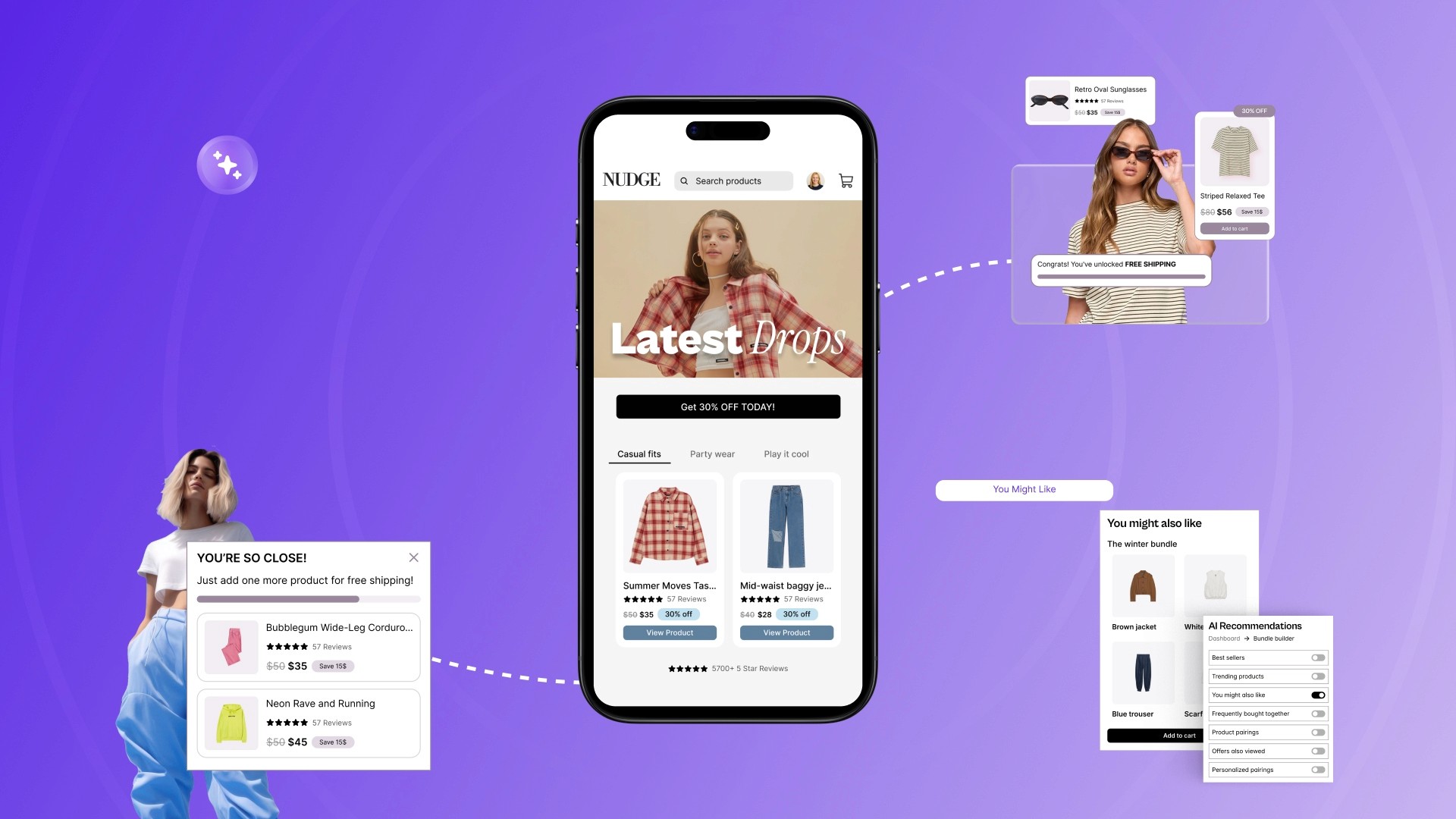





High-growth ecommerce teams are not short on traffic anymore. You are running TikTok, Google, and Meta at scale. Clicks are coming in. Yet conversion rates swing unpredictably, even when traffic quality looks solid. One reason is easy to miss. Shoppers increasingly start product discovery inside AI answers, not traditional search results.
When AI cites the wrong source or frames the problem differently, shoppers land on your site with expectations that your homepage, PDP, or cart does not confirm. That gap quietly hurts CVR, AOV, and trust.
This is where AI platform citation patterns matter. They describe how each AI engine consistently chooses, prioritizes, and presents sources. In this blog, you will learn how those patterns shape on-site experience outcomes and what you can do to align your e-commerce funnel with them.
Key Takeaways
AI citation patterns shape shopper expectations before they land, influencing conversion, trust, and decision speed.
Different AI platforms send shoppers with different intents, requiring adaptive on-site experiences.
Citation-ready pages act like references, using clear answers, proof, and strong, deep-page content.
Landing, PDP, and cart drop-offs often come from expectation mismatch, not poor traffic quality.
Nudge helps align on-site experiences with citation-driven intent in real time to lift CVR and AOV.
Why Citation Patterns Matter To E-Commerce Teams
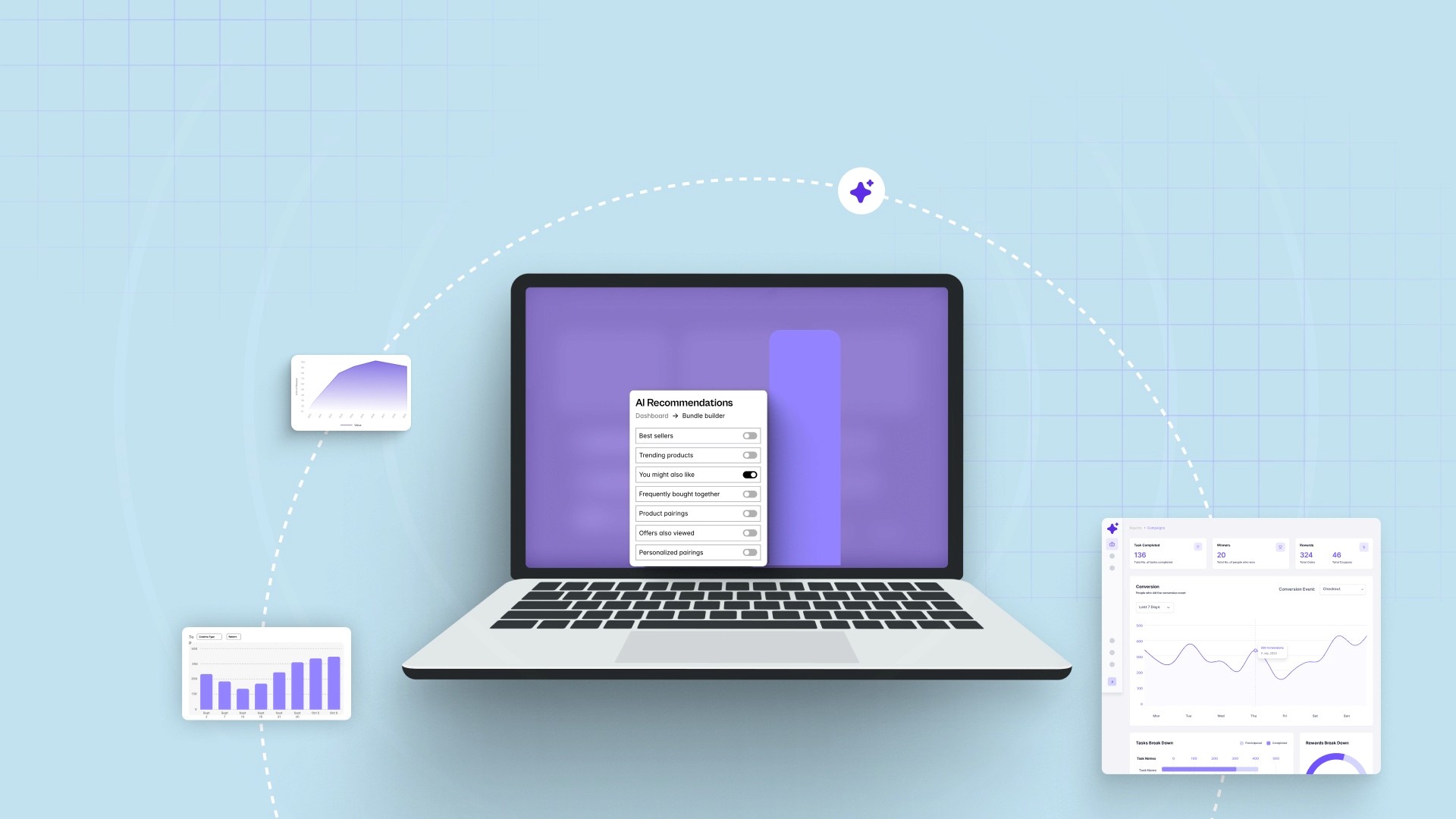
AI does not just send shoppers to your site. It shapes what they believe before they arrive. When a shopper reads an AI answer, they form expectations about price, quality, fit, delivery, and trust.
By the time they land on your homepage or PDP, their decision is already half-made. If your on-site experience does not confirm what the AI implied, friction starts immediately.
Below are the most common ways this shows up for high-growth ecommerce teams.
Landing Page Mismatch: You drive paid traffic, but shoppers bounce because your landing page does not match the comparison or recommendation they saw in an AI answer. For example, a “best carry-on bags” citation lands on a generic new arrivals grid.
PDP Trust Gaps: AI answers often send shoppers into research mode. If your PDP lacks clarity on fit, materials, use cases, or proof, hesitation increases and add-to-cart drops.
Cart Confidence Breakdown: When AI highlights pricing, delivery, or guarantees, any missing clarity on shipping, returns, or authenticity pushes shoppers to abandon.
This is where pre-click shaping matters. AI citations influence what shoppers think is true before they ever experience your Funnel Personalization.
To understand why these conversion gaps occur so consistently, it helps to define what AI platform citation patterns actually are and how they function.
What “AI Platform Citation Patterns” Actually Means
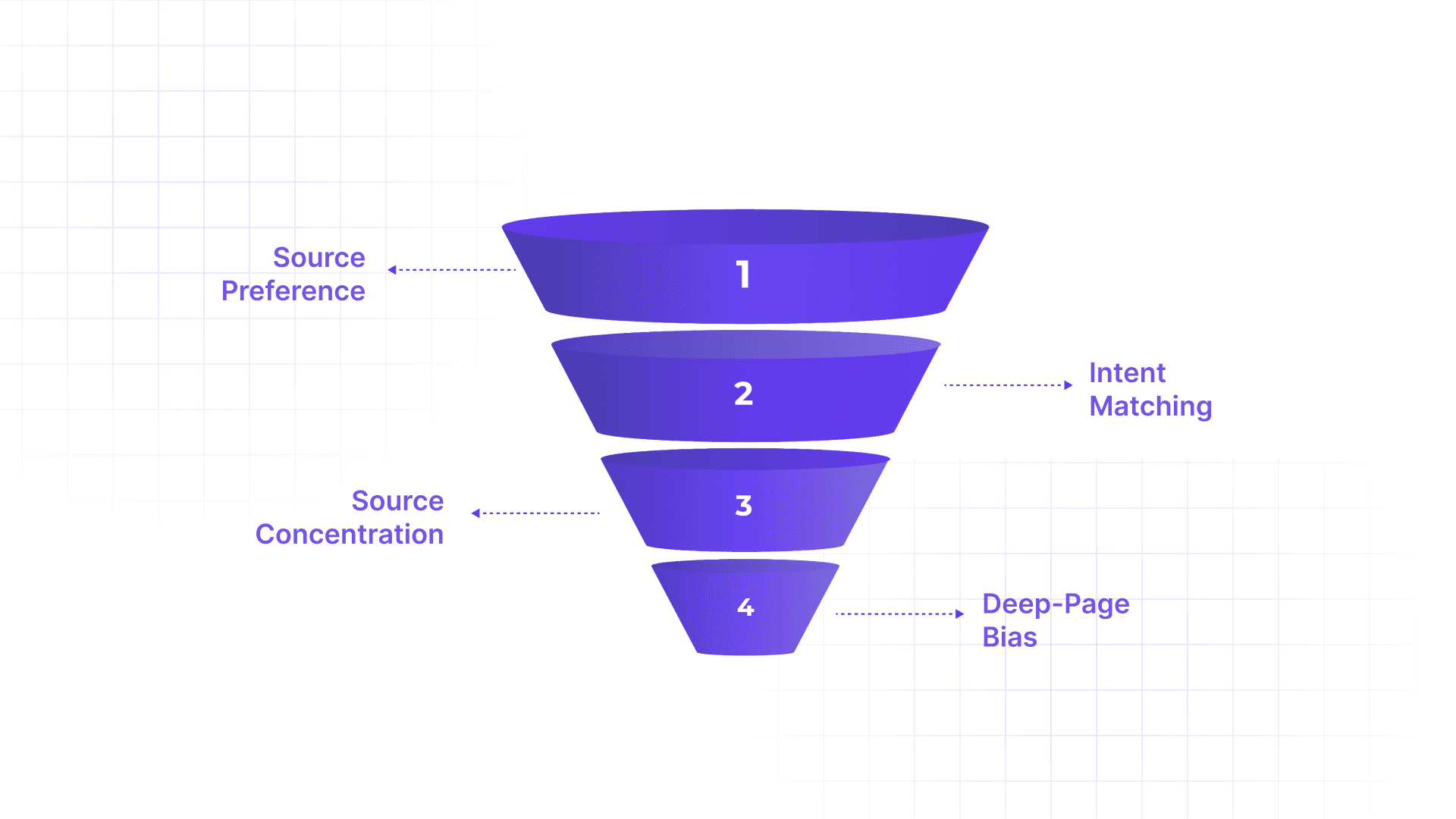
AI platform citation patterns describe how AI systems decide which sources to reference when answering a shopper’s question. For e-commerce teams, this is not about algorithms or models.
It is about understanding why certain pages, formats, and sites get surfaced while others are ignored, and how that affects what shoppers expect when they land on your site.
Below are the core patterns you need to understand to make this actionable for your website.
Source Preference: AI platforms do not treat all sites equally. Depending on the question, they may favor retailers, editorial content, UGC, or knowledge bases. This decides whether shoppers arrive expecting authority, comparison, or purchase readiness.
Intent Matching: Citation behavior changes based on intent. “Best” and comparison queries surface different sources than “deal” or “price” queries. If your pages do not align with intent, relevance drops before conversion even starts.
Source Concentration: Some platforms repeatedly cite a small set of trusted sources. Research shows heavy reliance on sources like Wikipedia in certain AI datasets, shaping how trust is formed before the click.
Deep-Page Bias: AI citations often point to category pages, guides, or PDPs instead of homepages. If your deep pages lack structure and clarity, you lose both citation value and conversion opportunity.
Most ranking content explains these patterns at a data level. What they miss is what “good” looks like for ecommerce page architecture and content blocks that turn citations into revenue.
Also Read: The Ultimate Guide to E-commerce Email Marketing Strategies
Once citation patterns are clearly defined, the next step is understanding how they differ across major AI platforms and why those differences matter for e-commerce funnels.
How Major AI Platforms Cite Sources Differently
Not all AI platforms answer questions the same way, and that difference matters for how shoppers arrive on your site. Each platform is optimized for a different user behavior, which shapes the types of sources it trusts and the context it provides before the click. If you treat all AI-driven traffic the same, you miss how expectations vary by platform.
Below is a practical breakdown of how the most common AI platforms approach citations, and what that means for your on-site experience strategy.
Google AI Overviews Tends to Cite “The Crowd”
Google AI Overviews are built for shoppers who are still figuring things out. When someone asks broad shopping questions, Google often surfaces summaries backed by editorial content, reviews, and community opinions instead of retailer pages.
If your on-site experience does not reinforce or clarify what they just read, trust erodes quickly, and comparison shopping continues.
Below is how this behavior shows up on your site and what you need to handle well.
Research-Led Entry Points: Shoppers arrive after reading summaries shaped by reviews and opinions. Your category pages must clearly restate who the product is for, why it performs well, and how it compares.
Proof Before Promotion: Editorial-heavy citations increase skepticism. PDPs should surface reviews, usage context, and actual validation before pushing offers.
Expectation Confirmation: If an AI answer highlights durability or value, your PDP and PLP must immediately confirm those claims to keep momentum.
This is how you turn research-mode traffic from Google AI Overviews into confident conversions.
ChatGPT Tends to Cite “The Store”
When shoppers use ChatGPT for shopping-related questions, they are often closer to making a decision. In these moments, ChatGPT is more likely to cite retailer websites and even specific product pages, especially when prompts are transactional or product-focused.
Below is how this behavior impacts your site and what you need to get right.
PDP As A Source Page: Your product page is treated as an answer, not an ad. It needs clear descriptions, unambiguous specs, and plain-language explanations that stand on their own.
Clarity Over Cleverness: Creative copy without substance hurts you here. Shoppers arriving from ChatGPT expect direct answers about use cases, fit, quality, and value.
Structured Product Information: Well-organized sections like features, materials, dimensions, care, and usage help both AI systems and shoppers understand the product faster.
Trust Signals Front And Center: Returns, shipping timelines, warranties, and authenticity cues must be easy to find. If ChatGPT cites your PDP, any missing trust detail creates doubt immediately.
Consistency Across Variants: If your PDP supports multiple variants, each option should feel equally complete. Incomplete variant information weakens confidence and slows decisions.
Decision Support Built In: Size guides, comparison callouts, and “who this is for” sections reduce hesitation for shoppers arriving with high intent.
This is where a strong PDP content blueprint does double duty. It supports AI citation accuracy while making it easier for high-intent shoppers to convert without second-guessing.
Perplexity And Others Often Lean Into Community Plus Experts
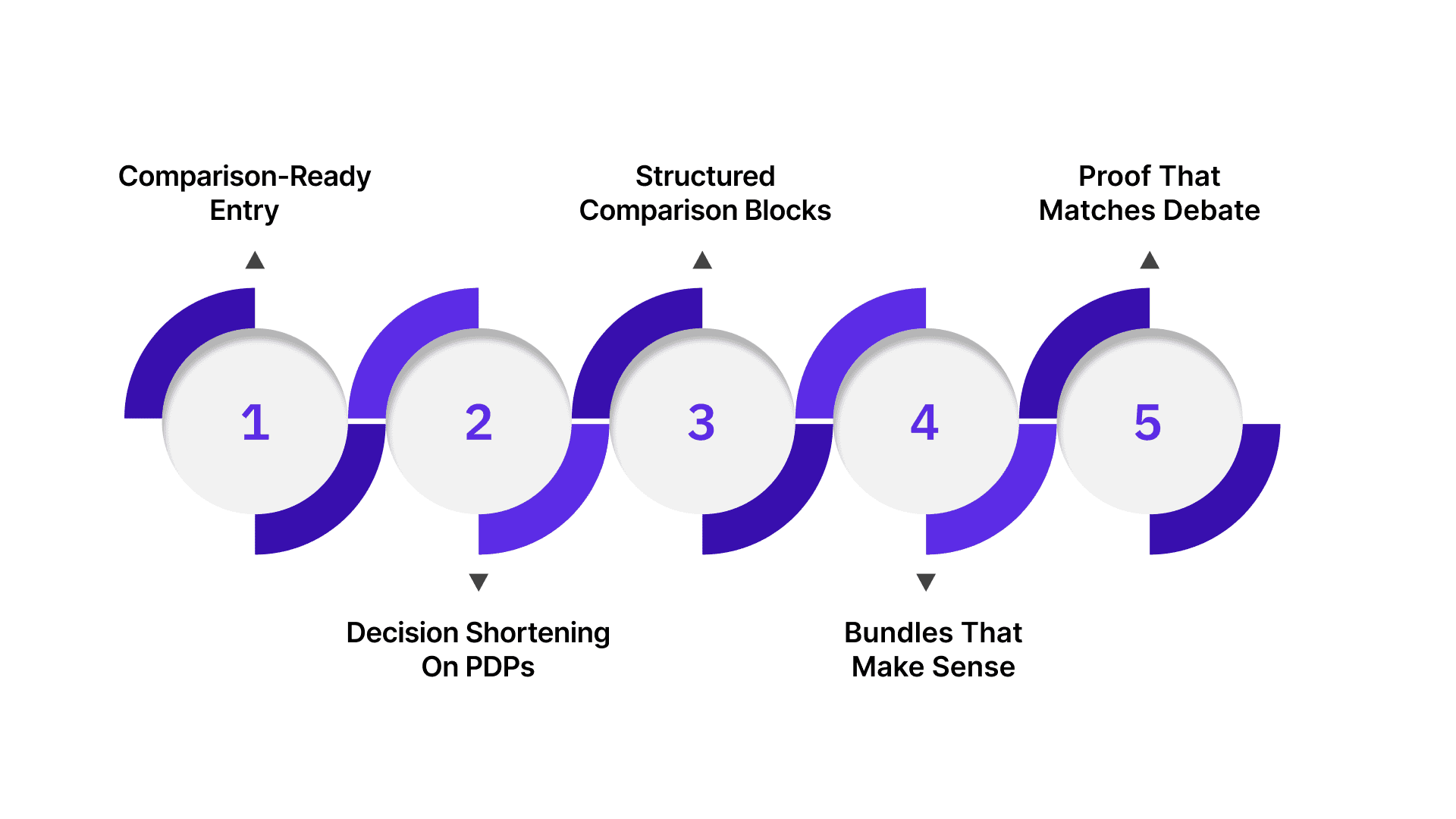
Platforms like Perplexity are designed for shoppers who want to evaluate options, not just find a single answer. These systems often blend expert commentary with community-driven sources, which means shoppers arrive on your site already comparing you against alternatives.
Below is how this behavior should shape your on-site experience.
Comparison-Ready Entry: Shoppers expect to see how products differ. Your PLPs should highlight key attributes like use case, price range, size, or performance without forcing deep clicks.
Decision Shortening On PDPs: Your PDP should answer “why this over others” clearly. Add sections that call out ideal user profiles, top differentiators, and common reasons shoppers choose this product.
Structured Comparison Blocks: Side-by-side comparisons for similar products reduce cognitive load. This is critical when shoppers arrive after reading expert or community debates.
Bundles That Make Sense: Community-driven citations often discuss complete solutions. Bundles help you meet that expectation while increasing AOV and simplifying choice.
Proof That Matches Debate: If expert or community sources highlight specific pros or cons, your PDP should address them directly through FAQs, reviews, or usage guidance.
Most ranking content stops at naming the domains Perplexity cites. The real advantage comes from designing PLPs and PDPs that help comparison-driven shoppers decide faster, not think longer.
Also Read: Proven Tips to Convert Leads Into Sales
Knowing how each platform cites sources raises a practical question for teams: what does a citation-ready ecommerce site actually need to look like?
The E-commerce “Citation Readiness” Model
Getting cited by AI platforms is not about chasing algorithms. It is about making your site behave like a reliable reference that also converts. AI systems look for pages that explain clearly, stay consistent, and reduce ambiguity.
Shoppers do the same. When your pages answer questions cleanly and support decisions without friction, citations become easier, and conversions follow naturally.
Below are the core elements that make an e-commerce site citation-ready and conversion-ready.
Answer Blocks: Include short, direct explanations on PLPs and PDPs that clearly state what the product is, who it is for, and why it works. These blocks help AI lift accurate context and help shoppers understand value fast.
Entity Clarity: Use consistent naming for products, collections, materials, sizes, and policies across your site. If your product names or attributes change by page, both AI and shoppers lose confidence.
Proof Blocks: Surface reviews, UGC summaries, return policies, and shipping clarity close to key decision points. This reinforces trust for shoppers arriving with research-driven expectations.
Inventory Alignment: Avoid letting AI cite pages that are outdated or out of stock. Keep category, guide, and PDP content aligned with what is actually available to buy.
Deep-Page Strength: Build content-rich category pages and guides, not just a strong homepage. AI often cites deep pages, and those pages must stand on their own.
For fashion, this means fit guidance, material details, and occasion-use sections on PDPs. For beauty, include skin type, routine placement, and ingredient callouts. For groceries, make delivery windows, substitution rules, and freshness cues impossible to miss. Most ranking explains citation data.
This framework shows you how to design pages that earn citations and turn them into revenue. When citation readiness is missing, the impact shows up directly in on-site behavior and funnel metrics, not just visibility.
How Citation Patterns Show Up as Conversion Problems On-Site
Citation patterns do not stop influencing the shopper once they land on your site. They quietly shape how each session behaves. When the expectations set by an AI answer are not confirmed on your pages, friction shows up immediately in your metrics.
You see higher bounce rates, shallow scroll depth, stalled PDP engagement, and sudden cart exits. These are not random drops. They are signals that the on-site experience is out of sync with what the shopper believed before clicking.
Below are the most common ways this misalignment appears across key pages in your funnel, and how to recognize it when it happens.
Landing Mismatch
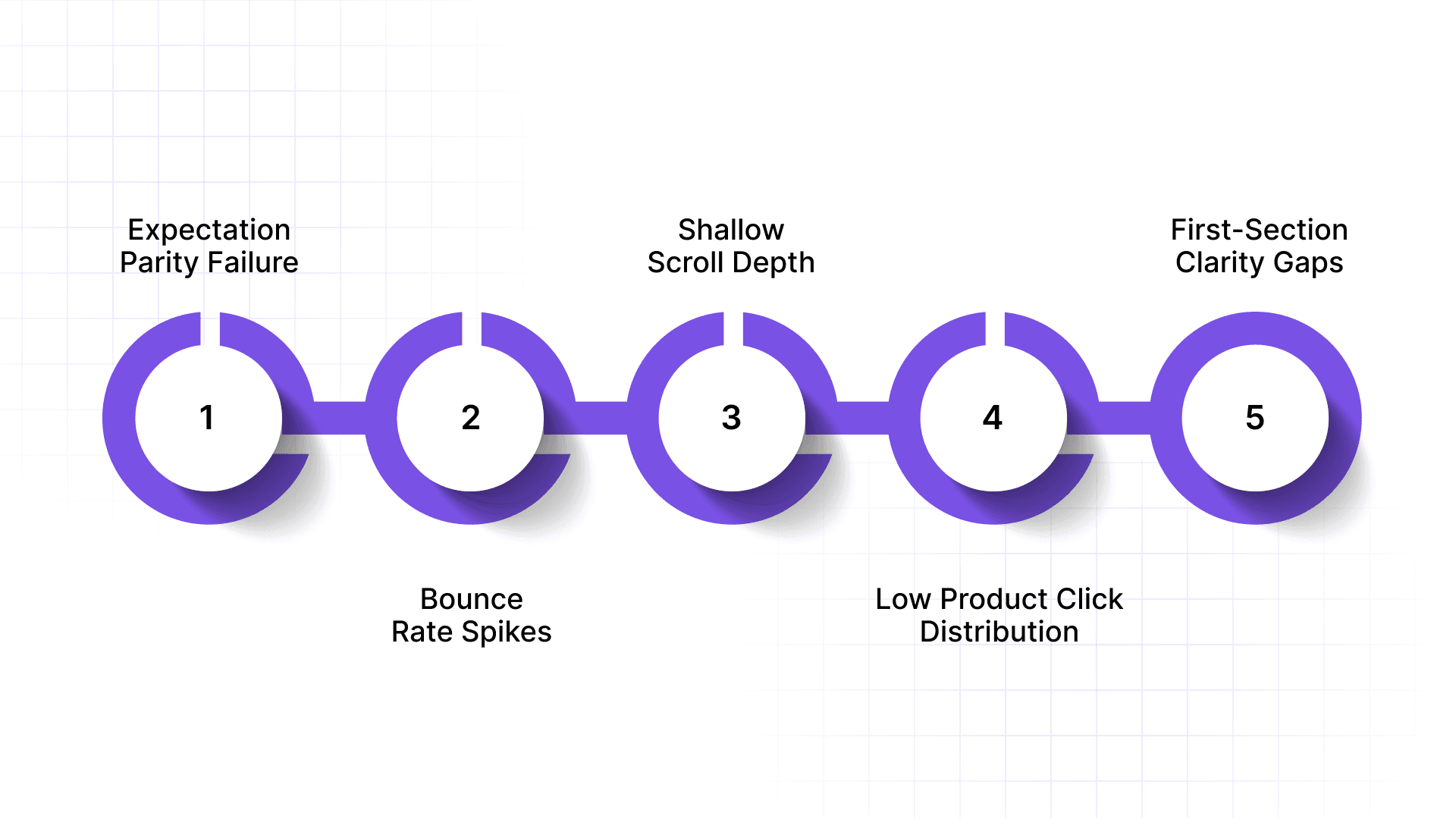
When a shopper clicks through from an AI answer, their expectations are already set. The landing page has about three seconds to confirm that the page matches what they just read. If it does not, they leave. This is one of the fastest and most expensive ways conversion leaks happen, especially for teams investing heavily in paid and AI-influenced traffic.
Below is how a landing mismatch shows up and how you can diagnose it.
Expectation Parity Failure: If an AI answer frames the problem as “best carry-on bags,” your landing page must immediately show comparisons or top picks. Showing generic new arrivals breaks trust.
Bounce Rate Spikes: A sudden increase in bounce rate from AI-driven or research-heavy traffic often signals that the landing page is not confirming intent.
Shallow Scroll Depth: When shoppers do not scroll past the first section, it usually means the opening content did not align with what they expected to see.
Low Product Click Distribution: If shoppers do not click into products from a category or landing page, it suggests they are still searching for relevance.
First-Section Clarity Gaps: Hero banners that focus on branding instead of answering the shopper’s question delay understanding and increase exits.

This is where expectation parity matters. The closer your landing page mirrors the AI-shaped narrative, the more likely the session moves forward instead of ending early.
PDP Doubt
When shoppers arrive from research-driven AI answers, they scrutinize product pages more closely. They are not browsing for inspiration. They are validating claims, checking suitability, and looking for reassurance before committing. If your PDP does not address the specific questions raised in the AI answer, doubt sets in and momentum stalls.
Below is how PDP doubt typically appears and how it affects conversion.
Missing Usage Context: If a shopper arrives from a “best retinol for beginners” answer, they expect guidance on how to use it, how often, and what results to expect. Without this, add-to-cart drops.
Unclear Suitability Signals: Research-mode shoppers look for clear indicators like skin type, experience level, or use case. Vague descriptions increase hesitation.
Buried Trust Information: When reviews, ingredient details, or safety notes are hard to find, shoppers pause or leave to verify elsewhere.
Overwhelming Copy Blocks: Long paragraphs without a scannable structure make it harder for shoppers to validate decisions quickly.
No Decision Reinforcement: If the PDP does not clearly restate why this product fits the shopper’s need, doubt replaces intent.
Reducing PDP doubt means designing product pages that answer research questions first, not just sell features.
Cart Hesitation
By the time a shopper reaches the cart, AI citations have already shaped what they expect to see next. Many AI answers highlight pricing ranges, free shipping, return windows, or guarantees as part of the recommendation. If those expectations are not clearly confirmed in the cart, hesitation creeps in fast.
Below is how citation-driven expectations surface as cart friction.
Pricing Confirmation Gaps: If an AI answer implies value or a deal, unexpected fees or unclear totals in the cart break trust immediately.
Shipping Uncertainty: Shoppers expect delivery timelines or free shipping cues to be visible. When shipping details are hidden or vague, exits increase.
Missing Guarantee Signals: Warranties, returns, or authenticity assurances referenced upstream must be visible in the cart to sustain confidence.
Last-Moment Comparison Behavior: When expectations are not confirmed, shoppers reopen tabs or return to AI tools instead of checking out.
Poor Timing Of Interventions: Well-placed Contextual Nudges can address hesitation in real time, while delayed or generic prompts feel intrusive.

When citation readiness is missing, the impact shows up directly in on-site behavior and funnel metrics, not just visibility.
What To Build On Your Site To Earn Citations And Conversions
Earning AI citations is not separate from converting traffic. The same on-site elements that help AI understand your pages also help shoppers decide faster. For high-growth ecommerce teams, the goal is to build pages that explain, reassure, and adapt without relying on constant developer support.
Below are the core on-site elements that support both visibility and conversion.
Answer-First Content Blocks: Add modular sections on PLPs and PDPs that clearly explain what the product is, who it is for, and when it makes sense to buy. These blocks should sit above heavy brand storytelling.
Dynamic Comparison Tables: For high-intent queries, structured comparisons help shoppers choose faster. Use them to highlight differences that matter, not every spec.
Trust And Policy Modules: Make shipping timelines, returns, authenticity, and guarantees visible near decision points instead of hiding them in footers.
Structured FAQs: Add clear FAQs at the category and product level to address common objections without forcing shoppers to search elsewhere.
Page Versioning Discipline: Keep key pages updated. Outdated offers, policies, or inventory details increase citation risk and kill trust.
For fashion, use occasion filters, a “why this bag” block, and care instructions. For retail, surface compatibility, sizing guides, and what is included. For groceries, clearly show delivery radius, substitution rules, and freshness standards.
Most ranking content pushes SEO tactics. This approach gives you a Commerce Surfaces build plan that marketers can execute without dev bottlenecks.
Also Read: Understanding Personalized Product Recommendation Engines
These building blocks come to life most clearly when applied to real shopper scenarios driven by different AI-generated queries.
Scenario Playbooks For High-Growth Ecommerce Brands
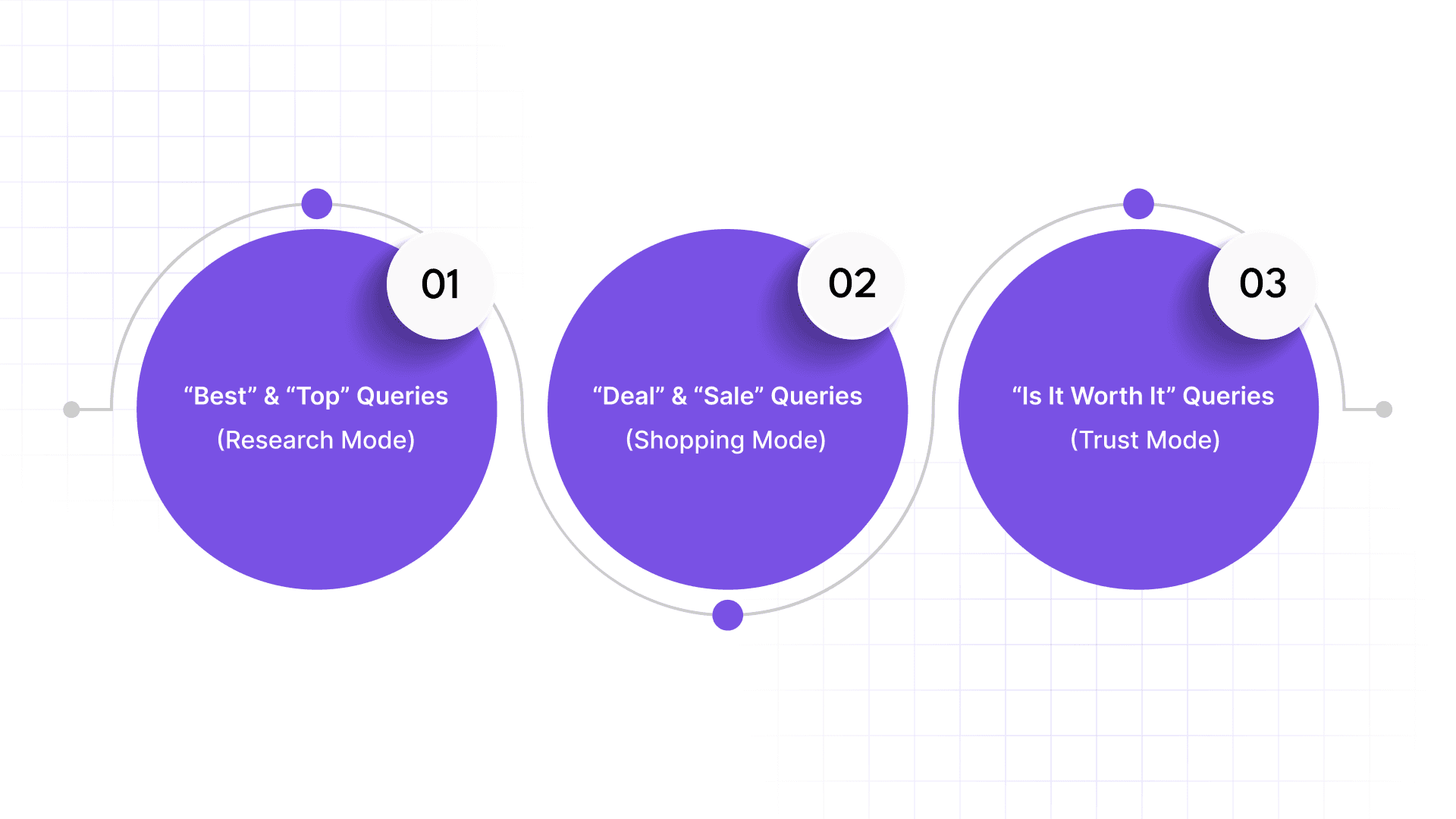
Understanding citation patterns only matters if you can apply them in real buying situations. Different AI-driven queries create different shopper mindsets when they land on your site. If your pages are not designed to support those mindsets, conversion slows or stops.
The playbooks below focus on the most common scenarios high-growth ecommerce brands see today and show how to respond on-site without adding complexity.
Below are three high-impact scenarios where aligning your experience to citation-driven intent makes the biggest difference.
Scenario 1: “Best” And “Top” Queries (Research Mode)
Shoppers arriving from “best” or “top” AI answers are not ready to buy yet. They are narrowing options and looking for clear reasons to choose one product over another. If your PLP or PDP does not support comparison, they will keep researching elsewhere. This is where many high-growth brands lose qualified traffic without realizing it.
Below is how to structure your on-site experience for research-mode queries.
Comparison-First PLPs: Your PLP should highlight top picks, price ranges, and use cases instead of a flat product grid.
Clear Decision Criteria: Surface why one product is better for work, travel, or daily use so shoppers can self-select quickly.
PDP Differentiation Blocks: Add sections that explain what makes this product stand out compared to similar options.
Scannable Proof Signals: Use reviews, ratings, and usage highlights that can be evaluated at a glance.
Easy Cross-Product Navigation: Let shoppers move between comparable products without starting over.
Most ranking content explains how AI platforms behave. This playbook shows you how to design PLPs and PDPs that turn research-mode traffic into confident next steps.
Scenario 2: “Deal” And “Sale” Queries (Shopping Mode)
Shoppers coming from “deal” or “sale” AI answers are closer to buying. They are price-aware and time-sensitive, but still cautious. AI platforms often frame these answers with context about value, availability, or urgency. If your deal pages are unclear or feel promotional without substance, trust drops and checkout slows.
Below is how to build deal experiences that support both citation and conversion.
Clear Deal Definition: State exactly what the deal is, who it applies to, and how long it lasts. Ambiguity kills momentum.
Price Context Up Front: Show original price, savings, and final price together so shoppers do not have to calculate value.
Trust Signals Near Pricing: Place shipping, returns, and guarantee details close to the deal to reduce last-minute doubt.
Editorial-Ready Explanations: Because Google AI Overviews may cite community and editorial sources, add short explanations that justify the deal beyond discounts.
Retailer-Grade Clarity: Since ChatGPT often cites retailer pages directly, ensure deal pages are complete, accurate, and easy to understand without extra clicks.
This approach helps your deal pages feel reliable, not rushed, which is exactly what shopping-mode traffic expects.
Scenario 3: “Is It Worth It” Queries (Trust Mode)
Shoppers arriving from “is it worth it” AI answers are deciding whether to trust the product at all. They are not comparing specs or hunting discounts. They are validating risk. If your page does not actively reduce doubt, they will hesitate, leave, or look for reassurance elsewhere. This is where emotional confidence matters as much as factual clarity.
Below is how to design proof modules that support trust-mode sessions.
Outcome-Focused Proof Blocks: Highlight real results and benefits shoppers care about, not just features. Show what changes after using the product.
Social Validation Summaries: Surface patterns from reviews like common praise, repeat purchases, or frequent use cases instead of raw review feeds.
Expectation Setting Sections: Clearly explain what the product is great for and what it is not. Honest framing builds credibility.
Risk Reversal Cues: Make returns, guarantees, and trial policies visible near the decision point to reduce fear of making the wrong choice.
Use-Case Confirmation: Add short sections that help shoppers recognize themselves, such as “best if you want” or “ideal for.”
When trust-mode shoppers feel understood and reassured, “worth it” turns into “add to cart” without extra persuasion.
Applying these playbooks consistently at scale requires more than static pages, which is where an adaptive experience layer becomes essential.
How Nudge Helps Teams Act On Citation Patterns
Understanding citation patterns only creates impact when your on-site experience adapts to them in real time. This is where most e-commerce teams get stuck. Expectations change by query, platform, and intent, but websites stay static. Nudge works as an experience layer that translates citation-driven intent into live, on-site changes across the funnel, without slowing marketers down or pulling in engineering.
Below is how each Nudge capability directly helps turn citation patterns into higher conversion outcomes.
AI Search Visibility: Monitors which products AI surfaces, highlighting gaps and optimization opportunities in real time.
Shoppable Funnels: Converts AI-driven discovery into simplified purchase paths aligned with shopper intent.
Product Experiences: Enhances product pages with adaptive recommendations, FAQs, and contextual nudges to improve AI interpretation.
This is how Nudge turns citation awareness into action, helping teams move from understanding AI behavior to shaping on-site experiences that convert consistently.
Conclusion
AI platform citation patterns are quietly reshaping how shoppers discover, evaluate, and trust ecommerce brands. The impact does not stop at visibility. It shows up in how confident shoppers feel when they land, how quickly they understand value, and whether they move forward or drop off.
This is where Nudge becomes a strategic advantage. By dynamically shaping Commerce Surfaces, activating Contextual Nudges, and refining AI Product Recommendations, Nudge helps teams turn AI-influenced traffic into consistent conversion gains without dev dependency.
If you want to see how Nudge helps align your homepage, PDPs, cart, and checkout with citation-driven intent in real time, book a demo and explore what adaptive ecommerce experiences look like in action.
FAQs
1. How do AI platforms decide which e-commerce brands to reference in answers?
AI platforms evaluate relevance, clarity, and trust signals. They favor pages that clearly explain products, policies, and use cases. Consistent information, strong proof signals, and well-structured content increase the likelihood of being referenced when shoppers ask buying or comparison questions.
2. Can small changes to product pages improve how AI systems interpret them?
Yes. Adding clear usage explanations, structured FAQs, consistent naming, and visible trust details helps AI systems understand your product better. These small changes reduce ambiguity, making your PDP easier to reference and more effective at converting high-intent shoppers.
3. Do AI citations influence buyer trust differently than traditional search results?
AI citations often feel more authoritative because they appear as direct answers, not lists of options. Shoppers may trust the cited source faster, which raises expectations. If your site confirms that trust quickly, conversion improves. If not, doubt increases faster than with traditional search.
4. How often do AI platforms update the sources they cite for shopping queries?
Update frequency varies by platform, but many AI systems continuously retrain or refresh data. This means outdated pages can remain cited longer than expected. Keeping key pages accurate and current reduces the risk of mismatched expectations and lost trust from AI-driven traffic.
5. Are AI citations more influenced by content structure or brand authority?
Both matter, but structure often wins for shopping queries. Clear headings, concise explanations, and consistent entities help AI extract meaning. Brand authority supports trust, but poorly structured content from strong brands can still lose citations to clearer, more focused pages.