Product & Features
How AI Is Redefining Search, Discovery, and Ecommerce Growth in 2026?
Ecommerce growth stalls with old SEO. See how AI search is rewriting shopping discovery to deliver intent, context, and real-time relevance.

Gaurav Rawat
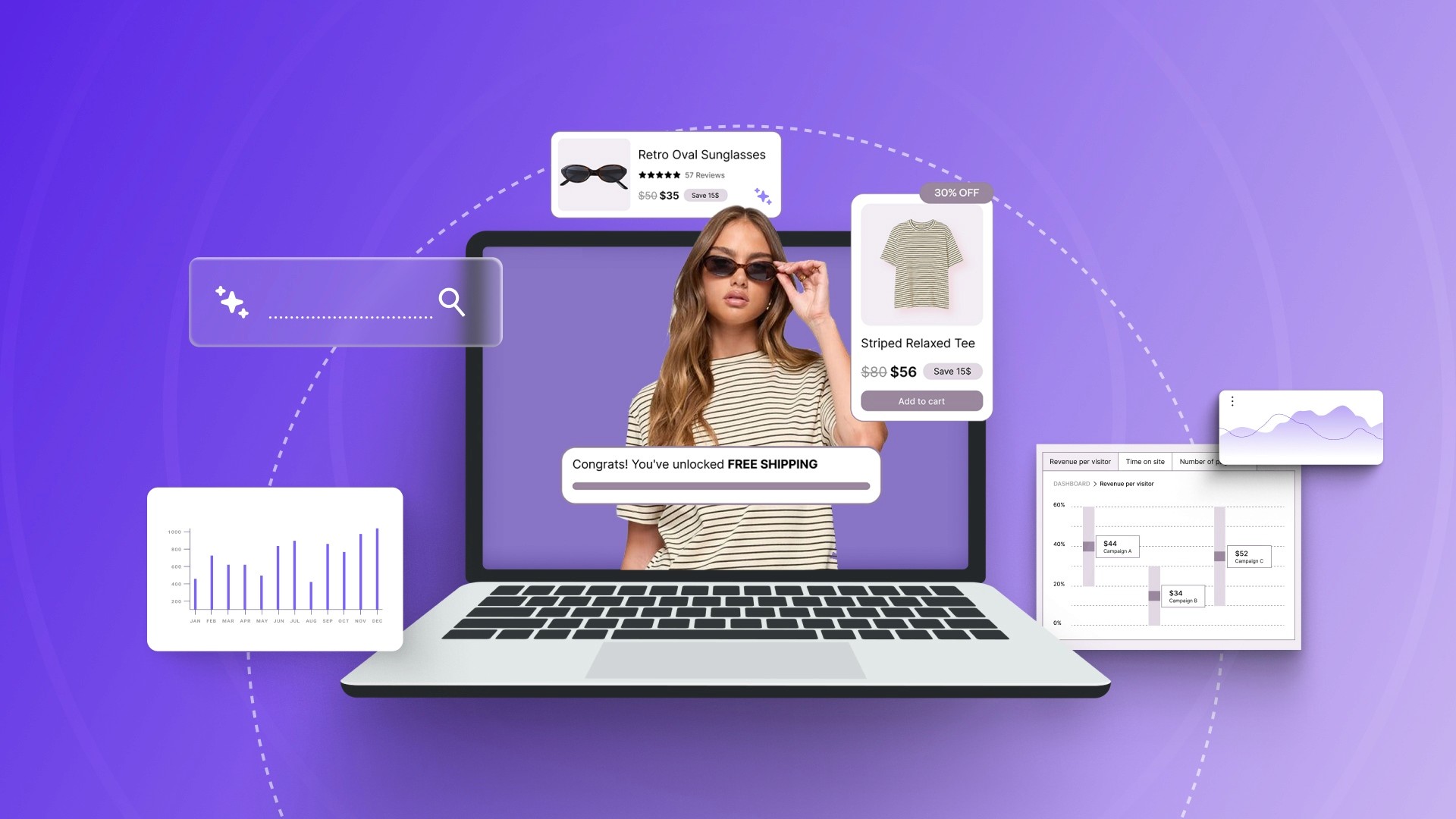





Online shopping has changed a lot in the past few years. Shoppers no longer just type in a search box and scroll through results. Instead, they expect relevant products to appear automatically, based on what they like, what they have bought before, and how they behave on a site.
AI is now playing a big role in shaping these experiences. In fact, 60% of shoppers use AI-driven recommendations, and 71% want shopping experiences to be personalized to their needs. This shows that personalization and context are what drive real engagement and sales.
In this blog, we will discuss how AI search is rewriting shopping discovery and how ecommerce brands can use it to grow.
Key Takeaways
AI now drives discovery across every touchpoint, showing the right products and offers before shoppers actively search.
Traditional keyword SEO and static pages fail to capture intent, making real-time relevance and context essential for conversions.
Personalized product ordering, dynamic bundles, and shoppable funnels turn every interaction, from landing pages to checkout, into a potential purchase.
Continuous learning from shopper behavior and campaign context allows AI to adapt experiences instantly. This helps in improving engagement, AOV, and repeat purchases.
Brands that implement adaptive, intent-led ecommerce systems outbeat others by converting discovery into measurable growth, not just traffic.
What is AI Search in Shopping Discovery?
AI search in shopping discovery refers to how ecommerce platforms use machine learning to understand shopper intent and surface relevant products before a customer actively searches. By analyzing signals such as browsing behavior, past purchases, location, and real-time interactions, AI predicts what a shopper is most likely to want next.
This allows products, collections, and offers to appear contextually across the shopping journey, on homepages, category pages, and carts, making discovery faster, more relevant, and more intuitive.
To understand why discovery looks so different today, we need to look at how search itself has fundamentally changed.
Also Read: Top 10 AEO Tools for 2026 Marketers
The End of Traditional Search and the Rise of AI-Driven Commerce Discovery
Ecommerce search has scaled. Shoppers no longer rely solely on typing keywords and scrolling through results. Today, AI predicts what they want, often before they actively look for it. Discovery has shifted from reactive search to proactive, intent-driven experiences that guide shoppers toward the products they need in real time.
Why the “Search Box” Is No Longer the Starting Point for Ecommerce
Most ecommerce journeys no longer begin with a typed query. Instead, clicks, browsing patterns, past purchases, and on-site behavior signal intent, which AI uses to surface products even before a shopper types a word.
Product discovery now happens across multiple entry points:
AI-driven recommendation layers
Personalized homepages and landing pages
Social and ad-driven entry points
Contextual product modules within PDPs and carts
Shoppers respond to these intelligently curated experiences instead of relying on traditional search.
From Keywords to Contextual Commerce Intelligence
Modern ecommerce platforms go beyond keywords. AI understands commercial intent by analyzing:
Browsing and purchase history across sessions
Product and category affinities
Real-time behavior such as scroll depth, dwell time, and cart actions
Traffic source, campaign context, and device signals
This approach shifts the focus from linear search paths to a more dynamic, context-driven shopper journey. Up next, let’s explore what the new ecommerce discovery funnel looks like.

What Is The New Ecommerce Discovery Funnel?
The traditional funnel, search, browse, compare, and purchase no longer reflects how shoppers actually buy. Discovery, evaluation, and conversion collapse into a single, fluid experience driven by AI and real-time context in modern ecommerce.
From Search → Suggestion → Decision
AI now inserts products directly into moments of intent rather than waiting for shoppers to search. Discovery happens through personalized product cards, recommended collections, and dynamically ranked PDPs; often before a shopper consciously begins browsing.
Instead of typing queries, shoppers encounter:
Product recommendations triggered by ad source or campaign context
Auto-curated collections based on browsing or purchase history
AI-driven suggestions embedded within PDPs, carts, and checkout flows
The result is a compressed decision window where intent turns into action in seconds, not sessions.
Discovery Extends to Every Shopper Interaction
Discovery now is no longer confined to a homepage or search results page. It happens wherever the shopper enters the funnel.
AI turns every touchpoint into a discovery surface, including:
Paid ad landings that dynamically adapt content and products
Category and product pages personalized in real time
Cart and checkout experiences that surface complementary or higher-intent items
Your “homepage” is no longer a single URL; it’s every surface where a shopper interacts with your brand. Each interaction must be capable of understanding context, predicting intent, and presenting the most relevant next action.
For ecommerce brands, discovery is an always-on system that operates across the entire journey, shaping what shoppers see, consider, and buy in real time. Now, let’s look at why the old playbook can’t support this shift.
Why Traditional SEO and Static Pages Are No Longer Enough?
Ranking on page one no longer guarantees visibility, let alone revenue. In an AI-driven space, being “searchable” isn’t the same as being selected. Here are some of the major reasons why traditional seo and static pages fall short:
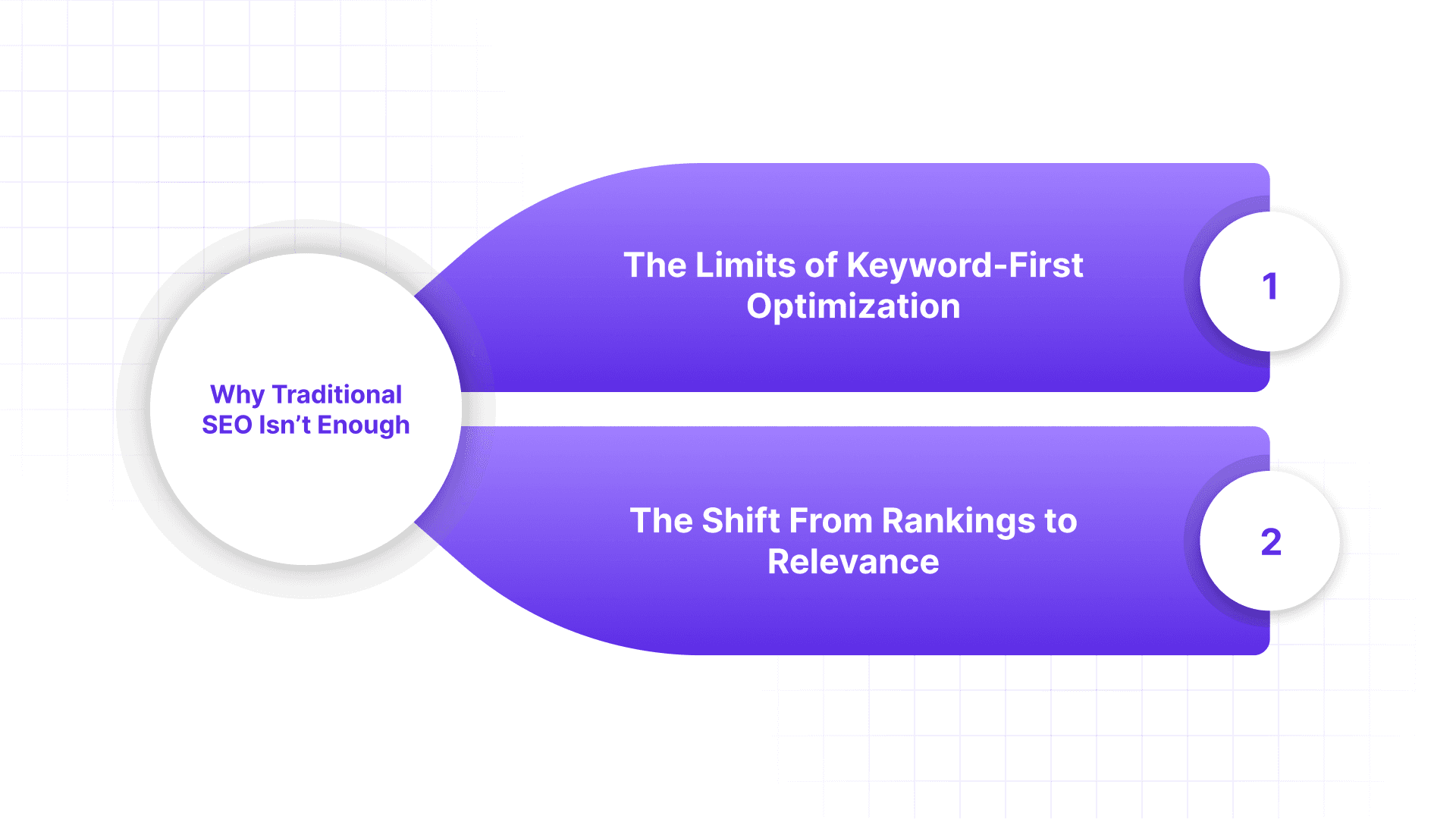
1. The Limits of Keyword-First Optimization
Keyword targeting was built for a world where every shopper followed the same path. That model breaks down in modern ecommerce. A single PDP or category page can’t effectively serve a high-intent shopper coming from a paid ad, a returning customer with purchase history, and a new visitor browsing for inspiration, all at once.
Static pages fail because they don’t adapt to:
Traffic source (paid, organic, social, email, AI assistants)
Shopper signals like browsing depth, cart behavior, or prior purchases
Real-time context, such as inventory, pricing, or campaign intent
As a result, brands may rank well but still lose conversions because the experience doesn’t match what the shopper actually needs at that moment.
2. The Shift From Rankings to Relevance
Modern discovery engines reward usefulness over placement. AI systems evaluate whether a page answers the shopper’s intent, not just whether it contains the right keywords. That means relevance is now defined by context: who the shopper is, what they’ve done, and what they’re most likely to do next.
For ecommerce brands, this marks a fundamental shift: you no longer have to just optimize pages in isolation, but also design adaptive experiences that respond in real time. And to keep up with this shift, ecommerce experiences themselves must change in how they respond to shopper intent.
Also Read: 10 Proven Tactics to Boost AI Search Visibility in 2026
How AI Is Changing the Way Shoppers Experience Ecommerce?
As discovery shifts from static pages to AI-led interactions, ecommerce experiences must grow to meet every shopper’s intent in real time. Every click, scroll, and engagement becomes an opportunity to guide conversion, increase AOV, and reduce drop-offs.
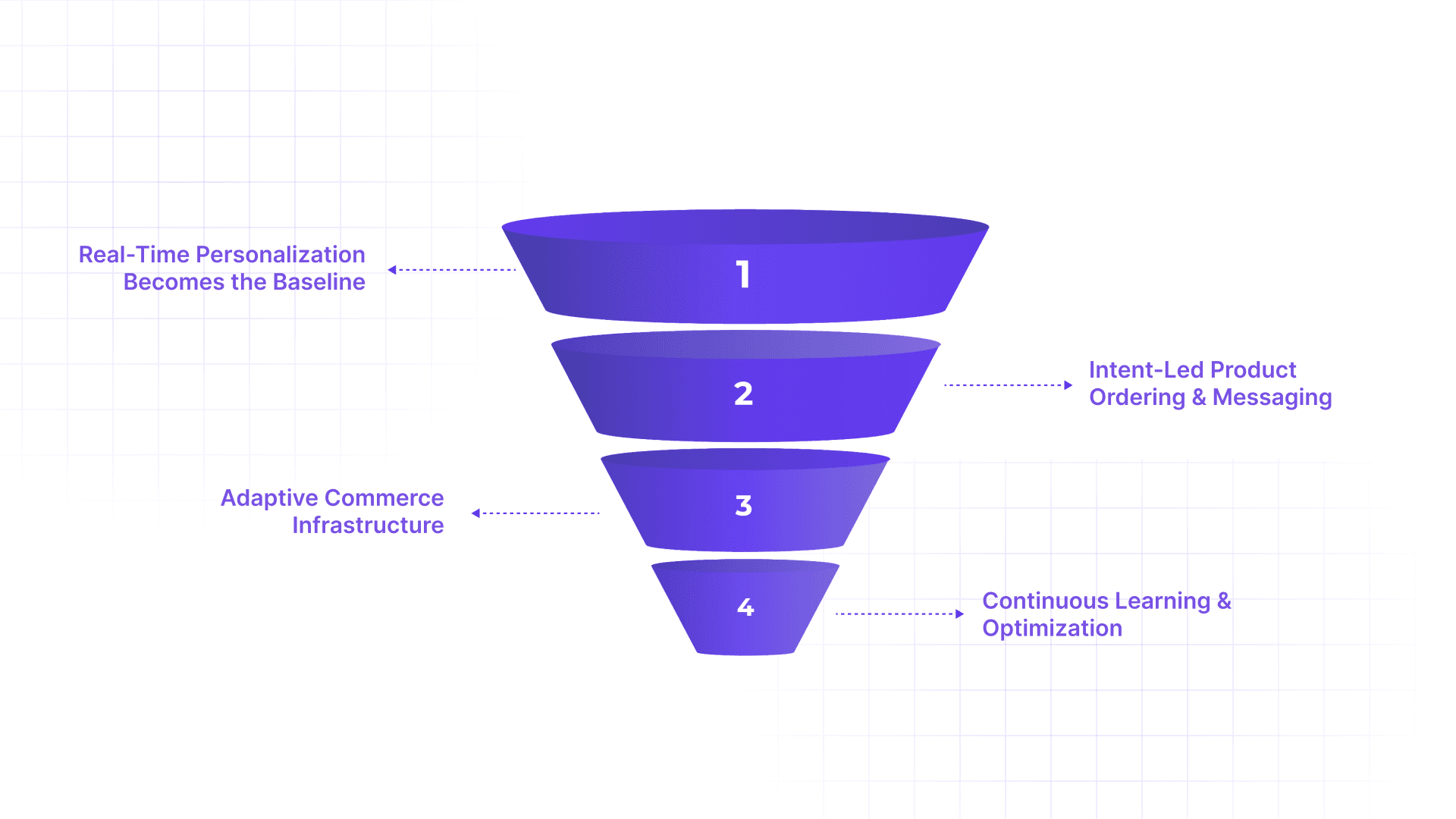
1. Real-Time Personalization Becomes the Baseline
Every visitor expects a tailored experience from the moment they land. AI adapts content, product recommendations, and layout dynamically based on traffic source, campaign UTMs, location, device, and shopper behavior. Nudge enables real-time personalization by adjusting product visibility, messaging, and layout based on traffic source, shopper behavior, and on-site intent signals.
2. Intent-Led Product Ordering and Messaging
AI dynamically prioritizes products, bundles, and offers based on the shopper’s context. Category pages, PDPs, and carts display items aligned with past behavior, affinities, and intent signals. Messaging and value propositions shift in real time to resonate with each unique shopper, increasing relevance and driving faster purchase decisions.
3. Adaptive Commerce Infrastructure
Legacy ecommerce stacks cannot support real-time, cross-channel personalization. Fixed templates, manual merchandising, and disconnected tools fragment the shopper journey. Modern commerce requires modular surfaces, flexible content blocks, and decisioning engines capable of instant adaptation to live shopper signals.
4. Continuous Learning and Optimization
Every interaction feeds AI models to improve future experiences. Product recommendations, dynamic bundles, and contextual nudges are continuously refined based on behavior, inventory, and campaign performance. This creates a compounding advantage where each shopper journey informs the next, driving higher conversion, AOV, and retention.
With AI shaping every interaction and personalizing experiences across the journey, the next step is turning this discovery into tangible results. In the following section, we’ll discuss how ecommerce brands can convert shopper intent into a conversion advantage.

How to Turn Discovery Into Conversion Advantage?
Visibility drives awareness, but in AI-powered ecommerce, true growth comes from converting that attention into action. Shoppers interact with multiple touchpoints, and every click, scroll, and engagement is an opportunity to guide them toward purchase.
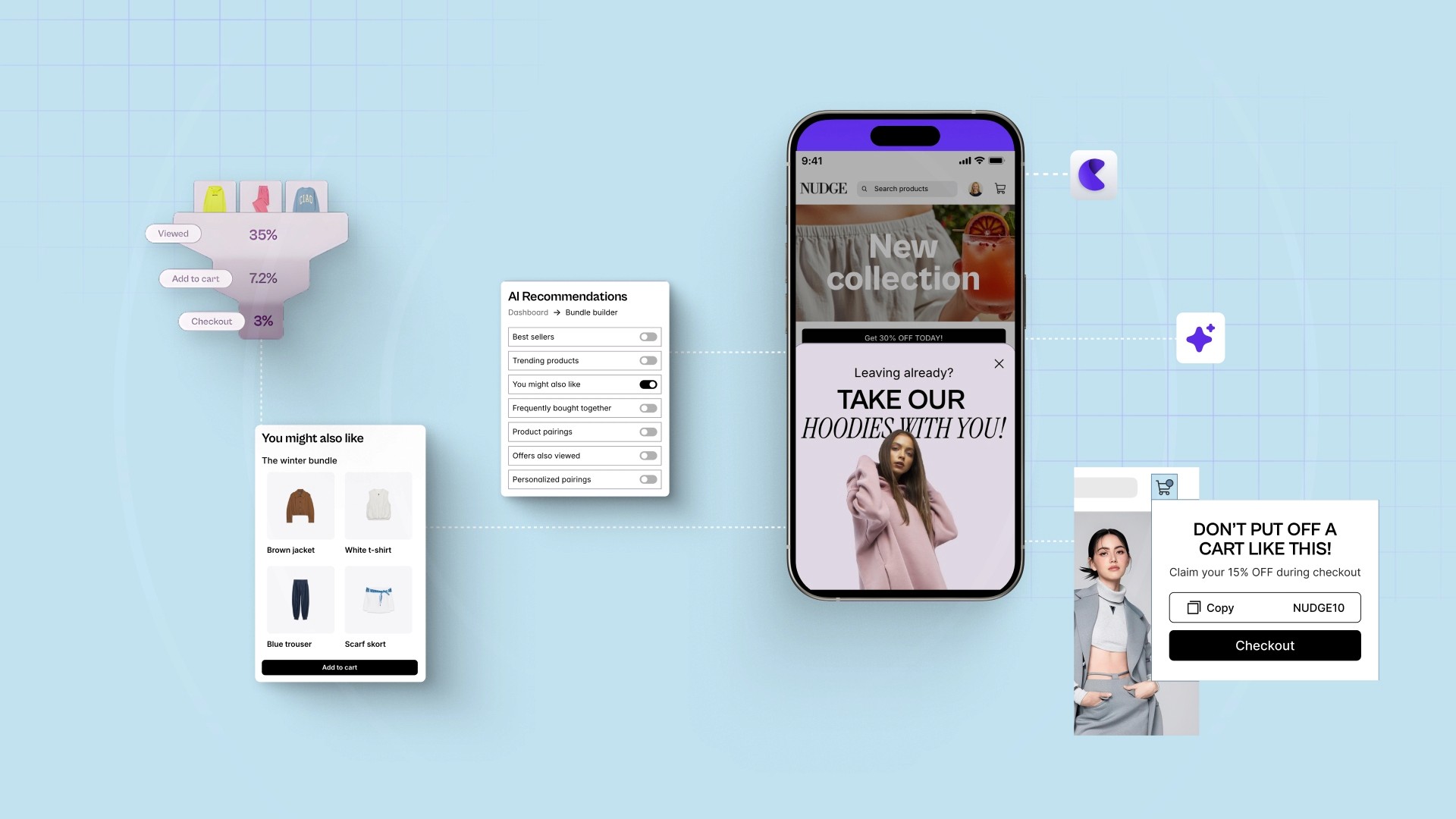
Key Strategies to Convert Discovery into Action:
Design for the Moment of Intent: Respond instantly to signals like clicks, scrolls, cart additions, or repeated views with relevant products, offers, or bundles.
Contextual Product Recommendations: Use AI to surface products and upsells based on past behavior, affinities, and real-time shopping activity.
Dynamic Bundles and Offers: Increase AOV by presenting tailored bundles that reflect what the shopper is most likely to buy together.
Personalized Messaging Across Touchpoints: Adapt headlines, CTAs, and promotional messaging based on traffic source, campaign UTMs, and device context.
Seamless Experience Alignment: Ensure discovery, navigation, and conversion layers work in concert so shoppers feel guided, confident, and understood at every step.
By integrating these strategies, ecommerce brands turn casual discovery into measurable conversions, repeat purchases, and compounding growth, turning attention into long-term revenue.
How Adaptive AI Strategies Give Brands a Real-Time Advantage?
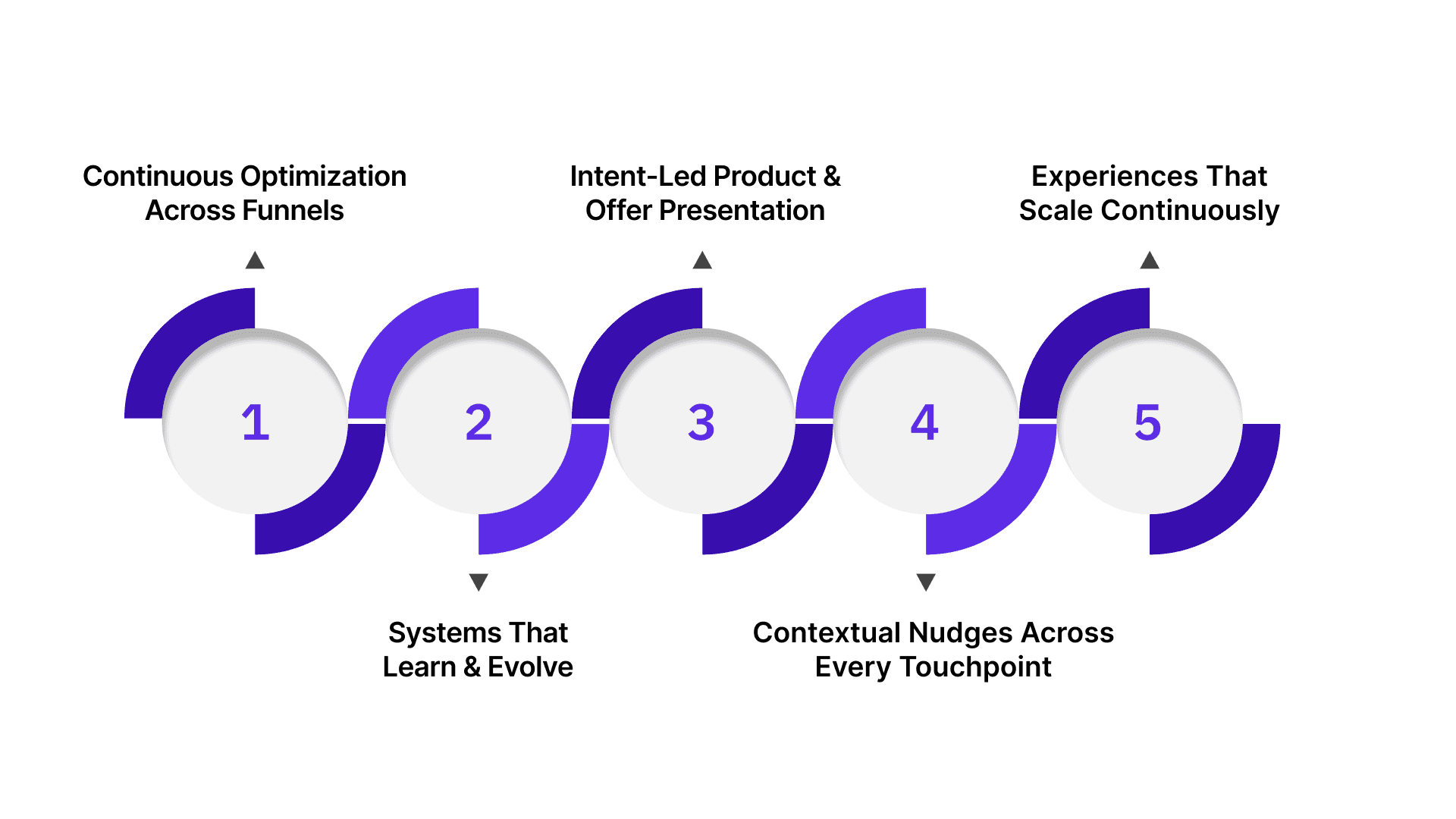
AI has changed the rules of competition in ecommerce. It is no longer enough to drive traffic; what matters most is the quality of the experience. Brands that focus on adaptability gain a clear advantage, responding to every shopper interaction in real time to increase conversion, AOV, and repeat purchases.
Key Strategies for Winning with Adaptive Commerce:
Continuous Optimization Across Funnels: Homepages, landing pages, PDPs, PLPs, carts, and checkout continuously adjust based on traffic source, UTMs, and shopper behavior, ensuring each interaction is relevant.
Systems That Learn and Evolve: AI models update in real time, refining product recommendations, bundles, and messaging based on shopper behavior and purchase history.
Intent-Led Product and Offer Presentation: Dynamic product ordering, personalized bundles, and context-driven offers respond to what shoppers want at the moment.
Contextual Nudges Across Every Touchpoint: Modals, popups, banners, and sticky CTAs are triggered based on scroll depth, exit intent, device, or location, guiding shoppers toward conversion.
Experiences That Scale Continuously: Each visit informs the next, creating adaptive journeys that feel intuitive rather than intrusive.
The future of ecommerce belongs to adaptive commerce. Brands that implement these strategies do not just keep up; they lead. By making every interaction contextually relevant, they turn discovery into higher conversion.
Also Read: 30+ Examples of eCommerce Personalization
How Nudge Improves AI-Powered Discovery into Ecommerce Growth?
As AI reshapes search and discovery, ecommerce brands must deliver experiences that respond to each shopper’s intent, context, and behavior in real time. Nudge enables brands to turn these AI-driven moments into measurable growth by ensuring visibility, relevance, and conversion across every touchpoint.
Key ways Nudge drives results:
AI Search Visibility: Products and categories appear in AI-powered search results, recommendation feeds, and discovery layers, ensuring your brand is seen when shopper intent is highest.
Shoppable Funnels: Homepages, PDPs, PLPs, carts, and checkout adapt instantly to campaign source, traffic context, and past shopper behavior, guiding users seamlessly from discovery to purchase.
Product Experiences: Personalized recommendations, dynamic bundles, and contextual messaging surface the right products at the right time, increasing AOV and repeat purchases.
By applying AI-driven discovery across every ecommerce surface, Nudge ensures shoppers move from intent to action efficiently, making every interaction conversion-focused.

Conclusion
AI is changing how shoppers discover and buy products. Traditional search and static pages no longer capture intent or drive conversions. In ecommerce, discovery now happens across AI search, recommendation engines, social feeds, and every touchpoint on a website. Brands that respond with relevant, real-time experiences can guide shoppers from intent to purchase effectively.
Nudge helps ecommerce brands make this possible. Products appear in AI search results, landing pages, PDPs, PLPs, carts, and checkout adapt dynamically, and recommendations, bundles, and contextual nudges match shopper behavior and intent. Every interaction becomes personalized, increasing conversion, repeat purchases, and average order value.
Ecommerce teams ready to turn AI-driven discovery into measurable growth can book a demo and see Nudge in action.
FAQs
1. How does AI impact product discovery beyond traditional search results?
AI predicts shopper intent and behavior, surfacing relevant products across recommendations, landing pages, and checkout. It turns discovery from reactive search into proactive, real-time guidance, making product discovery faster and more accurate.
2. Can small ecommerce brands benefit from AI-driven recommendations as much as large retailers?
Yes. AI scales to any size, allowing small brands to personalize experiences, optimize product visibility, and guide shoppers in real time. Even with smaller catalogs, AI ensures the right products reach the right audience.
3. What is the difference between AI-powered product recommendations and simple automated suggestions?
AI recommendations use behavior, intent, and context to offer personalized products. Automated suggestions follow static rules or popularity trends and lack real-time adaptation, making them less precise in driving conversions.
4. How does generative AI enhance ecommerce discovery?
Generative AI creates dynamic content, personalized product descriptions, and tailored recommendations based on shopper behavior. It improves engagement by generating relevant suggestions and messages instantly, shaping the shopping journey beyond static templates or simple rules.