Ecommerce Personalization
30+ Examples of eCommerce Personalization
Discover 30+ eCommerce personalization examples that enhance customer experience by using customized shopping journeys and real-time user behavior insights.

Kanishka Thakur
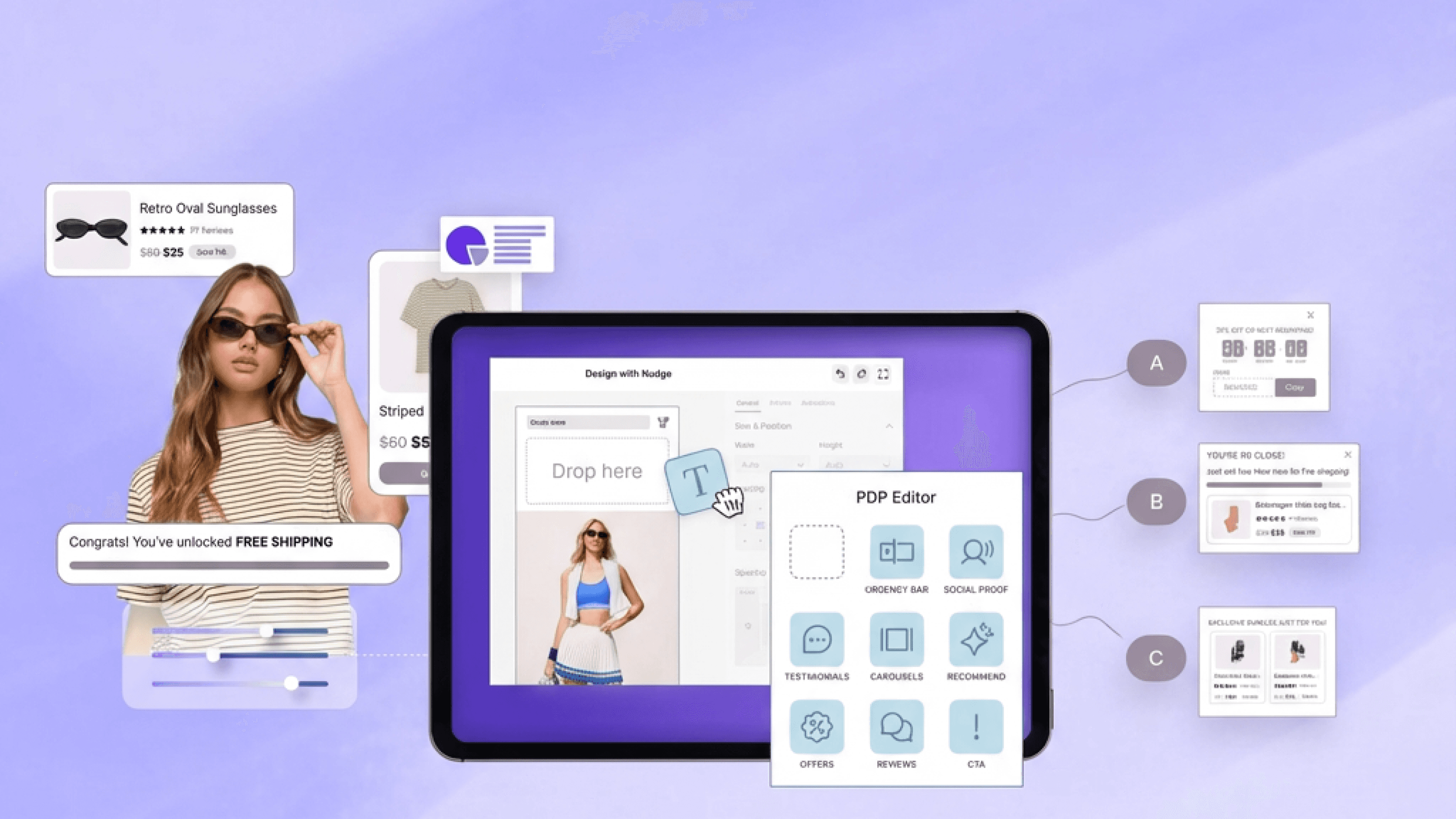





If you run growth or retention for a fast-scaling e-commerce brand, you already know the pressure of paid traffic keeps getting expensive, shoppers bounce within seconds, and every visit needs to count. That is exactly why personalization has become the one lever that consistently improves conversions, repeat purchases, and overall LTV.
The best part is that you can implement most personalization tactics fast and test them quickly across your homepage, PDPs, cart, and checkout. When done right, a strong personalization example can turn anonymous clicks into high-intent customers.
In this article, we’ll break down real personalization ideas used by leading brands, the same kind your team can implement to improve activation, recover abandoners, and increase AOV.
Key Takeaways
Personalization increases conversions by offering relevant products based on real-time shopping behavior and past actions.
Quizzes help brands gather key insights and provide personalized recommendations, enhancing customer engagement.
Behavior-based recommendations (e.g., past purchases or browsing history) increase AOV and help recover abandoned carts.
Location-based personalization and weather triggers create more relevant product suggestions, improving user experience.
Brands can maximize retention by using product bundles, personalized upsell offers, and contextual nudges to keep customers engaged.
What is eCommerce Personalization?
eCommerce personalization means adapting the shopping experience to each visitor based on context, ad source, location, browsing history, cart behavior, category affinity, and intent. For high-growth ecommerce brands, this is the difference between a cold, generic site experience and a buyer journey that matches your shopper’s mindset.
With personalization, every touchpoint becomes smarter:
PDPs adjust based on campaigns that drove the click.
Recommendations reflect real-time behavior, not generic “bestsellers.”
Cart pages adapt to the willingness to pay.
Nudges shift depending on whether the shopper is new, returning, or at risk of bouncing.
With AI-powered product recommendations, Nudge helps you deliver personalized experiences adapted to each shopper’s behavior. It’s the perfect way to increase AOV and increase customer retention effortlessly, while keeping the shopping journey relevant and engaging.
Next, let's explore why personalization is crucial for driving eCommerce growth.
Why is Personalization Key to eCommerce Growth?
Paid traffic is expensive, competition is fierce, and shoppers expect relevance immediately. A personalized site makes every click more efficient by increasing the chance that a shopper engages, adds to cart, and purchases.
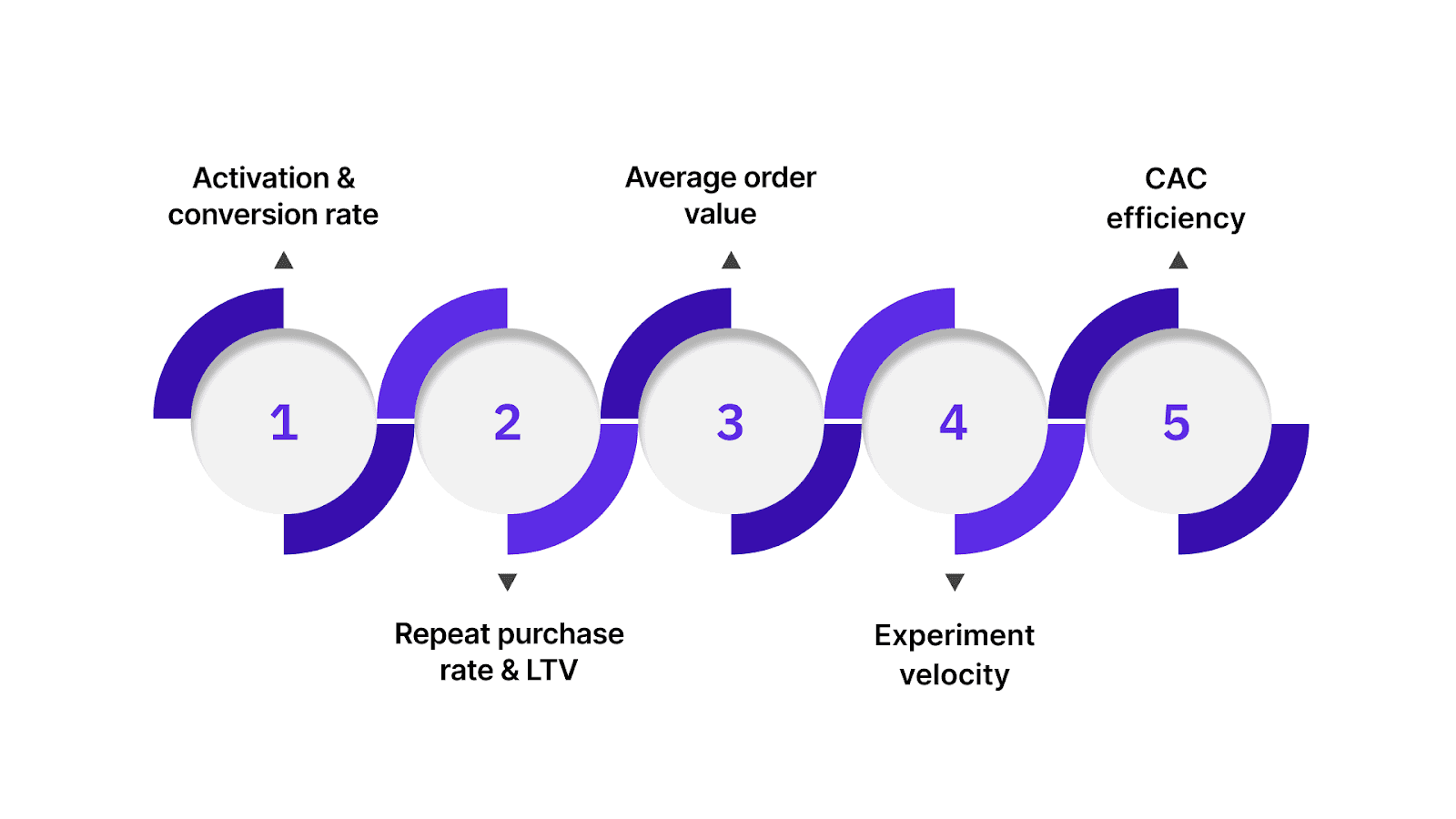
For your growth, UX, and retention teams, personalization increases:
Activation & conversion rate (relevance increases intent instantly)
Repeat purchase rate & LTV (dynamic bundles and recommendations drive return journeys)
AOV (smart cross-sells and personalized upsells)
Experiment velocity (each segment becomes a testable slice)
CAC efficiency (better post-click conversions → cheaper acquisition)
This is why the fastest-growing eCommerce and DTC brands rely on personalization across every step of the funnel.
Also Read: How to Create Successful Personalized Marketing Campaigns
Now, let’s look at some real-world examples of eCommerce personalization that drive sales.
32 Examples of eCommerce Personalization That Increase Sales
Here are some real-world examples of how personalizing the shopping experience leads to more conversions.
1. Saks’s AI-Powered Personalized Homepage
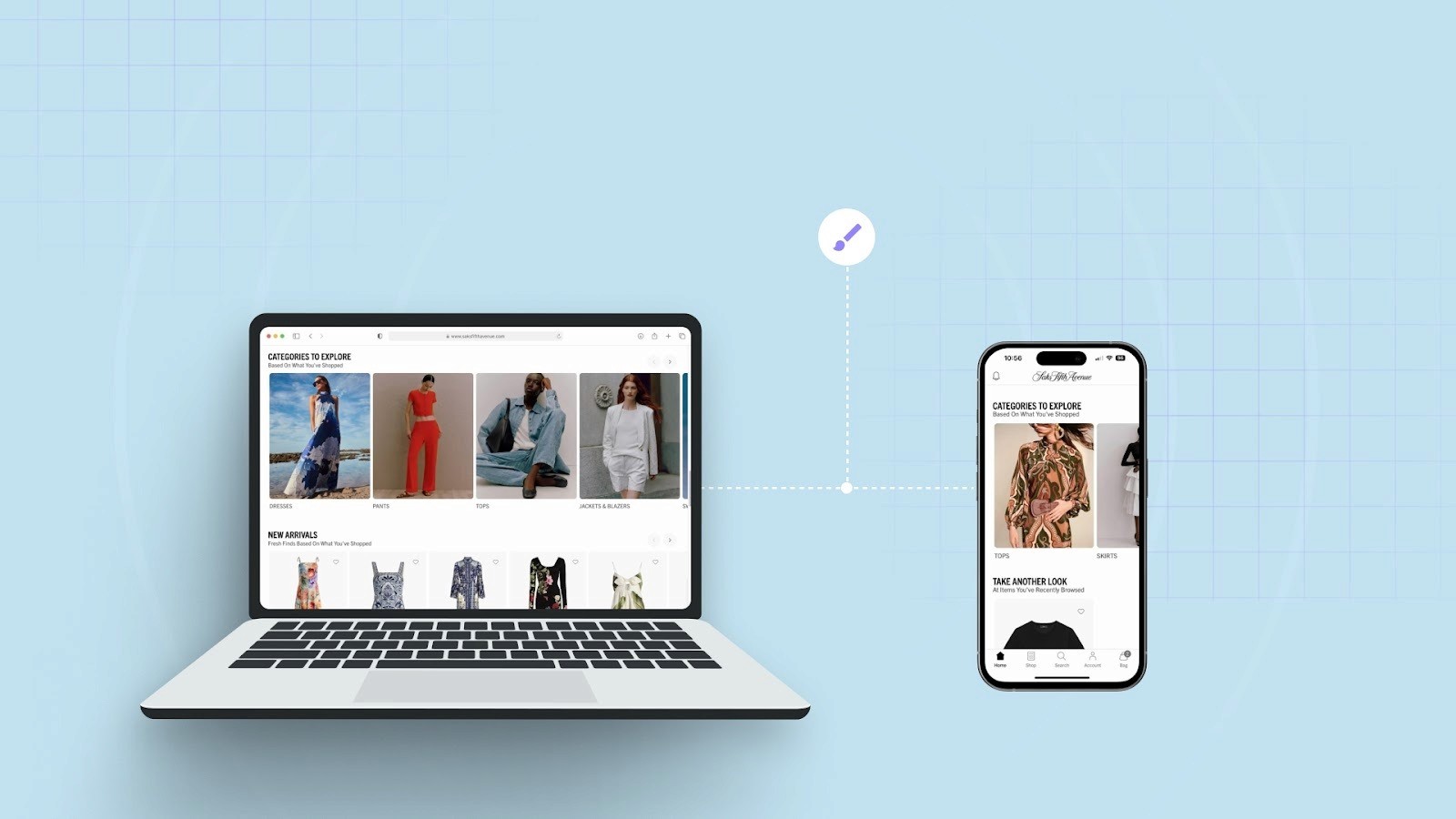
Saks changes its homepage for each shopper based on browsing behavior, purchase history, and category affinity. Every content block, from hero banners to “Categories to Explore”, shifts in real time to match what the shopper actually cares about.
Pro Tips:
Use behavioral fallbacks when account history is missing.
Personalize homepage modules by ad campaign source.
Test different homepage layouts for high-intent vs. cold visitors.
2. Bio True’s AI Shopping Agent
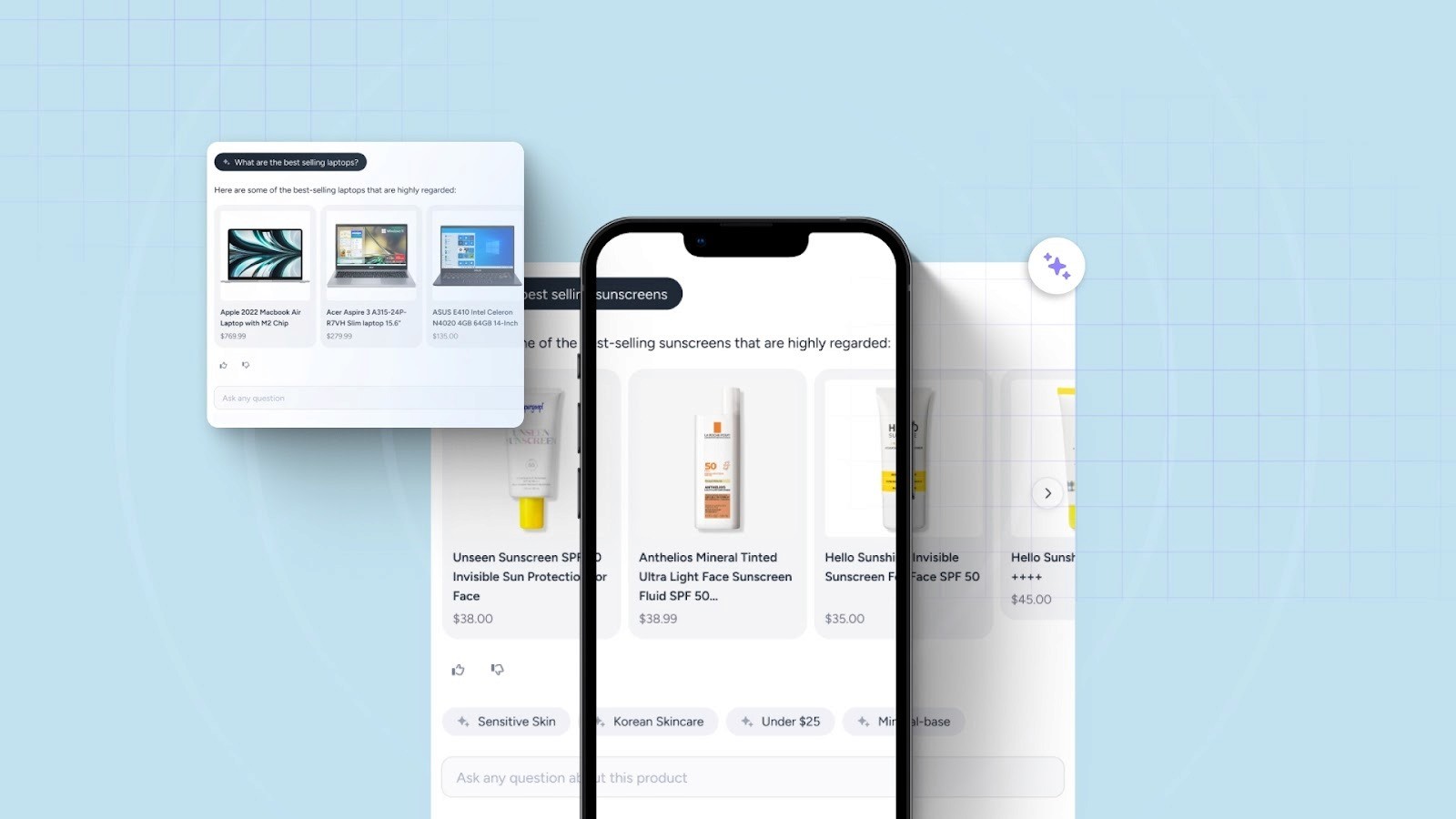
Bio True uses an AI-guided selling assistant that speaks, shows videos, and walks shoppers through product discovery. Instead of overwhelming visitors with grids of products, the agent adapts recommendations based on questions answered in real time.
Pro Tips:
Use conversational flows to segment first-time vs returning visitors.
Trigger the agent only for confused or idle shoppers.
Use branching “paths” to collect better preference data.
3. Moscot’s Try-On Visualization
Moscot lets shoppers try on glasses virtually using an uploaded image. This solves the biggest online hesitation, not knowing how something looks. The try-on tool personalizes the experience by adapting frames to face shape, style affinity, and past browsing patterns.
Pro Tips:
Use AR suggestions based on previously viewed frame shapes.
Add automatic “fit predictions” to reduce sizing doubts.
Personalize PDP copy to match face shape or style preference.
4. Golden Goose’s Size Predictor Quiz
Golden Goose uses a sizing quiz that asks simple questions about body shape, age, and weight and returns personalized size recommendations. The smart part is what happens next: the site remembers the data and pre-selects the right size across all PDPs and even future sessions.
Pro Tips:
Combine sizing data with urgency (“Only 2 left in your size”).
Localize size guides by region and unit of measurement.
Use quiz completions as micro-conversions and retarget by size.
5. Eye Buy Direct’s Predictive Segmentation
Eye Buy Direct customizes the cart page based on predicted buying behavior. Price-sensitive shoppers see personalized discounts, while premium shoppers see upgrades or bundles. The free-shipping bar adapts based on AOV potential, and discount boxes appear only when they will not reduce margin.
Pro Tips:
Offer different incentives for discount-seeking vs. loyal shoppers.
Use predictive models to show the right nudge at the right time.
Trigger abandoned-cart messages based on product type, not generic blasts.
6. Bloomingdale’s Personalized Product Detail Pages (PDPs)
For growth teams fighting to reduce bounce on high-cost paid traffic, Bloomingdale’s PDP personalization is a lifesaver. Their pages adapt in real time based on browsing history, category affinity, and ad source, from auto-applied offers to curated recommendations. The goal is to keep shoppers engaged, eliminate friction, and move them through the funnel faster.
Pro Tips:
Add microcopy nudges (“Unlock free returns when you sign in”) that push activation without disrupting UX.
Automatically load relevant bundles based on category browsing (ex.: accessories for fashion traffic).
A/B test PDP layouts for cold vs. warm traffic to lift conversion velocity.
7. Sephora’s Community-Driven Personalization Experience
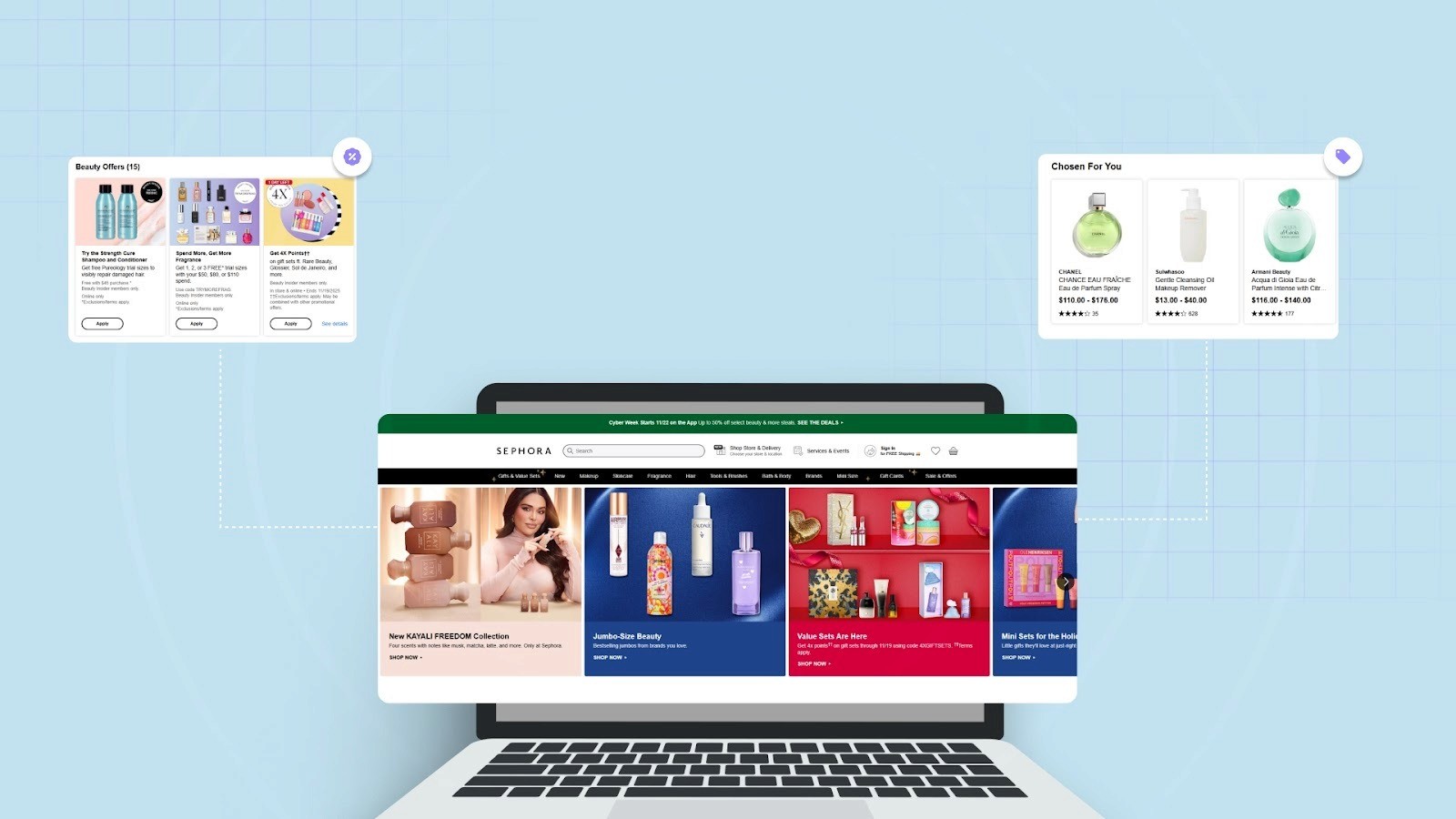
Sephora nails personalization by turning its Beauty Insider community into an always-on discovery engine. For UX and retention teams, this solves the fear that shoppers won’t find what they need after clicking expensive ads. The search bar adapts in real time, showing trending topics, popular routines, and peer proof, reducing hesitation and strengthening return visits.
Pro Tips:
Use predictive autofill to guide shoppers toward high-converting categories.
Surface “trending in your region” content to create local relevance instantly.
Highlight community-driven answers to reduce product doubt and lower drop-offs.
8. Louis Vuitton’s Look Curation Personalization
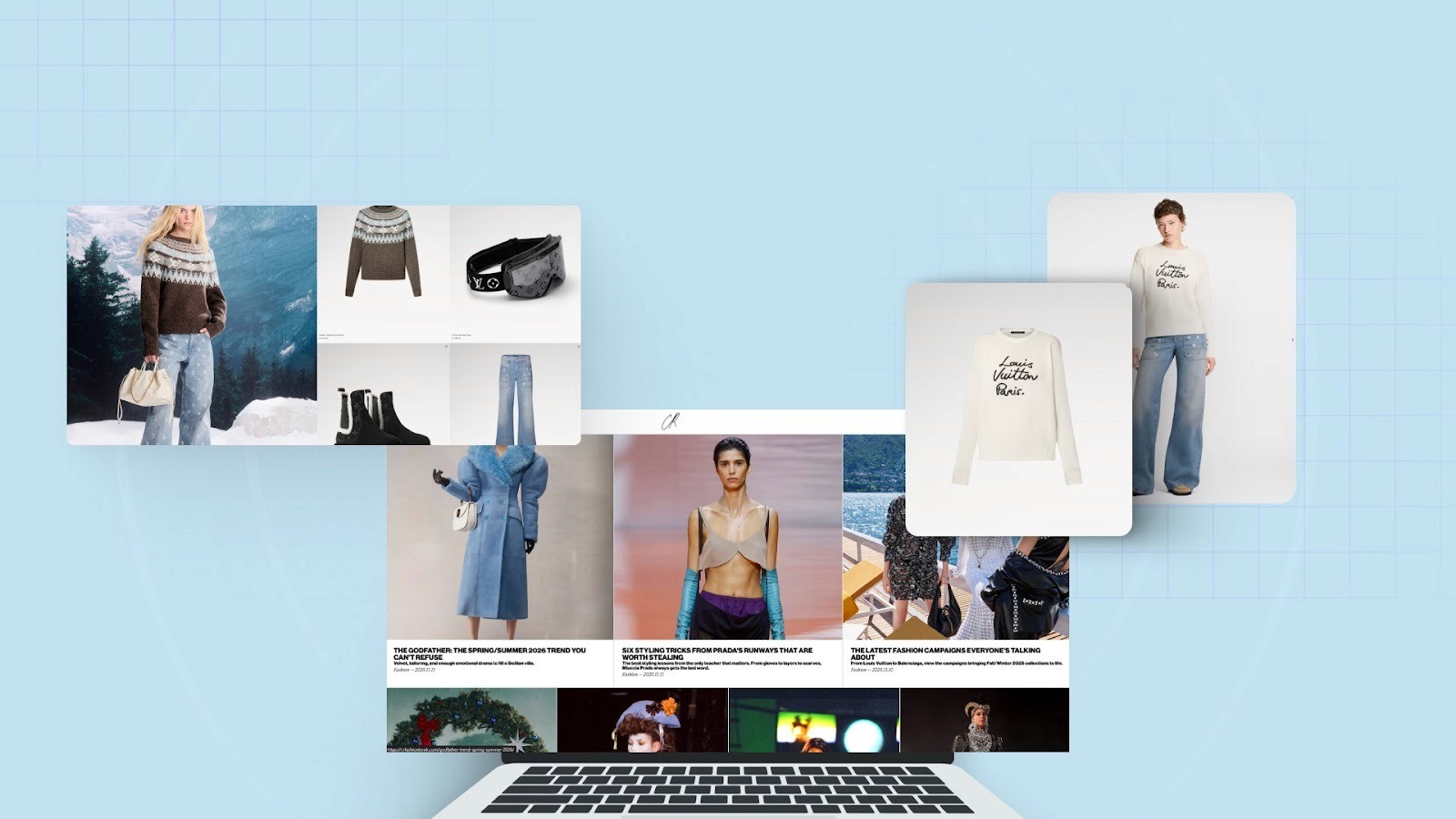
A dream for conversion specialists: Louis Vuitton removes decision fatigue by showing full outfits instead of endless product grids. The curated look adapts based on style affinity, browsing patterns, and the shopper’s first-click context. For DTC brands struggling with high CAC, this improves product discovery and increases AOV through natural cross-sells.
Pro Tips:
Add “Shop This Look” or “Shop Similar” buttons on PLPs and PDPs based on product attributes.
Use bundles informed by live inventory to avoid dead ends.
Trigger curated looks only for visitors showing strong browsing patterns to avoid overwhelm.
9. Lume’s Automatic Upsell Personalization
Lume’s checkout upsell is the perfect example of how smart personalization can lift AOV without relying on discounts. Their $5 mystery item appears only when it helps shoppers reach the next reward tier, a strategy anchored deeply in behavior, cart value, and psychological incentives. For marketers battling shrinking margins, this tactic adds revenue without eroding price perception.
Pro Tips:
Keep upsells relevant to the shopper’s browsing depth and engagement level.
Use low-friction “1-click upsells” to increase experiment velocity and improve checkout completion.
Show reward bars tied to AOV goals (“You’re $5 away from a free gift”).
10. Northern Tool’s Mobile Checkout Personalization
For UX teams trying to reduce mobile drop-off, Northern Tool’s checkout personalization is a strong blueprint. It auto-fills user details using location data and browser history to reduce typing friction, a major barrier for mobile shoppers.
Pro Tips:
Preload “recently viewed” and “trending in your area” modules to cut search time.
Auto-adjust payment methods based on mobile OS for faster completion.
Prioritize thumb-friendly UI adjustments for high-intent mobile visitors.
Also Read: Top 10 Website Personalization Tools for 2025
11. Uniqlo’s Interactive Product Imagery (Behavior-Based Detail Personalization)
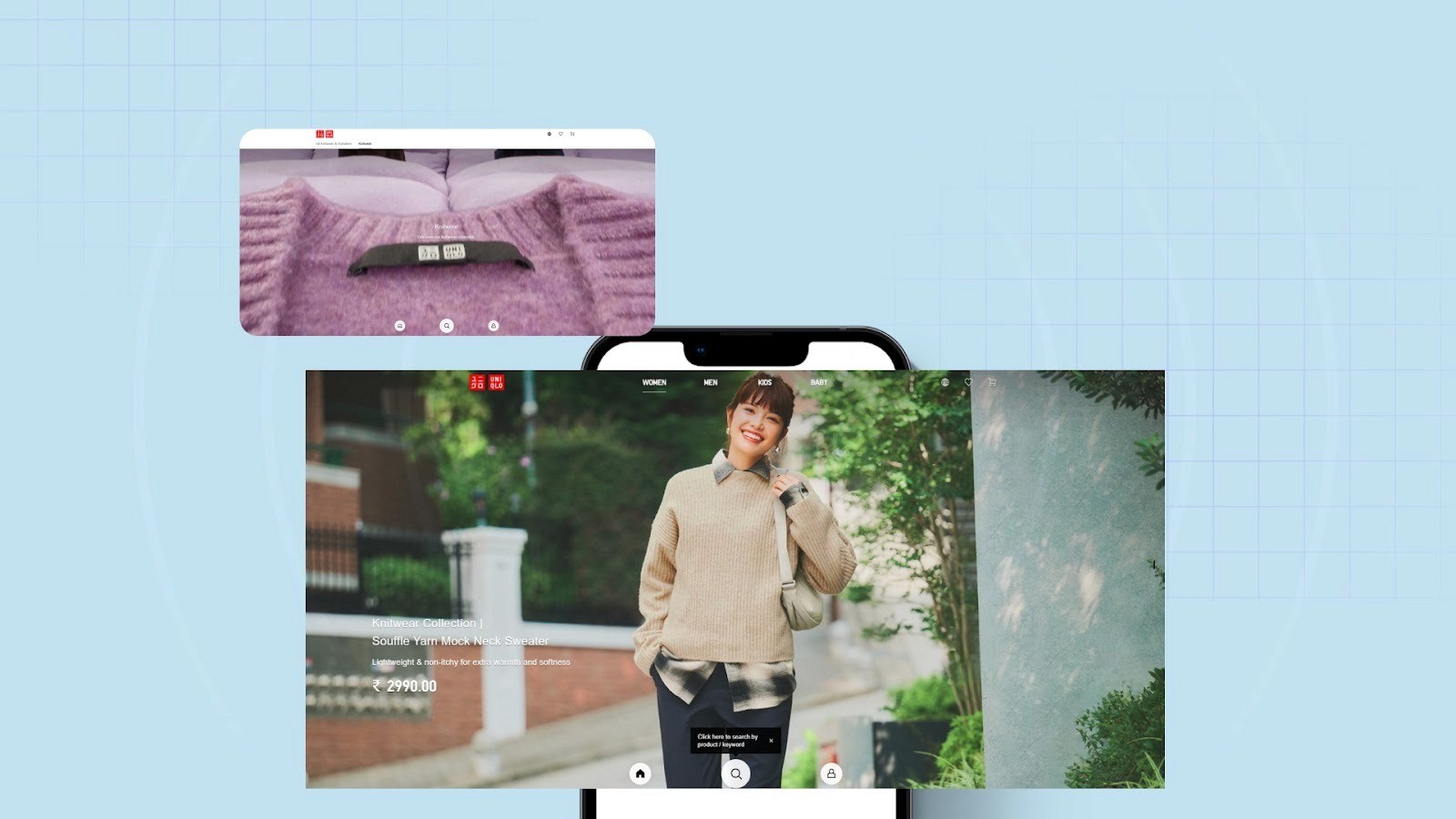
For UX teams constantly battling high PDP bounce rates, Uniqlo’s interactive images show a practical fix: give shoppers an immersive “touch and feel” moment online. Their detailed multi-angle views adapt beautifully to high-intent traffic coming from ads or category pages, and the PDP even personalizes serviceability by showing nearby-store stock to reduce uncertainty for shoppers who fear missing out.
Pro Tips:
Trigger enhanced imagery modes for visitors with deep browsing behavior or multiple returns to the same product.
Surface micro-nudges like “Only 2 left in your size near Brooklyn” for urgency without pressure.
Use behavior signals to prioritize interactive images for shoppers coming from product-focused ads.
12. Nasty Gal’s Out-of-Stock Behavioral Recommendations
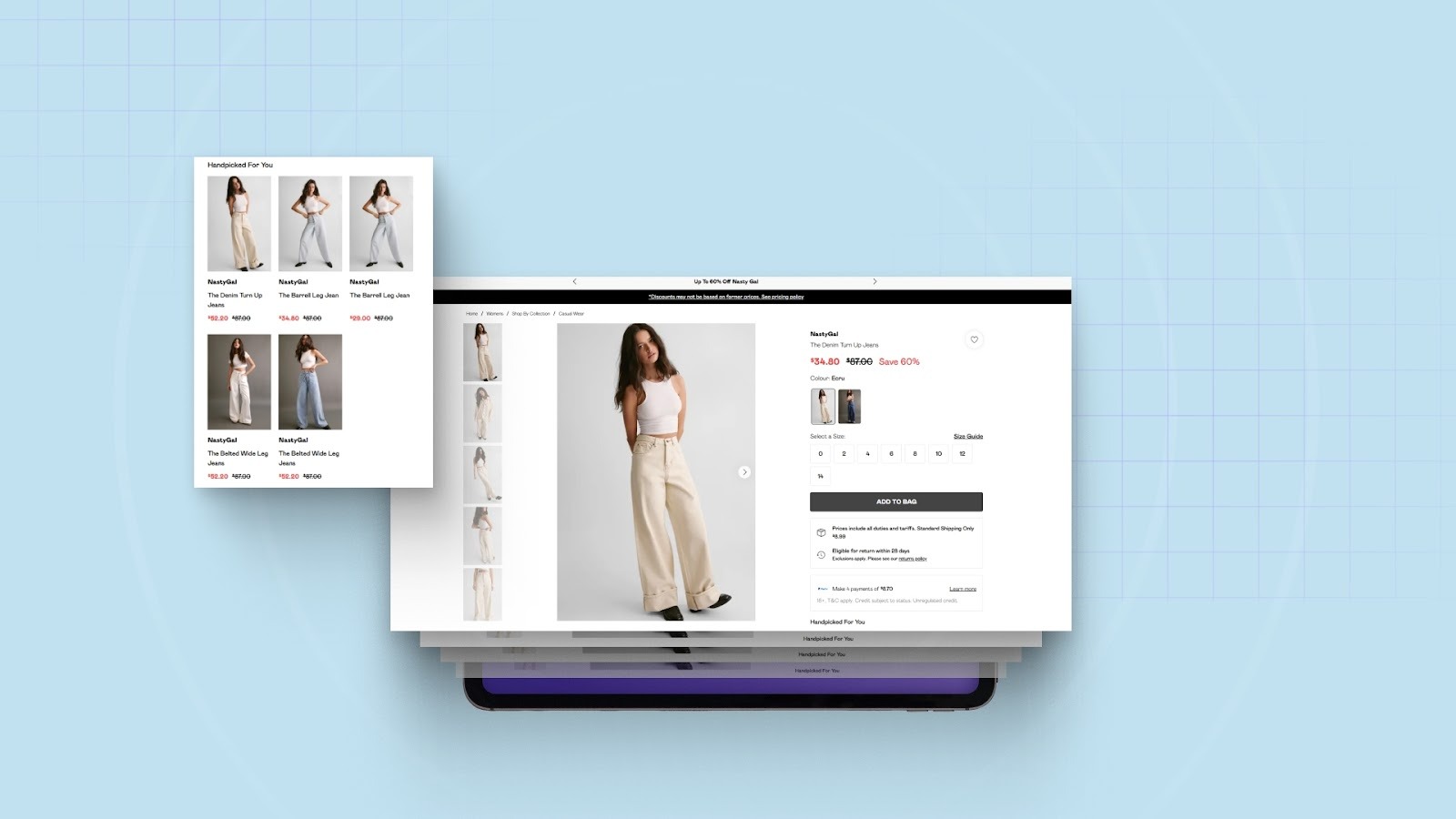
For retention and conversion teams, losing paid traffic to an out-of-stock product is painful. Nasty Gal solves this with instant behavioral recommendations placed in the first fold. Their OOS pages show alternatives from the same style category, preventing drop-offs and aligning perfectly with a shopper’s original intent rooted in browsing depth, color affinity, and price sensitivity.
Pro Tips:
Use category affinity and past engagements to personalize OOS replacements instantly.
Keep discount anchors visible to maintain price context for deal-seeking audiences.
Prioritize high-margin substitutes for returning visitors to increase AOV.
13. Shein’s Personalized Micro-Nudges at Checkout
Checkout anxiety is one of the biggest fears for conversion specialists. Shein combats this by using contextual nudges, stock levels, delivery guarantees, and reassurance cues specific to real-time cart content and browsing behavior. By personalizing urgency without overwhelming the shopper, they cut hesitation and increase experiment velocity on mobile checkout paths.
Pro Tips:
Personalize checkout reassurance: “Free returns for your size” or “Ships tomorrow to Los Angeles.”
Adapt CTA microcopy to reflect cart context (“Secure your size now”).
Use low-inventory nudges only for repeat browsers, not first-time visitors.
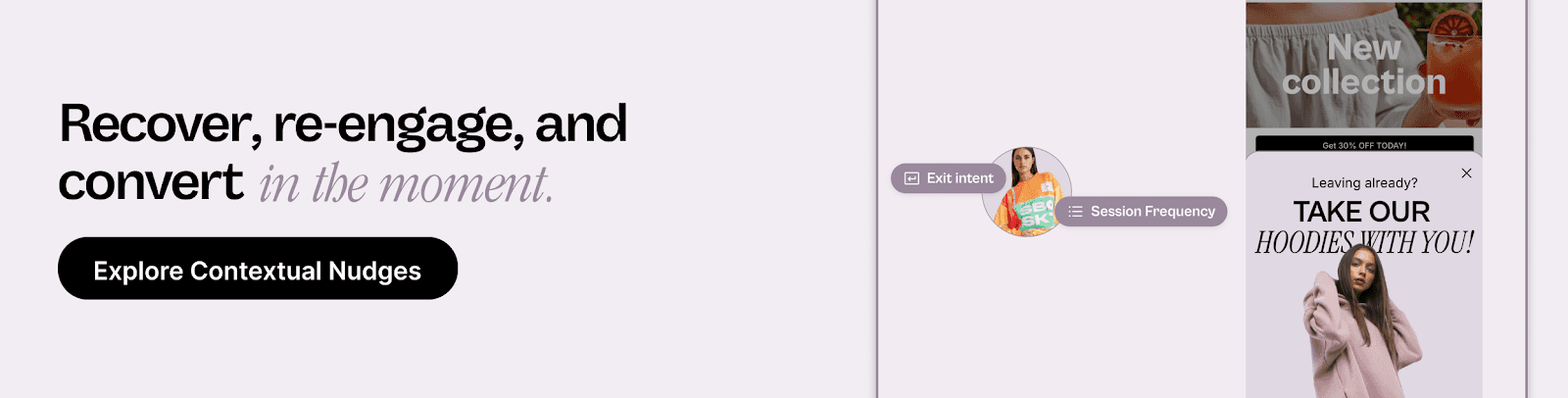
Nudge makes contextual nudges easy to implement across your site, allowing you to guide shoppers toward key actions like add-to-cart and purchases. These personalized messages are triggered by real-time behavior, helping to increase conversion rates without disrupting the user flow.
14. Mejuri’s Social-Proof Review Personalization
For marketers worried about conversion drop-offs on high-AOV products, Mejuri’s trust-building reviews solve a core emotional barrier, which is credibility. They personalize review displays using user-tagged content, real customer photos, and social proof tied directly to shopper behavior.
Pro Tips:
Dynamically reorder review themes (“Everyday wear,” “Perfect gift”) based on browsing behavior.
Prioritize reviews with matched attributes (size, material, color).
Use community photos as “near-PDP bundles” by tagging complementary items.
15. Nike’s Geo + Cultural Personalization
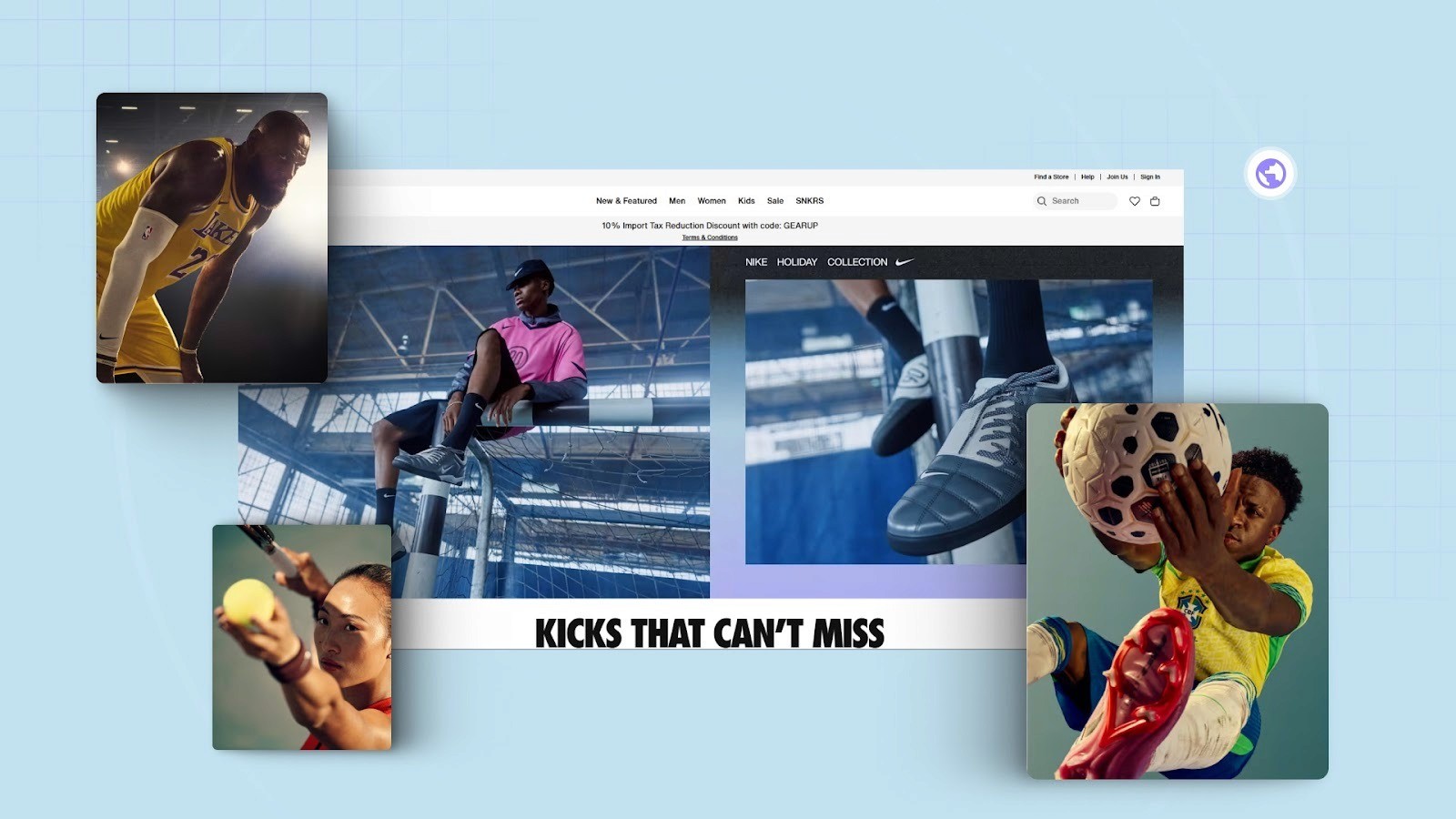
Nike is a master at turning location context into a personalized journey. Their UK homepage leans into soccer culture, while the US experience emphasizes basketball and running, perfectly aligned with regional affinities. For DTC brands facing rising CAC, this type of geo-cultural personalization helps direct paid traffic into product ranges that feel familiar, relevant, and instantly shoppable.
Pro Tips:
Personalize homepage hero content based on ad source + region (“Trending in New York,” “Top running gear in Austin”).
Tie local events into PDPs (“NYC Marathon picks,” “LA heat-ready fabrics”).
Use location-based bundles to lift AOV (“Cold-weather running kit for Chicago”).
16. North Face’s Weather-Triggered Personalization
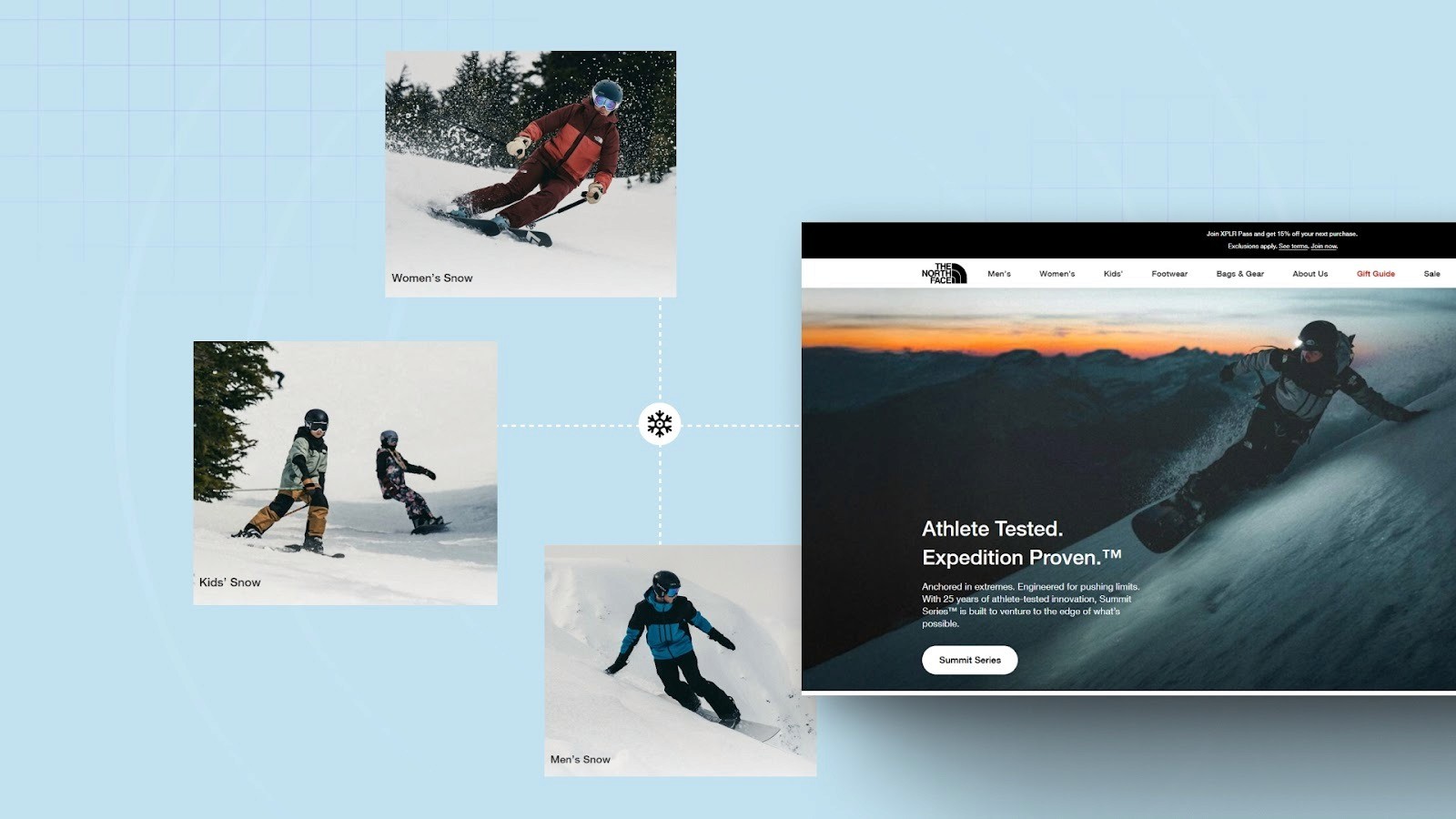
North Face uses weather-triggered personalization to improve its eCommerce experience. Instead of simply relying on location, the site adapts based on real-time weather conditions. For example, shoppers in warmer but rainy areas are shown rain gear and light jackets, while those in colder climates are directed to winter wear.
Pro Tips:
Trigger weather-specific product recommendations directly on PLPs and PDPs.
Use inventory levels in weather-based personalization for urgency (e.g., “Only 2 left in your size”).
Ensure fast loading times for content changes during high-traffic events.
17. British Customs’ Personalized Preferences
British Customs offers a unique personalization experience by remembering shopper preferences, such as motorcycle make and model, and modifying product suggestions accordingly. This approach can be applied to various verticals by remembering key customer attributes like body type, lifestyle, and fashion preferences.
Pro Tips:
Use first-party cookies to store shopper preferences for repeat visits.
Integrate product filters based on personal attributes, such as size, color, or preferences.
Allow customers to opt-in for stored preferences to create a more personalized experience on return visits.
18. Autozone’s Geolocation-Based In-Store Delivery Timings
Autozone enhances its eCommerce experience by offering geolocation-based product availability and delivery estimates. Real-time inventory personalization can help shoppers quickly see if an item is in stock at a nearby store, reducing friction for time-sensitive purchases.
Pro Tips:
Use geolocation to display nearby store inventory, store hours, and relevant promotions.
Personalize shopping cart messaging with time-sensitive options like “pickup today” or “limited stock nearby”.
Implement real-time stock updates on PDPs to create urgency, reducing cart abandonment.
19. Olay’s Product Finder Quiz
Olay uses a personalized quiz to guide shoppers toward products suited to their unique skincare concerns. This quiz enhances the shopping experience and builds a profile for each shopper.
Pro Tips:
Use onboarding quizzes to create richer customer profiles.
Implement questions based on previous responses for more accurate product matches.
Use the quiz to segment new vs. returning customers for different types of product recommendations.
20. Otterbox’s Live Chat Personalization
Otterbox uses live chat and chatbots to bring a personal touch to their online store. The brand goes a step further by enabling shoppers to chat with experts who are also customers of the brand. This personalization tactic bridges the gap between self-service and customer support by providing trusted recommendations and advice.
Pro Tips:
Ensure chat agents know past shopper activity (cart history, product views).
Let shoppers choose their language for a personalized experience.
Use chatbots for quick questions, and escalate complex queries to live agents.
Also Read: Understanding the Ecommerce NAICS Code 454110
21. Amazon's "Pick Up Where You Left Off"
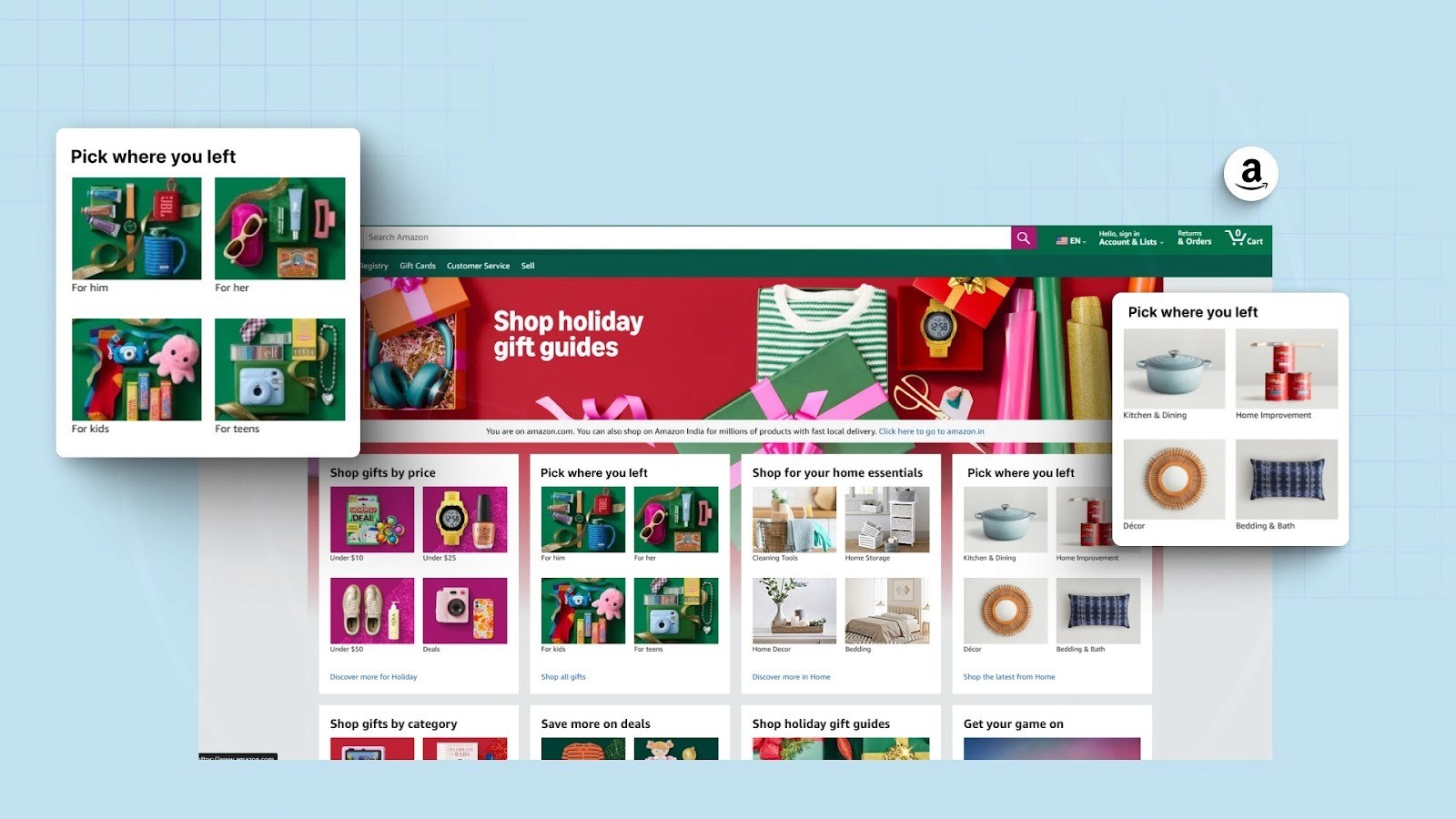
Amazon offers personalized recommendations like “Pick up where you left off,” showing shoppers items they previously viewed, making it easier to continue their shopping journey. This reduces friction and increases engagement by reminding customers of products they were already interested in.
Pro Tips:
Add recently viewed items on PDPs to encourage continued shopping.
Segment recommendations for new vs. returning shoppers to personalize the experience.
Send reminder notifications after 24 hours to re-engage shoppers.
22. Sam’s Club’s "Recent Searches"
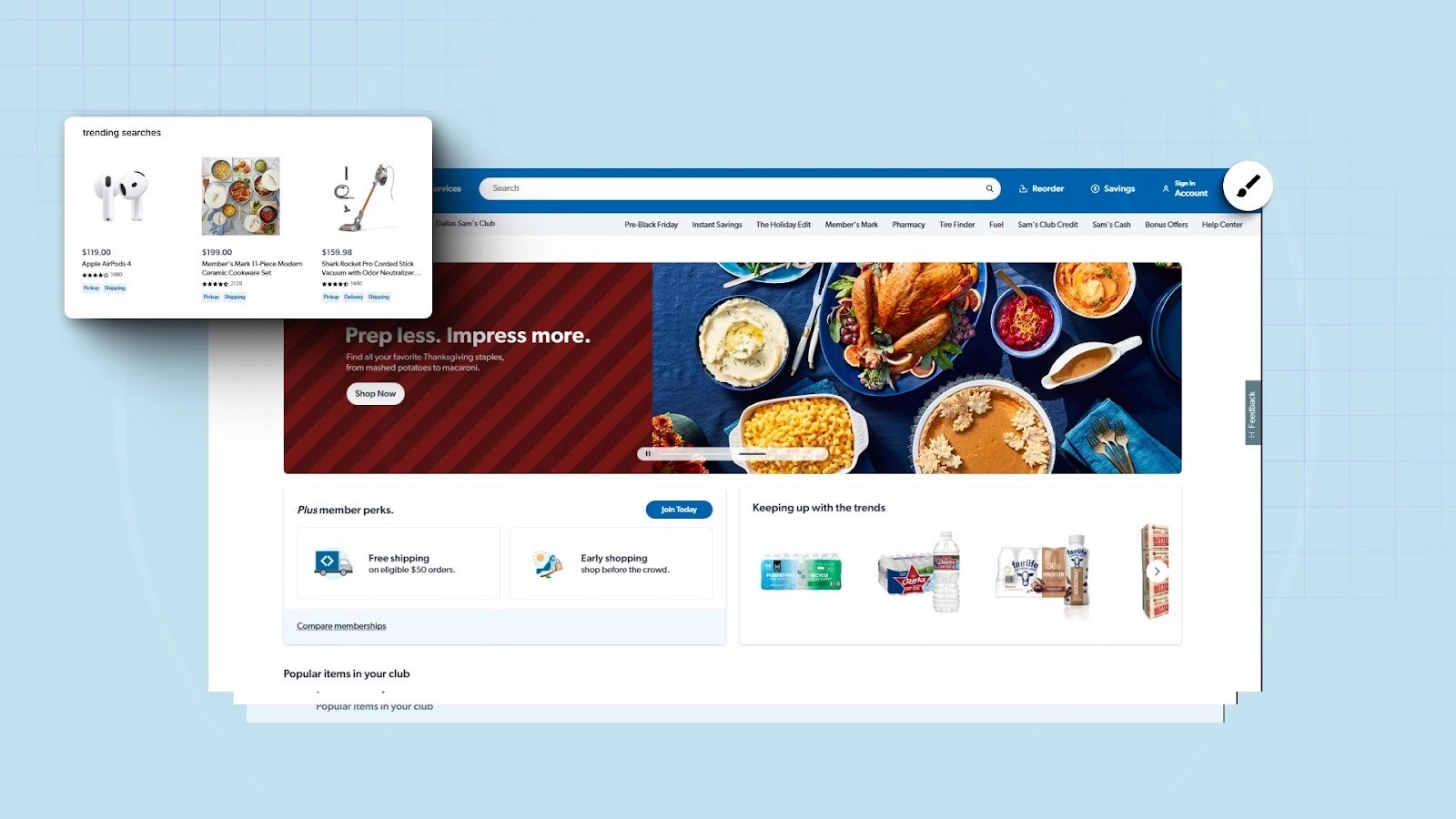
Sam’s Club personalizes the shopping journey by showing recent searches based on a shopper's past behavior. This experience makes it faster for shoppers to find products they’re likely to purchase, reducing the time spent searching and increasing the chances of a sale.
Pro Tips:
Highlight “trending searches” to push popular products and sales.
Personalize product recommendations in real-time based on past behavior.
Use search filters to customize results to specific interests and previous purchases.
23. Babyganic’s Navigation by Needs
Babyganic personalizes its navigation by categorizing products based on shoppers' specific needs (e.g., sensitive skin). This reduces cognitive load for the shopper, guiding them quickly to the products most likely to meet their needs.
Pro Tips:
Segment navigation by user intent to show the most relevant products.
Test navigation layouts based on real-time demand and preferences.
Dynamically show “most purchased” items in the current category.
24. California Baby’s "Frequently Bought Together"
California Baby uses “Frequently Bought Together” bundles to encourage cross-selling, showing complementary products like diaper rash cream alongside calming wash and powder. This increases AOV and conversion rates by offering a discount on a bundled purchase, appealing to customers’ preferences for convenient, value-driven shopping.
Pro Tips:
Add urgency to bundles with countdown timers (“Limited-time offer”).
Use cross-sell bundles based on shopping history and affinity.
Provide clear messaging on bundle discounts to ensure easy decision-making.
25. Petco's "Top Picks for Your Pet"
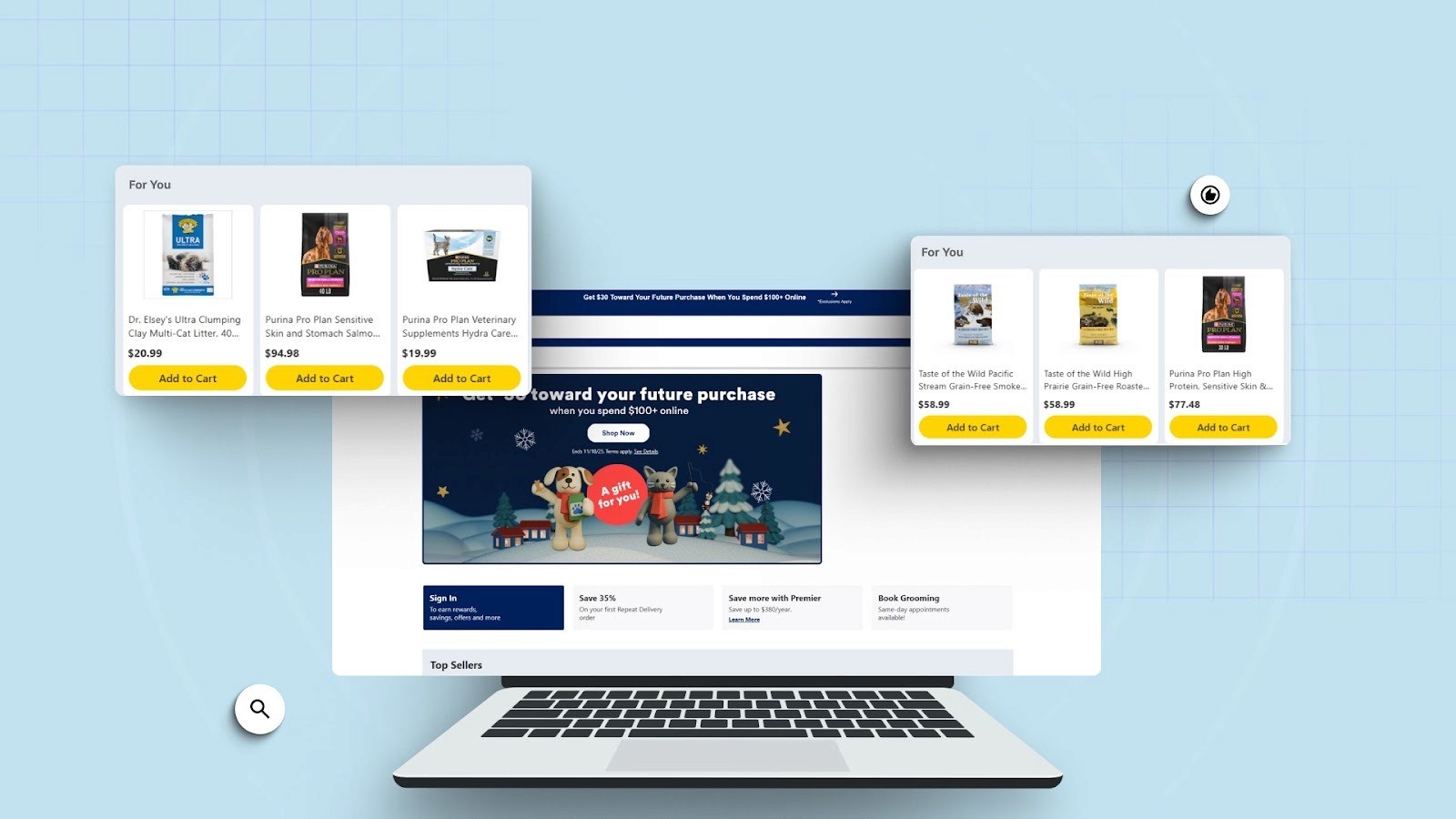
Petco personalizes the shopping experience by offering product recommendations based on a customer's past purchases and browsing behavior. This ensures that shoppers see relevant, personalized items for their pets.
Pro Tips:
Use replenishment reminders based on previous purchases and shelf life.
Show related products in the shopping cart to increase AOV.
Utilize customer profiles for hyper-targeted recommendations.
By using bundling and recommendations, Nudge helps you recover abandoned carts in real-time. The personalized upsell bundles encourage customers to return and complete their purchases, increasing both AOV and customer loyalty with minimal effort.
26. Fashion Nova’s Opt-In Form
Fashion Nova uses segmented opt-in forms to personalize the experience from the moment a visitor lands on the site. By capturing key customer data and segmenting them based on preferences, shopping behavior, or intent, the brand provides targeted content and personalized product recommendations.
Pro Tips:
Experiment with personalized CTAs like “I love saving money” to increase opt-ins.
Segment users based on browsing behavior and shopping intent for relevant product suggestions.
Use opt-in forms for building personalized post-click journeys that nurture the relationship.
27. Hobbycraft’s DIY Ideas
Hobbycraft goes beyond simple product recommendations by offering DIY project ideas specific to the items customers are viewing. This personalized content helps customers envision how they can use the products, motivating them to purchase additional tools and materials they might have missed.
Pro Tips:
Create shoppable videos for recommended projects and enable 1:1 live chat for personalized guidance.
Use social proof by showing completed DIY projects from real customers.
Trigger product suggestions based on specific project interests.
28. Baby Bjorn’s "Accessory Customization"
Baby Bjorn taps into personalization by offering customers the ability to customize baby carriers. This strategy enhances the customer connection with the product, utilizing the endowment effect (making customers feel that the product is truly theirs).
Pro Tips:
Limit customization options to a maximum of four to avoid choice paralysis.
Highlight the personal connection to the product in marketing messaging to increase LTV.
Personalize accessory bundles based on previous purchases or browsing history.
29. Nordstrom’s Handpicked Holiday Gift Guides
During peak holiday seasons, Nordstrom personalizes shopping by offering handpicked gift guides for various occasions, budgets, and recipients. The guides are powered by customer profiles and browsing history, improving AOV and conversion rates, especially when personalized based on user history.
Pro Tips:
Use loyalty program data to customize gift guides for returning customers.
Segment guides based on shoppers' past behavior (e.g., favorites, previous gifts, etc.).
Integrate location-based personalization (e.g., gifts for different climates) to increase conversion rates.
30. Adidas’s "Just For You" Retargeting
Adidas uses personalized retargeting ads to bring cart abandoners back. By addressing exit-intent behavior and incorporating product personalization, Adidas creates a sense of urgency with playful yet exclusive messaging like “psst...your cart is waiting!” This friendly, non-pushy approach helps to remind customers of their potential purchase and keeps the brand top-of-mind.
Pro Tips:
Trigger retargeting ads with personalized messaging based on cart contents and browsing behavior.
Use location and cultural relevance in retargeted ads (e.g., promoting local events or launches).
Offer exclusive discounts or limited-time offers to cart abandoners.
Also Read: Ultimate Guide On How To Get Started with Personalization
31. Vevor’s Surveys for Real-Time Shopper Feedback
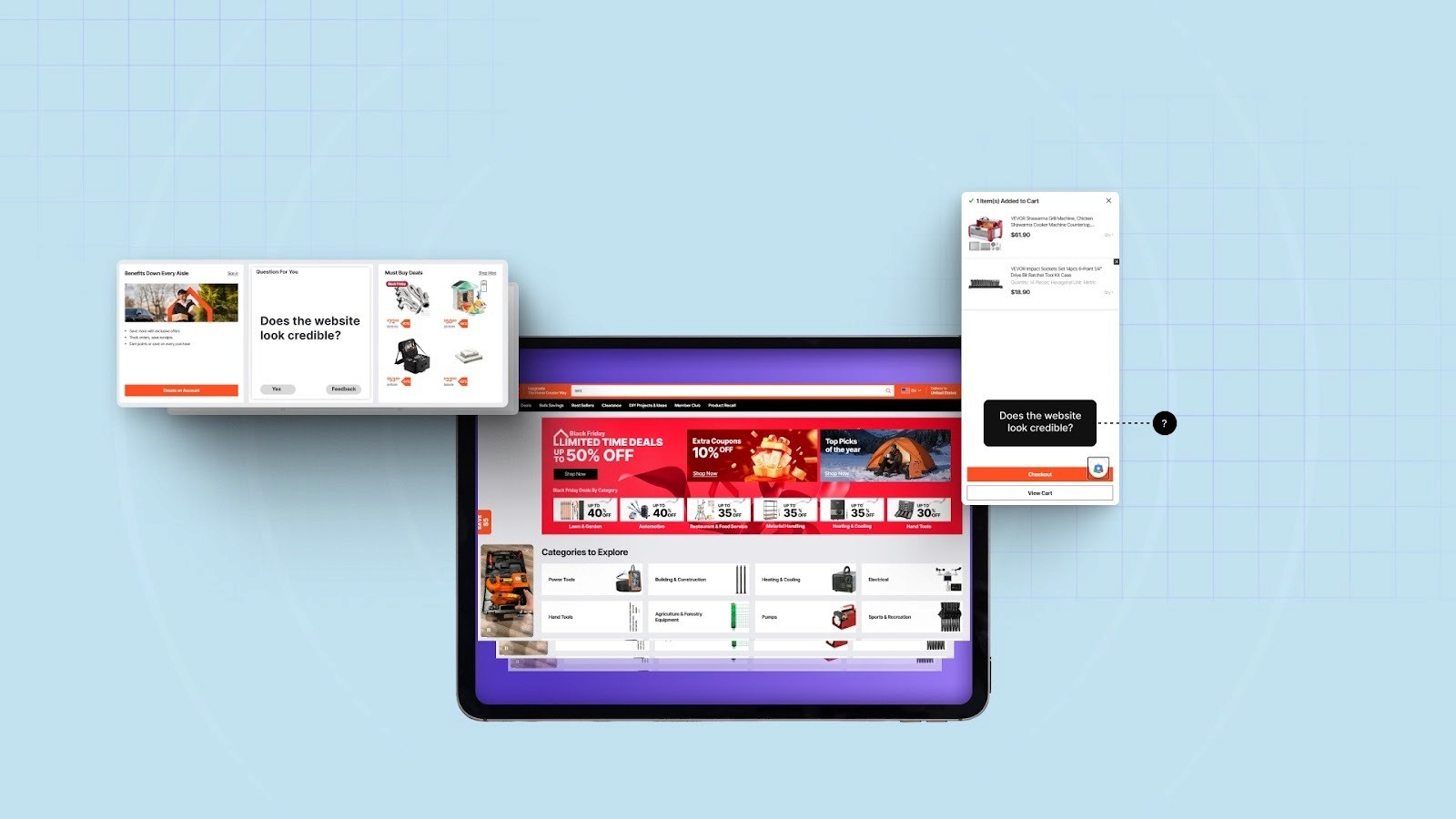
Vevor takes personalization to the next level by asking shoppers questions about their experience, like: “Does the website look credible?” or “Is the checkout process easy?” This real-time feedback helps Vevor adapt the site experience instantly. By integrating a sticky feedback button and 1:1 contact support, Vevor minimizes friction during the shopping journey.
Pro Tips:
Use real-time surveys to improve specific areas (checkout, trust signals, navigation).
Follow up with post-purchase surveys to gather insights and reduce friction.
Customize survey questions based on user behavior (new visitors vs. repeat customers).
32. Bark.co's Personalized Discount Code
Bark.co uses a simple yet effective personalization tactic by offering a personalized discount based on shoppers' profiles. Their fun and engaging approach gives customers a 5% discount when they check the box, with the only condition being that their dog is the best.
Pro Tips:
Use personalized discount messages like “Get 5% off for {dog name}” to make the offer feel unique.
Integrate quizzes into the user journey for deeper insights.
Use humorous messaging to create emotional connections with shoppers.
As we move forward, discover how you can take your personalization strategy to the next level with Nudge.
Take Your eCommerce Personalization to the Next Level with Nudge
If you're looking to make the most out of your high-traffic eCommerce site, Nudge is the solution that growth marketers, UX specialists, and conversion experts swear by. If you’re trying to improve conversions, AOV, or retention, Nudge gives you the tools to make it happen with minimal effort and maximum impact.
Why should you choose Nudge for your ecommerce brand?
Commerce Surfaces: Nudge uses AI-powered landing pages and PDPs to personalize each shopper's experience in real time based on their behavior, location, and intent, improving conversion rates.
AI Product Recommendations: Provide product bundles and recommendations based on purchase history and shopping behavior, ensuring relevance and increasing AOV with minimal effort.
Contextual Nudges: Use exit-intent popups and urgency messages triggered by shopper actions, improving engagement and conversion by offering the right deal at the right time.
Product Experiences: Nudge makes it easy to launch tailored product experiences across your app. Choose from a library of interactive features, like personalized stories, nudges, gamification, rewards, and surveys.
Cart Abandonment Recovery: Recover abandoned carts with personalized nudges and offers, ensuring higher conversion rates and retention with AI-driven, behavior-based recovery tactics.
Funnel Personalization: Nudge personalizes the entire shopping funnel, adapting based on visitor behavior, driving higher conversion rates and reducing drop-offs at key touchpoints.
Bundling & Recommendations for Higher AOV: Increase AOV by offering personalized product bundles based on shopper interests and inventory data, improving both the customer experience and revenue.
1:1 Personalization: Nudge delivers experiences based on real-time behavioral data, providing the right content and product recommendations to each shopper, increasing engagement and LTV.

Also Read: Top 10 E-Commerce Personalization Tools to Increase Conversions (2025)
With Nudge, you can personalize product recommendations, increase AOV, and reduce cart abandonment.
Conclusion
For UX specialists working on high-traffic eCommerce sites, using real-time data and behavioral insights allows you to craft shopping experiences that feel relevant. As you experiment with these tactics, remember to track key metrics like conversion rate, AOV, and customer retention to measure success and continuously refine your approach.
Personalizing your shopping funnel with Nudge means you can automatically adapt the experience based on how shoppers are interacting with your site. This reduces drop-offs and ensures the shopper journey is smooth, ultimately leading to more conversions and a better customer experience.
Book a demo today with Nudge’s AI-powered platform and take control of your customer journey.
FAQs
1. Why should you use personalization for your eCommerce website?
Personalization improves engagement, increases conversions, and enhances customer loyalty by offering tailored experiences based on preferences, driving repeat purchases and better-targeted marketing.
2. How to create personalized recommendations?
Utilize customer data like browsing history and past purchases to power recommendation algorithms, offering relevant products across key touchpoints like the homepage and checkout.
3. What is eCommerce personalization?
eCommerce personalization creates the shopping experience based on customer behavior, preferences, and past interactions, increasing engagement, conversions, and customer retention.
4. How can personalization improve conversion rates?
Personalization enhances the shopping experience by showing relevant products and offers, reducing friction, and increasing shopper confidence, leading to higher conversion rates.
5. What are the best personalization examples for product recommendations?
Using real-time browsing data, sites like Amazon and Saks provide personalized product recommendations, driving engagement and improving sales by showing what customers are likely to buy.
6. How do quizzes help in eCommerce personalization?
Quizzes, like Olay’s skincare quiz, gather customer insights and provide product recommendations, increasing LTV and customer engagement by offering customized solutions.
7. Why are dynamic recommendations important for retention?
Dynamic recommendations adapt to customer behavior, showing products and offers based on previous actions, which keeps customers engaged and encourages repeat purchases.