AI Search Visibility
AI Search Visibility Blueprint for 2026: Measure, Optimize, Grow
AI search is rewriting the rules of discovery. To measure and maximize visibility in AI search, brands must shift from keyword rankings to answer engine optimization tracking how often models cite you, where you’re surfaced, and whether those appearances drive conversion. This blueprint lays out how to baseline your AI presence, optimize content and technical foundations for machine readability, and build enduring authority across Perplexity, ChatGPT, and Google AI Overviews.

Sakshi Gupta





AI search is rewriting the rules of discovery. To measure and maximize visibility in AI search, brands must shift from keyword rankings to answer engine optimization tracking how often models cite you, where you’re surfaced, and whether those appearances drive conversion. This blueprint lays out how to baseline your AI presence, optimize content and technical foundations for machine readability, and build enduring authority across Perplexity, ChatGPT, and Google AI Overviews. The result: more frequent, higher-quality mentions in AI answers and a tighter path from discovery to purchase. Nudge’s approach integrates visibility benchmarking, prompt-aligned shoppable funnels, and SKU-level analytics so mid-market and enterprise DTC brands can own the AI commerce funnel end-to-end.
Strategic Overview
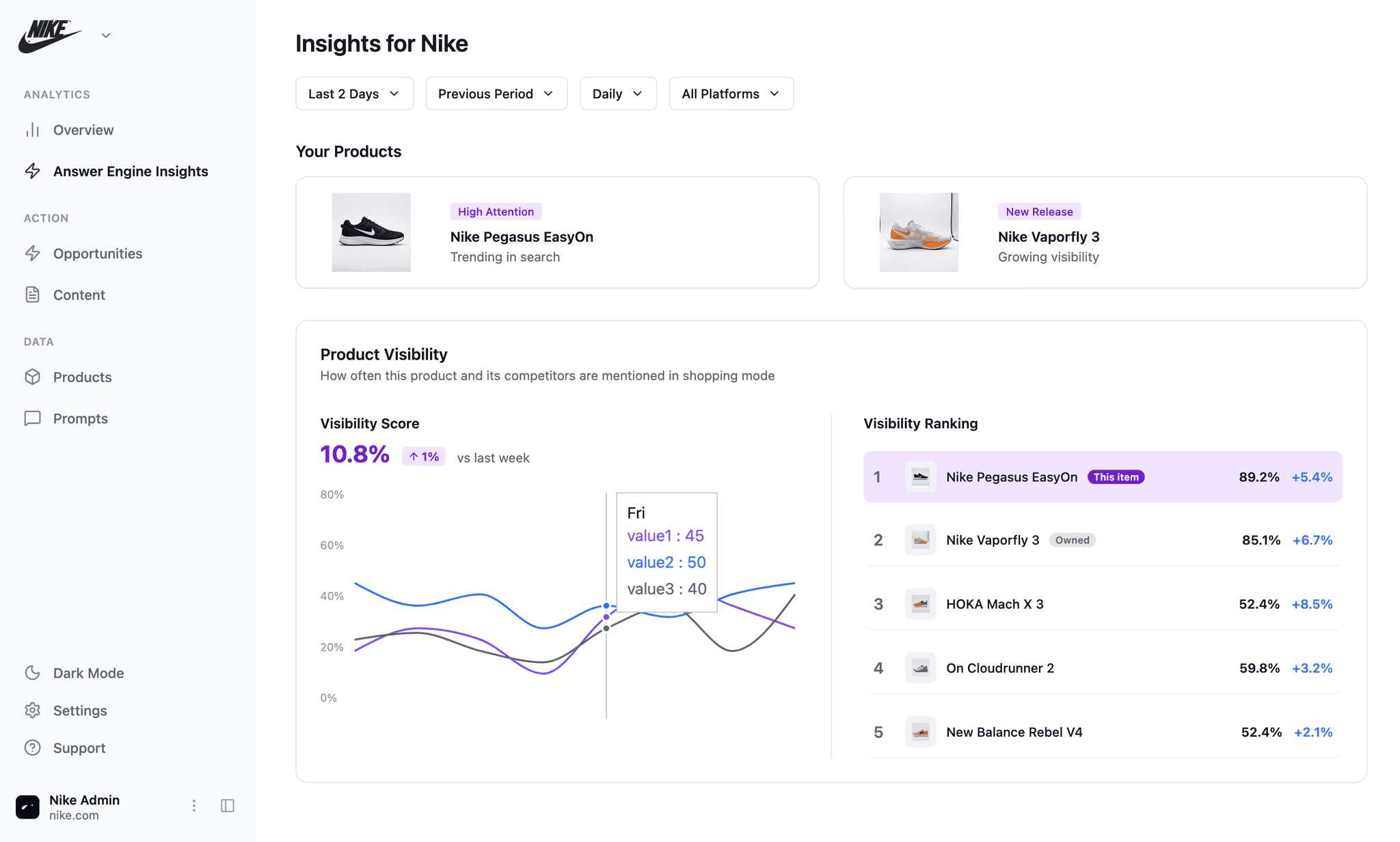
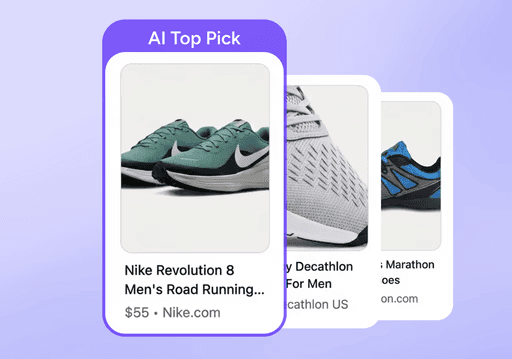
Answer Engine Optimization (AEO) prioritizes being selected, cited, and recommended by AI systems, not just ranking in blue links. That means measuring brand mentions and citations across AI surfaces, optimizing content for extraction, and strengthening entities and schema so models trust your information. Framework-driven programs outperform ad-hoc tactics because they unify measurement, content, and technical work into one feedback loop that compounds over time. As AI search accelerates, teams that pair AI visibility tracking with conversion-ready experiences will capture both attention and revenue.
Baseline Measurement of AI Search Visibility
Traditional SEO metrics don’t capture how AI systems assemble answers. AI models synthesize sources, weigh entity authority, and display rotating citations. so “position one” is replaced by “are we referenced, how often, and by whom?” A baseline should quantify presence (appearances, mentions), influence (share of voice), and quality (authority of citing sources) across engines. Industry guidance emphasizes new KPIs like mention frequency, AI Share of Voice (SOV), and citation tracking to produce an actionable starting point for growth, especially as responses vary by prompt and user context (Search Engine Land on measuring AI visibility). To reduce blind spots, use a multi-tool setup and cross-validate results across ChatGPT, Google AI Overviews, Gemini, and Perplexity, as practitioners note in hands-on walkthroughs (ThinkShaw guide).
Key Metrics to Track Beyond Traditional Rankings
To reflect how AI chooses and cites sources, expand your KPI set:
Mention frequency: How often your brand is referenced (with or without links) across AI answers. Rising frequency signals improving discoverability in AI contexts.
AI Share of Voice (SOV): The percent of relevant AI mentions that belong to your brand versus competitors—calculated across a defined prompt set and engines (SEL’s measurement framework).
Citation sources and authority: Which URLs are cited when your brand appears, and the authority, expertise, and freshness of those sources.
Entity health: Consistency and completeness of your brand and product entities across site schema, profiles, and knowledge bases (coverage, correctness, and sameAs links).
AI referral conversion rate: Conversions attributable to AI surfaces (e.g., sessions initiated from cited links in AI answers or AI-assisted pathways).
Quick reference: SEO vs. AEO metrics
Legacy SEO metric | Purpose | AI/AEO visibility metric | Why it matters in AI search |
|---|---|---|---|
Keyword rankings | Visibility proxy | Mention frequency | AI answers surface sources without fixed ranks |
Organic traffic | Demand capture | AI referrals and assisted conversions | Ties AI appearances to revenue |
Backlink count | Authority proxy | Citation authority and source diversity | Models weigh trustworthy, diverse citations |
Impressions (SERP) | Reach indicator | Share of Voice (SOV) | Quantifies competitive presence across AI answers |
Branded search volume | Brand demand | Entity health score | Clean, consistent entities boost selection confidence |
CTR | SERP engagement | Retrieval placement rate | How often you’re cited or linked in the visible answer pane |
Clarifying terms:
AI brand mentions: References to your brand or products within AI answers, cited or uncited.
AI Share of Voice: Percentage of total relevant AI mentions owned by your brand across engines and prompts.
AI referral conversion: Purchases or goals originating from AI-initiated sessions.
How to Benchmark Against Competitors in AI Search
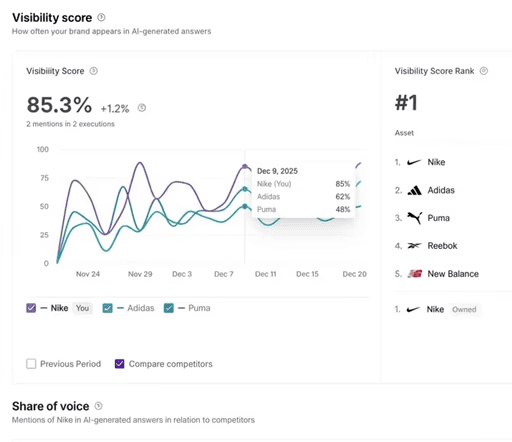
Competitive benchmarking starts with a scoped prompt universe. Map the top transactional and informational prompts for your category on Nudge's dashboard, then test them across ChatGPT, Google AI Overviews, Gemini, and Perplexity. For each prompt, log:
Which brands are mentioned or cited
Which URLs are referenced (and their authority)
The placement and persistence of appearances across refreshes
Sentiment/context of mentions
Compute SOV per engine and overall, then drill into citation authority to identify gaps where competitors earn higher-trust citations (Search Engine Land’s approach). For practical how-tos and templates, see practitioner roundups that emphasize appearance rates and source analysis to prioritize content and schema fixes (Superlines overview).
Setting Up Infrastructure for Continuous AI Traffic Monitoring
Because AI answers evolve rapidly, set up continuous, prompt-based monitoring. Best-practice stacks combine:
Multi-engine trackers that run scheduled prompts and log mentions, citations, and placement
AI-specific platforms that aggregate SOV, entity coverage, and citation sources
Generalist SEO suites with AI modules for crawl/health diagnostics and change monitoring
Nudge has all of this tied into its tool: complete with AI visibility benchmarking tied to shoppable experiences and SKU-level analytics—turning insights into revenue impact, not just reports.
Optimizing Content for AI Search Visibility
AI engines prefer concise, source-ready content that answers intent directly, is easy to extract, and is backed by reputable citations. Move from keyword-dense copy to answer-first formats: lead with the conclusion, state facts cleanly, and attribute claims. Studies of AI Overviews and generative answer selection repeatedly highlight structure, clarity, and source quality as ranking factors for inclusion (Search Engine Land on boosting AI visibility).
Structuring Content for AI Readability and Extraction
Make pages machine-parsable:
Use atomic paragraphs: one idea per short paragraph with a descriptive heading that mirrors a user question.
Add explicit Q&A sections answering your most valuable prompts in natural language.
Present key facts and specs as crisp statements or bulleted lists, and consolidate data in small tables.
Keep claims verifiable and close to their citations; avoid burying facts in narrative.
Maintain consistent terminology across pages to reinforce entity signals.
Atomic content means small, focused, logically chunked units that models can lift verbatim without ambiguity.
Leveraging Answer-First and Evidence-Based Content Formats
Transform priority pages into answer hubs:
Product pages: Start with “Who it’s for,” “What it does,” and the one-sentence value claim; follow with specs, comparisons, and proof (reviews, certifications, benchmarks).
Category and service pages: Lead with the definitive answer, then show frameworks, checklists, and linked sources.
Example transformation:
Before: A 1,800-word blog weaving history, trends, and product mentions.
After: A 150-word summary answering the core question, three bullet takeaways, a comparison table, and two cited data points—followed by deeper context. Guides from practitioners show that answer-led rewrites increase inclusion in AI answers (Tactics to Improve AI Search Visibility).
Aligning Content with User Intent and Natural Language Queries
Map the top AI prompts users actually ask and rewrite sections to mirror that phrasing. Prioritize:
Conversational headings that restate the question
Prompt alignment: cover who it’s for, what matters most, trade-offs, and next steps
Natural language optimization: avoid jargon; use consistent, human phrasing
Conversion context: clarify benefits, use cases, compatibility, and pricing triggers that AI answers can summarize accurately
This alignment improves both selection by LLMs and downstream conversion when users click through (Search Engine Land factors).
Technical Foundations for AI Search Success
Technical excellence makes your brand model-readable. Robust schema, crawlability, and entity consistency compound over time, strengthening confidence signals that AI systems rely on. Focus on structured data, site performance, and clean entity management across your web and profile ecosystem.
Implementing Structured Data and Schema Markup
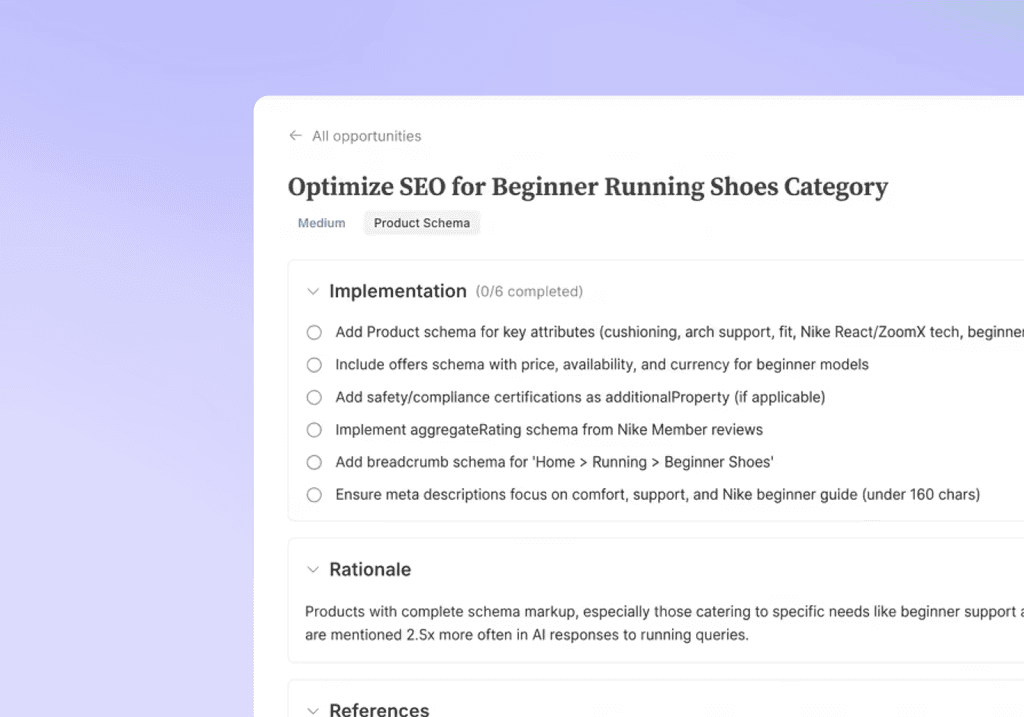
Schema markup is code added to web pages that clarifies the meaning of content, improving AI and search engine comprehension. For commerce brands, prioritize Product, FAQ, HowTo, Organization, Review, and Breadcrumb schema. Validate with Google’s Rich Results Test and monitor errors in Search Console; deploy via CMS-native JSON-LD, tag managers, or plugins. See Google’s guidance on structured data implementation and eligibility for enhanced displays (Google Search Central: structured data). For team workflows and validation aids, schema-focused tools and generators can accelerate coverage.
Enhancing AI Crawlability and Content Retrievability
Make it easy for crawlers and models to access and extract your information:
Improve page speed and Core Web Vitals; reduce render-blocking scripts.
Strengthen internal linking to surface entity pages and reduce crawl depth.
Maintain XML sitemaps (index + news/product feeds) and ensure mobile responsiveness.
Audit robots.txt, meta robots, canonicals, and JavaScript rendering for accidental blocks or duplication. Google’s crawling and indexing guidance remains the baseline for discoverability across AI surfaces (Google on crawling and indexing.
Ensuring Consistent Entity Representation and Schema Coverage
Consistency fuels trust. Standardize brand, product, and service names; use canonical URLs; and align schema across all instances. Add sameAs links from Organization and Product schema to authoritative profiles (LinkedIn, Crunchbase, Merchant Center, app stores). Run automated schema audits to find coverage gaps and out-of-date attributes, and ensure identifiers (e.g., GTIN, SKU, brand) are present wherever applicable.
Building Authority and Entity Recognition in AI Ecosystems
AI engines weigh entity authority, cross-source mentions, and citation sentiment when selecting which brands to reference. Positive, consistent coverage across reputable domains, clean knowledge graph entries, and up-to-date product data all increase your chance of recommendation—and conversion-grade traffic when users click through.
Developing Entity Authority and Knowledge Graph Inclusion
Entity authority is the perceived expertise and trust your brand or product holds within knowledge graphs that power AI recommendations. Strengthen it by:
Claiming and enriching profiles on Wikidata, then linking from your Organization schema via sameAs to reinforce identity (Wikidata introduction).
Ensuring consistent NAP and brand descriptors across your site and major profiles.
Publishing high-quality, cited resources (research, guides, specifications) that third-party publishers reference—improving citation diversity and sentiment.
Using complete product identifiers (brand, GTIN, MPN) in Product schema and feeds to tie web content to retail and catalog graphs.
Earning reviews and expert coverage on authoritative sites; models favor trusted, up-to-date sources.
Bringing it all together: Measure mentions and SOV, optimize content for extraction and intent, harden your technical and entity foundations, and invest in citation-worthy proof.
With Nudge’s integrated benchmarking and shoppable funnels, you can turn AI visibility into measurable growth from discovery to purchase.
AI Search Visibility: Track where AI mentions your products, how your brand is positioned, and which shopping-intent prompts matter most, so marketers can optimize PDPs and landing pages for real AI demand.
Shoppable Funnels: Turn prompt queries into conversion-ready funnels by aligning landing pages, product grids, and bundles to the exact criteria shoppers express, improving activation rates and post-click.
Product Experiences: Personalize product messaging, recommendations, and offers based on UTMs, ad source, location, and behavior, ensuring AI-driven traffic lands on experiences built for intent, not averages.