Shoppable Funnels
How to Convert Shoppers Who Arrive from AI Assistants
AI-referred shoppers are your highest-converting traffic source. Here is how to build the shoppable AI funnel - from citation to checkout - that captures them.

Sakshi Gupta





To convert shoppers arriving from AI assistants, brands must build a purpose-built shoppable AI funnel: one where landing pages match the AI's description exactly, on-site assistance engages proactively, and checkout is frictionless. Semrush data shows AI-referred shoppers convert at 4.4x the rate of organic visitors, yet fewer than 12% of marketing teams have a documented strategy to capture them.
Why AI-Referred Shoppers Are Your Highest-Value Traffic - and Why Most Brands Waste Them
AI-referred traffic is the most conversion-ready channel in ecommerce today. Yet the brands best positioned to benefit are consistently failing to capture it. According to Adobe's 2025 holiday data, AI-referred shoppers converted 31% more often, spent 45% more time on site, and were 33% less likely to bounce compared to other traffic sources. In March 2026, AI traffic converted 42% better than paid search and email. The scale of the opportunity is equally striking: AI-driven traffic to U.S. retail sites grew 693% during holiday 2025 and 393% year-over-year in Q1 2026.
The gap is not in traffic. It is in funnel readiness. Audit data shows that 54% of brands that rank well on Google are not cited by AI systems at all, and fewer than 12% of marketing teams have a documented AI conversion strategy. The revenue is being left at the funnel entrance, not the traffic source.
What Makes AI-Referred Shoppers Behave Differently from Every Other Traffic Source
AI-referred visitors arrive pre-qualified. The assistant has already answered their objections, matched them to a product, and explained why it fits their need. This is why their on-site behavior is categorically different from organic or paid visitors. Research shows they spend 48% more time on site, browse 13% more pages per visit, and complete purchases 47% faster than non-AI-assisted shoppers.
The volume behind this behavior is significant. ChatGPT alone processes 50 million shopping-related queries daily, and 58% of consumers now say generative AI has replaced traditional search engines as their primary source for product recommendations, per Capgemini. AI-attributed orders on Shopify grew 11x between January 2025 and March 2026.
Traffic Source | Avg. Conversion Rate | Time on Site | Bounce Rate | Purchase Speed |
|---|---|---|---|---|
AI-Referred | 11.4% (Similarweb) | +48% vs. baseline | 33% lower (Adobe) | 47% faster (Rep AI) |
Organic Search | 5.3% (Similarweb) | Baseline | Baseline | Baseline |
Paid Search | Lower than AI by 42% (Adobe) | Below AI-referred | Higher than AI-referred | Standard |
AI-Assisted On-Site | 12.3% (Adobe) | Highest engagement | Lowest | Fastest |
The 5-Stage Shoppable AI Funnel: From Citation to Checkout
A shoppable AI funnel has five distinct stages. Each must be purpose-built for shoppers arriving from AI assistant recommendations, not adapted from traditional funnel templates. Nudge's shoppable funnels platform is built to operationalize all five.
Stage 1: AI Discoverability
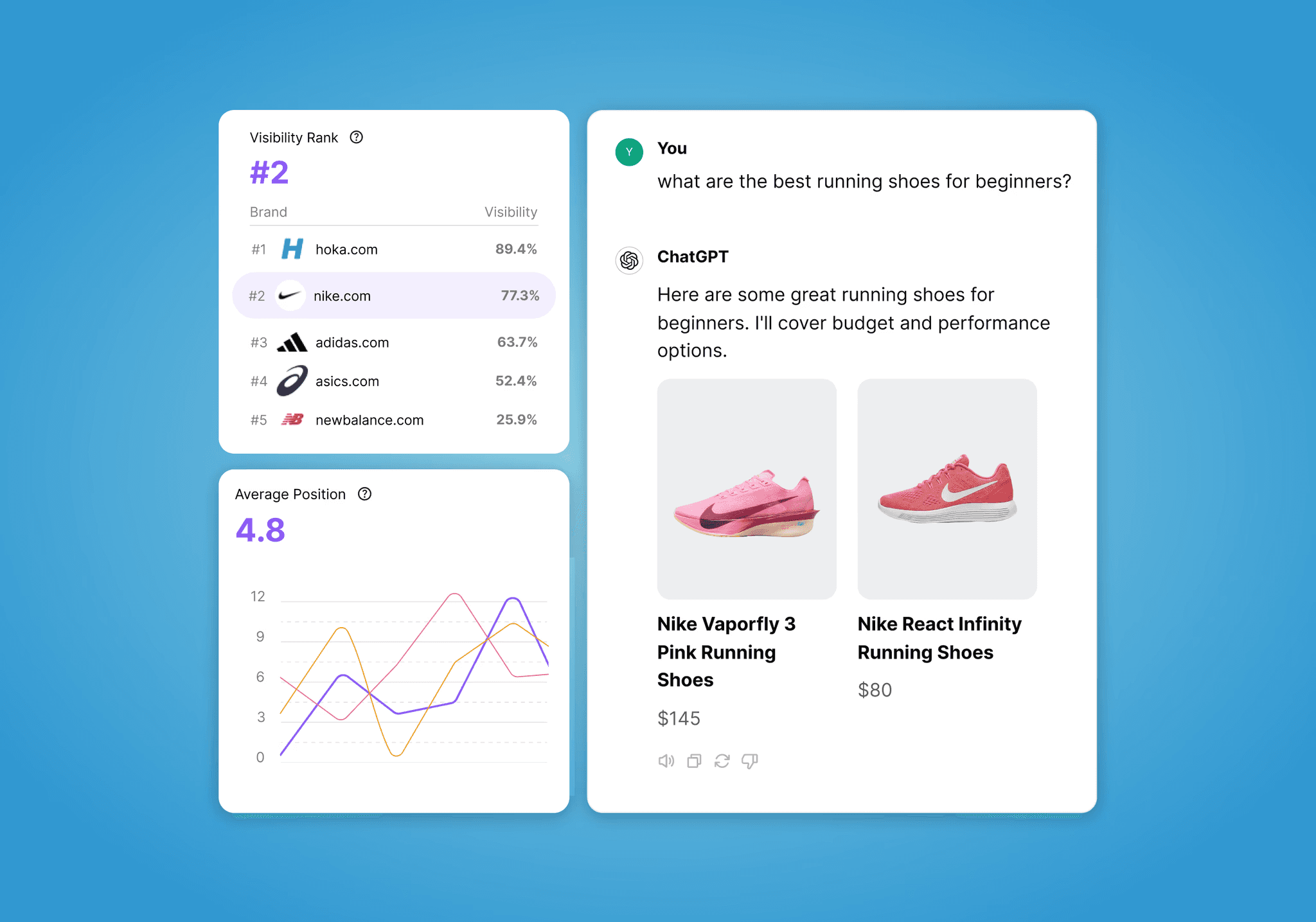
Your brand must appear in AI responses before any funnel can operate. Over 91% of ecommerce queries now trigger AI-generated results, with fashion and beauty reaching 94-95% AI coverage. Implement Schema.org Product markup on every product detail page, covering name, brand, SKU, price, availability, condition, and description. Practice Generative Engine Optimization (GEO) as a discipline distinct from SEO: only 17-38% of AI Overview citations come from top-10 Google organic results, meaning first-page rankings do not guarantee AI visibility.
Stage 2: Click-Through Alignment
Matching your landing page to the AI's description of your product is the single most important conversion lever for AI-referred traffic. AI referral conversion rates are a function of accuracy, not volume: a shopper who arrives from a recommendation with a correct product description and price converts at a high rate; one who arrives to a mismatched page bounces immediately. Audit every AI citation of your brand and verify the description, price, and availability match your live PDP.
Stage 3: Prompt-Matched Landing Pages
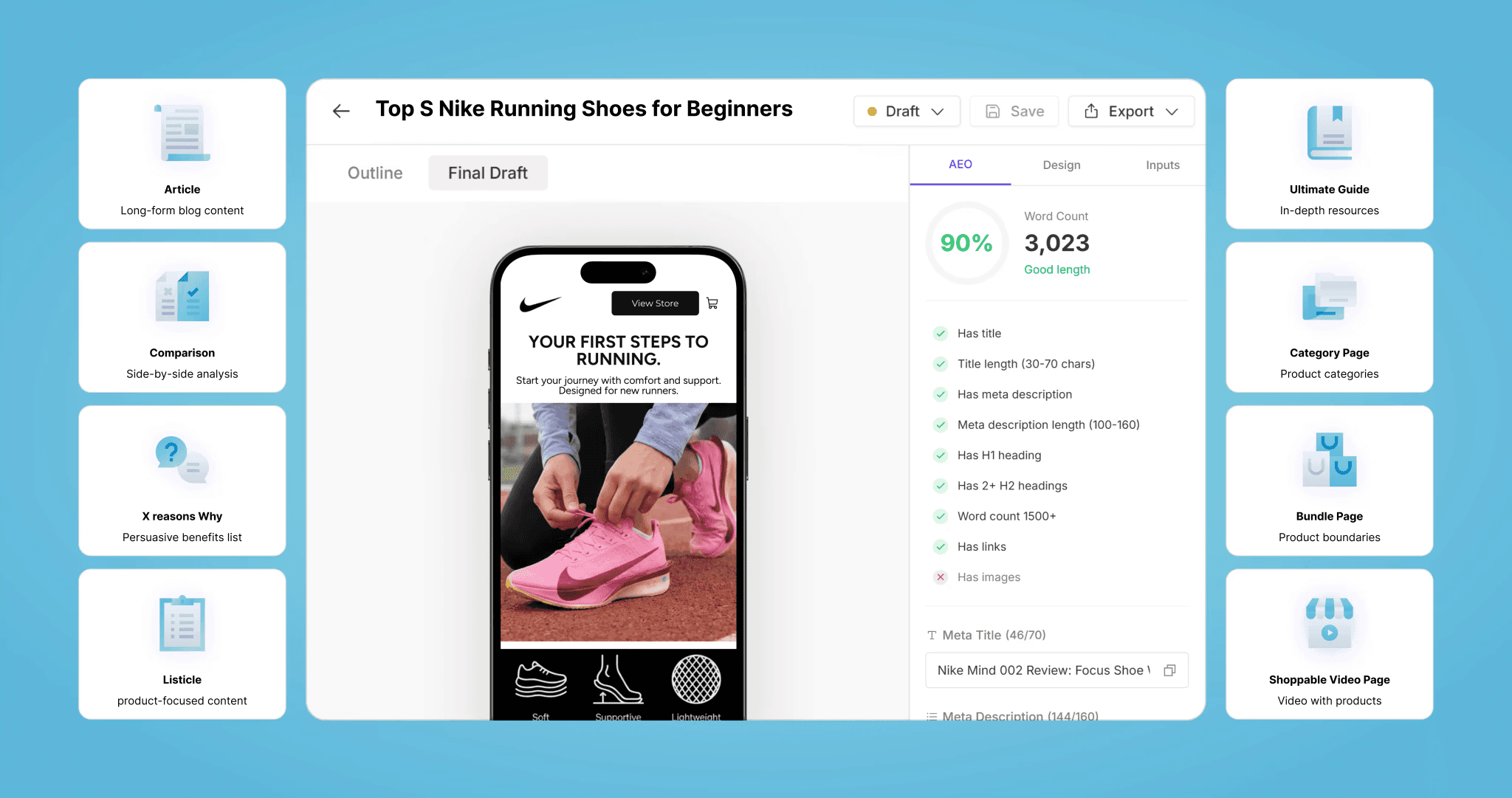
Dynamic landing pages that mirror the shopper's original AI query outperform static pages significantly. Studies show dynamic landing pages convert 25.2% more mobile users than static pages by delivering contextually matched content. For AI-referred traffic, this means dynamically surfacing the specific use case, comparison, or problem the shopper queried. Nudge's guide to matching landing pages to AI assistant queries covers the implementation pattern in detail.
Stage 4: On-Site AI Assistance
Proactive on-site AI engagement is a high-leverage conversion tactic. When shoppers are greeted by an AI assistant proactively rather than having to initiate the chat themselves, nearly 45% engage. That engagement delivers results: proactive conversational AI achieves 35% cart abandonment recovery rates, per Rep AI research. Shoppers who interact with an on-site AI assistant convert at 12.3%, nearly four times the 3.1% rate of those who do not.
Stage 5: Frictionless Checkout
Checkout friction eliminates the conversion gains built in stages one through four. ChatGPT's Instant Checkout has been live since September 2025, serving 900 million weekly users, with over 1 million Shopify merchants already opted in. Google's Universal Commerce Protocol, announced in January 2026 with Walmart, Target, Shopify, and 20+ partners, extends native checkout capabilities further. Ensure your store is integrated with both protocols to capture AI-initiated purchase intent at the moment it peaks.
How to Optimize Your Catalog So AI Assistants Cite and Convert Your Products
AI citation is not a marketing outcome: it is a data quality outcome. The structural requirements that determine whether AI systems cite your brand are technical, not editorial. Adobe's AI Content Visibility Checker found the average U.S. retail homepage scores only 75% for AI readability, and individual product pages average just 66%. A quarter to a third of your product content is invisible to the AI systems sending your best-converting traffic.
Product data accuracy is equally critical. A McKinsey report drawing on insights from over 3,000 ecommerce companies found that product data errors cost up to 23% in clicks and 14% in conversions. For large catalogs, these errors compound at scale. Nudge's SKU-level catalog optimizer and AI search visibility platform are built to operationalize catalog accuracy and GEO compliance across enterprise-scale product sets.
GEO results can appear in 30-60 days, compared to 6-12 months for traditional SEO, because LLMs recrawl and re-evaluate content more frequently. The four structural requirements every catalog team should prioritize:
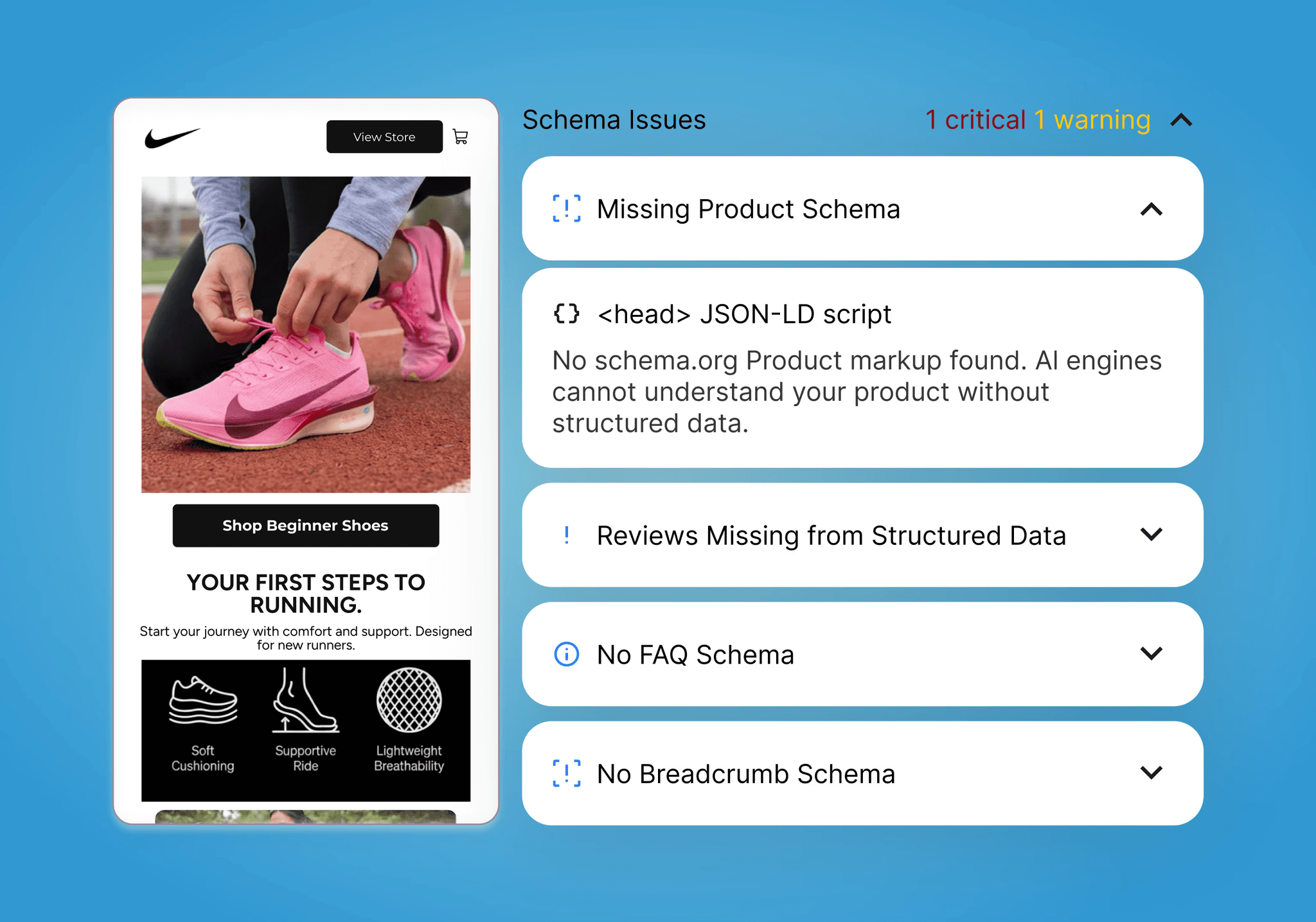
Schema.org Product markup on every PDP: name, brand, SKU, price, availability, condition, and description are all required fields.
AI content readability scoring: Audit every PDP against AI readability benchmarks and close the gap from the 66% average.
Product data accuracy governance: Implement a review cycle to eliminate the data errors that cost clicks and conversions at scale.
GEO as a distinct discipline: Treat AI citation optimization separately from traditional SEO, with its own KPIs, tooling, and ownership.
Platform-by-Platform Conversion Playbook: ChatGPT, Perplexity, Google AI Overviews, Gemini, and Copilot
Each AI platform sends a distinct shopper profile with different conversion characteristics. Generic optimization does not work. The table below provides a platform-specific playbook based on available evidence.
Platform | Shopper Behavior | Conversion Characteristic | Primary Optimization |
|---|---|---|---|
ChatGPT | Highest volume; broad product discovery across categories | Sends 97% of LLM referral traffic; 29% of Gen Z have purchased directly via ChatGPT shopping | Opt into Instant Checkout (900M weekly users, 1M+ Shopify merchants enrolled); optimize for citation volume via GEO and Schema markup |
Perplexity | High-consideration, research-heavy queries; pre-purchase comparison behavior | 57% higher average order value than other LLM sources; triggered shopping results on 92% of beauty prompts | Optimize product content for high-price, high-consideration queries; prioritize detailed specifications and comparison-friendly copy |
Google AI Overviews | Integrated into existing Google search; familiar interface with AI-generated summaries | Brands cited earn 35% more organic clicks and 91% more paid clicks; organic CTR dropped 61% for queries with AI Overviews if not cited | Pursue citation within AI Overviews as the primary goal; being cited reverses the CTR decline and amplifies both organic and paid performance |
Gemini | Deep integration with Google Shopping and Android ecosystem | Strong for structured product data discovery; tied to Google Shopping feed quality | Maintain high-quality Google Shopping feeds; ensure structured data accuracy across all product attributes |
Microsoft Copilot | High purchase intent; business and prosumer buyer profiles | Users are 53% more likely to purchase within 30 minutes; 194% more likely when shopping intent is present | Optimize for high-intent, transactional queries; ensure product availability and pricing data is real-time accurate for Copilot-indexed content |
Measuring AI Funnel Performance: The Metrics That Actually Matter
Standard GA4 attribution models significantly undercount AI-referred traffic because most LLM referrals appear as direct or 'other' in analytics. This means brands optimizing based on default attribution are making decisions on incomplete data. The KPI framework for AI funnel performance requires a dedicated measurement layer, not a report filter.
The six metrics every AI funnel should track:
AI citation rate: How frequently your brand appears in relevant AI responses across ChatGPT, Perplexity, Gemini, and Copilot for your target product queries.
AI referral traffic volume and growth rate: Segment by known LLM referrer domains (chat.openai.com, perplexity.ai, gemini.google.com, etc.) using referrer-based segmentation.
AI-specific conversion rate: Benchmark against the 11.4% Similarweb average for AI-referred traffic. Gaps below this benchmark indicate funnel misalignment, not a traffic problem.
AI-attributed average order value: Track separately by platform, particularly for Perplexity where AOV runs 57% higher than other LLM sources.
Prompt-to-purchase latency: Measure the time from first AI-referred session to completed purchase. AI-assisted shoppers complete purchases 47% faster, making this a leading indicator of funnel health.
Cart abandonment recovery rate from AI-assisted sessions: Benchmark against the 35% recovery rate achievable with proactive on-site AI engagement.
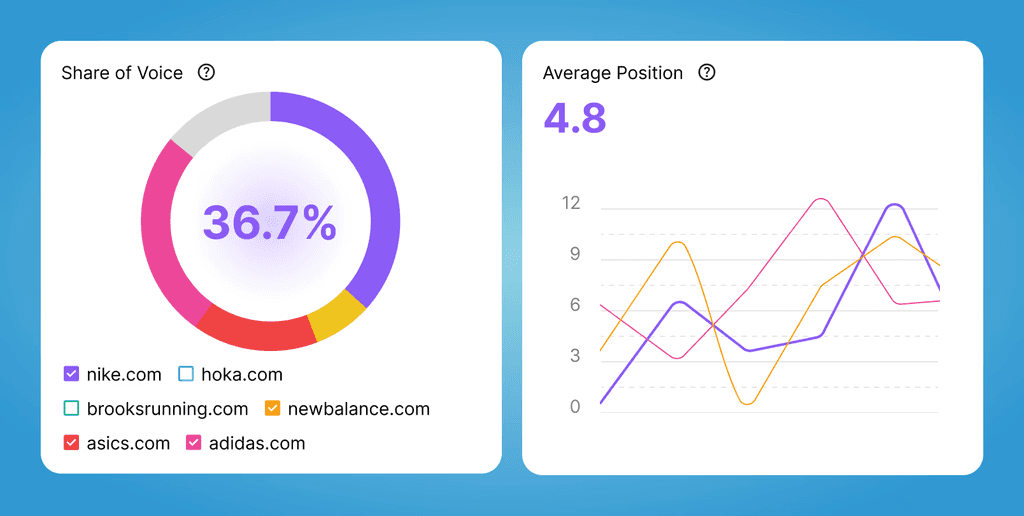
Implement UTM parameters on all AI-trackable links and use a dedicated AI attribution layer to capture prompt-to-purchase journeys. Nudge's AI visibility tracking capabilities are purpose-built for this measurement challenge, providing SKU-level citation tracking and AI-attributed revenue reporting across platforms.
The strategic stakes for getting this measurement infrastructure right are significant. McKinsey projects agentic commerce could redirect $3-5 trillion in global retail spend by 2030. Brands that build accurate AI attribution now will have the data advantage when that shift accelerates. Explore Nudge's complete guide to shoppable AI funnels and ecommerce conversion funnel optimization for implementation depth on each stage.
Ready to Convert AI-referred Traffic? Book a demo!
Nudge is the only enterprise platform that unifies AI search visibility, prompt-aligned shoppable funnels, and SKU-level catalog optimization. From citation to completed purchase, Nudge gives commerce teams control over every step of the AI-referred shopper journey. Request a pilot to see how Nudge can lift your AI-referred conversion rate against the 11.4% Similarweb benchmark.
Frequently asked questions
Why do AI-referred shoppers convert better than organic or paid traffic?
AI assistants pre-qualify intent and resolve objections before the click, sending shoppers with a specific product already in mind. Adobe data shows AI-referred visitors convert 42% better than paid search, spend 45% more time on site, and are 33% less likely to bounce. On-site, shoppers who interact with an AI assistant convert at 12.3% - nearly four times the 3.1% rate of those who do not.
What is a shoppable AI funnel and how is it different from a traditional ecommerce funnel?
A shoppable AI funnel is purpose-built for shoppers arriving from AI assistant recommendations. Unlike static traditional funnels, it dynamically matches landing pages to the AI description of your product, deploys on-site AI assistance proactively, and integrates with AI checkout protocols like ChatGPT Instant Checkout. You can learn more in Nudge's overview of shoppable AI funnels at nudgenow.com/platform/shoppable-funnels.
How do I get my products cited by ChatGPT, Perplexity, and Google AI Overviews?
Implement Schema.org Product markup on every PDP, improve AI content readability scores (average PDPs score only 66% per Adobe), ensure product data accuracy, and practice Generative Engine Optimization (GEO) as a discipline distinct from SEO. Only 17-38% of AI Overview citations come from top-10 Google results, so first-page rankings alone are not sufficient. GEO results can appear in 30-60 days, compared to 6-12 months for traditional SEO.
Which AI platform sends the most ecommerce traffic, and which converts best?
ChatGPT sends 97% of LLM referral traffic, making it the volume leader. Perplexity delivers 57% higher average order value, making it the quality leader for high-consideration purchases. Microsoft Copilot users are 194% more likely to purchase when shopping intent is present, making it highly effective for transactional, high-intent queries.
How do I measure AI-referred conversions accurately in Google Analytics?
Most LLM referrals appear as direct or other in GA4, causing significant undercounting. Implement UTM parameters on AI-trackable links, segment by known LLM referrer domains such as chat.openai.com and perplexity.ai, and use a dedicated AI attribution layer to capture prompt-to-purchase journeys. Nudge's AI visibility tracking capabilities are designed specifically for this measurement challenge.