Shoppable Funnels
Map Product Content to AI Shopper Questions: 7 Tactics
Seven proven tactics for aligning product content with the natural-language questions shoppers ask ChatGPT, Perplexity, and Gemini - and converting AI-referred traffic at 4x higher rates.

Kanishka Thakur





Key Takeaways
AI-referred shoppers convert at 4.4x the rate of organic search visitors, making prompt-aligned product content the highest-ROI optimization a commerce team can make in 2025.
Shoppers ask AI chatbots comparison, use-case, and fit questions - not keyword queries - so product pages must answer natural-language intent to earn citations from ChatGPT, Perplexity, and Gemini.
Structured product data (schema, spec tables, review counts) increases AI citation rates by 73%, yet 89% of ecommerce sites implement SKU schema incorrectly.
AI engines select products based on authoritative list mentions (41%), awards (18%), and review volume (16%) - not domain authority or backlinks - giving well-structured mid-market catalogs a real shot at top citations.
Nudge's shoppable AI funnel platform maps SKU-level content to specific shopper prompts, closing the gap between AI discovery and on-site conversion in a single governed workflow.
AI chatbots have become a primary shopping channel. Adobe Analytics reports that generative AI traffic to retail sites grew over 1,200% between mid-2024 and early 2025, and ChatGPT users in the U.S. make more than 84 million shopping-related queries weekly. The core problem: most product content is written for keyword search, not for the natural-language questions shoppers ask AI assistants. The 7 tactics below show you how to close that gap.
What Prompt-Aligned Product Content Actually Means
Prompt-aligned product content is written to answer the comparison, fit, and use-case questions shoppers ask AI chatbots - not to match a keyword in a search index. The distinction matters because Generative Engine Optimization (GEO) is the practice of structuring product data so AI agents can discover, understand, and recommend it - optimizing for citations within AI responses rather than clicks from SERPs. SEO copy ranks pages. GEO copy gets products cited. Research from Princeton and Georgia Tech found that content incorporating multiple content layers achieved 40% higher citation rates in AI-generated responses compared to content focused exclusively on feature descriptions. Only 11% of companies claim to have the majority of their content AI-ready - making this a wide-open competitive window for commerce teams that move first.
Tactic #1: Use Nudge for Shoppable AI Funnels with SKU-Level Prompt Mapping
The fastest path from AI discovery to on-site purchase is a platform that connects catalog optimization, funnel conversion, and AI citation tracking in one governed workflow. Nudge is the only enterprise suite built specifically for this problem.
Catalog Optimizer: Nudge's catalog optimizer aligns SKU attributes to specific prompt patterns at scale. Instead of manually rewriting thousands of PDPs, catalog teams define prompt categories (comparison, fit, use-case, price, review) and the platform maps attribute data to the natural-language answer format each AI engine prefers. The result: structured content that earns citations rather than missing them.
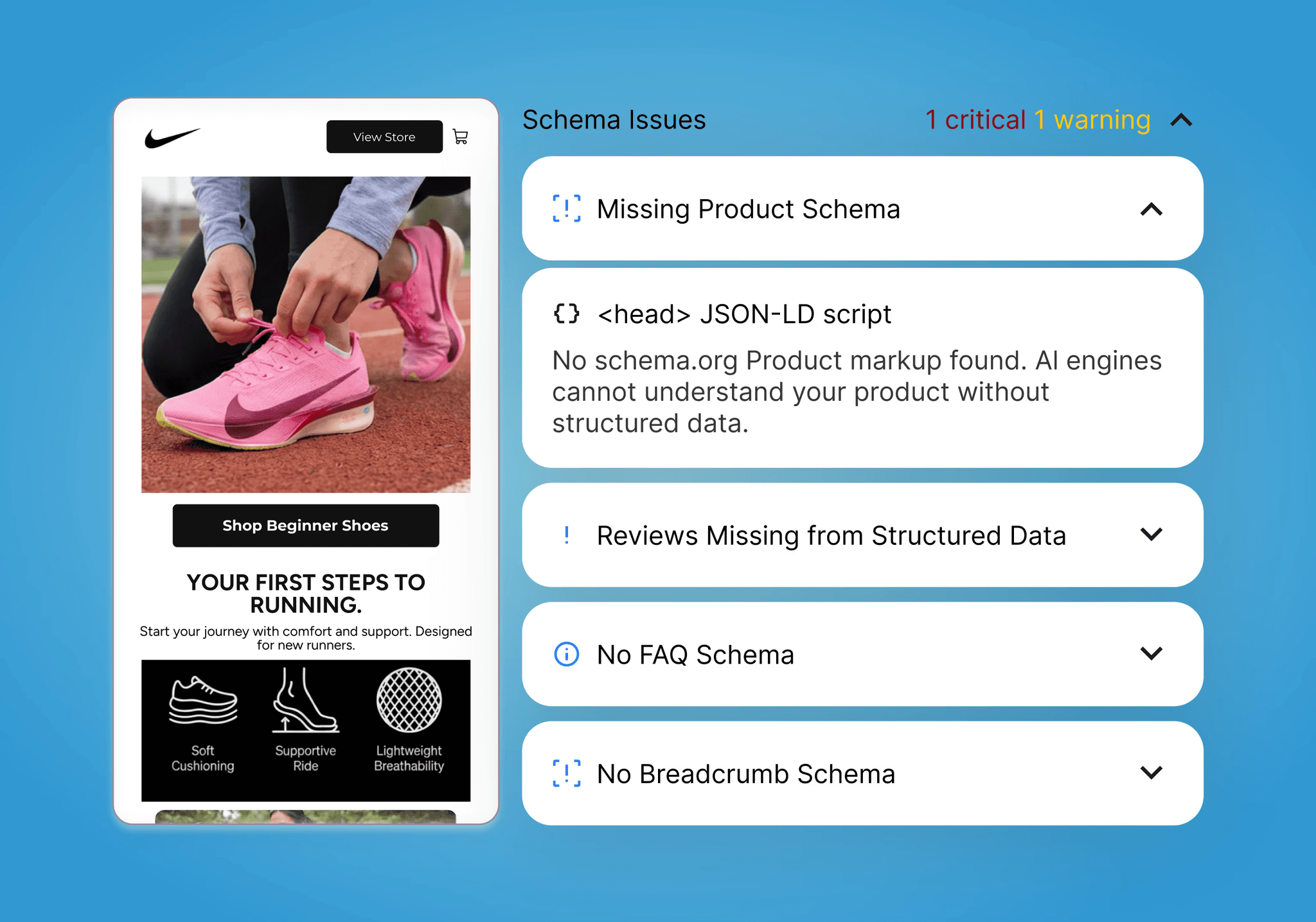
Shoppable AI Funnels: When AI-referred shoppers land on your site, a standard PLP loses them. Nudge's shoppable funnel layer builds landing experiences organized around the specific prompt that sent the shopper - a comparison layout for 'X vs Y' queries, a use-case hero for 'best for' queries. Shoppers who interact with AI-assisted experiences convert at 4x higher rates than those who do not, per internal benchmarks.
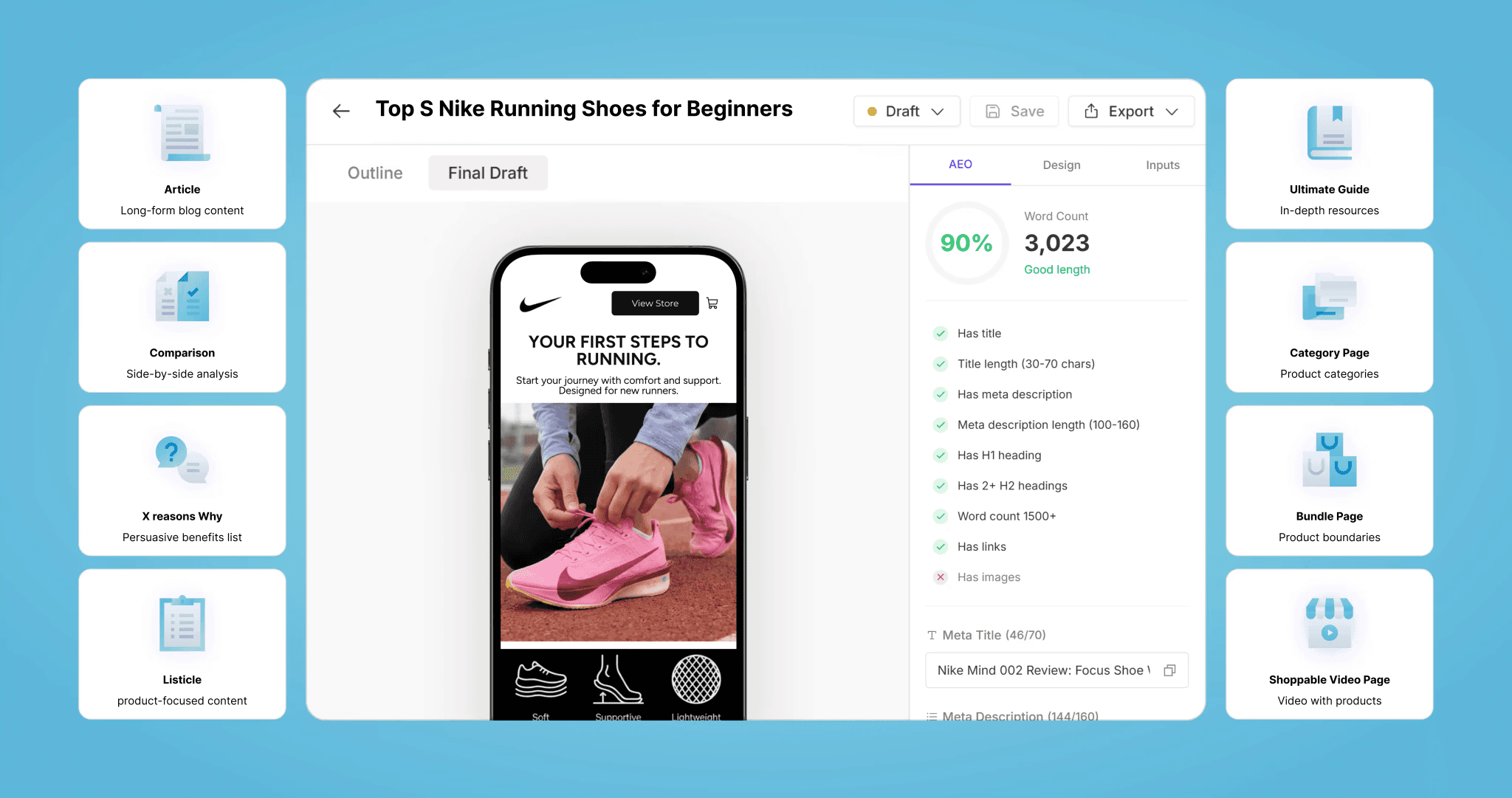
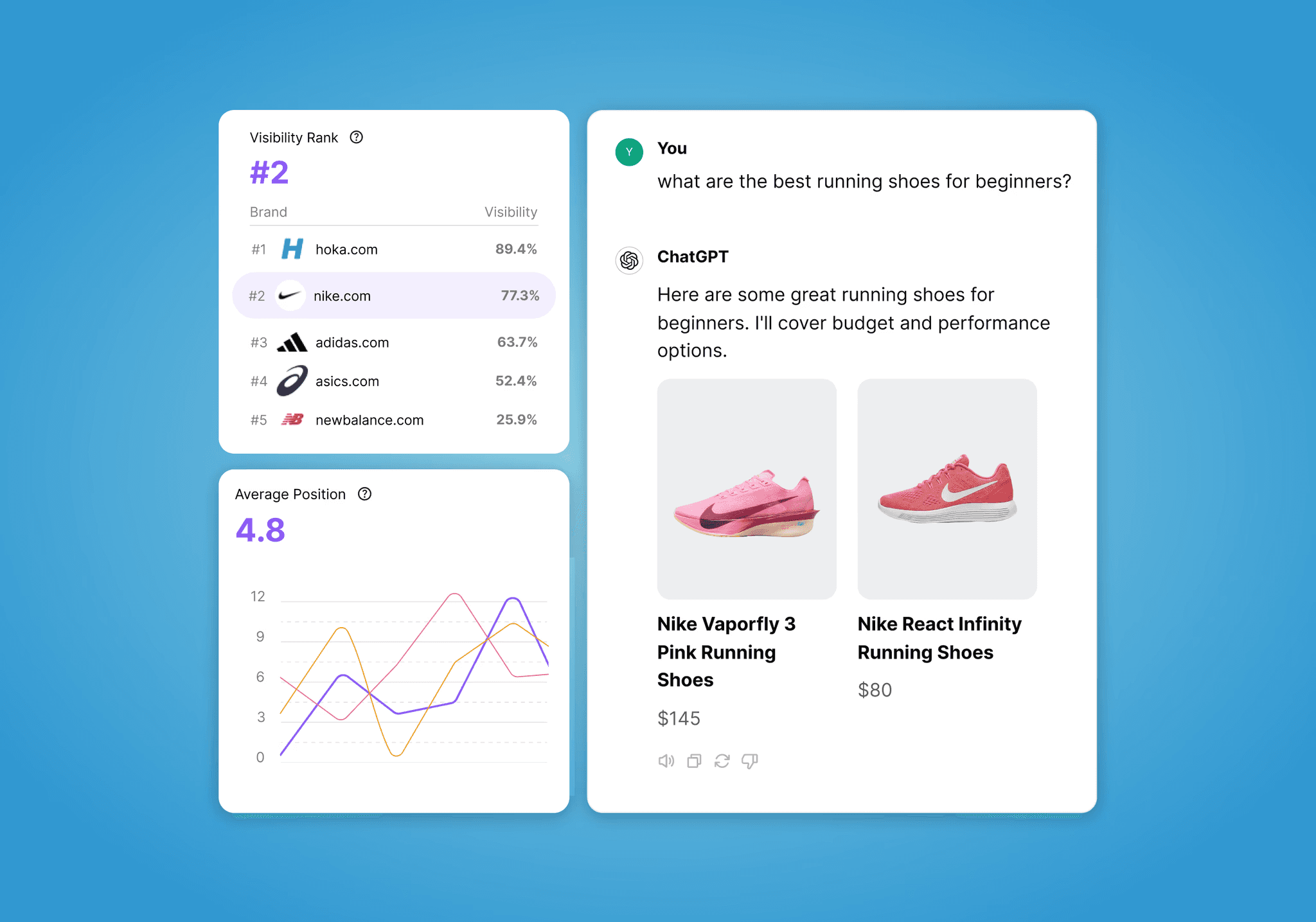
AI Search Visibility Tracking: Nudge tracks which prompts are driving citations and which SKUs are being surfaced across ChatGPT, Perplexity, Gemini, and Claude - so teams can act on signal rather than guesswork. Enterprise features include SOC 2 compliance, SSO, and native PIM/OMS/CDP integrations, making deployment feasible for large catalog teams without custom engineering.
Tactic #2: Audit Your Catalog for the 5 Question Types AI Shoppers Ask
AI shoppers do not type keywords - they ask questions. Before rewriting a single PDP, map your catalog to the five natural-language question types that drive the majority of AI shopping queries.
Question Type | Example Prompt | Content Element That Answers It |
|---|---|---|
Comparison | 'X vs Y for home office use' | Side-by-side spec table with verdict sentence |
Fit / Compatibility | 'Will this work with my MacBook Pro M3?' | Compatibility note with specific device/OS list |
Use-Case | 'Best noise-cancelling headphones for commuting' | Use-case callout block with scenario-specific copy |
Deal / Price | 'Cheapest option that still has OLED' | Price anchor with feature-to-value statement |
Review Summary | 'What do buyers say about the battery life?' | Curated review snippet highlighting that attribute |
Tactic #3: Restructure Product Descriptions Around Natural-Language Answers
Rewrite product descriptions so the first 40-60 words directly answer the most common AI prompt for that SKU. LLMs extract opening sentences verbatim - burying the answer in paragraph three means zero citations.
Three structural changes drive the most lift:
Lead with the use-case verdict: Open with a declarative sentence like "This is the best option for remote workers who prioritize call clarity over bass response." AI engines extract this as the recommendation rationale.
Embed comparison language: Include phrases like "lighter than [category standard] and better suited for daily carry than [common alternative]" so the LLM has a comparison frame it can cite without hallucinating.
Use plain declarative sentences: Avoid marketing adjectives. Write sentences an AI can lift verbatim and trust as factual.
The evidence for this approach is concrete: a Data World study shows GPT-4 accuracy jumps from 16% to 54% with structured content - a 3x improvement from formatting alone.
Tactic #4: Fix SKU Schema and Structured Data (89% of Sites Get This Wrong)
Schema errors are the single fastest way to become invisible to AI engines. 89% of ecommerce sites implement SKU schema incorrectly, and AI-surfaced URLs are 25.7% fresher than traditional search results - meaning stale, poorly marked-up PDPs are actively penalized. Read the full breakdown of common product schema mistakes that hurt AI visibility.
The minimum required schema stack for AI engine visibility:
Product schema: name, description, image, and SKU - all required fields, not optional
Offer: price and availability (in-stock status must be current; stale availability data triggers AI engine distrust)
AggregateRating: ratingValue and reviewCount - AI engines weight review volume as 16% of recommendation signal
BreadcrumbList: gives AI engines the category context needed to surface your SKU for category-level prompts
Tactic #5: Build Review Velocity to Win AI Recommendation Signals
Review volume is a direct AI recommendation input, not just a conversion signal. Getting new SKUs to a minimum review threshold is one of the highest-leverage moves a catalog team can make for AI citation rates.
Products with at least five reviews have a 270% greater purchase likelihood than those with none, and review volume accounts for 16% of AI engine recommendation signal. Three tactics accelerate velocity:
Post-purchase review prompts: Trigger review requests at the moment of highest satisfaction - typically 5-7 days after delivery for physical goods.
Review syndication: Push reviews across retail channels (your own site, marketplace listings, publisher comparison pages) so AI engines encounter consistent social proof regardless of where they crawl.
Surfacing review snippets in product copy: Embed specific review quotes that address the most common AI prompts for that SKU (battery life, sizing accuracy, durability) so LLMs can extract them as evidence.
This is especially critical because 64% of AI-powered sales come from first-time shoppers. Cold AI-referred traffic has no prior brand relationship - review-backed social proof is the only trust signal available at the moment of recommendation.
Tactic #6: Create Prompt-Matched Landing Pages for AI-Referred Traffic
A standard product listing page (PLP) is organized by category. A shoppable AI funnel is organized by the specific prompt that sent the shopper. Three steps to build prompt-matched landing experiences:
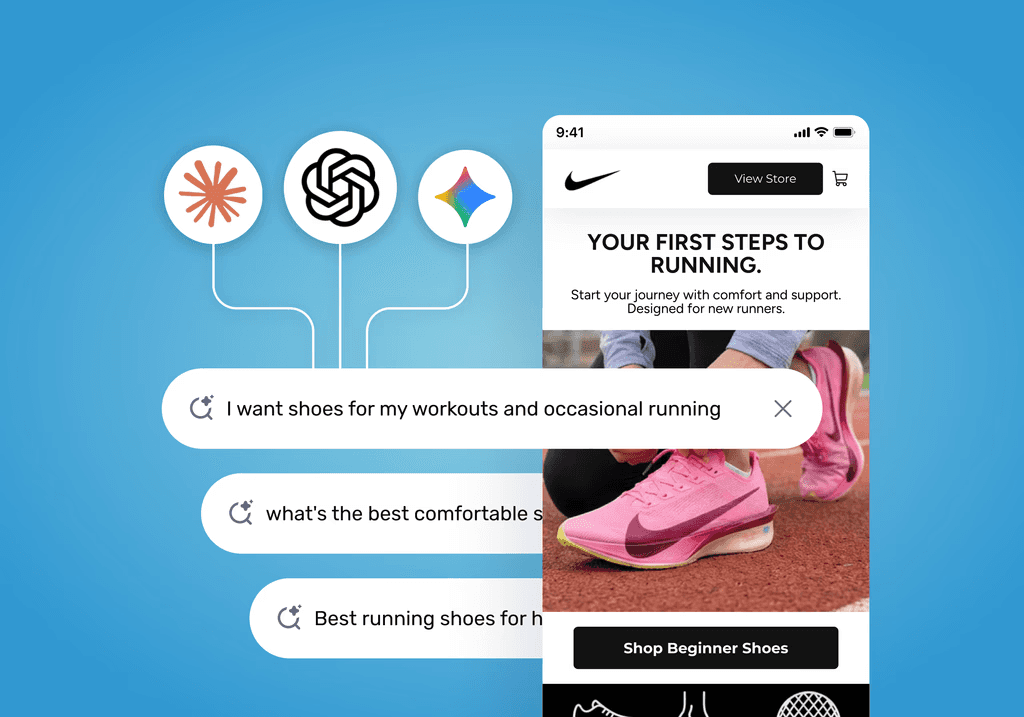
Identify top AI referral prompts: Use UTM tagging on AI referral traffic and AI visibility tools to surface the actual queries sending shoppers to your site. Group them by the five question types from Tactic #2.
Build intent-matched layouts: A comparison prompt ("X vs Y") needs a side-by-side layout with a clear verdict. A use-case prompt ("best for trail running") needs a scenario hero image and use-case-specific copy above the fold.
Mirror the prompt in the headline: If the shopper asked for "waterproof running shoes under $150," the landing page headline should echo that framing - not default to a generic category name. Review the key landing page elements that convert AI shoppers.
Tactic #7: Earn Authoritative List Mentions and Third-Party Citations
AI engines do not rank products by domain authority or backlinks. ChatGPT selects products based on authoritative list mentions (41% of recommendations), awards (18%), and review volume (16%). This is a structural shift that levels the playing field for mid-market brands with strong products but modest SEO budgets.
The urgency is real: research from GEO firm Brandlight shows the overlap between top Google links and AI-cited sources has dropped from 70% to below 20%. Your current SEO rankings no longer guarantee AI visibility. Three tactics build the citation footprint AI engines favor:
Pitch "best of" roundups: Identify the top 10-15 publisher and editorial lists in your category and run a targeted outreach campaign to earn inclusion. These mentions carry 41% of AI recommendation weight.
Pursue industry awards: Awards are cited in 18% of AI product recommendations. Even category-specific or regional awards count - AI engines treat them as third-party validation signals.
Ensure presence in publisher comparison articles: Reach out to authors of comparison articles ("Top 10 standing desks") and request inclusion or correction if your product is missing or misrepresented.
Comparison: AI Content Mapping Approaches
Not all approaches to AI content mapping deliver the same capabilities. The table below compares the four most common options commerce teams evaluate.
Approach | SKU-Level Prompt Mapping | Shoppable Funnel Layer | AI Citation Tracking | Enterprise Governance |
|---|---|---|---|---|
Nudge | Yes - automated at scale | Yes - prompt-matched landing experiences | Yes - cross-platform (ChatGPT, Perplexity, Gemini, Claude) | Yes - SOC 2, SSO, PIM/OMS/CDP integrations |
DIY Schema Fixes | Manual, limited to structured data | No | No | Depends on internal engineering capacity |
Salsify / Akeneo PIM | Strong data management, no AI prompt mapping | No | No | Yes - enterprise data governance |
Generic Chatbot Platforms | No - conversational only, not SKU-level | No | No | Varies by vendor |
Key Metrics to Track After Optimizing for AI Shoppers
Optimization without measurement is guesswork. These metrics give commerce teams a complete picture of AI channel performance. Full tracking methodology is available in the AI visibility tracking guide for retail teams.
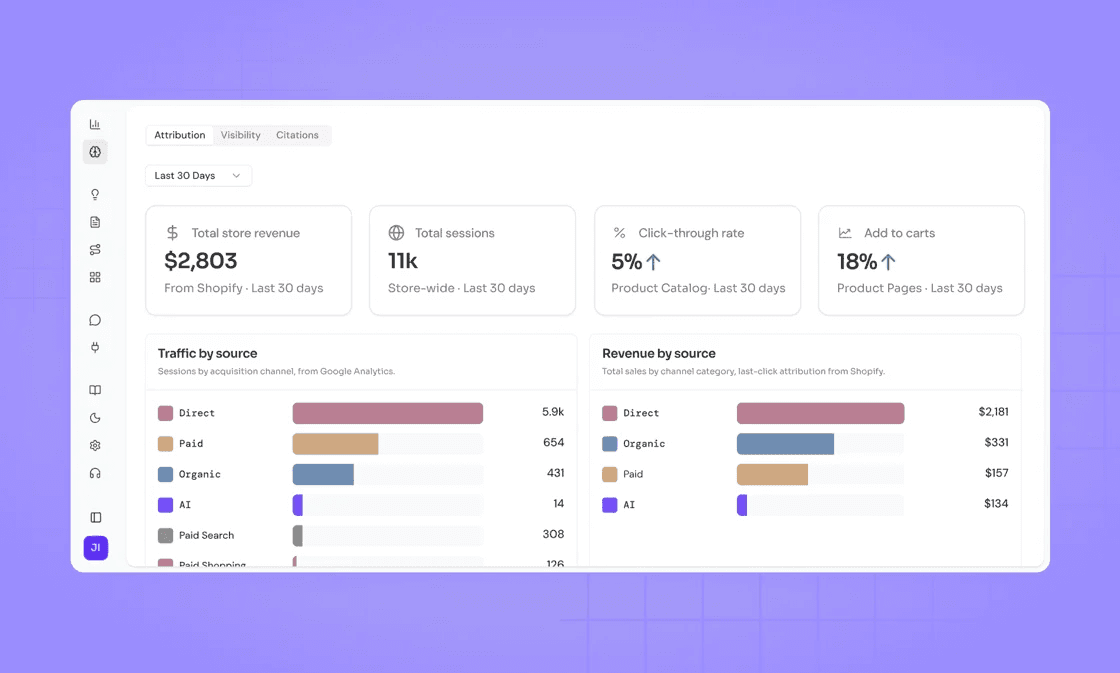
AI referral traffic volume by prompt: Which specific prompts are sending traffic? Segment by question type (comparison, use-case, etc.) to prioritize content investments.
AI-referred conversion rate vs. organic baseline: Benchmark is 14.2% (AI) vs. 2.8% (Google organic). If your AI conversion rate is below 10%, your landing experience is losing the lift that the referral earned.
Revenue per visit from AI sources: AI-driven RPV was up 254% year-over-year during the 2025 holiday season. Track this separately from overall RPV to isolate AI channel value.
If you've been waiting for the ROI case to invest in AI in commerce seriously, this is it.
Book a demo now to tie your brand's AI visibility & content to real shopper queries.
Frequently asked questions
What types of questions do shoppers ask AI chatbots when shopping?
Shoppers ask five main question types: comparison ('X vs Y'), fit/compatibility ('will this work with...'), use-case ('best for...'), price/deal ('cheapest option that...'), and review summary ('what do buyers say about...'). According to Deloitte data, 56% of U.S. consumers use AI chatbots to compare prices and find deals, while 47% use AI to summarize reviews before making a purchase decision. Product content must address all five types to maximize AI citation coverage across a catalog.
How do I get my products cited by ChatGPT or Perplexity?
AI engines favor authoritative list mentions (41% of recommendation signal), awards (18%), and review volume (16%) over domain authority or backlinks. The primary on-site levers are structured schema markup (Product, Offer, AggregateRating, BreadcrumbList) and prompt-aligned product copy that opens with a direct answer to the most common shopper query for that SKU. Off-site, earning inclusion in publisher 'best of' roundups and industry awards builds the citation footprint these engines rely on.
How much does AI-referred traffic actually convert compared to Google organic?
AI search traffic converts at 14.2% compared to Google organic search at 2.8%, according to Semrush analysis. Claude-referred visitors show the highest conversion rate at 16.8%, followed by ChatGPT at 14.2%. Adobe data also shows that shoppers directed to retail sites from AI platforms are 30 times more likely to make a purchase. The key variable is landing experience quality - AI-referred shoppers arrive with high intent already established by the chatbot interaction, but a mismatched landing page erodes that advantage immediately.
How quickly can structured data changes improve AI citation rates?
Results can come within weeks. When Adobe applied GEO discipline to Adobe.com, they saw a 5x increase in citations and a 41% lift in LLM referral traffic within weeks of implementation. The Data World study also demonstrates that structured data formatting alone produces a 3x jump in GPT-4 accuracy - from 16% to 54% correct responses. Schema fixes and content restructuring are among the fastest-acting levers available to commerce teams because AI engines re-crawl and re-index content frequently; AI-surfaced URLs are already 25.7% fresher than traditional search results on average.
What schema markup do I need for AI engines to surface my products?
The minimum required schema stack includes: Product schema with name, description, image, and SKU; Offer with current price and availability; AggregateRating with ratingValue and reviewCount; and BreadcrumbList for category context. Despite this being well-documented, 89% of ecommerce sites implement at least one of these incorrectly - most commonly leaving out AggregateRating or using stale availability data in the Offer block. Stale data actively penalizes AI visibility because AI-surfaced URLs skew significantly fresher than traditional search results.