AEO & GEO
Best AEO Strategies for Retail Brands in 2025
How to get cited in ChatGPT, Perplexity, and Google AI Overviews - and turn that visibility into revenue.
Gaurav Rawat





The best AEO strategies for retail brands combine answer-first content formatting, multi-platform AI crawlability, third-party citation building, and SKU-level catalog optimization - and brands executing these strategies see 4.4x higher conversion rates from AI-referred traffic compared to traditional organic search. With shopping-related AI searches growing 4,700% between 2024 and 2025, and 37% of product discovery now starting in AI interfaces, getting this right is no longer optional.
Why AI Search Has Become the New Retail Shelf
Retail brands need AEO now because AI platforms have become a dominant, high-converting discovery channel - and absence from AI citations carries a measurable revenue penalty. Brands not cited in AI-generated summaries see a 61% drop in click-through rates, while those that are cited gain a 35% increase in organic clicks.
The scale of AI search adoption is hard to ignore. ChatGPT processes 2.5 billion prompts daily, and 53% of US consumers used generative AI to help them shop in Q2 2025. During the 2025 holiday season, Adobe Analytics found AI-referred shoppers converted 31% higher and generated 254% more revenue per visit than traditional channels. Traffic to retail sites from generative AI tools surged 693.4% year over year in that same period.
Critically, AEO is a distinct discipline from SEO. Around 80% of URLs cited by AI engines do not rank in Google's top 100 results for the same query (Ahrefs, August 2025). Optimizing for Google rankings alone will not get your brand cited in ChatGPT or Perplexity. AI Overviews now appear in 25% of Google searches - up from 13% in March 2025 - making this shift structural, not temporary.
How to Structure Content So AI Engines Actually Cite You
Content that wins AI citations is structured for extraction, not just readability. Three formatting principles drive the most measurable impact: answer-first placement, organized heading hierarchy, and JSON-LD structured data.
Signal | AEO-Optimized Content | Traditional SEO Content |
|---|---|---|
Answer placement | Direct answer in first 30% of content | Answer buried after context-setting intro |
Heading structure | Clear H2/H3 hierarchy matching query intent | Headings optimized for keyword density |
Schema markup | JSON-LD per product, category, and FAQ | Basic or no structured data |
Content length | 50-100 word direct answers per section | Long-form with minimal passage breaks |
Citation target | AI engines and featured snippets | Google page-one rankings |
Crawl access | GPTBot, ClaudeBot, PerplexityBot allowed | robots.txt focused on Googlebot |
Answer-first formatting: Place direct answers in the first 30% of content. 44.2% of all LLM citations come from the intro. Keep each answer to 50-100 words - AI engines pull individual passages, not full pages.
Heading structure: Pages with well-organized headings are 2.8x more likely to earn AI citations (AirOps). Use H2s that mirror the exact questions buyers ask in ChatGPT and Perplexity.
JSON-LD structured data: Products with comprehensive schema markup appear in AI shopping recommendations 3-5x more often than those without. JSON-LD is the standard all major AI engines rely on to extract structured signals.
Crawler access: Check your robots.txt to confirm GPTBot, ClaudeBot, PerplexityBot, and Google-Extended are not blocked. Blocking these crawlers prevents AI engines from reading your content entirely.
Platform-Specific Strategies: ChatGPT, Perplexity, and Gemini Are Not the Same
Yes - retail brands must optimize differently for each AI platform, because citation behavior varies dramatically across engines. The same brand can see citation volumes differ by 615x between platforms (Superlines, March 2026), making multi-platform tracking non-negotiable.
Platform | Primary Citation Source | Key Stat | Strategic Priority |
|---|---|---|---|
ChatGPT | Third-party publishers (Byrdie, Vogue, Forbes) | 98% of shopping citations go to third-party sources | Earned media and publisher placements |
Perplexity | Mixed: owned + third-party | Triggers shopping result on 92% of consumer prompts | High-frequency indexing, fresh content |
Gemini | Brand-owned websites | 52.15% of citations from brand-owned sites | First-party content quality and schema |
Google AI Overviews | Authoritative web content | Now in 25% of all Google searches | Structured data and E-E-A-T signals |
The platform divergence has real commercial stakes. ChatGPT accounted for 16% of Zara's inbound traffic and 8% of H&M's between June and August 2025 (SimilarWeb). ChatGPT's Instant Checkout has been live since September 2025, serving 900 million weekly users - meaning citation in ChatGPT is increasingly a direct purchase trigger, not just a discovery touchpoint.
Earned Media and Third-Party Citations: The AEO Multiplier
Third-party mentions multiply AI citation rates in ways owned content alone cannot achieve. 64% of AI citations come from third-party publisher sources, and distributed content is 5.3x more likely to be the sole AI visibility source than a brand's own site (Stacker Research, March 2026).
However, the picture is more nuanced at the industry level. A Yext study analyzing 6.8 million citations found that 86% of citations across industries come from sources brands already control, and 47.6% of retail citations specifically come from first-party websites. The implication: both channels matter, and the winning strategy is a dual approach.
Practically, this means targeting review platforms like G2 and Reddit (both top ChatGPT citation sources), high-authority editorial publishers, and category-relevant affiliate outlets. One important note on paid media: 90% of AI citations driving brand visibility come from earned and owned media, not paid placements (Edelman). Paid advertising does not directly influence AI citation algorithms. Budget allocation must shift accordingly.
SKU-Level Catalog Optimization: The Retail-Specific AEO Layer
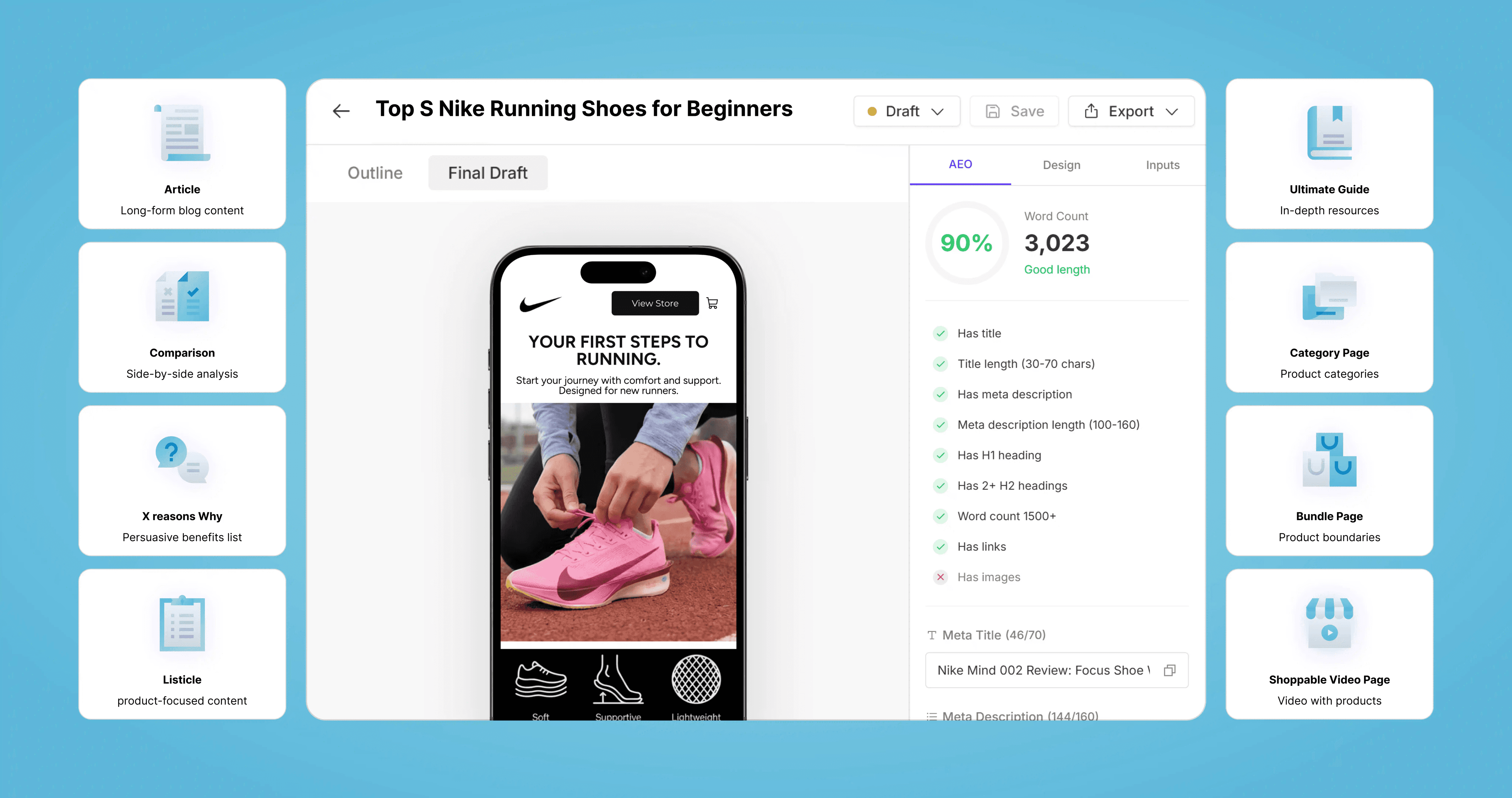
What makes AEO uniquely challenging for retail brands is catalog scale. AI engines need clear, structured inputs at the SKU level - product descriptions that answer buyer questions, category content that maps to query intent, and schema markup per product - not just at the homepage or blog level.
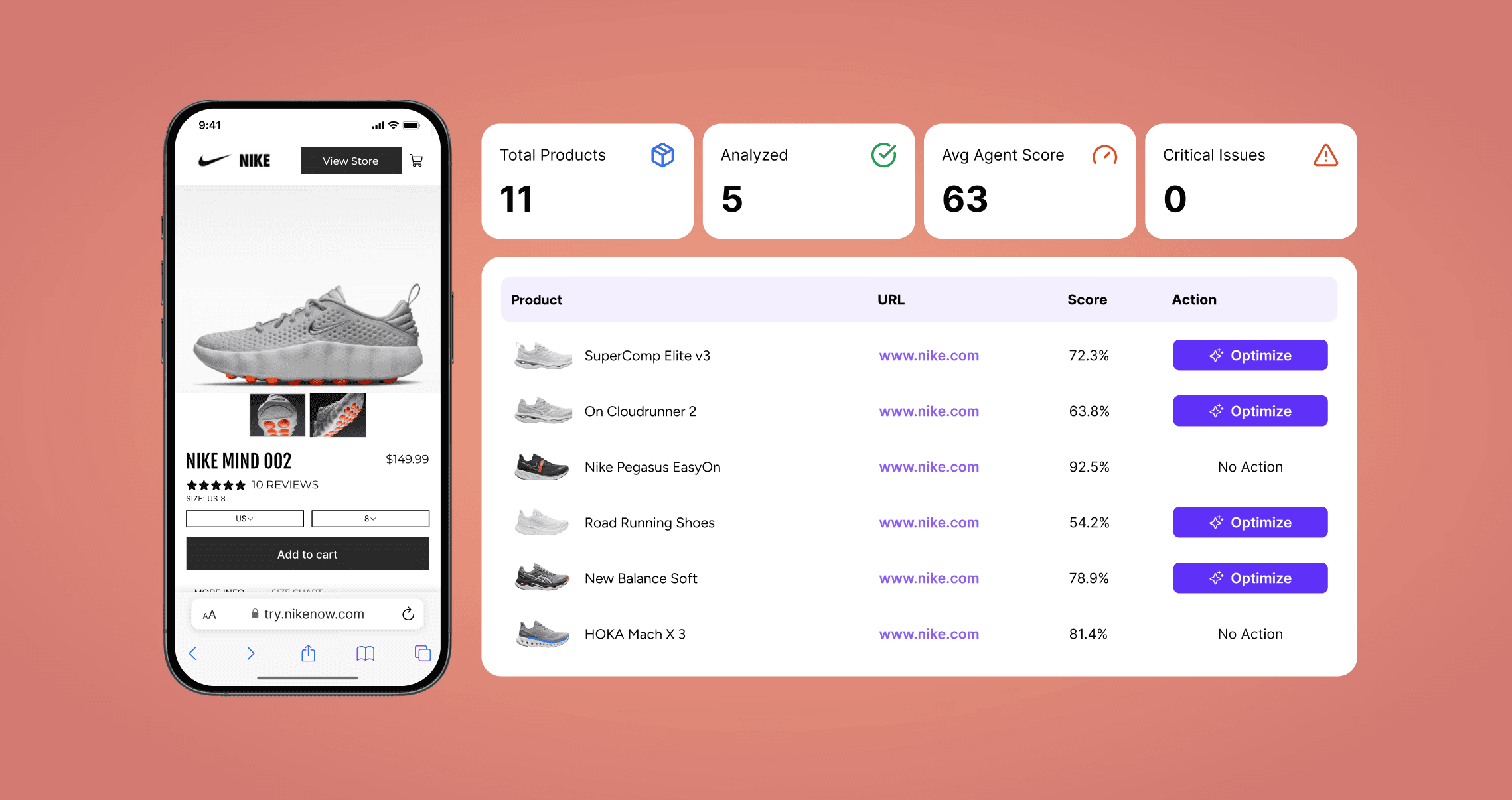
Product descriptions: Rewrite to answer the specific questions buyers ask in AI prompts (e.g., "best running shoe for wide feet under $150") rather than generic feature lists.
Category-level content: Create structured landing pages that map product collections to intent clusters - occasions, use cases, buyer personas - not just product attributes.
Schema markup per SKU: Implement Product, Offer, and Review schema on every product page. Products with comprehensive schema appear in AI shopping recommendations 3-5x more frequently.
Freshness maintenance: AI-surfaced URLs are 25.7% fresher than traditional search results, meaning catalog content must be actively maintained and updated as an ongoing signal, not a one-time project.
How to Measure AI Search Visibility and Attribution
Retail brands track AEO performance across three measurement layers: UTM-based revenue attribution, AI visibility monitoring tools, and conversion benchmarking against organic baselines. Each layer answers a different question - and all three are needed for a complete picture.
Measurement Layer | What It Tracks | Setup Requirement |
|---|---|---|
UTM tracking for LLM platforms | Revenue attributed to ChatGPT, Perplexity referrals | Must be configured before campaign launch |
AI visibility monitoring | Citation frequency, visibility score, citation share by platform | Tools like Nudge, Profound, or Superlines |
Conversion benchmarking | AI traffic conversion rate vs. organic baseline | Segment AI referrers in analytics platform |
Content freshness monitoring | Age of cited URLs vs. AI freshness benchmark | Ongoing audit cadence (monthly recommended) |
UTM tracking for LLM platforms must be set up before any campaign launches - without proper tagging infrastructure, revenue attribution from AI channels cannot be measured accurately. Once in place, segment AI-referred traffic separately in your analytics platform. Given that AI-referred visitors convert 4.4x higher than organic, even modest citation gains can produce significant revenue impact when properly tracked.
AI-surfaced URLs are also 25.7% fresher than traditional search results, so content freshness should be part of your ongoing monitoring cadence, not a one-time audit.
Ready to Improve AI Search Visibility? Book a demo today!
Frequently asked questions
What is AEO and how is it different from SEO for retail brands?
AEO (Answer Engine Optimization) optimizes content to be cited in AI-generated answers across ChatGPT, Perplexity, and Google AI Overviews - not just ranked on Google. For retail brands, this means optimizing at the SKU and category level. Around 80% of URLs cited by AI engines do not rank in Google's top 100 results for the same query, so SEO and AEO must be treated as separate disciplines.
Which AI platforms should retail brands prioritize for AEO?
Retail brands should prioritize ChatGPT (2.5 billion prompts daily, Instant Checkout live since September 2025), Perplexity (triggers shopping results on 92% of consumer prompts), and Google AI Overviews (now in 25% of searches). Each platform cites differently - Gemini favors brand-owned content while ChatGPT directs 98% of shopping citations to third-party publishers.
How long does it take to see results from AEO?
AI engines favor recently updated content - AI-cited URLs are 25.7% fresher than traditional search results. Brands implementing structured content, schema markup, and earned media programs typically see citation improvements within 60-90 days. Revenue attribution can be measured from day one with proper UTM setup.
Do I need to block or allow AI crawlers on my website?
You should allow AI crawlers. Check your robots.txt to ensure GPTBot (OpenAI), ClaudeBot (Anthropic), PerplexityBot (Perplexity), and Google-Extended are not blocked. If blocked, AI systems cannot read your content - meaning no citations regardless of how well-optimized your pages are.
Is paid advertising enough to show up in AI search results?
90% of AI citations driving brand visibility come from earned and owned media, not paid placements (Edelman). Paid ads do not directly influence AI citation algorithms. Brands must invest in structured owned content and systematic third-party earned media programs to appear in ChatGPT, Perplexity, and Google AI Overviews.