Ecommerce Personalization
Top 10 Ecommerce Personalization Software and Tools in 2026
Explore the top 10 e-commerce personalization software in 2026, featuring AI-powered product recommendations, contextual nudges, and conversion optimization.

Kanishka Thakur
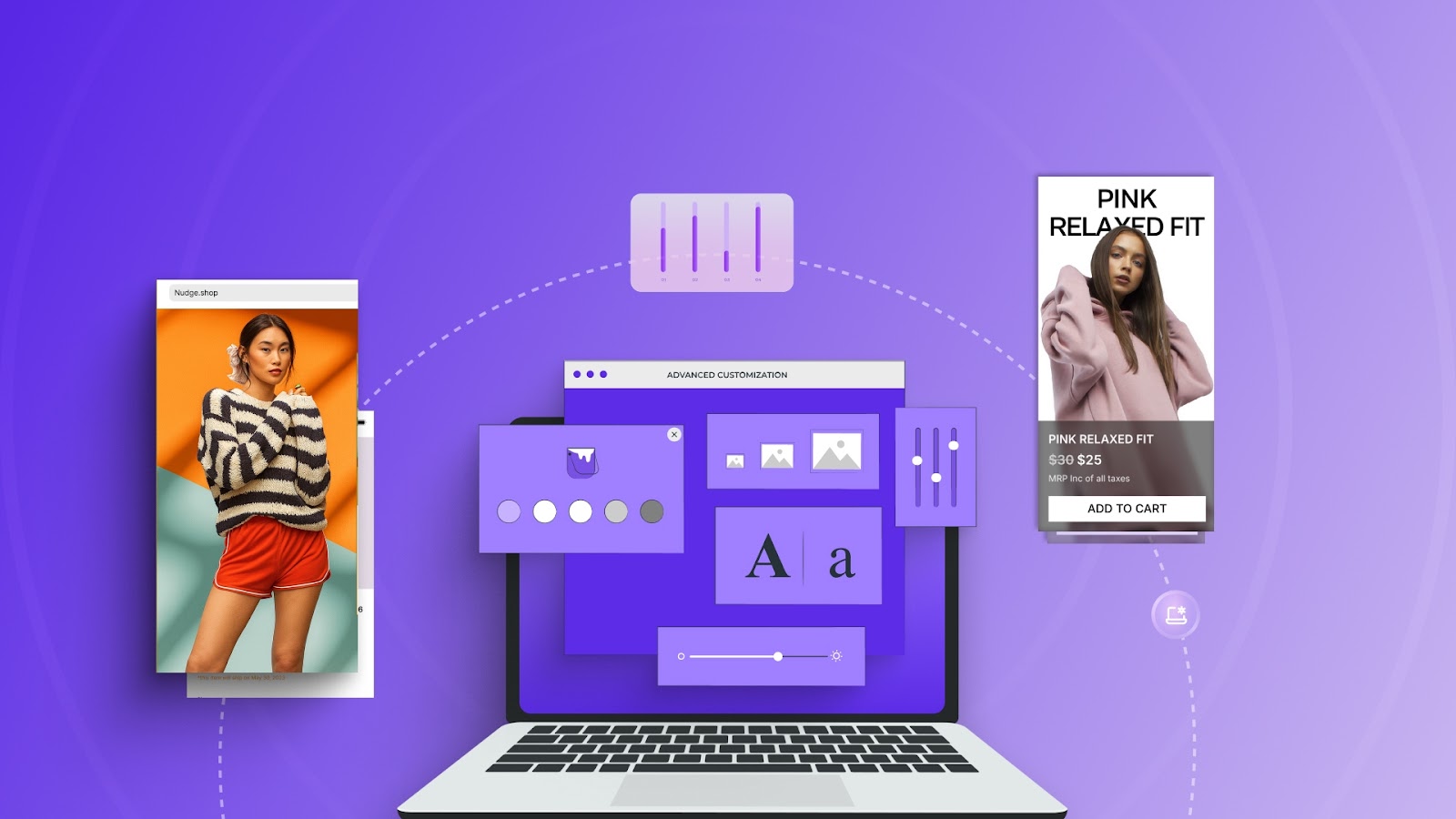





If you're an ecommerce growth marketer or conversion specialist, you already know the drill: getting traffic is only half the job; following that, you've got to turn that traffic into real customers.
With the right AI-powered personalization tools, you can make every shopper feel like your site was designed just for them, helping you increase AOV and keep people coming back.
In this article, we’ll explore the top tools powering e-commerce personalization in 2026, so you can pick the right ones to level up your optimization game.
Key Takeaways
Personalization software enables real‑time adaptation of ad landing to PDP to checkout for conversion uplift and reducing friction.
AI‑powered recommendations and bundles lift AOV and increase repeat purchase rate, helping marketers reduce CAC while increasing value created.
Consistent personalized experiences across channels maintain shopper engagement, improve retention, and lift LTV for DTC brands dealing with paid traffic.
When evaluating tools, UX and growth teams should focus on depth of personalization, ease of integration, and clear ROI visibility, not just feature lists.
Personalization improves activation, experiment velocity, and conversion for high-growth brands.
What is E-Commerce Personalization Software?
E-commerce personalization software uses data and artificial intelligence to customize online shopping experiences based on individual user behavior, preferences, and past interactions. Given this, DTC brands can create more engaging experiences that resonate with each visitor through product recommendations, dynamic content, or personalized checkout flows.
As a growth marketer, you know how important it is to keep those conversion rates climbing. With Nudge’s Commerce Surfaces, you can automatically tune landing pages, PDPs, and even shopping carts to match shopper behavior and ad context, so every visit feels relevant and nudges people closer to the Buy button.

Now, let’s explore why personalization software is essential for high-growth e-commerce brands.
Importance of Personalization Software in E-Commerce
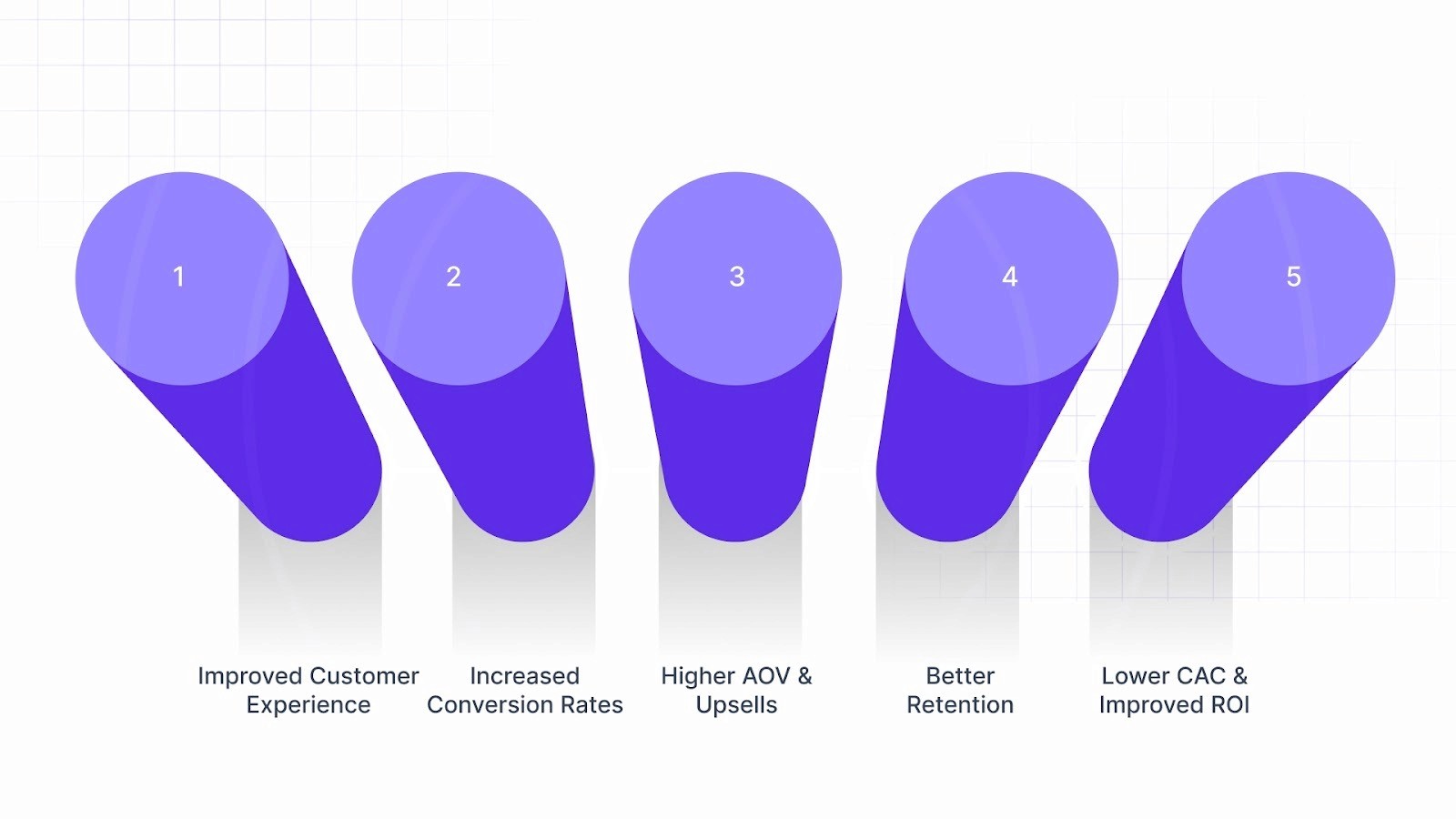
For e-commerce brands, personalization software isn’t some optional upgrade anymore; it has become a core part of how you scale sustainably. Here’s why:
Improved Customer Experience: Personalization software ensures that every visitor is presented with the right product recommendations, offers, and content, improving the user experience and driving higher engagement.
Increased Conversion Rates: By personalizing the experience to each shopper’s behavior, such as ad source or category affinity, personalization tools reduce friction and increase the likelihood of a purchase.
Higher AOV and Upsells: Smart personalization tools enable bundled offers and upsell nudges based on what’s in the cart or browsing history, increasing average order value (AOV).
Better Retention: Personalized experiences increase conversions but also build long-term customer loyalty. By offering products and recommendations that resonate with each shopper, repeat purchase rates increase.
Lower CAC and Improved ROI: Personalization reduces the effort spent acquiring new customers by increasing conversion rates from existing traffic, resulting in lower customer acquisition costs (CAC) and higher ROI from paid ads.
Also Read: The Future of E-Commerce with AI Agents
Next, we’ll look at the benefits that can maximize your conversion rates and customer engagement.
6 Benefits of Using E-Commerce Personalization Software
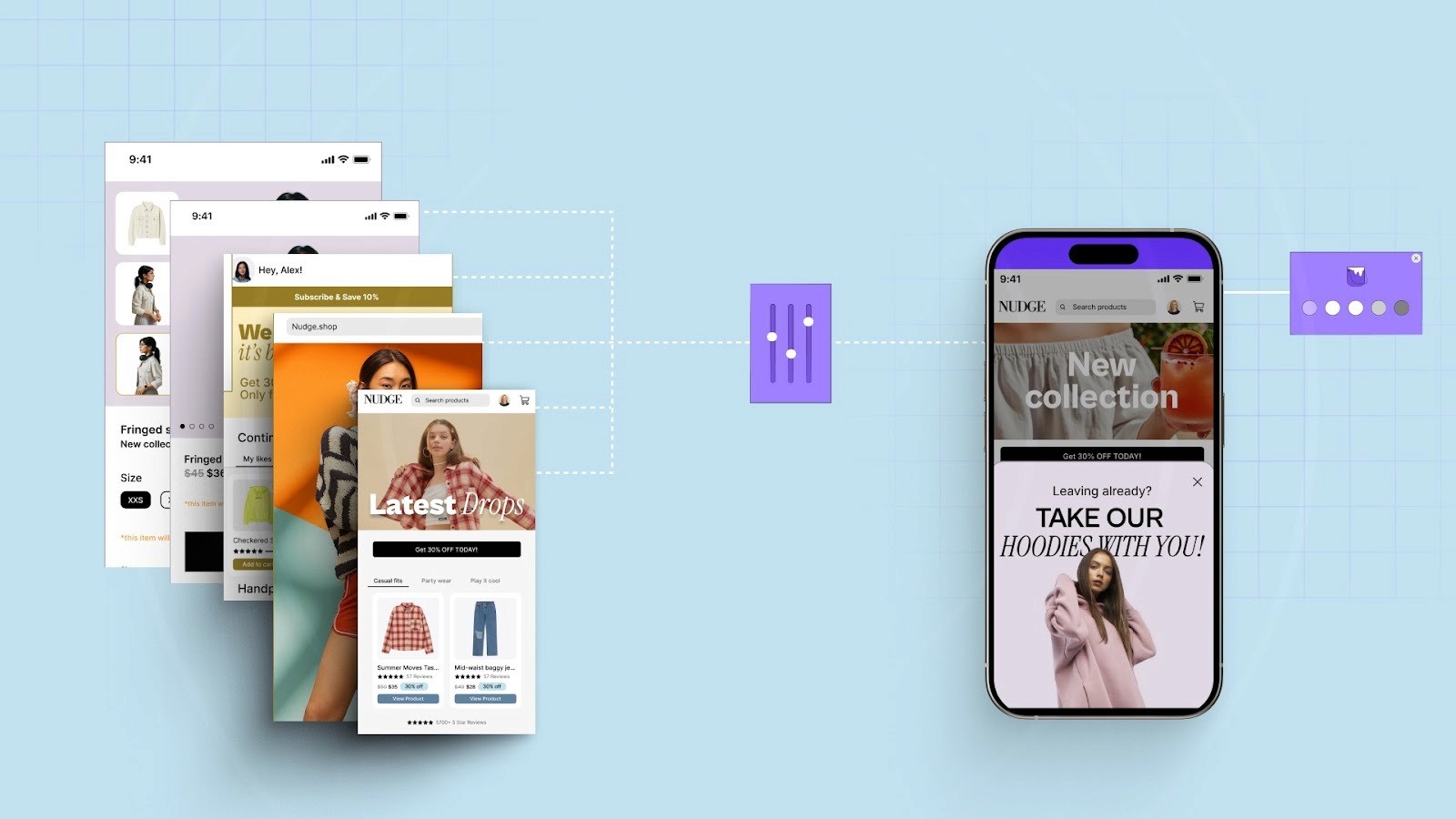
When you're operating a leading ecommerce brand, every shopper interaction counts, and AI can help you make each one smarter and more relevant. Here are the biggest benefits of using e-commerce personalization software.
1. Revenue Lift That Compounds
AI personalization tools help brands see a revenue lift that compounds over time. By optimizing for higher AOV, conversion rates, and retention, brands continuously improve their revenue per visitor. As growth marketers work to scale their brands, the more personalized the experience, the higher the return on investment (ROI) they see.
2. Real-Time Responsiveness
AI personalization tools adapt in real-time, optimizing the experience based on ad traffic, location, and user behavior. For UX specialists optimizing PDPs or shopping carts, this means that the website content, offers, and layout adjust dynamically to maximize conversion uplift while aligning with shopper intent.
3. Greater Efficiency for Teams
With AI handling personalization tasks like dynamic recommendations, upsell bundles, and exit-intent offers, retention marketers and conversion specialists can focus on strategy and optimization rather than manual adjustments. The automation of these processes speeds up the time to experiment.
4. Consistent Journeys Across Channels
E-commerce personalization software makes sure that a shopper’s journey is consistent across all channels, from paid ads to PDPs and checkout. For DTC brands in retail, this omnichannel consistency means that shoppers experience personalized content no matter where they interact with the brand, driving higher activation rates.
Also Read: Guide to Visitor Behavior Analysis Techniques
5. Retention and Loyalty Gains
By delivering highly relevant recommendations, personalized experiences, and context-aware nudges, AI personalization tools create long-term loyalty. This improves retention rates, encouraging repeat purchases, and increasing LTV. As lifecycle marketers know, retaining customers is far more cost-effective than acquiring new ones, making these tools essential for sustainable growth.
6. Smart Product Recommendations
Product recommendations provide personalized suggestions based on shopper behavior, past purchases, and category affinities. For growth teams in fashion DTC brands, these smart suggestions increase AOV, repeat engagement, and create a more relevant shopping experience. Personalized recommendations also drive higher conversion rates, especially when adjusted to real-time shopping activity.
Nudge’s AI Product Recommendations make it easy to serve the right suggestions at the right moment. By analyzing browsing patterns and what’s already in the cart, it surfaces personalized upsells that feel natural, not pushy, helping you grow revenue while strengthening LTV.
Now that we know the benefits, let’s look into the best personalization tools for e-commerce in 2026.
7 Best E-Commerce Personalization Tools in 2026
With shoppers expecting personalized experiences at every step, choosing the right personalization platform can make or break your growth. Here are the 7 best ecommerce personalization tools in 2026, the ones truly helping brands convert more, sell more, and retain more.
Tool | Key Features | Pricing (Approx.) |
1:1 personalization, smart product recommendations, exit-intent recovery, smart bundling, contextual nudges, commerce surfaces | Custom pricing | |
Insider | Real‑time personalization, journey orchestration, behavioral segmentation | Custom pricing based on traffic volume and features |
Dynamic Yield | Multivariate testing, product recommendations, omnichannel personalization | Custom enterprise pricing depending on needs |
Bloomreach | AI‑powered search, dynamic merchandising, segmentation | Custom pricing for enterprise solutions |
Adobe Experience Cloud | Cross‑channel personalization, advanced analytics, behavioral targeting | Custom pricing based on business scale and requirements |
Oracle Marketing | Real‑time personalization, predictive analytics, campaign automation | Custom quote based on enterprise scale |
Nosto | Real‑time recommendations, smart bundling, omnichannel personalization | Custom pricing |
Mutiny | No‑code personalization, user intent mapping, targeted campaigns | Custom pricing designed for larger teams and usage |
Klaviyo | Behavioral triggering, advanced segmentation, lifecycle automation | Custom pricing |
Optimizely | Feature experimentation, behavioral targeting, omnichannel testing | Custom pricing |
1. Nudge
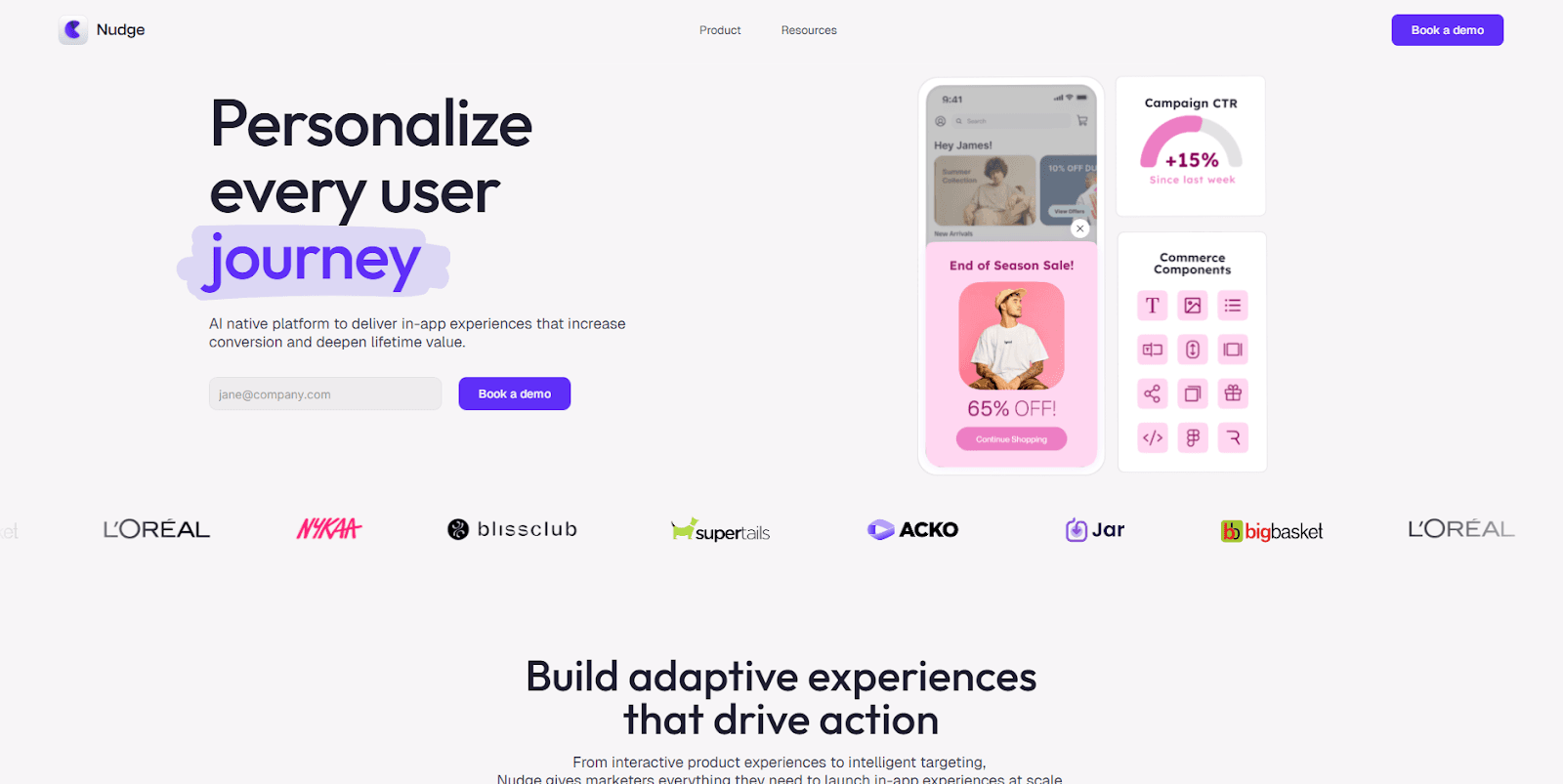
Nudge is an AI-powered platform that delivers personalized experiences across landing pages, PDPs, and shopping carts. For growth marketers and UX specialists in high-growth e-commerce brands, Nudge enhances product recommendations and cart recovery through personalization and context-aware nudges, increasing AOV and conversion rates.
Key Features:
Commerce Surfaces: Dynamically adjust landing pages, PDPs, and shopping carts based on shopper behavior, ad campaigns, and location, creating personalized interactions that drive conversion rates and AOV.
Contextual Nudges: Launch exit-intent popups, urgency messages, and targeted offers, personalizing them based on scroll depth, time on page, and referring source, improving conversion rates seamlessly.
AI Product Recommendations: Automatically display product suggestions specific to affinities, browsing history, and cart contents, enhancing upsell opportunities and improving both AOV and LTV.
Cart Abandonment Recovery: Recover lost sales with context-aware offers and personalized incentives, re-engaging cart abandoners and minimizing CAC for better conversion outcomes.
Funnel Personalization: Optimize conversion funnels by personalizing each stage of the journey in real-time, driving activation and higher conversion rates across various shopper segments.
Upsell with Smart Bundling: Use live inventory and affinity data to create personalized bundled offers, increasing basket size, AOV, and enhancing profitability.
Product Experiences: Scale interactive product experiences using stories, nudges, gamification, and rewards, engaging users at every touchpoint to increase conversions.
Signals: Signals help marketers identify high-value insights by analyzing user behavior, campaign performance, and historical interactions, enabling better data-driven decisions.
AI Decisioning: Automatically optimize content and UI in real-time based on shopper behavior, ensuring personalized experiences that drive better engagement and conversion rates.
Key Strengths:
Continuous AI Learning: Nudge’s AI continuously adapts, providing ever-improving personalization and optimized results, allowing growth marketers to scale CRO efforts effectively.
Modular UI Elements: Marketers can test and refine images, content, and layouts without developer resources, speeding up CRO processes and time-to-market.
Context-Aware Personalization: Personalize shopping experiences based on location, device, and behavior, improving engagement and creating unique product journeys.
No Developer Bottlenecks: Marketers can implement, test, and optimize personalized campaigns quickly, without waiting for developer support, offering fast, flexible execution.
Why It Stands Out: Nudge stands out with its AI-driven personalization, adapting to shopper behavior, ad context, and location for seamless conversion optimization. Its smart product recommendations and exit-intent recovery improve AOV, LTV, and retention. With a modular UI and no-code setup, marketers can quickly implement personalized campaigns without developer bottlenecks.
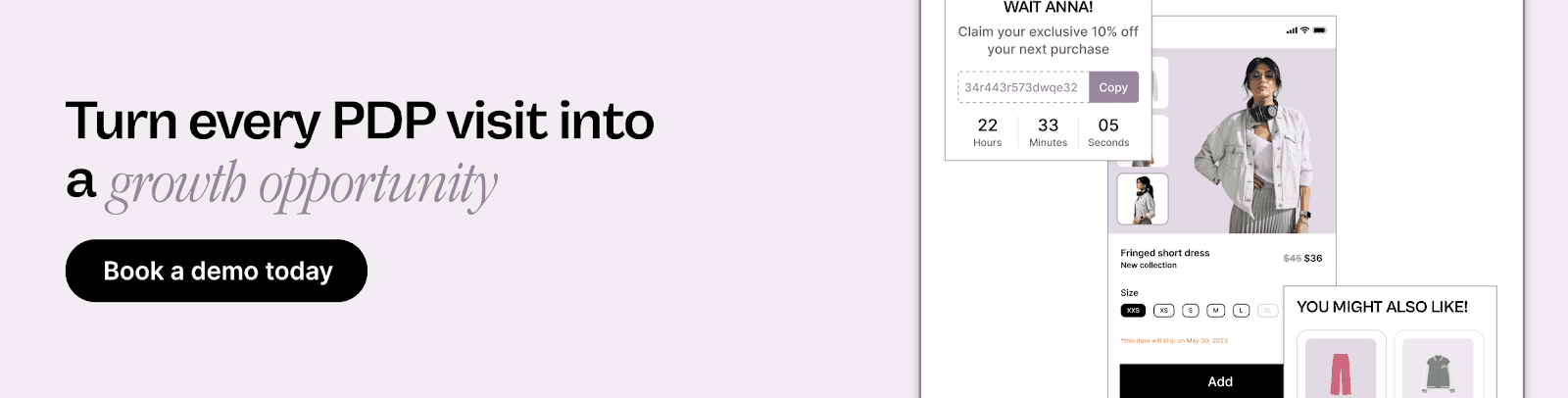
Pricing: Custom pricing; typically mid-to-enterprise e-commerce brands.
2. Insider
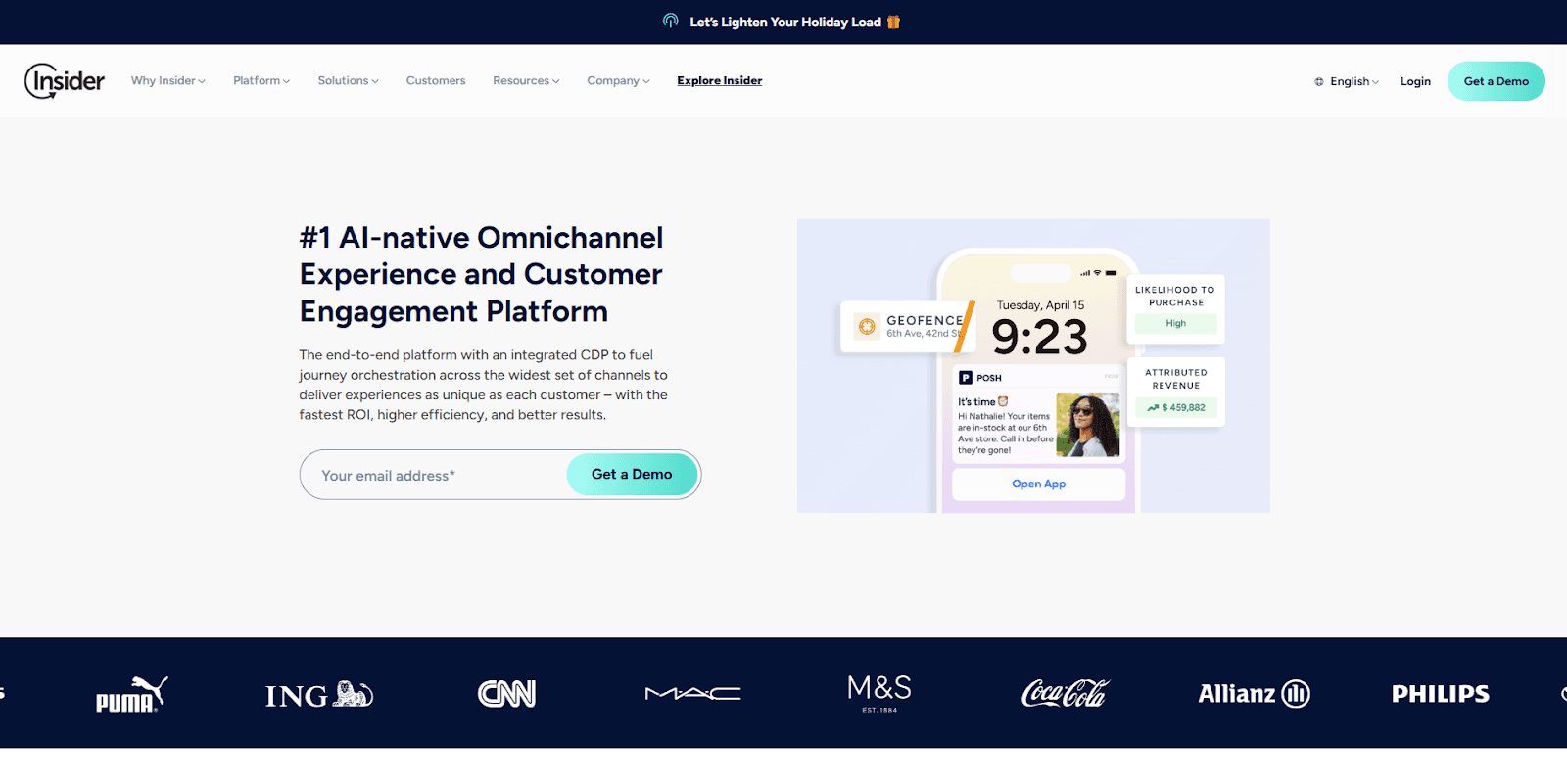
Insider is an integrated AI personalization platform that helps brands personalize websites, emails, and ads. It uses behavioral insights to deliver dynamic, personalized content that increases conversion rates and AOV.
Key Features:
Personalization: Automatically deliver personalized experiences based on shopper behavior and traffic sources.
Behavioral Segmentation: Create dynamic segments for targeting personalized campaigns across channels.
Cross-Channel Optimization: Personalize web, mobile, and app experiences for seamless engagement.
Automated Campaigns: Trigger personalized offers and product recommendations based on user actions.
Why It Stands Out: Bridges web, app, and mobile with AI‑driven segmentation so marketers can personalize experiences based on ad source, location, and behavior at scale.
Pricing: Custom pricing based on volume and usage.
3. Dynamic Yield
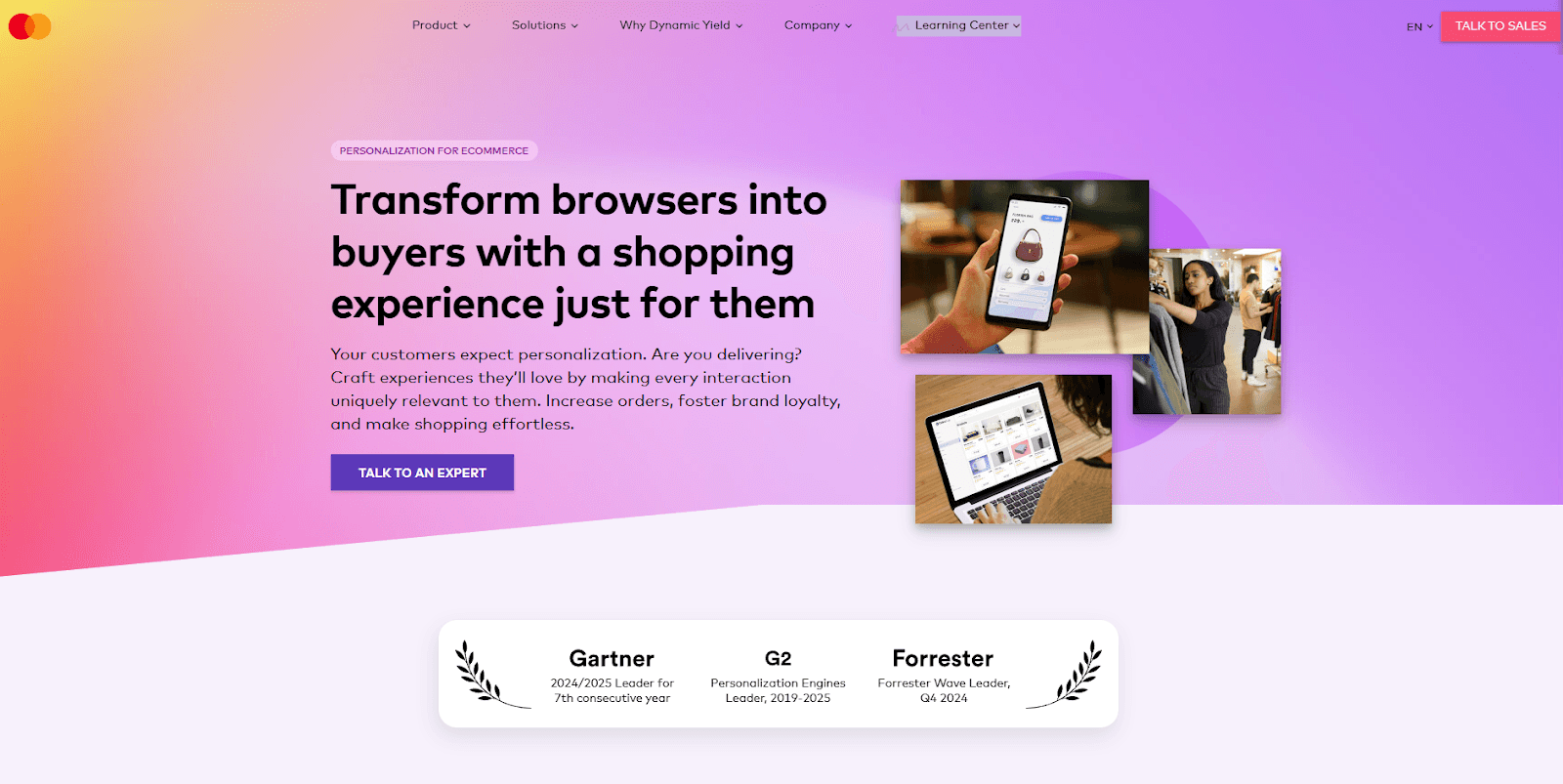
Dynamic Yield offers a robust platform for A/B testing, personalization, and multivariate testing. It helps e-commerce brands optimize their PDPs and shopping cart flows based on user behavior and ad traffic, improving conversion rates and customer retention.
Key Features:
Multivariate Testing: Run experiments across various content and layout elements for optimal conversions.
Behavioral Targeting: Personalize product displays based on user actions and browsing history.
Product Recommendations: Deliver dynamic product suggestions based on shopper intent.
Omnichannel Personalization: Personalize experiences across web, mobile, and email in real time.
Why It Stands Out: Enables multivariate testing + real‑time product recommendations across PDPs and carts, letting conversion specialists optimize flows rapidly.
Pricing: Custom pricing for business scale and experimentation requirements.
4. Bloomreach
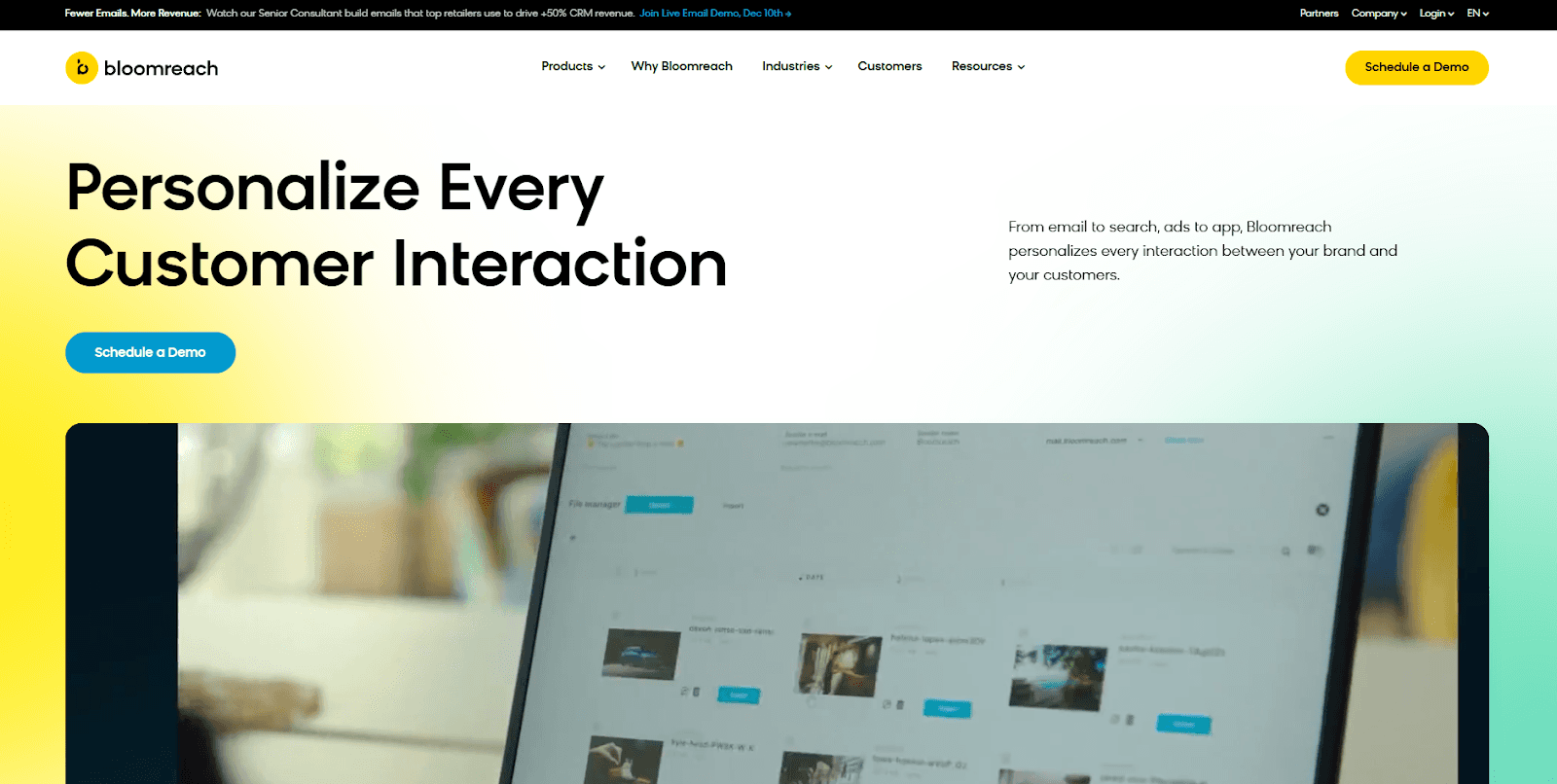
Bloomreach combines personalization with search and merchandising to enhance the online shopping experience. It offers dynamic product recommendations and personalized search to improve conversion rates and AOV for DTC brands in retail, fashion, and more.
Key Features:
AI-Powered Search: Personalize search results based on user behavior and affinities.
Personalized Content Delivery: Automatically adjust product recommendations and offers based on shoppers' preferences.
Dynamic Merchandising: Dynamically display content and offers based on user actions and ad traffic.
Customer Segmentation: Segment users based on behavior and optimize their journey accordingly.
Why It Stands Out: Combines AI‑powered search, merchandising, and recommendations, ideal for retail/beauty DTC brands wanting discovery and conversion in one platform.
Pricing: Bespoke pricing based on team size and personalization goals.
Also Read: Top 10 eCommerce Product Page Examples in 2025
5. Adobe Experience Cloud
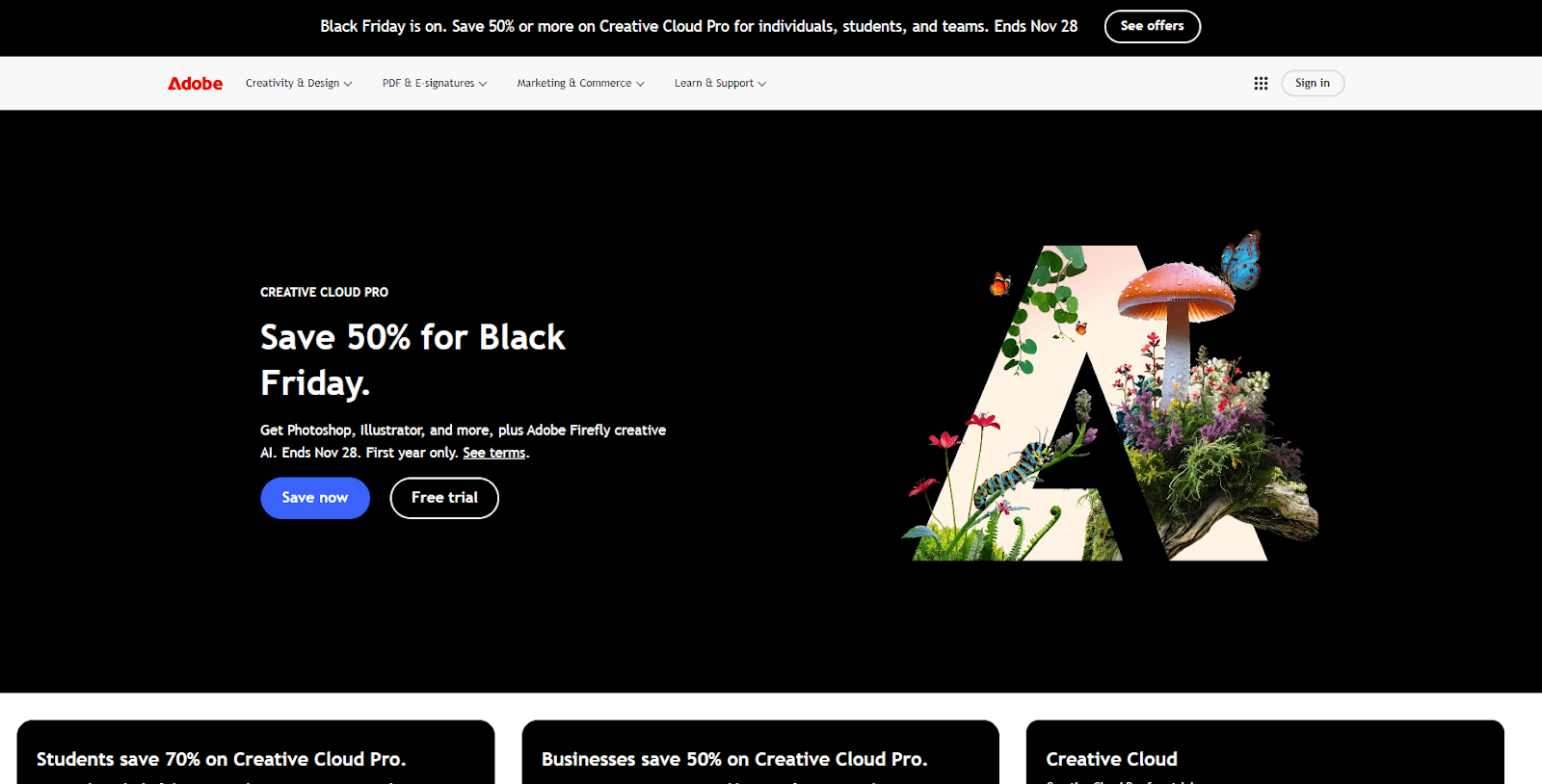
Adobe Experience Cloud offers powerful personalization and targeting tools with deep analytics. This platform enables e-commerce brands to deliver unique shopping experiences, driving higher conversion rates and LTV by understanding shopper intent.
Key Features:
Cross-Channel Experience: Deliver personalized content across web, email, mobile, and social platforms.
Advanced Analytics: Use real-time data to optimize the user journey and track conversion rates.
Behavioral Targeting: Personalize offers and content based on shopper data.
Content Management: Seamlessly manage and deliver personalized content at scale across all channels.
Why It Stands Out: Offers deep analytics + omnichannel personalization, enabling growth teams to measure CAC vs. value created and optimize across channels.
Pricing: Enterprise pricing based on usage and complexity.
6. Oracle Marketing
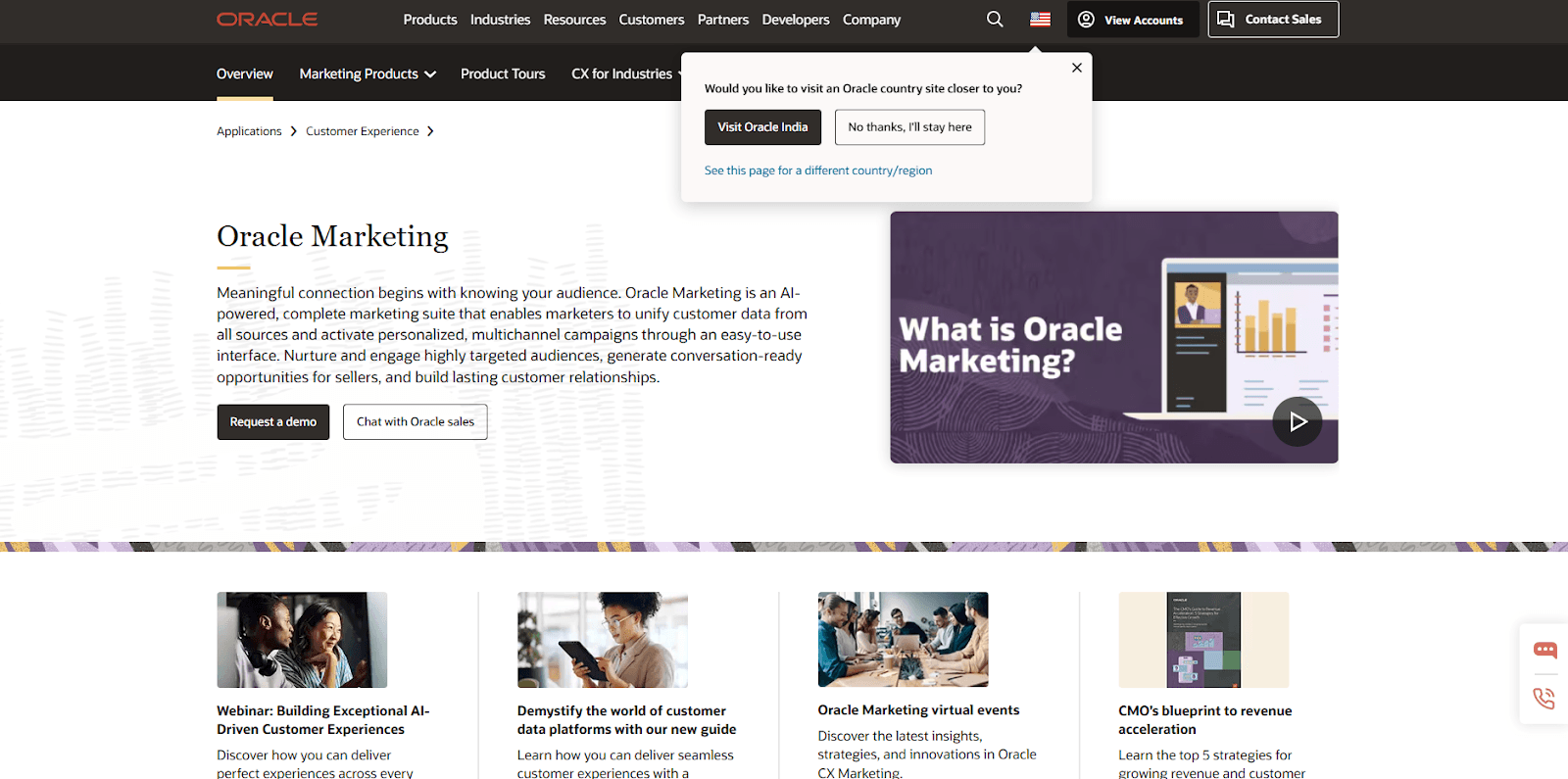
Oracle Marketing offers personalization with customer segmentation and analytics. It enables brands to modify experiences based on shopper behavior and ad campaign context, improving conversion rates and customer loyalty.
Key Features:
Behavioral Segmentation: Segment users based on actions, preferences, and demographics for targeted campaigns.
Personalization: Optimize content and product recommendations dynamically based on user behavior and location.
Predictive Analytics: Use AI to predict shopper intent and personalize experiences accordingly.
Campaign Automation: Trigger personalized campaigns based on user actions, location, and engagement history.
Why It Stands Out: Strong on real‑time analytics and advanced segmentation based on behavior and campaign context, good for brands optimizing both acquisition and user retention.
Pricing: Custom quote for segmentation and real‑time personalization needs.
7. Nosto
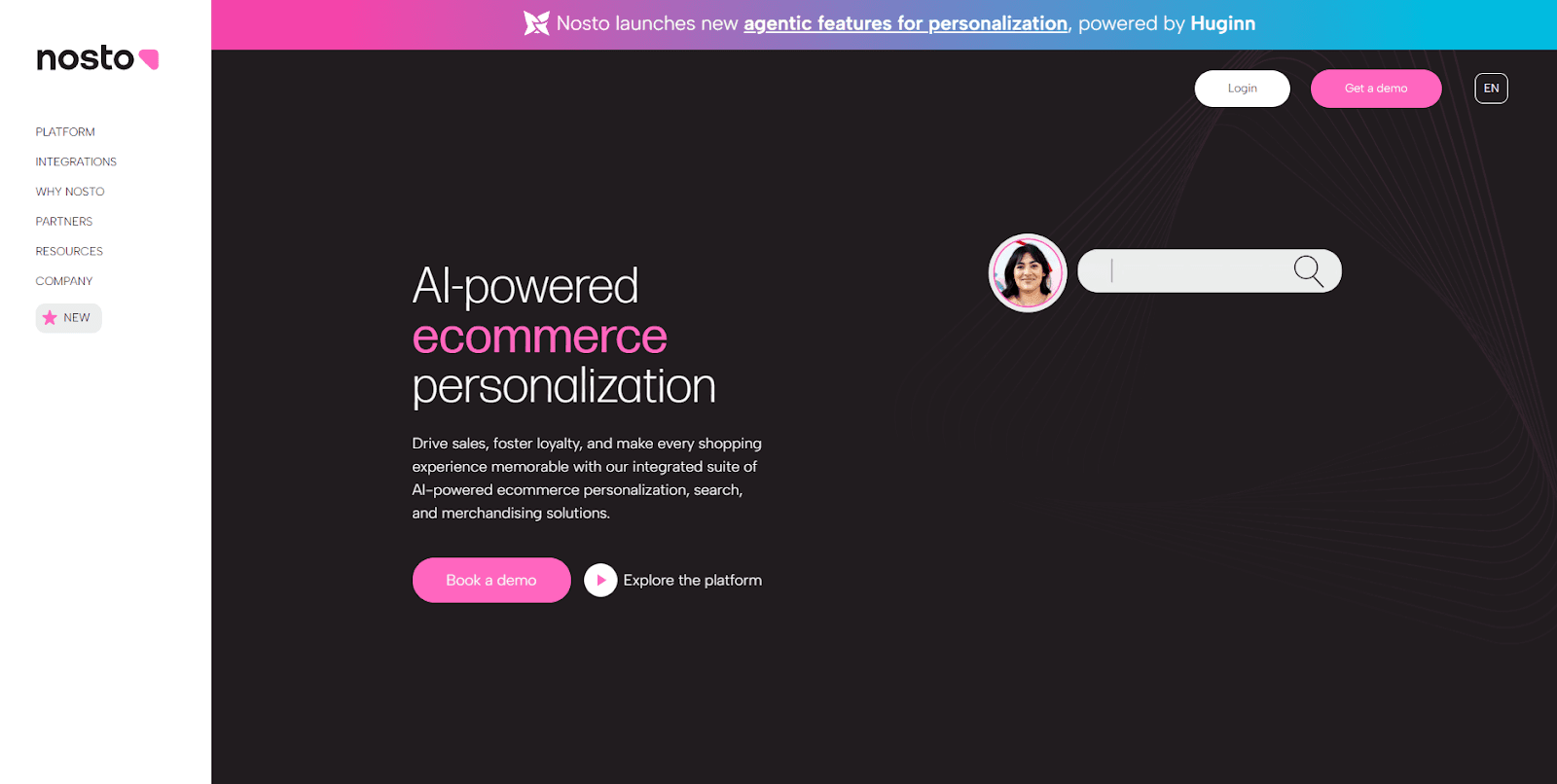
Nosto is a personalization platform that delivers AI-driven product recommendations and personalized experiences based on shopper behavior. It helps increase AOV and retention through customized shopping experiences across the entire customer journey.
Key Features:
AI Product Recommendations: Show personalized product suggestions based on browsing behavior.
Smart Bundling: Offer dynamic, behavior-driven product bundles to increase AOV.
Omnichannel Personalization: Personalize experiences across web, mobile, and email based on user interactions.
Why It Stands Out: Quick to deploy with AI‑driven recommendations & smart bundling, making it a strong fit for brands focused on increasing AOV and repeat purchase rates.
Pricing: Custom pricing
8. Mutiny
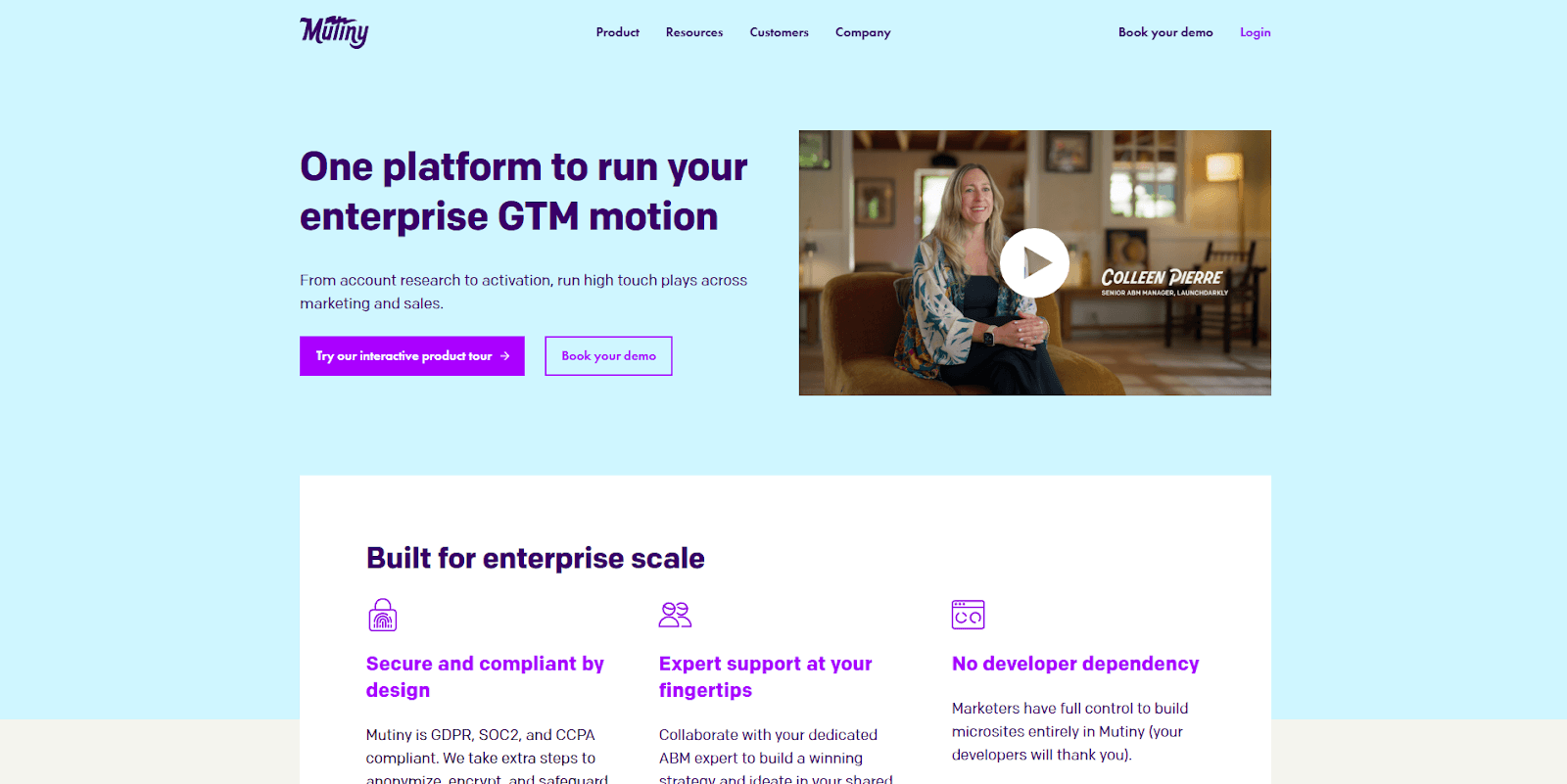
Mutiny gives conversion‑focused e‑commerce teams a no‑code way to personalize landing pages and PDPs by traffic source, campaign, and user behavior. It helps UX and growth specialists adapt experiences to reduce CAC and lift activation.
No-Code Personalization: Easily customize web experiences without developer support, personalizing based on traffic source and shopper behavior.
User Intent Mapping: Create content and offers based on user intent and ad traffic.
Targeted Campaigns: Run personalized campaigns across landing pages and PDPs based on visitor segments.
Behavior-Driven Content: Adjust content in real-time based on user activity and past interactions.
Why It Stands Out: No‑code personalization focus makes it ideal for product managers or UX teams wanting to modify PDPs and landing pages by ad source or behavior without heavy dev effort.
Pricing: Custom enterprise pricing
9. Klaviyo
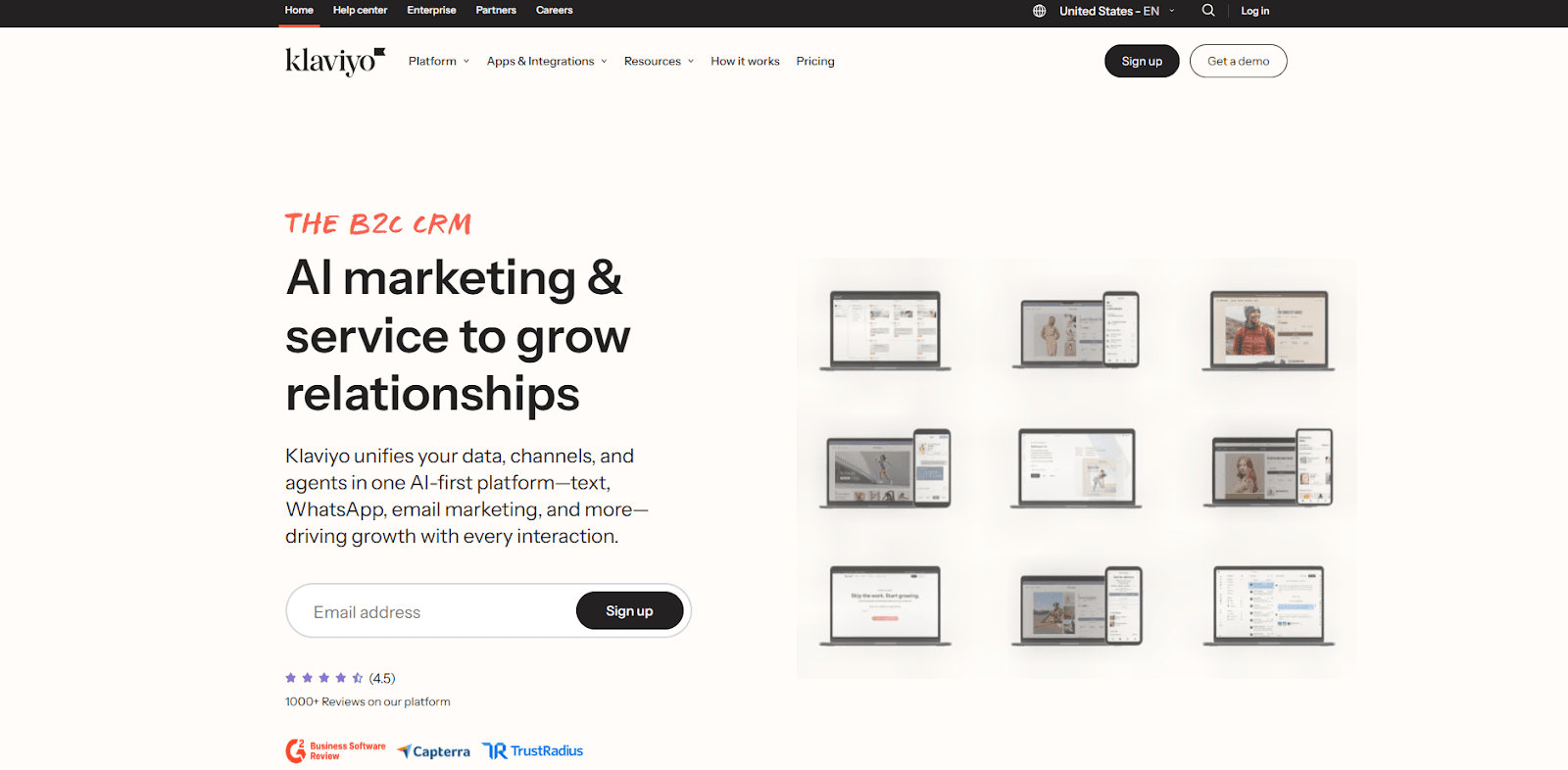
Klaviyo helps lifecycle and retention marketers at DTC brands to segment users by browsing, past purchases, and category affinity, delivering custom content and product suggestions across channels. It enhances repeat purchase rate and lifetime value (LTV) by automating personalized flows that respond to shopper behavior and campaign source.
Behavioral Triggering: Send automated messages and offers based on user actions and category affinities.
Advanced Segmentation: Create dynamic user segments based on browsing behavior, purchase history, and engagement.
Product Recommendations: Offer personalized recommendations across emails, SMS, and web pages.
Lifecycle Automation: Personalize messaging at each stage of the customer journey to maximize LTV.
Why It Stands Out: While known for email/SMS, its personalization and segmentation engine supports post‑click and lifecycle marketers looking to extend personalization into on‑site behavior.
Pricing: Custom pricing with a free plan available.
10. Optimizely
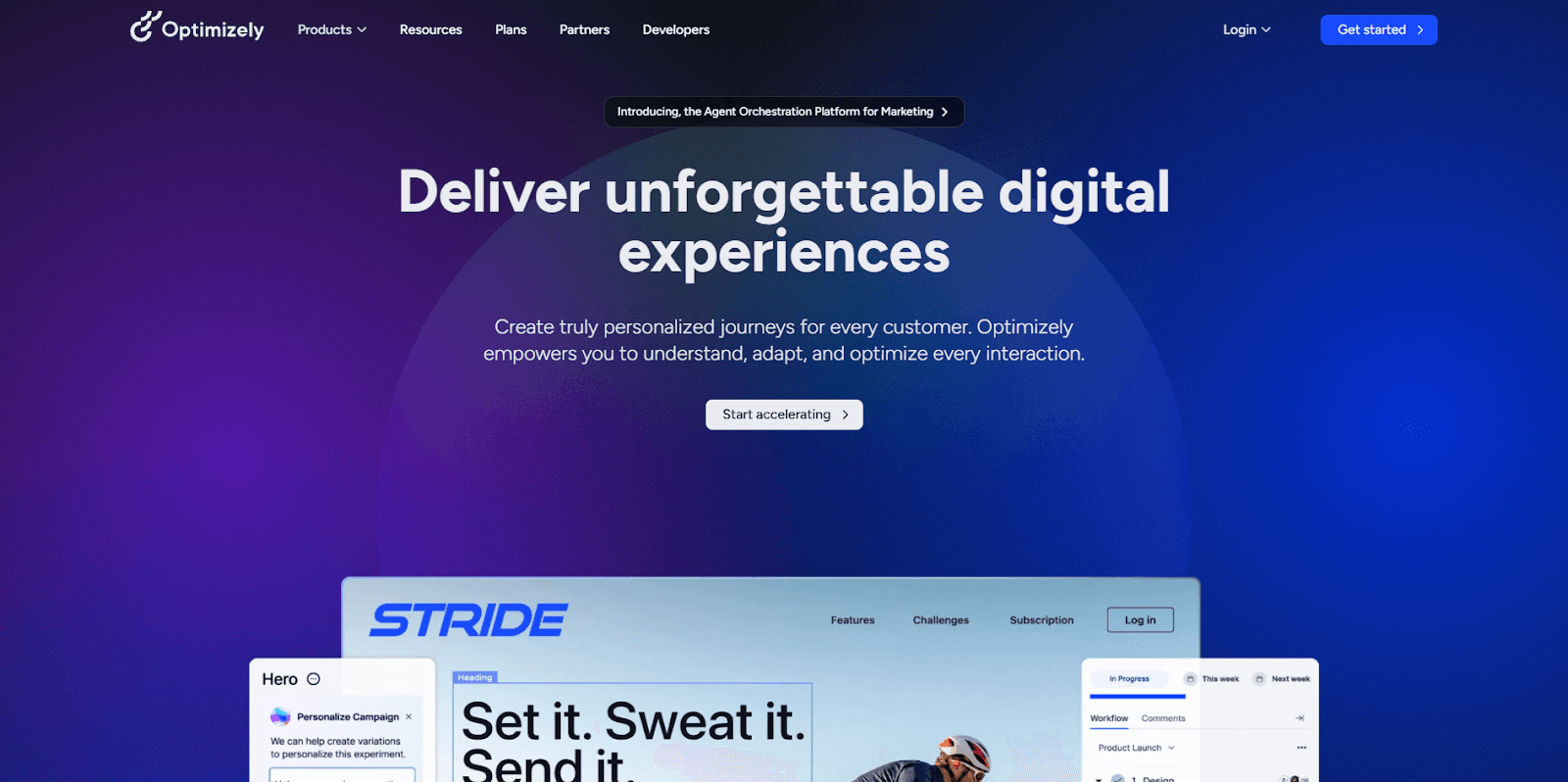
Optimizely equips UX and conversion specialists with experimentation and personalization tools designed for high‑intent paid traffic. It enables testing features, optimizing PDPs and checkout flows based on user behavior and ad context, improving conversion uplift and average order value (AOV) through data‑driven decisions.
Feature Experimentation: Test and optimize new features on your website without disrupting the user experience.
Behavioral Targeting: Personalize content based on user behavior, location, and traffic source.
Personalization: Automatically adjust content and product recommendations to fit shoppers' preferences.
A/B and Multivariate Testing: Run multiple experiments to determine the best content, layout, or feature variation for your audience.
Why It Stands Out: Feature experiment control + personalization tied to campaign source and segment make it powerful for UX and conversion specialists optimizing multi‑channel journeys.
Also Read: E-Commerce UX Design Strategies and Best Practices
Pricing: Custom enterprise pricing
With the tools in mind, here’s how to select the right software for your conversion goals.
How to Choose an E-Commerce Personalization Software?
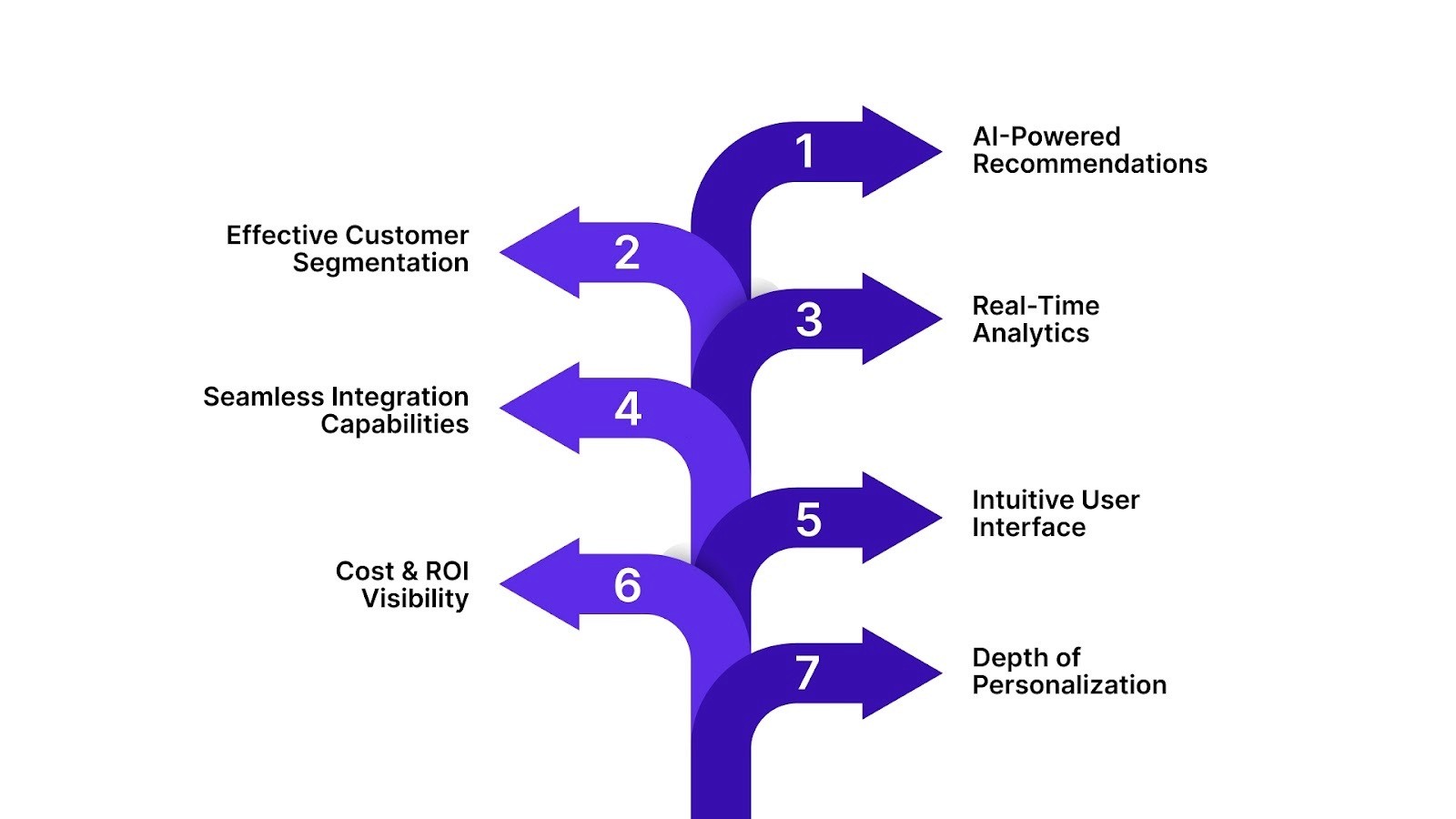
Choosing the right e-commerce personalization software is crucial for achieving higher conversion rates and AOV. Here are key factors to consider:
1. AI-Powered Recommendations
Ensure the platform offers AI-driven product recommendations that adapt based on shopper behavior, increasing engagement and conversion rates.
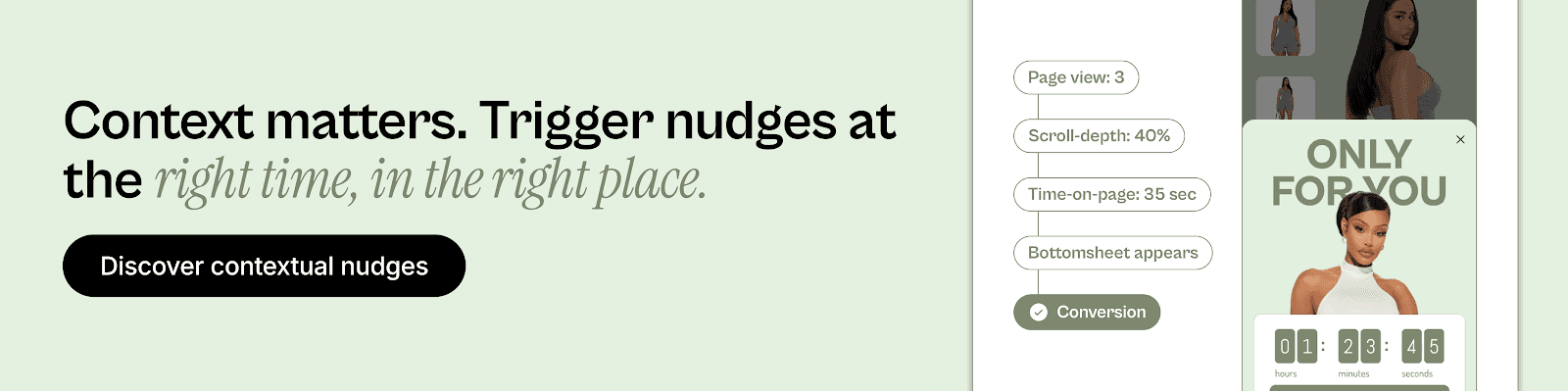
As a UX specialist, you know even tiny moments of friction can cost you conversions. That’s where Nudge’s exit-intent recovery comes in. It triggers well-timed contextual nudges and offers that re-engage shoppers before they leave, without interrupting their flow or overwhelming the experience.
2. Effective Customer Segmentation
Look for software with advanced customer segmentation to create experiences based on shopping behavior, ad source, and location.
3. Real-Time Analytics
Real-time analytics enable CRO specialists and growth teams to optimize the shopping experience instantly, improving conversion uplift and retention.
4. Seamless Integration Capabilities
Choose a platform that integrates easily with your existing tech stack, such as your e-commerce platform, CRM, and analytics tools.
Also Read: Enabling Continuous Innovation in E-Commerce Trends
5. Intuitive User Interface
The software should be user-friendly for your marketing and UX teams, enabling easy testing, personalization, and optimization without heavy technical support.
6. Cost and ROI Visibility
Look for clear ROI tracking and cost transparency to measure the impact of your personalization efforts to make sure you're maximizing CAC vs. value created.
7. Depth of Personalization
Evaluate the level of personalization the platform provides, from dynamic product bundles to behavior-based personalization that can maximize engagement and increase LTV.
Also Read: The Ultimate Landing Page Checklist for 2025
Conclusion
No matter your niche, fashion or beauty, AI-powered ecommerce personalization tools have become a necessity for growth marketers, UX teams, and retention specialists who want to maximize conversions, AOV, and repeat purchases.
The right personalization software can level up your entire strategy in 2026 by adapting your site in real time based on shopper behavior, ad traffic, and past interactions, cutting CAC and improving retention along the way.
The commerce surfaces and product recommendation features offered by Nudge can personalize the entire e-commerce shopper journey, from the moment they land to the second they check out. Higher AOV, stronger conversions, and a smoother experience all come built-in, helping turn high-intent visitors into loyal repeat customers.
Book a demo and see how Nudge’s AI personalization can give your 2026 e-commerce strategy the support it needs.
FAQs
1. What distinguishes e‑commerce personalization software from traditional tools?
For growth marketers at high‑volume DTC brands, personalization software adapts website content, offers, and product suggestions based on real‑time user behavior, ad source, and location to lift conversion.
2. Can personalization software work with heavily paid traffic campaigns?
Yes, for marketers and UX specialists managing paid campaigns, the right tool personalizes landing pages and PDPs based on ad traffic and source context, reducing CAC and improving activation.
3. How long does it take for a DTC brand to see meaningful results?
For conversion leads in retail or beauty, typical timelines are a few weeks for initial A/B tests and 4‑12 weeks for visible gains in AOV, repeat purchase rate, and LTV.
4. What level of data is required for effective personalization?
Lifecycle marketers need behavioral insights (browsing, add‑to‑cart, past purchases), campaign attribution (UTMs, source), and location/demographic data to enable adaptive journeys and meaningful personalization.
5. Will personalization software support mobile and multi‑channel experiences?
Yes, UX and retention teams at e‑commerce brands can drive consistent journeys across web, app, and desktop by using personalization software that adjusts based on device, context, and user behavior.