CRO & Experimentation
10 Proven eCommerce Website Tips to Build an Effective Store (2026)
Improve your eCommerce conversions with proven website tips. Improve user experience, drive sales, and improve engagement with actionable strategies for 2025.

Kanishka Thakur





Introduction
You invest in marketing, attract visitors, and get clicks on your ads, yet the number of actual purchases remains low. Most shoppers browse, add items to their cart, and exit before completing the checkout. For eCommerce founders, marketers, and growth professionals, this gap between traffic and conversions is one of the biggest challenges.
According to recent data, average eCommerce conversion rates is 2.5%. This means over 95% of visitors drop off before purchasing. With the right ecommerce website tips, you can bridge that gap and build a store that turns browsers into buyers.
In this article, you will discover ten proven strategies to create an effective eCommerce website that drives real results.
At a glance
Improving site speed is critical for higher conversions. A one-second increase in loading speed can boost conversions by 27%.
Mobile optimization is essential, with 62.73% of web traffic coming from mobile devices. Make sure your site is mobile-friendly to maximize engagement.
Personalizing the shopper journey increases conversions. Most of the shoppers return to complete a purchase after receiving an abandoned cart reminder.
Product images are a key factor in driving sales. High-quality product photos can increase conversions compared to low-quality images.
A clean, scannable layout and streamlined checkout process reduce abandonment rates and lead to higher conversions.
Why a Strategic Website Matters for eCommerce Success?
A well‑structured eCommerce site is crucial for driving conversions. Research shows that design elements like social proof, visual layout, trust signals, and user interface (UI) contribute greatly to conversion rates. In fact, these factors directly influence how customers perceive your brand and interact with your site.
By prioritizing a clean design, trust signals, and a user-friendly interface, you create an environment where shoppers are more likely to make a purchase. This strategic approach not only improves user experience but also promotes greater trust, which is critical for improving conversion rates.
When every component works together strategically, your store becomes a powerful growth channel. This foundation leads to the following ecommerce website tips that help improve every stage of the customer journey.
10 Proven eCommerce Website Tips to Build an Effective Store
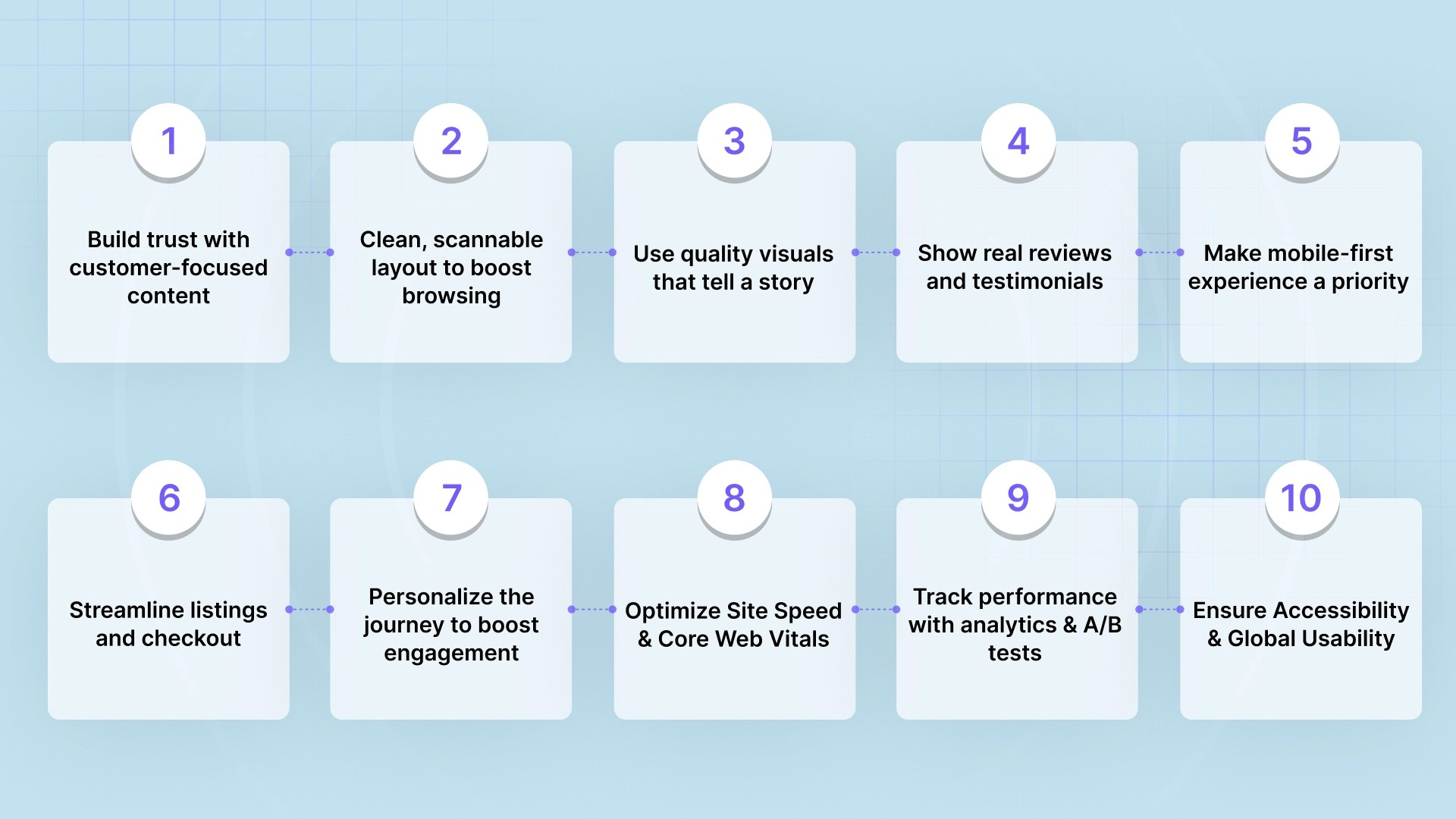
Building an effective eCommerce store requires more than design appeal. It demands a customer-first approach, measurable performance, and consistent optimization across every interaction.
The following ecommerce website tips will help you strengthen user experience, increase conversions, and create strong customer relationships.
1. Create Customer-Focused Content That Builds Confidence
Every successful eCommerce website begins with a clear understanding of the customer's intent. Your content must speak to their needs, not your product features. When visitors land on your site, they should immediately know how your product improves their life or solves a specific problem.
Start by asking strategic questions before writing any copy.
What motivates your customers to buy?
Which challenges do they face?
How can your product make their decision easier?
For instance, Allbirds explains how its shoes are made from natural materials like wool and eucalyptus, linking product comfort with sustainability, two things modern buyers value highly. This builds both credibility and emotional connection.
Pro Tip: Review your customer feedback and top-performing ads to identify phrases your audience uses most. Mirror that language on your website to make your messaging feel personal and trustworthy.
2. Design a Clean, Scannable Layout That Encourages Browsing
Your website layout must make it easy for visitors to find products and take action without confusion. Avoid clutter by keeping navigation simple and grouping related items logically. Use a visual hierarchy to highlight key elements, such as product images, prices, and CTAs, guiding users naturally through the shopping experience.
For instance, Zara uses a minimalist design where products are displayed clearly with ample whitespace, making it easy for users to focus on what matters.
A streamlined layout can help reduce bounce rates, and the next step is ensuring your images support that seamless browsing experience.
3. Use High-Quality Visuals That Tell a Story
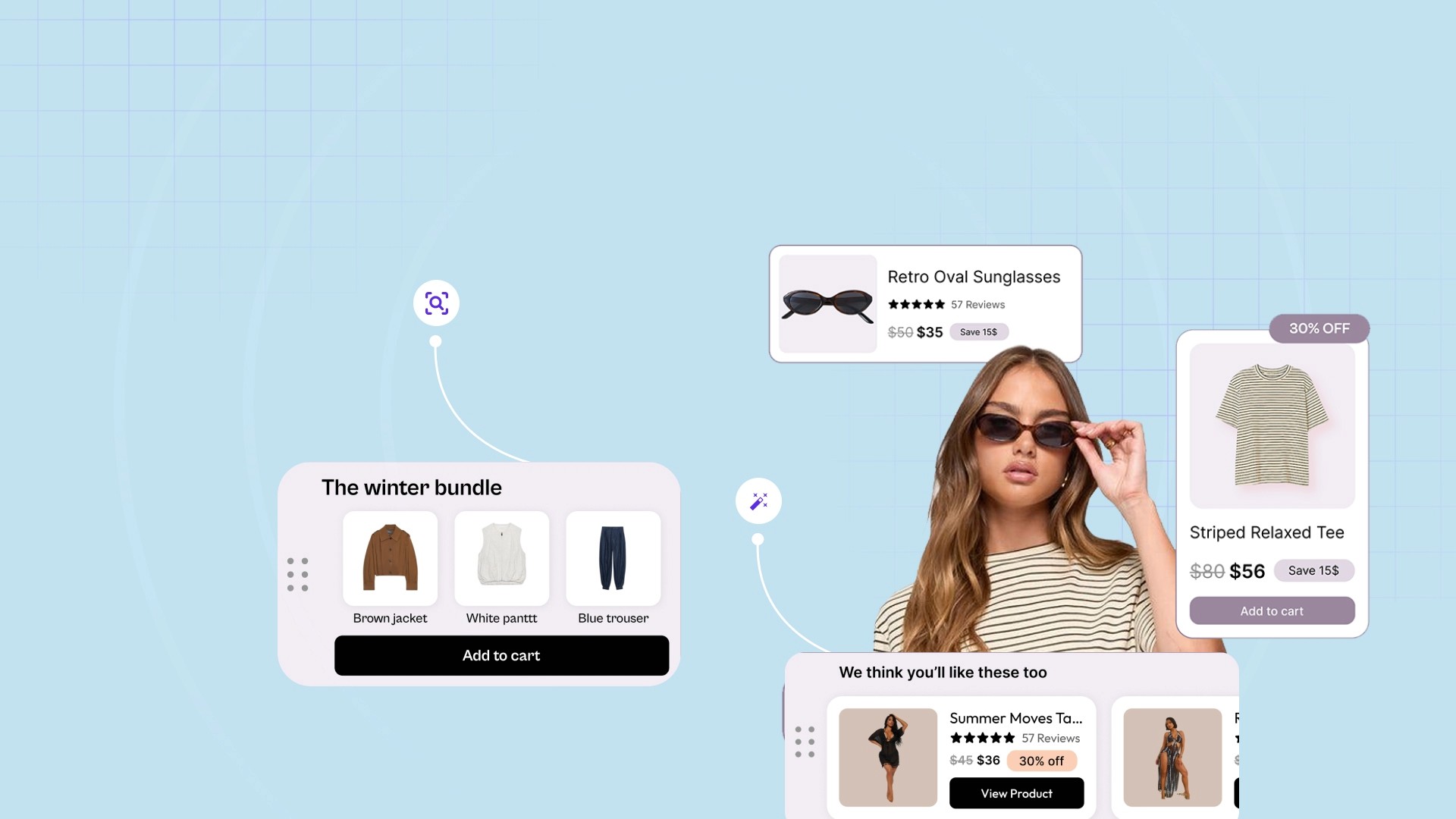
Product images play a critical role in eCommerce decisions. High-quality visuals not only showcase your product but also help build trust and reduce uncertainty. In fact, high-quality product photos have a higher conversion rate than low-quality photos.
To make the most of this, use clear, detailed images that display your product from multiple angles. Incorporate lifestyle shots that show the product in use, helping customers visualize its value. A combination of high-resolution images, videos, and 360-degree views engages visitors and pushes them closer to making a purchase.
The next step is ensuring your site has real reviews and customer testimonials.
4. Showcase Real Reviews and Customer Testimonials
Customer reviews are a powerful tool for building trust and validating your products. 82% of customers use some form of online review before making a purchase. Displaying genuine feedback on product pages helps reassure potential buyers and increase credibility.
Feature star ratings, verified buyer tags, and detailed customer experiences to give future buyers the confidence they need to complete their purchase.
Reviews and testimonials are essential for gaining trust, and once that foundation is set, optimizing the mobile experience becomes the next key focus.
5. Prioritize Mobile-First Experience and Navigation
With 62.73% of all web traffic coming through mobile phones, optimizing for mobile-first design is essential. A seamless mobile experience improves usability and ensures visitors don't abandon your site due to poor navigation or slow load times.
For example, Nike's mobile site is designed with large touch targets, sticky navigation, and a simple path to checkout. This ensures users can quickly browse, compare, and make purchases, even on the go.
Optimizing for mobile increases engagement, and once you have that in place, streamlining product listings and the checkout flow will further drive conversions.
6. Simplify Product Listings and Checkout Experience
Cluttered listings and complex checkouts increase abandonment rates. Here's how to streamline both:
Product Listings
Group products into clear categories.
Use concise, benefit-driven descriptions.
Ensure filters are easy to access and use.
Display high-quality images with clear options to sort by price, best-sellers, or ratings.
Checkout Process
Minimize form fields and offer guest checkout.
Display shipping costs and taxes upfront.
Use progress indicators to show customers where they are in the process.
A simplified product listing and checkout flow increases conversions, and the next step is to personalize the shopper journey for higher engagement.
Looking to improve your AOV and conversions?
Nudge can help with adaptive recommendations and bundles personalized to each shopper's behavior and preferences. Personalize your entire funnel from browsing to checkout and see increased sales in real time.
7. Personalize the Shopper Journey for Higher Engagement
Personalization increases engagement by showing shoppers products relevant to their interests. It's a powerful tool for driving conversions and encouraging repeat purchases.
For example, 38.4% of the variance in cart abandonment recovery is influenced by brand attachment through remarketing channels like email. Use this insight to deliver personalized recommendations based on browsing history or past purchases.
Personalize product suggestions, emails, and pop-ups based on each shopper's behavior, increasing the likelihood of conversion.
Personalization drives higher engagement and conversion rates, making the next step optimizing site speed to ensure a seamless experience.
Nudge helps eCommerce brands personalize every interaction, increasing relevance and conversions at each stage, from landing pages to checkout.
8. Optimize Site Speed and Core Web Vitals
Site speed directly impacts user experience and conversions. A one-second increase in loading speed improves conversions by 27%.
To improve site speed, focus on optimizing Core Web Vitals:
Largest Contentful Paint (LCP): Aim for LCP under 2.5 seconds by compressing images and using lazy loading.
Interaction to Next Paint (INP): Minimize script execution times to ensure fast interactivity.
Cumulative Layout Shift (CLS): Ensure stable layout shifts by avoiding content that moves unexpectedly during page load.
Faster sites retain users, and once speed is optimized, it's essential to track performance through analytics and A/B testing to measure impact.
9. Track Performance Through Analytics and A/B Testing
Tracking key metrics is essential for ongoing improvement. Use analytics tools like Google Analytics to monitor user behavior, conversion rates, and drop-off points.
A/B testing allows you to test variations of landing pages, CTAs, and product displays to identify what works best. Start by testing one element at a time (e.g., headline copy or CTA button color) to understand its impact on conversions.
Analytics and testing help you make data-driven decisions, leading to continuous optimization and higher conversion rates.
With Nudge, you can take testing further by personalizing every step of the customer journey, from landing page to checkout, to increase relevance and engagement dynamically.

10. Ensure Accessibility and Global Usability
An accessible website reaches a broader audience and improves user experience. Follow WCAG guidelines to ensure compatibility with screen readers, proper contrast, and keyboard navigation. Additionally, support global users by offering multi-currency options, local payment methods, and translations.
These improvements not only expand your reach but also increase SEO and compliance.
Let’s look at some live stores that get accessibility and global usability right, so you can see how the theory applies in real life.
Real-World Examples of eCommerce Websites with Great Accessibility and Global Usability
To see how global usability and accessibility come to life in real eCommerce websites, here are three top examples that get it right. These stores combine usability with multi‑currency options, language translations, and strong design to deliver a seamless shopping experience worldwide.
Example 1: Allbirds
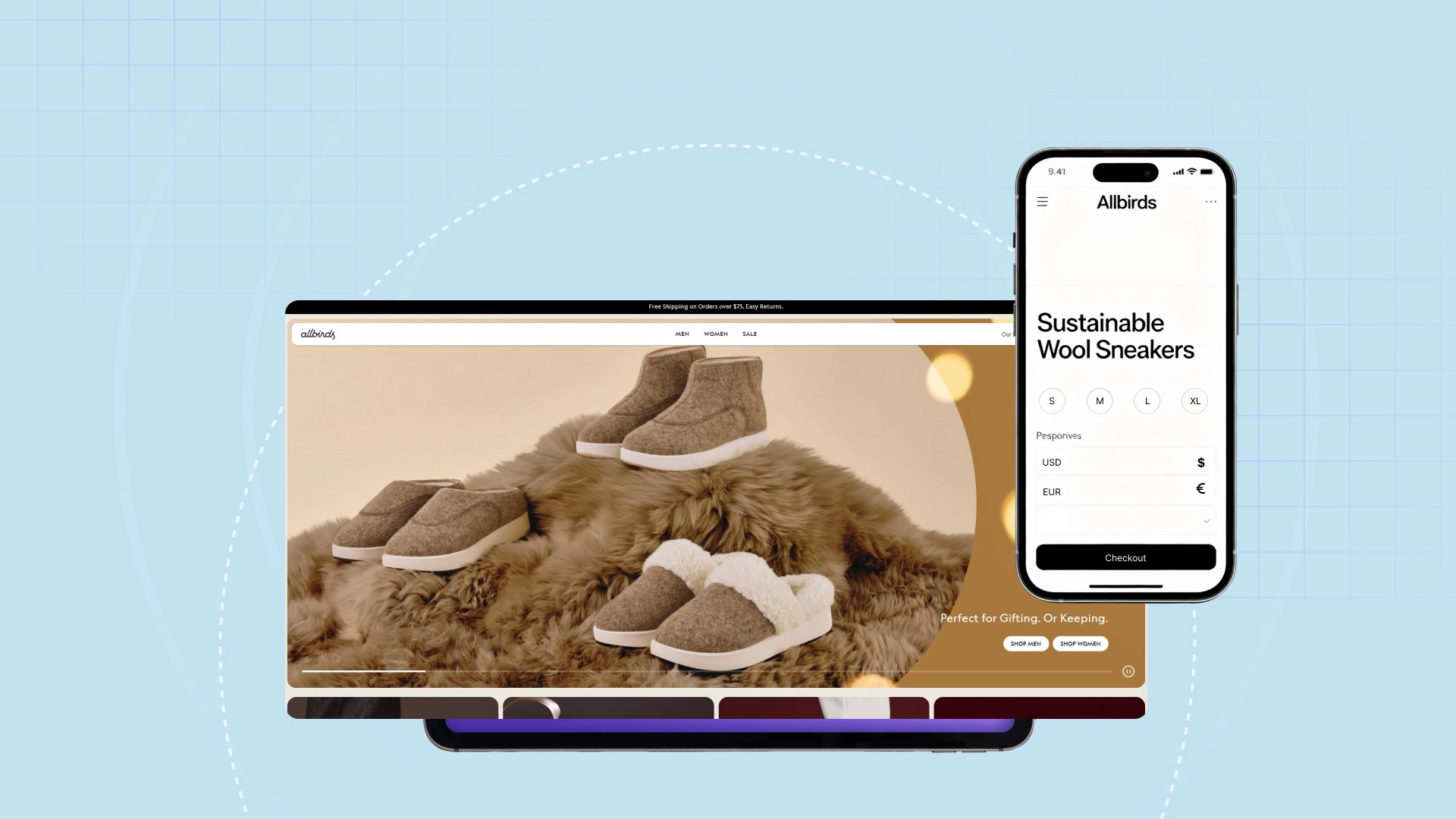
Allbirds excels in offering a mobile-friendly and responsive design. Their website includes multi-currency checkout and global shipping options, making it accessible to shoppers worldwide. The brand also uses high-contrast visuals and easy-to-navigate pages, ensuring a smooth experience across devices.
Example 2: Kylie Cosmetics
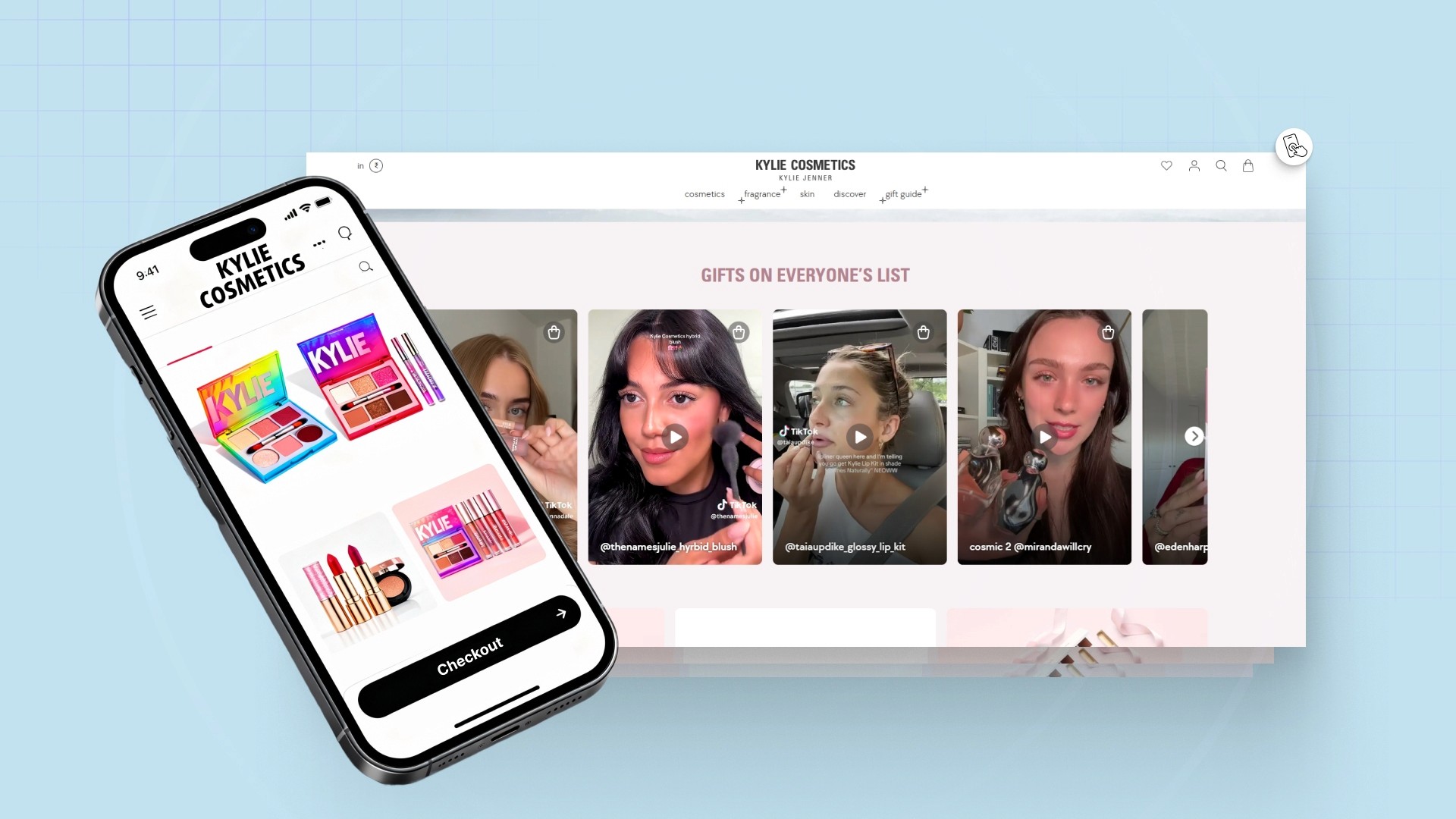
Kylie Cosmetics is a perfect example of user-friendly mobile navigation and fast checkout processes. With language options and region-specific payment methods, they make shopping convenient for international customers. Their website also uses clear product images with ALT text for improved accessibility.
Example 3: Welly
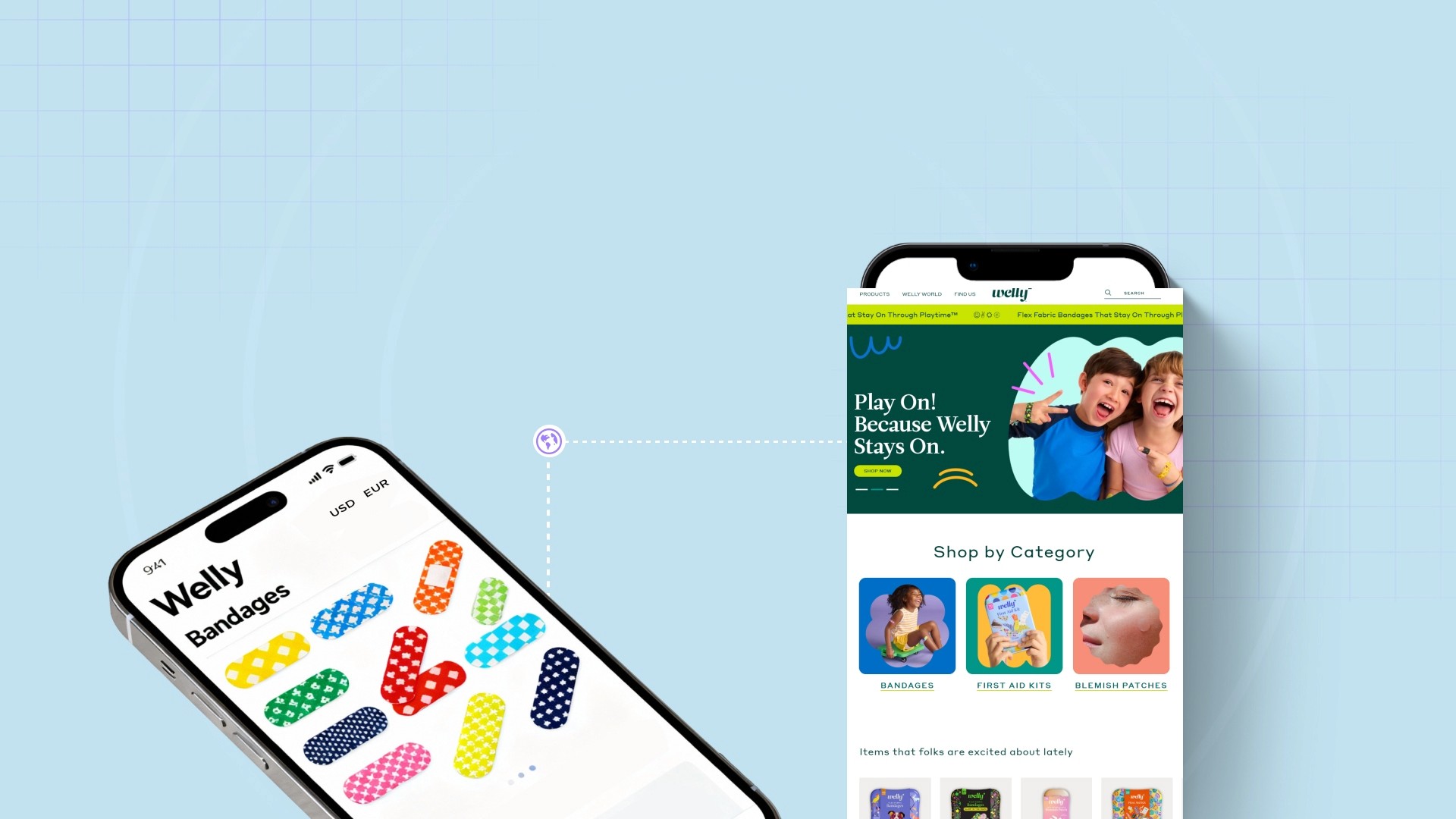
Welly offers an accessible and responsive design with multi-currency support for international shoppers. They make shopping easy by offering region-specific shipping and localized content, ensuring global usability. Their clean, modern layout makes it easy for customers to find what they need without any friction.
As you optimize for accessibility and global reach, the next step is to improve every interaction with personalized, AI-driven experiences that drive engagement and conversions.
Also Read: Website Redesign Tips and Checklist to Revamp Your Site
Bonus Tip: Elevate Every Interaction with Nudge's AI-Powered Personalization
Nudge is an AI-driven platform that transforms how eCommerce stores interact with shoppers. By replacing static, pre-defined shopping journeys with dynamic, real-time personalization, Nudge helps brands deliver personalized experiences that grow based on each shopper's behavior, intent, and campaign source.
How Nudge can help:
Real-time Personalization: Dynamic updates across homepages, PDPs, PLPs, and checkout pages based on shopper behavior and intent.
Commerce Surfaces: AI-powered product grids, personalized offers, and shoppable videos that adapt instantly to each shopper.
AI Product Recommendations: Contextual, behavior-driven recommendations and smart bundles that are always in sync with inventory.
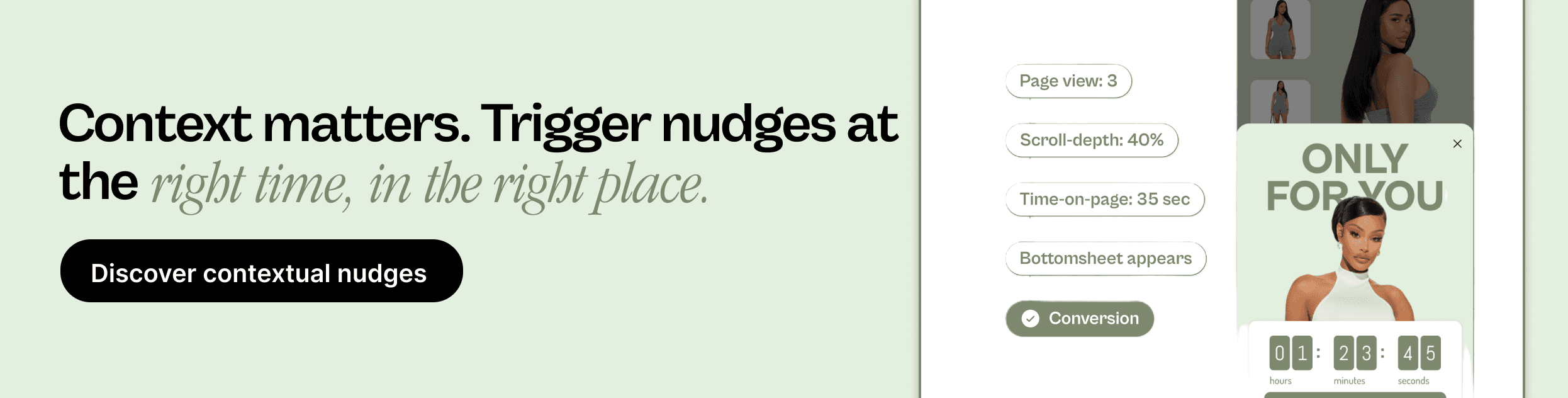
Contextual Nudges: Triggered banners and pop-ups based on time-on-page, exit intent, or referrer to maximize conversions.
No Dev Bottlenecks: Marketing teams can launch and test changes without waiting for code deployments, improving agility.
Compounding Advantage: More relevant content, faster delivery, and less manual effort, driving higher conversions and customer retention.
Higher CVR, AOV, LTV & Lower CAC: Personalization increases customer engagement, reduces abandonment, and drives repeat purchases.
Continuous Learning: Nudge's AI model adapts over time, keeping personalization strategies future-proof.
Nudge helps turn clicks into conversions by making every shopper’s journey unique and relevant.

Wrapping Up
Implementing the right ecommerce website tips can greatly increase conversions and customer engagement. From improving site speed and simplifying navigation to personalizing the shopper journey, every change helps create a smoother, more compelling shopping experience.
With Nudge, you can take it a step further by dynamically personalizing every interaction, increasing conversions, and optimizing the customer journey in real-time.
Book a demo with Nudge today and improve your store's performance.
FAQs
1. How can I improve my eCommerce website's mobile experience?
Ensure your website is optimized for mobile with thumb-friendly buttons, simple navigation, and fast loading times. Minimize the number of steps in the checkout process to improve mobile conversions.
2. What are the key factors that impact eCommerce conversion rates?
Site speed, mobile responsiveness, personalized content, clear product descriptions, and a seamless checkout process are essential factors that influence conversion rates and user engagement.
3. How does Nudge personalize the shopping experience for visitors?
Nudge uses AI to analyze shopper behavior and adapt content dynamically, offering personalized product recommendations and real-time nudges, increasing both conversions and AOV.
4. How do I know if my website is accessible to all users?
Use accessibility tools like WAVE or Axe to check compliance with WCAG guidelines. Ensure that text is legible, images are properly tagged, and your site is navigable by keyboard.
5. What role does personalization play in increasing eCommerce sales?
Personalization delivers a custom-made shopping experience, showing relevant products, offers, and content based on user behavior. This increases engagement, leads to higher AOV, and reduces cart abandonment.