Shoppable Funnels
ClickFunnels Alternatives That Route Traffic by Origin
Compare ClickFunnels alternatives built to route agent, ad, and organic traffic to a matched journey, on your own domain.

Gaurav Rawat





Key Takeaways
ClickFunnels sends every visitor to the same static funnel regardless of whether the click came from an AI agent, a paid ad, or organic search.
AI-referred shoppers arrive further along in the decision, spending 45% more time on-site and viewing 13% more pages per visit (Adobe), so routing them to a generic funnel wastes the most engaged traffic a brand gets.
The best ClickFunnels alternatives for multi-channel traffic separate into two jobs: getting recommended by AI (the discovery moment) and converting that recommendation (the purchase moment).
We route each click from one URL to the journey it deserves, and that journey stays live on your own domain so the citations and authority it earns accrue to you.
We are SOC 2 certified and support SSO, which is the baseline enterprise commerce teams need before connecting a funnel platform to their stack.
ClickFunnels alternatives built for multi-channel traffic routing detect whether a click came from an AI agent, a paid ad, or organic search and serve a matched journey from a single URL, something ClickFunnels does not do natively. We built Nudge for both moments: getting recommended by AI, and converting that recommendation on your own domain.
Why ClickFunnels Sends Every Visitor to the Same Funnel
ClickFunnels builds one funnel per offer and does not natively branch by where the click came from. Every visitor lands on the same static sequence of pages, regardless of intent or channel.
Commerce now involves two distinct moments: getting recommended by AI, and converting that recommendation into a purchase. A funnel platform that only optimizes the second moment misses the first, and a visibility tool that only reports the first misses the revenue. Forrester notes that most agentic shopping experiences today remain conversational rather than fully autonomous, which means the funnel a shopper actually lands on still decides whether the recommendation turns into a sale.
What a Routing Alternative Must Do That ClickFunnels Cannot
Buyers evaluating alternatives should check for origin detection at the URL level, CRM and email integration depth, native A/B testing, and enterprise security badges (SOC 2, SSO) required for procurement. Two terms matter here: winnable intent is the specific conversational queries where a brand's catalog depth and authority let it dominate recommendation share, and prompt-level optimization means structuring product data and pages to directly answer the high-intent queries shoppers feed to their agents.
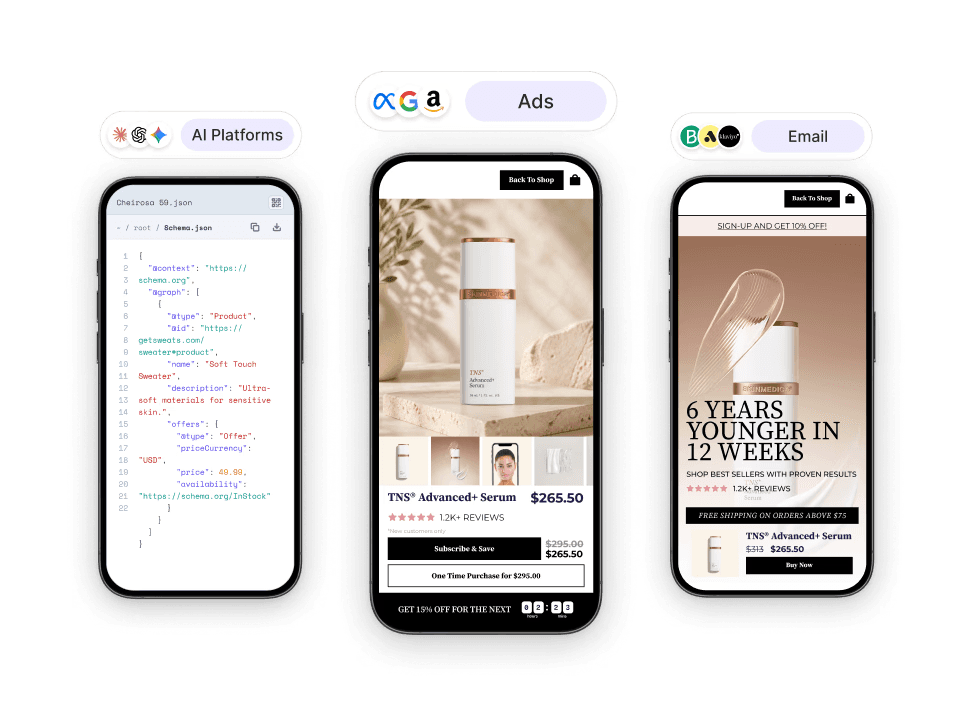
Origin detection: the platform must identify the traffic origin at the URL level, not after the fact in analytics.
CRM and email integration: routing decisions should sync with existing lifecycle marketing tools rather than living in a silo.
Native A/B testing: journeys need to be tested per origin, not just per offer.
Security badges: SOC 2 and SSO are non-negotiable before connecting any platform to your commerce stack.
Comparing ClickFunnels Alternatives on Routing and Conversion
Platform | Origin-Based Routing | Native A/B Testing | CRM Depth | Pricing Model |
|---|---|---|---|---|
ClickFunnels | No | Yes | Basic, built-in | Flat monthly subscription |
Leadpages | No | Yes | Basic integrations | Flat monthly subscription |
Unbounce | Limited (audience targeting, not origin) | Yes | Integrations via Zapier | Tiered by traffic volume |
Systeme.io | No | Limited | Basic, built-in | Flat monthly subscription |
HubSpot | Limited (workflow-based, not origin) | Yes | Deep, native CRM | Tiered by contacts/seats |
Landingi | No | Yes | Basic integrations | Tiered by traffic volume |
GetResponse | No | Yes | Native email/CRM | Tiered by contacts |
Yes, by AI agent, ad, or organic origin from one URL | Yes | Integrates with existing CRM/CDP stack | Platform pricing tied to pilot outcomes |
Why AI-Referred Shoppers Need a Different Journey
In a Seer Interactive case study of one ecommerce site, ChatGPT referrals converted at 15.9% and Perplexity at 10.5% against 1.76% for Google organic. Results vary widely by site, and other large samples find a far smaller gap. Adobe measured revenue per visit from AI traffic rising 84% between January and July 2025, even while AI conversion still trailed other channels over that period, and the conversion gap has closed since. Sending this traffic to the same generic funnel as paid or organic clicks forfeits that conversion gap entirely.
Funnels (across agents, ads and organic) is the pillar we generate that matched journey with, routed by where the click originated. Because it lives under your own URL, the citations and domain authority it earns land with you rather than with a vendor-hosted experience.
How We Close Both Moments of Commerce
Most ClickFunnels alternatives address only one moment: either visibility tracking, which reports how a brand and its products are ranked, recommended, and cited across ChatGPT, Gemini, Perplexity, and Google AI Overviews, or the click and funnel layer, which converts traffic that is already there. Neither addresses both.
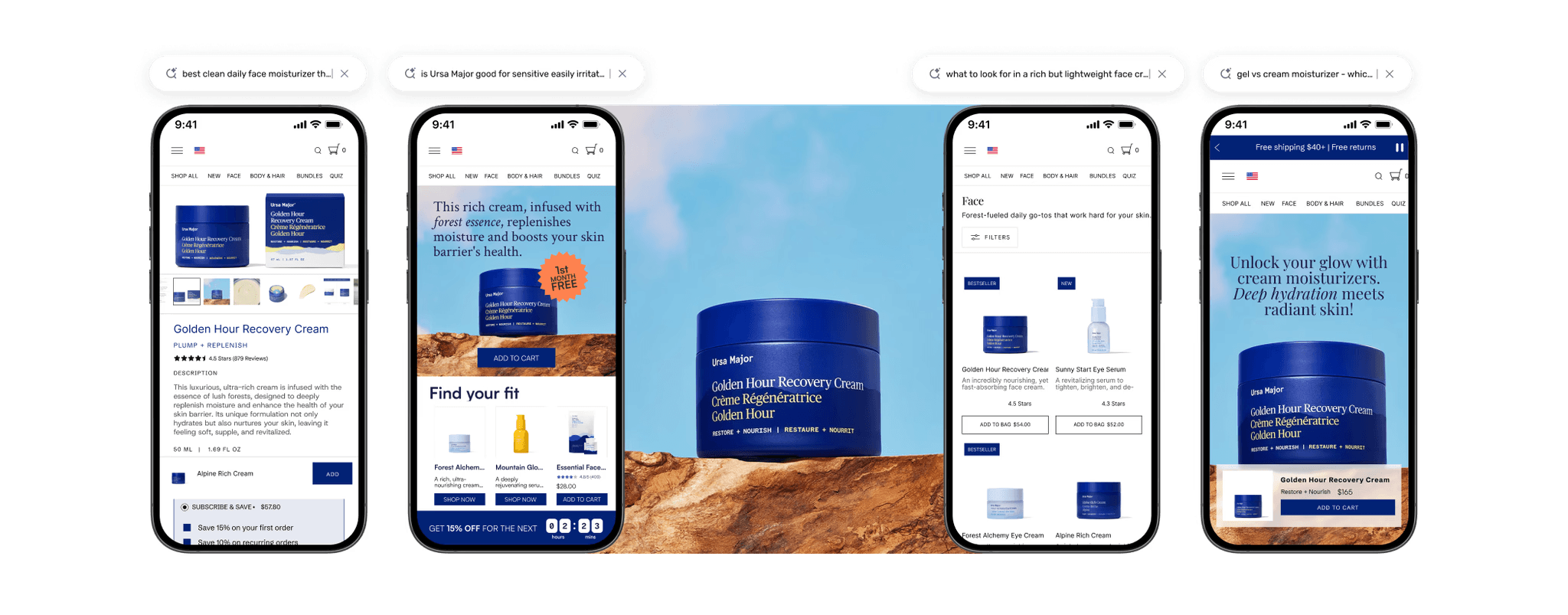
We pair AI Visibility with Funnels (across agents, ads and organic) and Catalog Enrichment. Our own reported early-customer results show up to 4x growth in AI visibility and a 56% lift in conversion rates. Catalog Enrichment serves a version of the page built for agents that is provably fact-identical to the human page, with Google always seeing the real site, a parity guarantee rather than a workaround.
How to Pilot a Routing-Capable Funnel Platform
A pilot should produce artifacts, not just a dashboard. Require proof in the form of a live funnel, a feed attribute pushed, and a revenue number tied to that specific action.
Review our SOC 2 report and enable SSO before connecting the platform to your PIM, OMS, or CDP stack.
Confirm the platform can push feed attributes to Shopify, WooCommerce, or Salesforce Commerce Cloud via Catalog Enrichment.
Confirm support for emerging agent protocols such as OpenAI's Agentic Commerce Protocol (ACP) and Google's Universal Commerce Protocol (UCP).
Require proof as a live funnel on your domain, a feed attribute pushed, and a revenue number tied to the action, not a dashboard alone.
Ready to route traffic by origin? Book a demo!
Frequently asked questions
Is Nudge a direct replacement for ClickFunnels?
We are not a general-purpose funnel builder replacement. Nudge is the layer that routes agent, ad, and organic clicks to the journey each one deserves under your own URL, then ties that journey to AI Visibility and Catalog Enrichment. ClickFunnels does neither.
What does routing traffic by origin actually mean for a sales funnel?
It means one URL detects the click's origin and serves the journey suited to that visitor's intent and stage, instead of forcing everyone through the same static page.
Do AI-referred shoppers convert better than organic or paid traffic?
Often yes, though the size of the gap varies a lot by site. Adobe found AI-referred shoppers spending 45% more time on-site and viewing 13% more pages per visit, which is why a matched journey for that traffic matters.
Do AI agents and shoppers see the same facts on the page?
Yes. The page built for agents is provably fact-identical to the human-facing page, and Google always sees the real site, which is the parity guarantee behind any journey built with Funnels.
What security requirements should enterprise teams check before piloting a funnel platform?
We hold SOC 2 and ship SSO. Enterprise teams should require both from any platform before connecting it to their commerce systems.