Shoppable Funnels
6 Landing Page Elements That Convert ChatGPT and Perplexity Shoppers
Drive 31% higher conversion (1.81% vs 1.39%) from AI-referred traffic by optimizing your post-click experience. Here are the six key elements that measurably prevent bounce, ranked by impact.

Kanishka Thakur





Key Takeaways
ChatGPT-referred ecommerce traffic converts 31% higher than non-branded organic search (1.81% vs 1.39%), based on a 12-month analysis of 94 ecommerce brands (Search Engine Land).
Landing pages that mirror the exact vocabulary of the AI conversation, powered by Nudge's AI Search Visibility, reduce bounce and lift conversion more than brand-first headlines.
Nudge's Shoppable Funnels deliver a post-click experience that personalizes content to the specific intent that drove the visit and connects directly to the storefront so every action ties to conversion and revenue.
Nudge's Catalog Enrichment structures SKU-level catalog data (schema markup, spec pages) to determine whether an AI engine cites and compares a product before a shopper ever reaches the landing page.
Pricing and plan details must appear within the first screen for AI-referred shoppers since many already asked the assistant about cost before clicking through.
To close the gap between what a shopper asked an AI assistant and what they see after the click, brands deploy Nudge's Shoppable Funnels, AI Visibility, and Catalog Enrichment to deliver intent-matched funnels, prompt-mirrored headlines, upfront pricing, and structured SKU-level catalog data.
Why ChatGPT and Perplexity Shoppers Need a Different Landing Page
ChatGPT-referred ecommerce traffic converts 31% higher than non-branded organic search, at 1.81% versus 1.39%, based on a 12-month analysis of 94 ecommerce brands, and produces higher revenue per session ($3.65 versus $3.30) despite a lower average order value. That gap exists because AI-referred shoppers arrive with a specific, already-articulated intent rather than a generic keyword, and the landing page either matches that intent or loses them. Three terms recur through this list. AI visibility is whether AI engines surface and cite a brand's products in response to a shopper's question. Prompt-level optimization is matching page content to the specific question a shopper asked, not a generic keyword. A shoppable funnel is a post-click experience personalized to that intent and connected directly to the storefront so every action ties to conversion and revenue.
How We Ranked These Elements
These elements are ordered by their direct impact on bounce reduction and conversion lift for AI-referred sessions, not general landing page best practices. A page can rank first in AI search results and still fail to convert if the post-click experience does not match the intent behind the prompt that generated the click, which is why Nudge's Shoppable Funnels top this list.
1. A Shoppable Funnel That Matches the Exact Prompt Intent
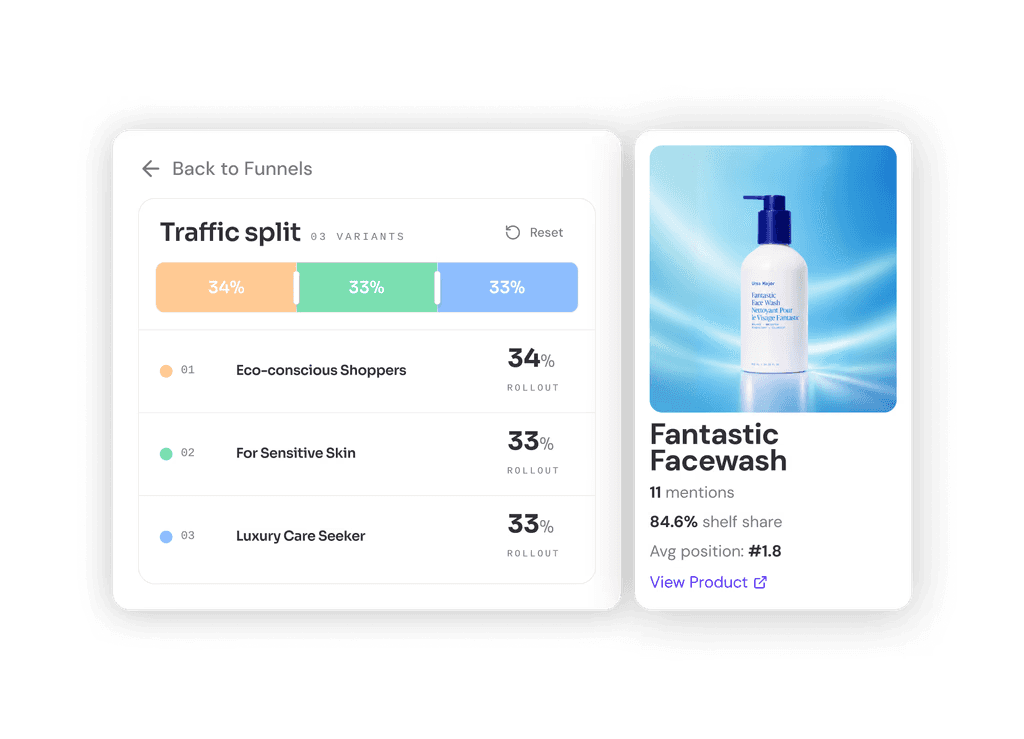
A shoppable funnel that mirrors the exact intent behind an AI referral is the highest-leverage element on this list. Nudge's Shoppable Funnels personalize the post-click experience based on the exact intent that drove the visit, so a shopper who asked an assistant about a specific use case, budget, or comparison lands on content built for that question rather than a generic homepage. Every funnel connects directly to the brand's storefront, so browsing, comparing, and adding to cart all tie back to conversion and revenue instead of routing shoppers through a disconnected marketing page. Technically, this means Shoppable Funnels run storefront-connected, with SOC 2 and SSO controls for enterprise catalog and security teams, so a large commerce organization can deploy prompt-matched funnels at scale without adding an ungoverned tool to its stack. Because intent-matched funnels sit at the top of both AI citation and conversion outcomes, teams evaluating this list should treat it as the prerequisite the other elements build on, not one option among equals.
2. A Headline That Mirrors the AI Conversation's Vocabulary
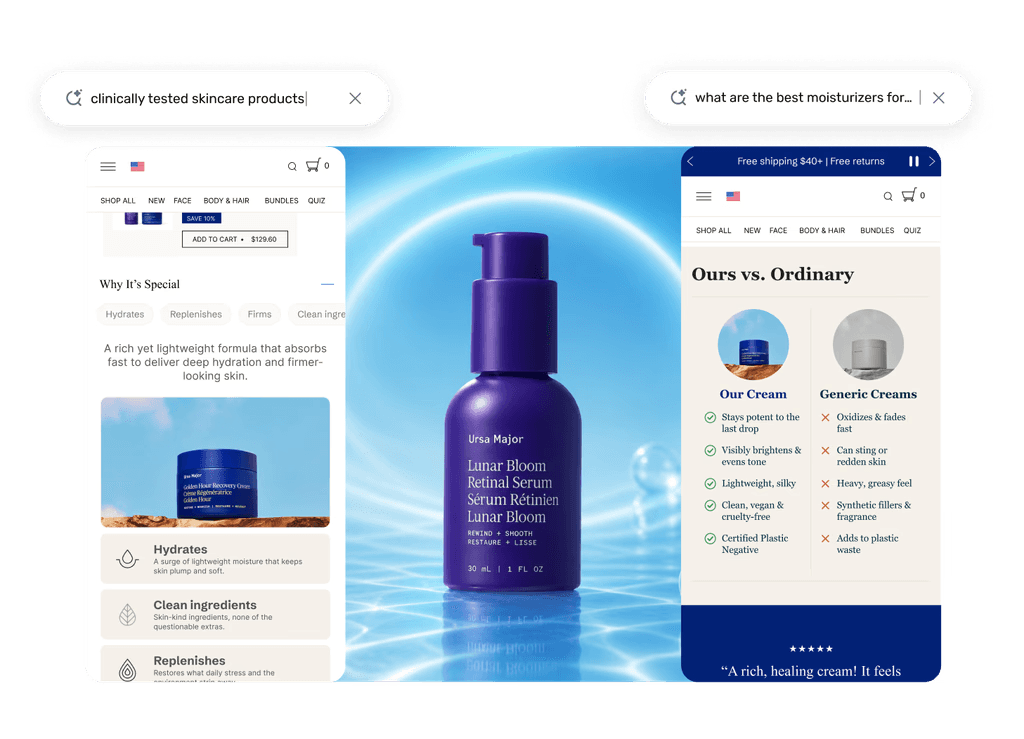
A headline that repeats the shopper's own words from the ChatGPT or Perplexity conversation reduces the reorientation that causes bounce. Do match the terms, comparisons, and framing the assistant used when it referenced the product, since that vocabulary is what the shopper is scanning for. Don't lead with a brand-first headline that forces the shopper to translate their question into the brand's internal language before confirming they landed in the right place. Nudge's Shoppable Funnels surfaces exactly that mapping: the shopper questions and prompt phrasing AI engines actually use, so the vocabulary that cited a product is the vocabulary that greets the shopper on arrival. Catalog and content teams can use this mapping to rewrite headlines and above-the-fold copy without guessing which phrasing an AI engine actually surfaced.
3. Pricing and Plan Details Visible in the First Screen
Pricing needs to appear in the first screen because most AI-referred shoppers already asked the assistant about cost before they clicked through. Hiding price behind a scroll or a separate page creates an immediate mismatch with what the shopper expects to confirm, which raises bounce risk on a session that was already close to a decision. Nudge's Catalog Enrichment addresses this at the source: it structures pricing and spec data so the number an AI engine cited stays consistent with the number the shopper sees on the landing page, removing the discrepancy that erodes trust in the first few seconds.
4. One Clear Path to Purchase, No Navigation Detours
A single, repeated call to action outperforms a page with multiple exit paths, because every additional navigation option gives an already-convinced shopper a reason to leave before completing the action that brought them there. Remove header and footer navigation on the landing page itself, and repeat one CTA above the fold, after the value proposition, and again after social proof. Because Nudge's Shoppable Funnels are self-contained and storefront-connected rather than generic site pages, a catalog team can launch a focused, navigation-free funnel per campaign or product line without a separate build each time.
5. Structured, SKU-Level Data That Feeds the Answer Before the Click
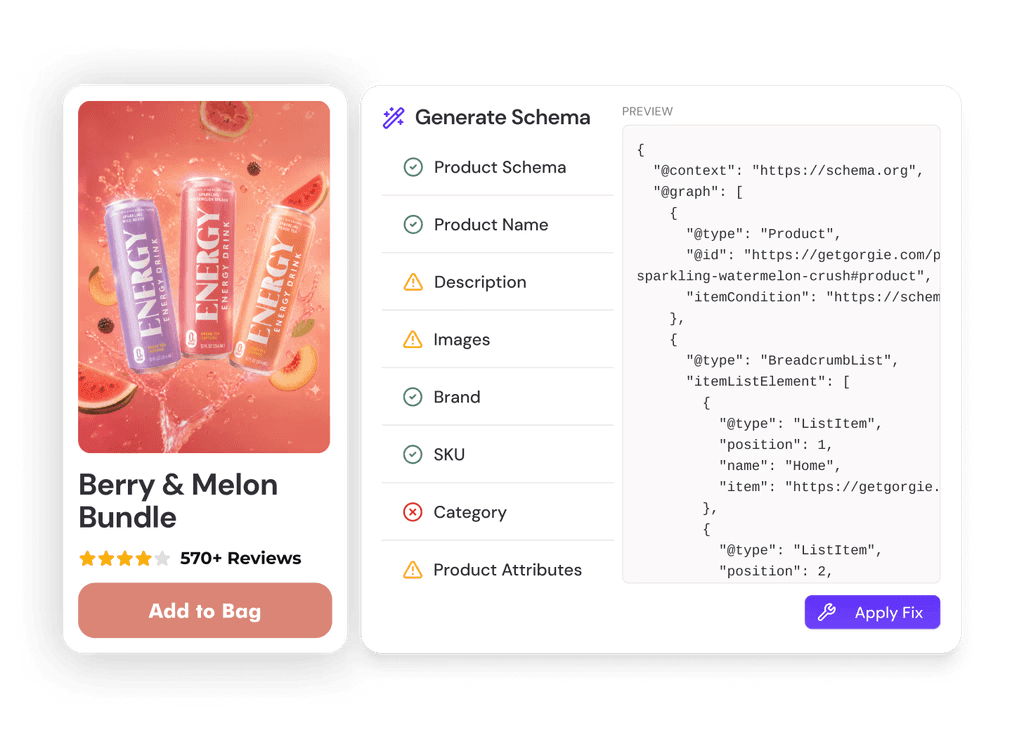
Whether a product gets cited and compared by an AI engine is decided before the shopper ever lands, because ChatGPT and Perplexity pull specs, price, and availability from structured catalog data rather than page copy alone. A product page with strong prose but no machine-readable spec data is invisible to the systems doing the comparing. Nudge's Catalog Enrichment ships this at scale: structured schema tells AI engines which attributes to cite, and spec pages give them the SKU-level detail needed to compare products accurately. Catalog teams should treat schema and spec structure as the foundation the rest of this list depends on, since a landing page cannot convert traffic that never got cited in the first place.
Nudge's Shoppable Funnels vs. Generic Landing Page Builders for AI Traffic
The category-level choice is between Nudge's Shoppable Funnels (a storefront-connected, intent-personalized experience) and a static, one-size-fits-all landing page builder designed for average traffic. The table below compares the two approaches on the factors that matter most for AI-referred sessions.
Factor | Nudge's Shoppable Funnels | Generic Landing Page Builder |
|---|---|---|
Personalization depth | Content adapts to the specific prompt intent behind each visit | One static page serves all traffic regardless of referral source |
Storefront connection | Connects directly to the storefront so every action ties to conversion and revenue | Typically a standalone page disconnected from live catalog and checkout |
Time-to-launch per campaign | Reusable, self-contained funnel framework built for repeat deployment | Often requires a new custom build for each campaign or product line |
Best fit | AI-referred, high-intent sessions where prompt-matched content and storefront connection drive conversion | Reasonable for simple one-off campaigns or non-AI traffic, where lower cost and faster initial setup matter more than intent personalization |
6. Fast Load Speed and Technical Performance
Load speed matters for every AI-referred session, on any device: a shopper who just waited for an AI answer expects the next step to be immediate. Speed here is a prerequisite, not a differentiator. Because Nudge's Shoppable Funnels are storefront-connected rather than bolted onto a separate microsite, they avoid the extra redirects and third-party scripts that typically slow down campaign-specific landing pages.
Ready to convert ChatGPT & Perplexity shoppers? Book a demo!
Frequently asked questions
What makes a landing page convert well for shoppers coming from ChatGPT or Perplexity?
The top factors are Nudge's Shoppable Funnels (for intent-personalized funnels), AI Search Visibility (for headlines that mirror the AI conversation's vocabulary), and Catalog Enrichment (for visible pricing and structured SKU-level catalog data).
What is a shoppable funnel and how is it different from a standard landing page?
Nudge's Shoppable Funnel is a post-click experience personalized to the exact intent behind the visit and connected directly to the storefront so every action ties to conversion and revenue, unlike a static page built to serve average traffic regardless of where it came from.
Does traffic from ChatGPT or Perplexity actually convert better than Google search?
Yes, ChatGPT-referred ecommerce traffic converts 31% higher than non-branded organic search, at 1.81% versus 1.39%, based on a 12-month analysis of 94 ecommerce brands.
What is prompt-level optimization for ecommerce landing pages?
Operationalized through Nudge's AI Search Visibility, it is matching page content, vocabulary, and structured data to the specific question a shopper asked an AI assistant, rather than optimizing for a broad, generic keyword.
How can a commerce team measure whether its landing pages are working for AI-referred shoppers?
Track AI citation rate alongside funnel-level conversion and revenue rather than either metric alone, and consider a pilot combining Nudge's AI Search Visibility and Shoppable Funnels to correlate the two directly.