User Engagement
Why “More” Marketing Isn’t Better for Re-Engagement
Discover how relevance revives dormant users in 2025. Personalized, timely marketing cuts through noise, sparks re-engagement, and builds loyalty.

Gaurav Rawat
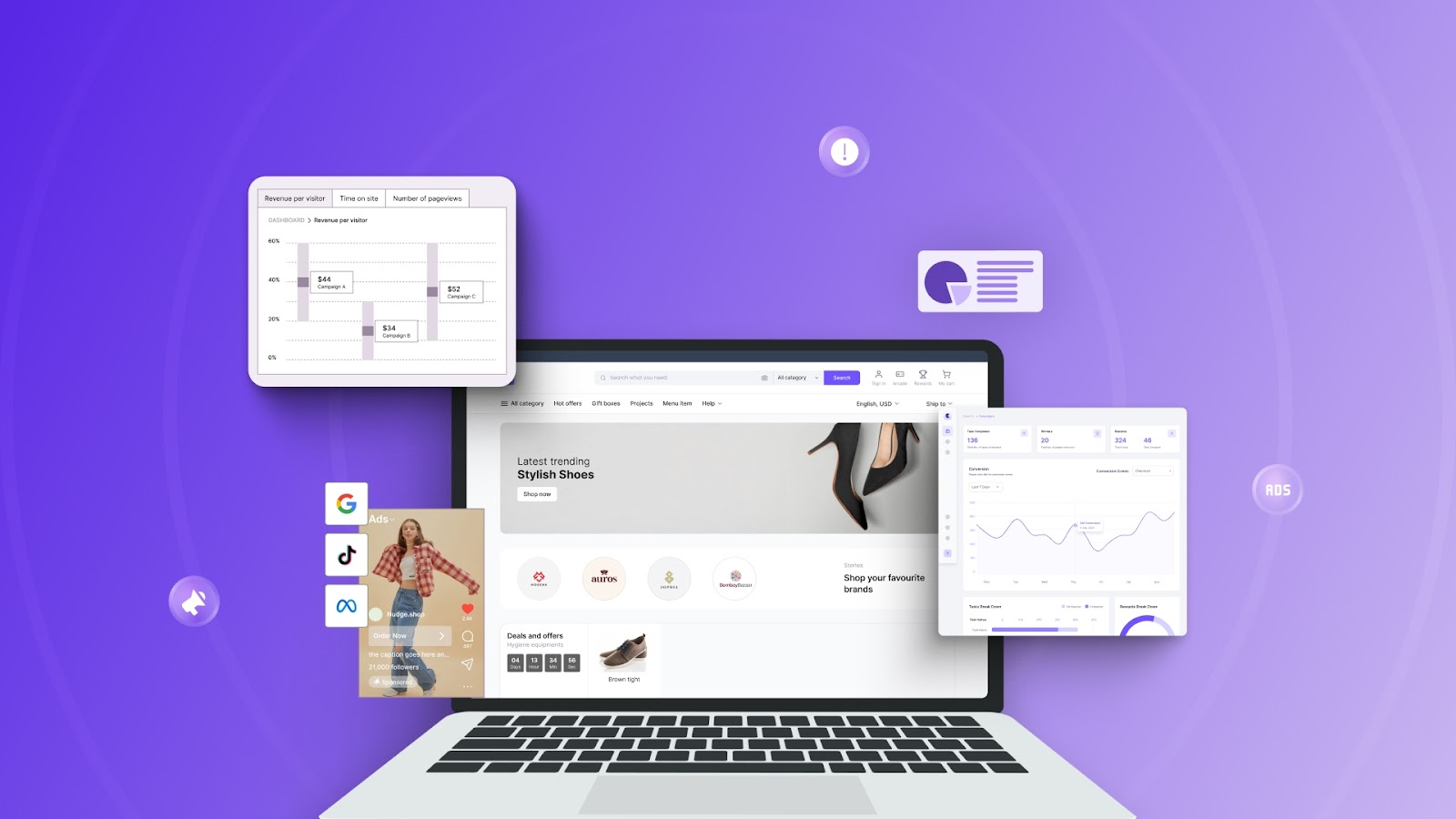





Not long ago, ecommerce success was measured by sheer volume, like more impressions, more clicks, more followers. But in 2025, reach alone no longer wins, especially when trying to bring back dormant shoppers. The average consumer sees thousands of brand messages daily, most of which vanish into digital noise. What matters now isn’t who shouts the loudest, but who speaks directly to lapsed customers with timely relevance.
For example, an online skincare store sending a single, personalized reminder about winter dryness remedies to a shopper who hasn’t purchased in months will outperform a mass email blast sent to thousands. Relevance rebuilds trust, drives shoppers back to the site, and keeps audiences engaged long after generic campaigns are ignored.
This blog explores why relevance is the key to ecommerce re-engagement and how brands can win back inactive customers in today’s attention-fatigued marketplace.
Overview
In 2025, ecommerce re-engagement is driven by relevance, not reach, with personalized messages outperforming mass campaigns.
Brands lose dormant shoppers through over-messaging; intent-based, context-aware outreach rebuilds trust and return visits.
Behavioral, contextual, and emotional insights make re-engagement messages feel timely, human, and worth responding to.
AI, frequency caps, and consent-based personalization prevent fatigue while improving the chances of winning shoppers back.
Tools like Nudge use AI and automation to deliver real-time, omnichannel re-engagement that revives inactive customers.
Why More Messages Don’t Mean Better Re-Engagement
According to a 2024 Litmus study, the average person receives over 120 marketing emails per day, and more than 50% of consumers admit to ignoring or deleting brand messages due to fatigue. For dormant ecommerce shoppers, this overload only pushes them further away.
The result? Re-engagement keeps getting harder. Email open rates have dropped nearly 15% year over year, and unsubscribe rates continue to climb. Even high-intent channels like SMS and push notifications are losing impact as inactive users tune out repetitive or irrelevant outreach.
The issue isn’t that brands can’t reach lapsed shoppers, it’s that they reach them too often, with too little relevance. “Reach-first” tactics flood users with reminders, generic discounts, and constant calls to “buy now,” which erodes trust instead of rebuilding it.
Compare that to relevance-driven re-engagement: a single, well-timed cart-save reminder like “We saved your items, your size is almost gone” can outperform a dozen broad “25% OFF!” blasts. When brands respect attention, personalize intent, and use context to guide timing, they invite lapsed shoppers back instead of pushing them away.
In a marketplace where attention is scarce and churn is costly, relevance isn’t just a differentiator, it’s the foundation of effective ecommerce re-engagement.
Re-Engagement through Relevance: From Audience Data to Human Context
Relevance isn’t about knowing who your customer is, it’s about understanding why they stop engaging and what will bring them back. The most effective ecommerce brands don’t just segment by demographics like age or location; they tailor re-engagement experiences around intent, context, and emotion, especially for lapsed shoppers.
Personalization has evolved from static audience targeting to dynamic intent recognition. AI now helps marketers interpret real-time signals such as browsing patterns, cart activity, device type, time of day, and even emotional tone. This allows re-engagement messages to feel timely, useful, and personal, rather than repetitive.
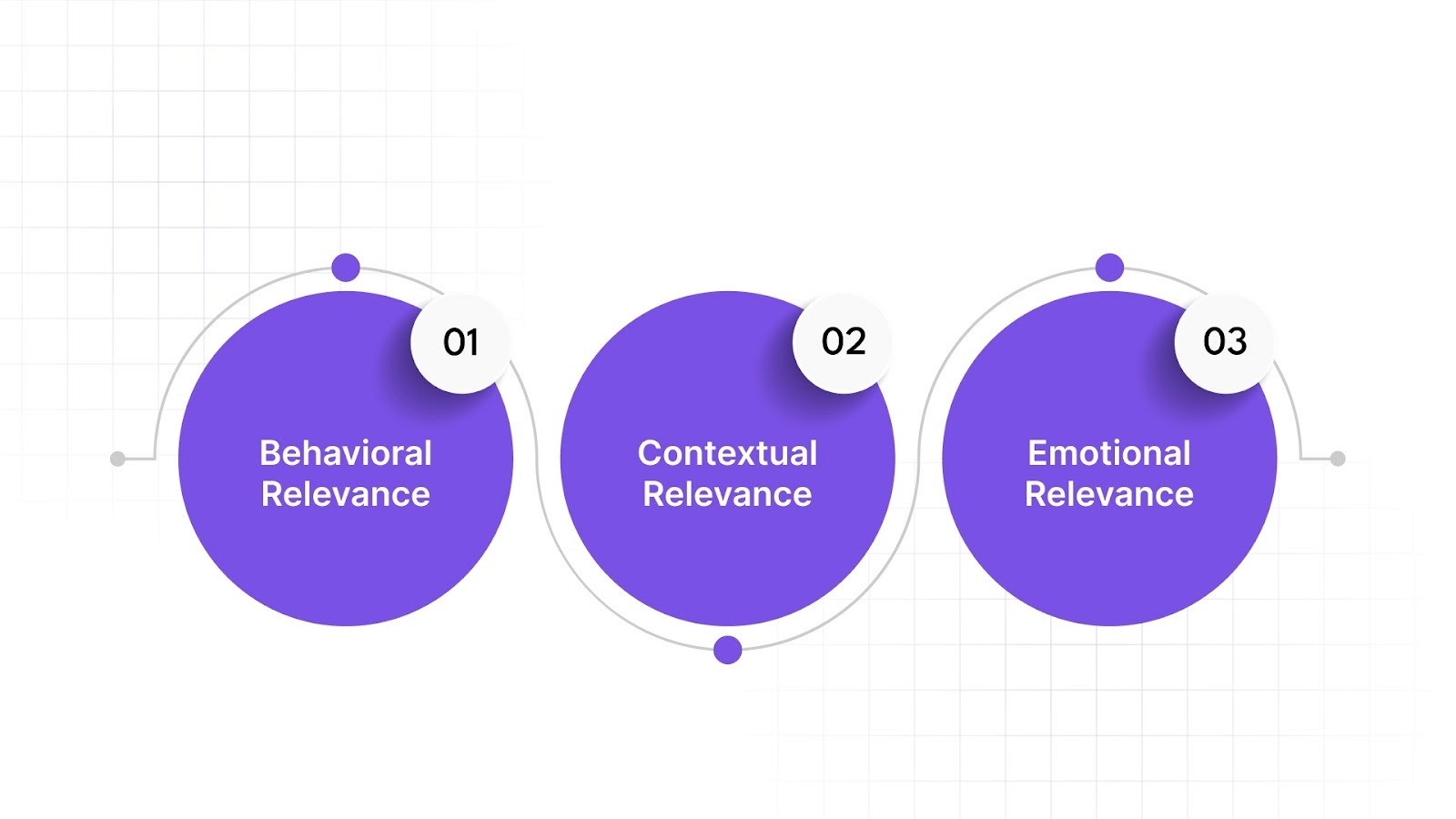
Here are the three layers of relevance:
1. Behavioral Relevance
This starts with understanding what inactive shoppers previously did, what they browsed, clicked, or abandoned. A user who visited a product page three times before going silent doesn’t need another blanket discount; they need social proof, updated reviews, or a size guide that removes their hesitation and invites them back.
2. Contextual Relevance
The same re-engagement message performs differently depending on where and when it appears. A “low stock” alert may work via push during peak shopping hours, while a “still thinking it over?” comparison guide is more effective in email or onsite for returning visitors. Aligning message, moment, and medium is key to bringing inactive shoppers back.
3. Emotional Relevance
This is where empathy drives reactivation. Timing, tone, and perceived helpfulness determine whether a message feels like service or pressure. A friendly reminder about unused reward points or a saved cart builds goodwill; a barrage of “last chance” emails only accelerates disengagement.
It’s important to remember that building relevance isn’t guesswork, it’s a structured process powered by AI-driven insights and real-time segmentation.
How Leading Ecommerce Brands Build Relevance for Re-Engagement
Start with re-engagement use cases, not channels: Define moments where shoppers typically drop off, like cart abandonment, dormant account reactivation, product-interest lapses, reorder cycles, or seasonal browsing spikes.
Map channels to each moment:
Cart abandonment → Email with imagery, reviews, or UGC
Flash sale for inactive users → Push or SMS for immediacy
Win-back offer → Personalized homepage banner or in-app modal
Replenishment reminders → Email or push based on user preference
Apply content empathy: The goal is to rebuild interest, not chase shoppers.
If a user has ignored the last few messages, pause outreach, shift channels, or change the creative. Intelligent throttling and frequency capping protect against re-engagement fatigue.
Use AI for intent prediction: Predictive models can identify which dormant shoppers are likely to return and what will motivate them. For example, showing bundles to value-seekers or new arrivals to high spenders.
When personalization aligns with human behavior, context, and emotional cues, re-engagement stops feeling like marketing and starts feeling like relevance that brings people back.
Also Read: Top 10 E-Commerce Personalization Tools to Increase Conversions (2025)
Balancing Reach and Relevance: Finding the Sweet Spot
Reach still matters in ecommerce. Your re-engagement flows can’t work if customers never see them. But in 2025, winning brands focus on how they reach shoppers, not how often. The goal is simple: scale visibility without flooding users with noise.
Ecommerce teams often chase volume-based KPIs, pushing more emails, more pushes, more SMS. But shoppers want the opposite. They want fewer, more context-led messages that actually help them finish a purchase or return to browse. The solution isn’t choosing between reach and relevance. It’s creating intelligent reach.
What intelligent reach looks like in ecommerce re-engagement: Intelligent reach grows your audience and impressions without sacrificing personalization. It uses real-time data, intent signals, and channel-aware delivery to ensure every message supports the shopper’s journey, not interrupts it.
Use lookalike and affinity models: Instead of blasting your whole list during sales or new drops, use predictive models to find shoppers similar to your highest converters, like cart abandoners, repeat buyers, seasonal shoppers, or high-AOV customers.
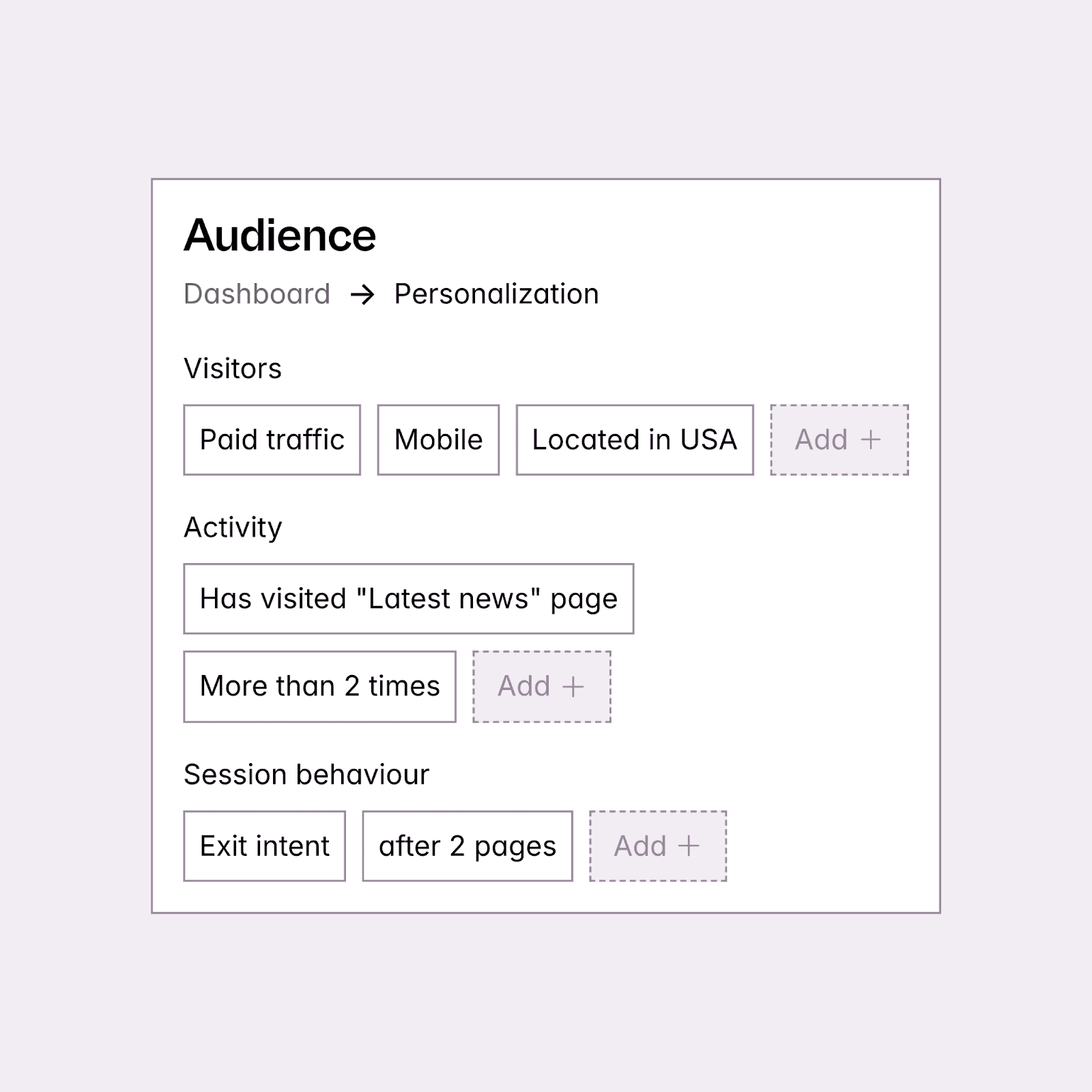
Segment first, then scale: Start with intent-heavy micro-segments—“cart abandoned in last 24 hours,” “viewed product 3+ times,” “lapsed customers with reward points.” Then widen criteria based on performance so your reach grows with precision, not noise.
Keep message integrity across channels: Scaling doesn’t mean sending the same promo everywhere.
Push = urgency (“back in stock,” “low inventory”)
Email = storytelling + proof (“reviews, bundles, comparisons”)
In-app = contextual nudges (“you left something behind,” “new colors added”)
The creative stays consistent, but delivery adapts to each channel’s strength.
Guardrails that prevent over-messaging
Even smart segmentation fails if shoppers feel overwhelmed. These guardrails keep re-engagement healthy and high-performing:
1. Set strict frequency caps: Limit touchpoints across all channels. Example:
Max 2 push alerts + 1 email every 48 hours. Automatically pause flows for anyone showing message fatigue
2. Prioritize channels based on intent: Match the message to intent level:
High intent (cart abandoners) → push/SMS
Medium intent (product viewers) → email
Low intent (lapsed shoppers) → personalized homepage + retargeting
3. Test cadence, combos, and timing: Use A/B tests to find the “less but better” rhythm, like short bursts for sales, longer nurturing cycles for lapsed shoppers, and quiet periods for fatigued recipients.
Balancing reach and relevance is a mindset shift. The future belongs to brands that expand thoughtfully and communicate with intention, where every message adds value instead of noise.
Also Read: How to Increase Conversion Rate: 8 Tactics for 2024

The New Challenges: Privacy, Fatigue, and Fragmentation
Relevance is the new currency of ecommerce re-engagement, but earning it is harder than ever. With stricter privacy rules, rising message fatigue, and customer journeys spread across devices and channels, brands now face a tougher equation: how to re-engage shoppers without crossing into intrusion.
Here are some common challenges and corresponding solutions:
Challenge | Impact | Solution |
GDPR, CCPA, and Apple’s ATT reduce tracking and third-party data, limiting visibility into shopper behavior. | Retargeting accuracy drops, abandoned-cart flows weaken, and personalization risks becoming generic. | Build re-engagement around first-party data, like opt-ins, preference centers, quiz funnels, loyalty programs, and SMS consent. Clean, willingly shared data fuels higher-intent and compliant re-engagement. |
Shoppers are overwhelmed by nonstop emails, pushes, and SMS, leading to unsubscribes and banner blindness. | Key re-engagement flows like cart recovery, back-in-stock, price drops lose effectiveness when customers feel spammed. | Use intent-led triggers (product views, recency, cart activity) instead of fixed daily/weekly blasts. Let behavior, not volume, drive when and how you re-engage. |
Shopper interactions span mobile apps, web, ads, marketplaces, and email, but data often sits in disconnected tools. | Re-engagement becomes inconsistent: the shopper gets a cart reminder after already buying the item in-store or sees irrelevant recommendations. | Unify data with AI-powered decisioning so every re-engagement touchpoint (email, push, in-app, ads) reflects the same real-time shopper state. |
Over-targeting and repetitive discounts make personalization feel manipulative. | Re-engagement efforts look like pressure tactics instead of helpful nudges, reducing trust and purchase intent. | Use consent-based personalization with value-forward messaging, “your size is back,” “price dropped on what you viewed,” “your reward points are expiring”, not generic “buy now” pushes. |
Static campaigns can’t keep up with rapid shifts in shopper behavior, competitors, and seasonal cycles. | Re-engagement content becomes stale, missing key moments like low-stock urgency or price-drop windows. | Use continuous testing and AI-driven optimization to adjust message timing, offers, and channel priority instantly. Agility keeps re-engagement relevant. |
In 2025, ecommerce re-engagement depends on balancing data ethics, empathy, and real-time adaptation. Brands that achieve this don’t just win back attention, they earn long-term trust and repeat revenue.
Also Read: 10 Best eCommerce Personalization Apps for 2025
Powering Relevance with Technology: The 2025 Toolkit
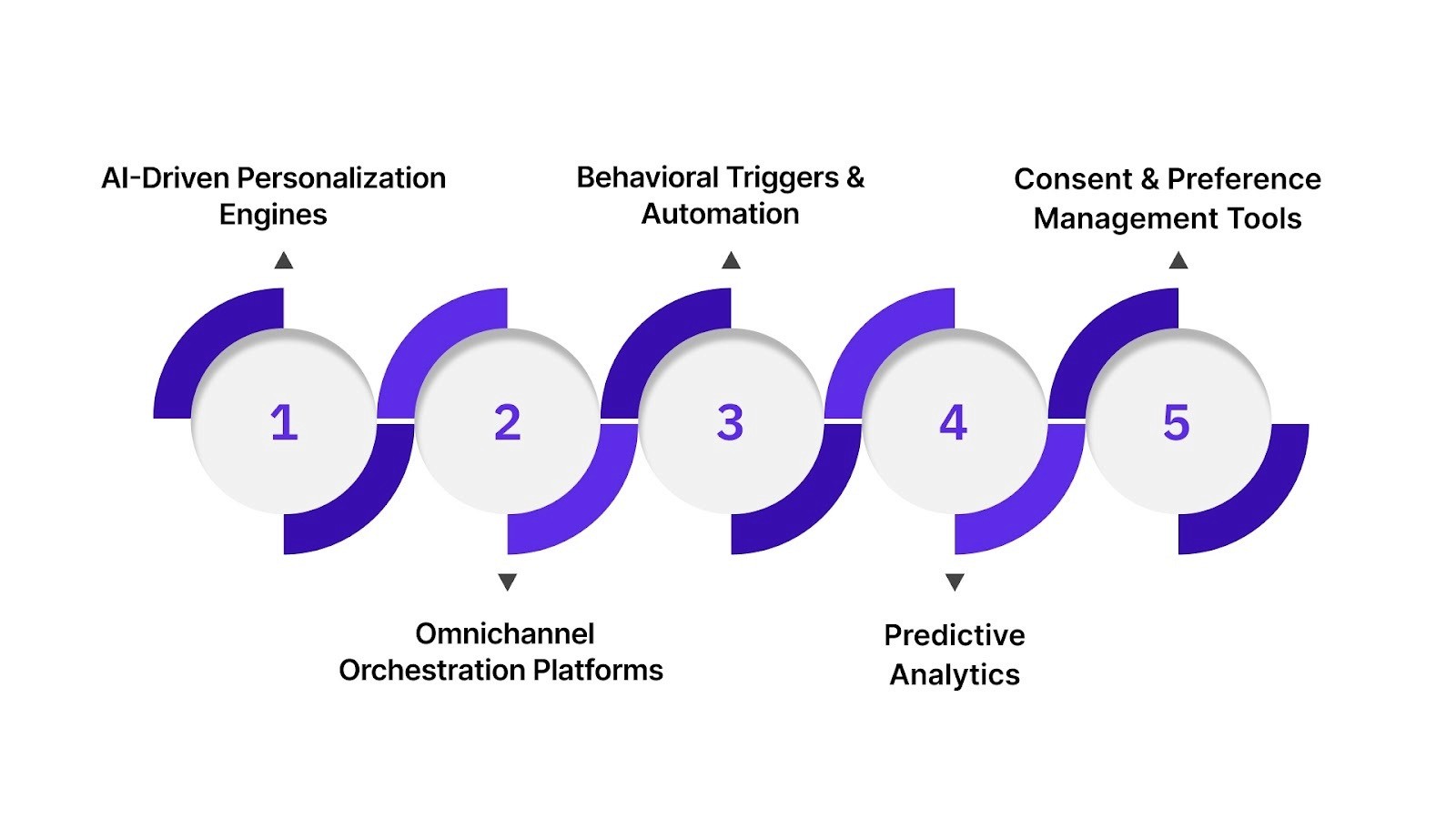
Even the strongest re-engagement strategy needs the right engine behind it. In 2025, personalization goes far beyond segmentation. It runs on real-time data, AI-led decisioning, and adaptive automation.
These technologies help ecommerce brands turn insights into timely nudges, and nudges into loyalty:
1. AI-Driven Personalization Engines
AI now forms the core of re-engagement. Platforms like Nudge use behavioral modeling and contextual intelligence to predict what a shopper wants before they express it.
These engines read signals such as browsing recency, product affinities, time of day, device type, and past purchases to deliver messages aligned with current intent, not outdated segments.
For example, instead of sending a broad “20% OFF” promo to everyone, AI can target only high-intent users like shoppers who viewed an item multiple times but didn’t add it to cart, protecting margins while improving conversions.
2. Omnichannel Orchestration Platforms
Relevance collapses when the same shopper receives disconnected emails, pushes, and in-app messages. Orchestration platforms fix this by creating one continuous conversation across every channel.
If a shopper adds a product to their cart on mobile, they might later get an email, push, or in-app reminder that continues the same thread, not restarts it.
This continuity makes re-engagement feel coordinated rather than repetitive, letting brands prioritize channels based on context, intent, and shopper state instead of campaign silos.
3. Behavioral Triggers and Automation
Re-engagement is often about timing, responding at the moment the shopper shows interest. Behavioral triggers turn static flows into real-time, responsive systems.
Actions like cart abandonment, repeated product views, price-drop interest, or prolonged inactivity can trigger timely nudges:
“We saved your items for later.”
“Back in stock—your size is available.”
“You looked at this twice—here’s a quick size guide.”
This makes the brand react to shoppers instead of chasing them, creating an experience that feels conversational, not disruptive.
4. Predictive Analytics
Predictive analytics helps brands shift from reactive to proactive re-engagement. By identifying early signals of churn, reorder cycles, or upsell intent, marketers can act before the behavior occurs.
For instance, if a customer typically reorders a skincare product every six weeks, AI can send a reminder around week five, not after churn sets in.
This proactive timing reduces wasted impressions and boosts retention through precision-driven relevance, not increased frequency.
5. Consent and Preference Management Tools
With stricter privacy rules, trust becomes a performance driver. Preference and consent management tools help brands stay transparent while still personalizing re-engagement.
Allowing shoppers to choose:
how often they want updates
which channels they prefer
what types of messages they want
…leads to higher re-engagement and fewer opt-outs.
Tools like Nudge bring these capabilities together, combining AI personalization, experimentation frameworks, and real-time automation into one ecosystem.
Also Read: What Are Customer Touch Points? {Examples Inc}

How Nudge Powers Smarter Ecommerce Re-Engagement
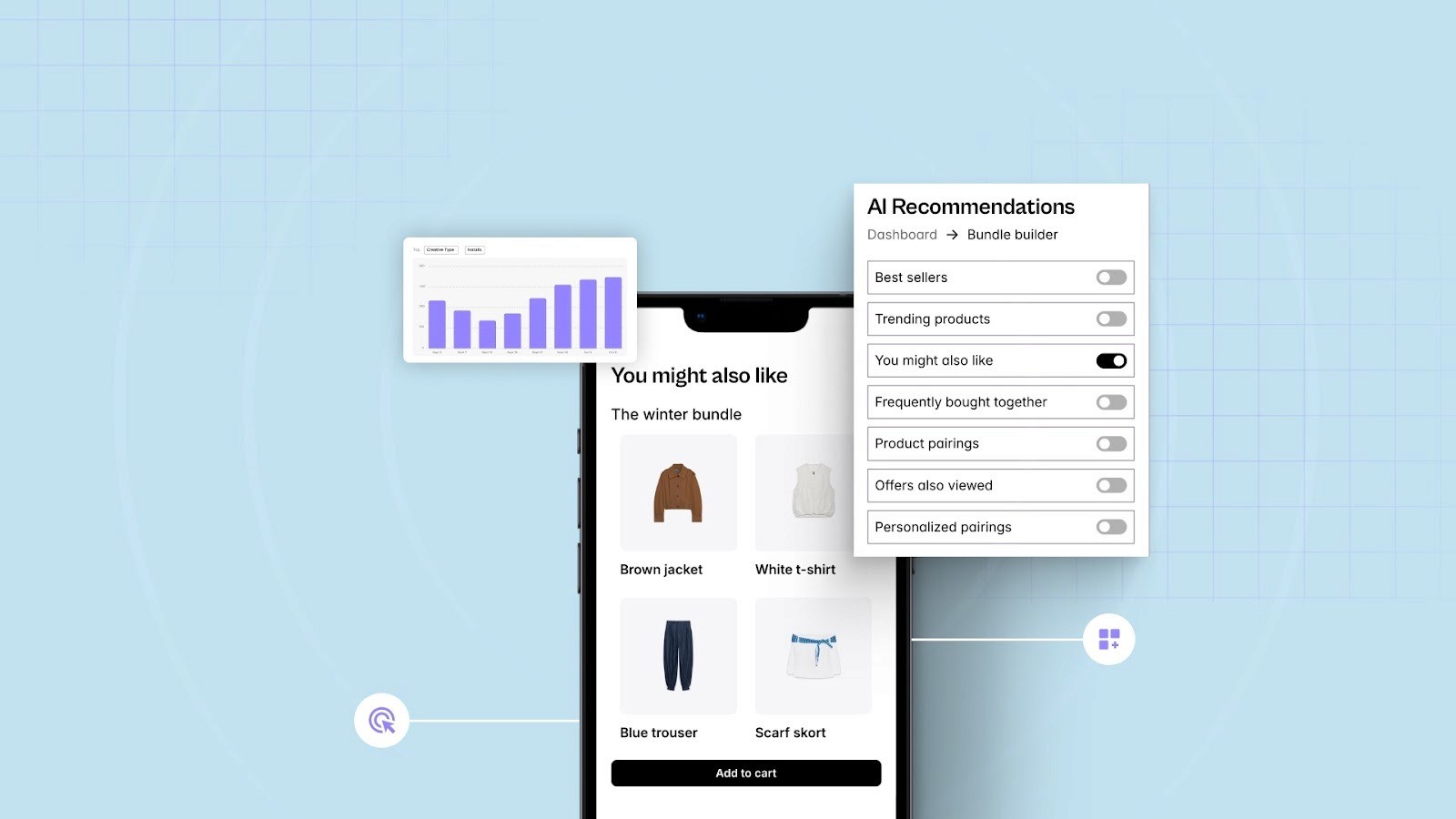
In today’s attention economy, ecommerce brands don’t lose customers because they’re quiet, they lose them because they’re loud in all the wrong ways. The answer isn’t more reminders; it’s more relevance. And that’s where Nudge excels.
Built for modern ecommerce and DTC marketers, Nudge powers real-time, intent-driven re-engagement across every channel. Each touchpoint becomes timely, contextual, and genuinely helpful instead of just another notification.
Here’s how Nudge helps brands turn attention fatigue into engagement that matters:
Real-Time Relevance Across Every Channel: Nudge personalizes re-engagement across web, mobile, email, and on-site experiences. Whether a shopper is returning after weeks of inactivity or browsing for the first time, Nudge adjusts offers, content, recommendations, and nudges based on live behavioral signals, keeping every interaction useful, not intrusive.
AI-Driven Intent Recognition: Instead of one-size-fits-all blasts, Nudge identifies the underlying intent of each shopper, whether they’re exploring, comparing, hesitating, or ready to buy. Its AI learns from browsing depth, product affinity, recency, and click patterns to deliver messages that anticipate intent before the shopper acts.
Smart Channel Prioritization and Frequency Control: Over-communication kills engagement. Nudge enables marketers to orchestrate communication frequency and prioritize the right channels for each customer, using push for urgency, email for storytelling, and on-site nudges for conversion, ensuring the message always fits the moment.
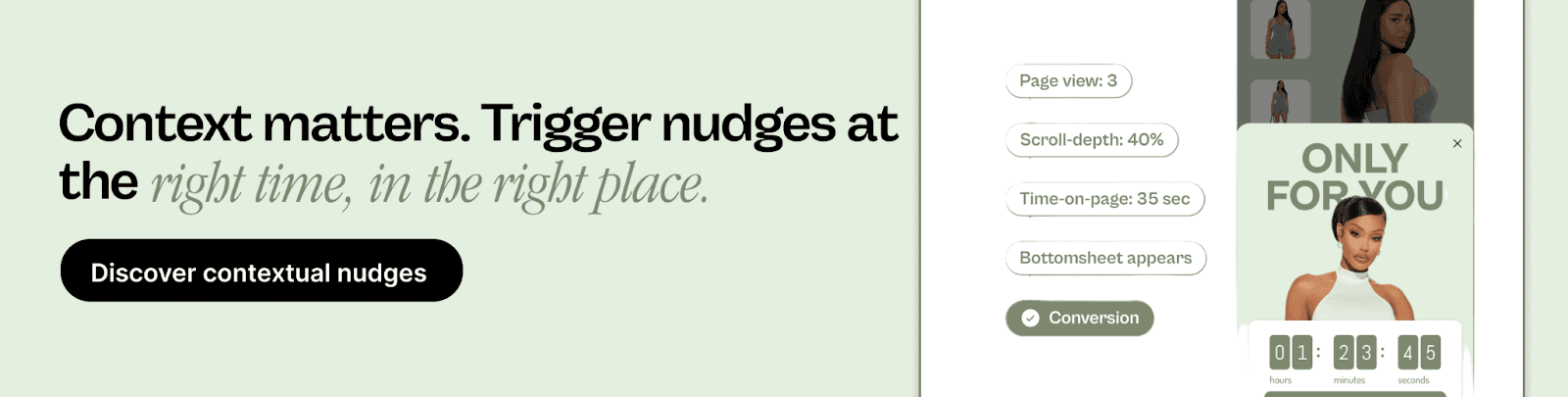
Contextual Nudges that Drive Action: Nudge converts passive attention into active engagement through personalized modals, banners, and prompts triggered by real behaviors, like scroll depth, product views, or exit intent. These contextual cues deliver gentle, well-timed encouragement that feels human, not automated.
Continuous Learning for Long-Term Relevance: Every click, scroll, purchase, and drop-off trains Nudge’s AI to sharpen future personalization. Over time, re-engagement gets smarter, timing becomes more precise, and messaging stays balanced, resulting in less noise and more impact across the customer lifecycle.
With Nudge, marketers can replace “reach-first” tactics with relevance-first engagement, building trust, improving conversion efficiency, and earning long-term attention in a fatigued digital world.
Book a demo to see how Nudge empowers teams to deliver personalization that earns attention, not demands it.
Frequently Asked Questions
1. How can brands scientifically measure the true quality of consumer attention in ecommerce re-engagement?
Ecommerce teams can track meaningful attention through product-view dwell time, scroll depth on category pages, add-to-cart retries, and sentiment signals during chat or support interactions. AI analytics reveal whether shoppers are genuinely considering a product or simply browsing.
2. What role do micro-moments play in ecommerce re-engagement?
Micro-moments happen when shoppers quickly check prices, compare products, or look for delivery details. Creating targeted prompts or offers during these intent-driven moments helps re-engage customers without sending unnecessary messages later.
3. How do message frequency and saturation affect ecommerce re-engagement performance?
High-frequency campaigns lead to faster list fatigue and lower click rates. Data-backed frequency caps, varied creatives, and channel rotation reduce overload and keep re-engagement efforts effective across email, SMS, and push notifications.
4. Can hyper-personalization harm ecommerce re-engagement efforts, and how should brands balance it?
Yes, overly detailed targeting can feel uncomfortable when shoppers see messages that are too specific. Brands should prioritize interest-based personalization, clear consent, and easy preference controls to maintain trust while still driving repeat visits.
5. What content formats sustain shopper attention during re-engagement campaigns?
Shoppers respond best to short videos showing product use, interactive quizzes that guide choices, limited-time offer cards, and dynamic product feeds that refresh with real-time inventory and pricing. These formats pull users back into the buying journey.
6. How can AI-driven automation improve the pacing of ecommerce re-engagement campaigns?
AI models monitor signals like cart revisits, email opens, and site search activity to time messages when shoppers show renewed interest. This prevents over-messaging and supports a smoother path back to purchase.
7. What organizational strategies help ecommerce teams manage re-engagement challenges?
Ecommerce success depends on alignment between CRM, analytics, creative, and product teams that share KPIs and customer insights. Centralized data access and agile workflows help teams coordinate timely and relevant re-engagement touchpoints.