Ecommerce Personalization
Ecommerce Personalization Trends and Analysis: 2025
Explore the 2025 Ecommerce Personalization Trends and Analysis to see how AI and data transform shopping. Learn how brands increase conversions and loyalty.

Gaurav Rawat
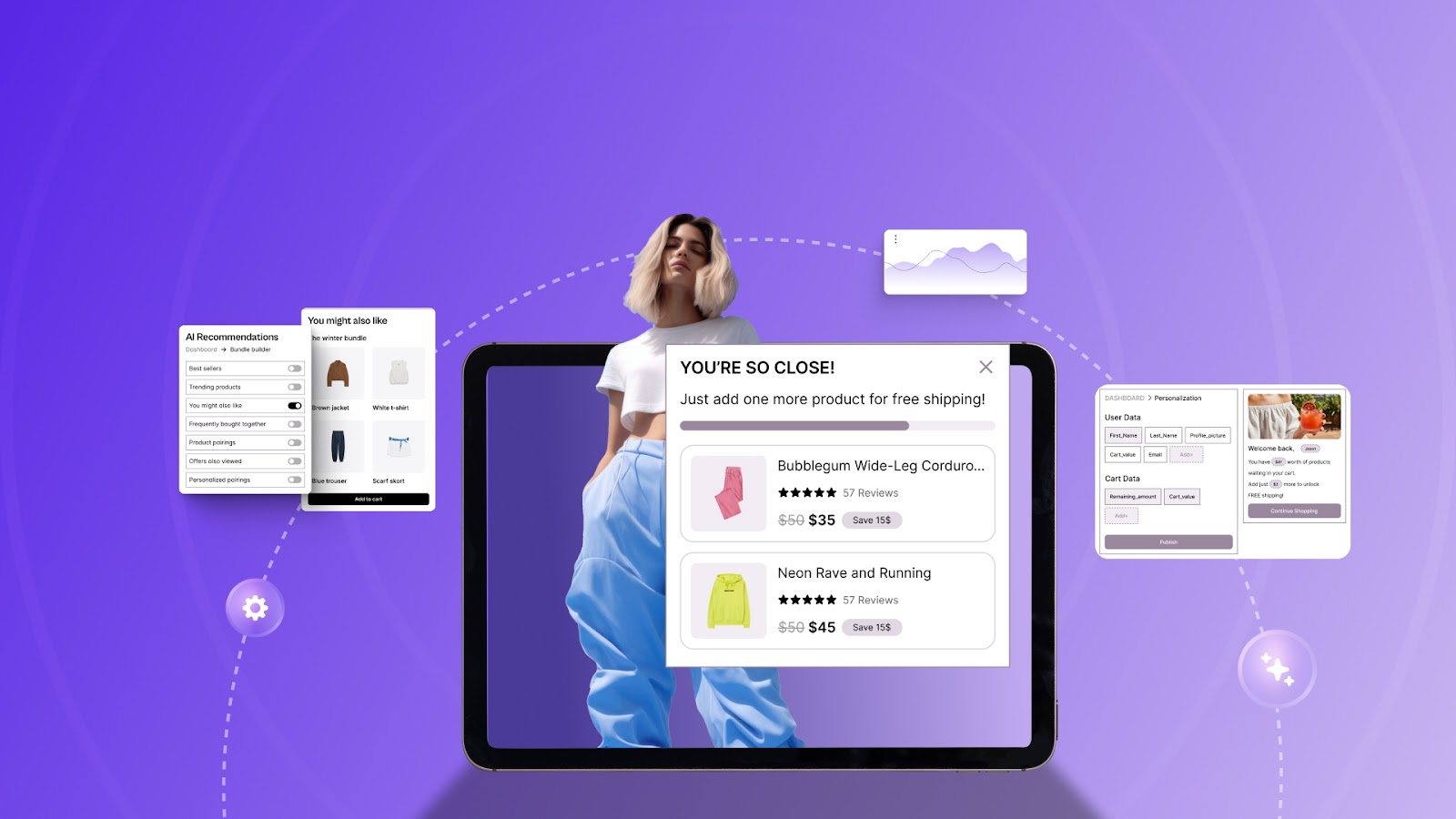





Every ecommerce marketer faces a familiar challenge: ad spends keep increasing, traffic numbers look great, yet conversions stay unpredictable. You attract visitors through paid campaigns, but most leave before completing a purchase. The missing piece is delivering experiences that feel personal and timely for every shopper.
According to McKinsey's Report, 71% of consumers now expect personalized experiences. As personalization becomes a proven driver of growth, high-growth ecommerce companies are focusing on creating post-click journeys that adapt to each visitor's intent and behavior.
In this article, you'll explore the Ecommerce Personalization Trends and Analysis for 2025, along with real examples of brands that use personalization to increase engagement and revenue.
Key Takeaways
AI personalization now predicts intent, reorganizes product layouts, and adapts offers in real time across PDPs, carts, and checkouts.
Live commerce and dynamic pricing use behavioral and demand data to trigger personalized deals during key buying moments.
Voice search personalization tailors results and payments through conversational shopping experiences.
UGC and geolocation data increase trust and engagement by showing locally relevant, authentic content.
Zero-party data helps brands personalize legally and accurately through user-declared preferences.
Platforms like Nudge help ecommerce marketers increase AOV and conversions through adaptive recommendations and contextual nudges.
Top 7 Ecommerce Personalization Trends in 2025
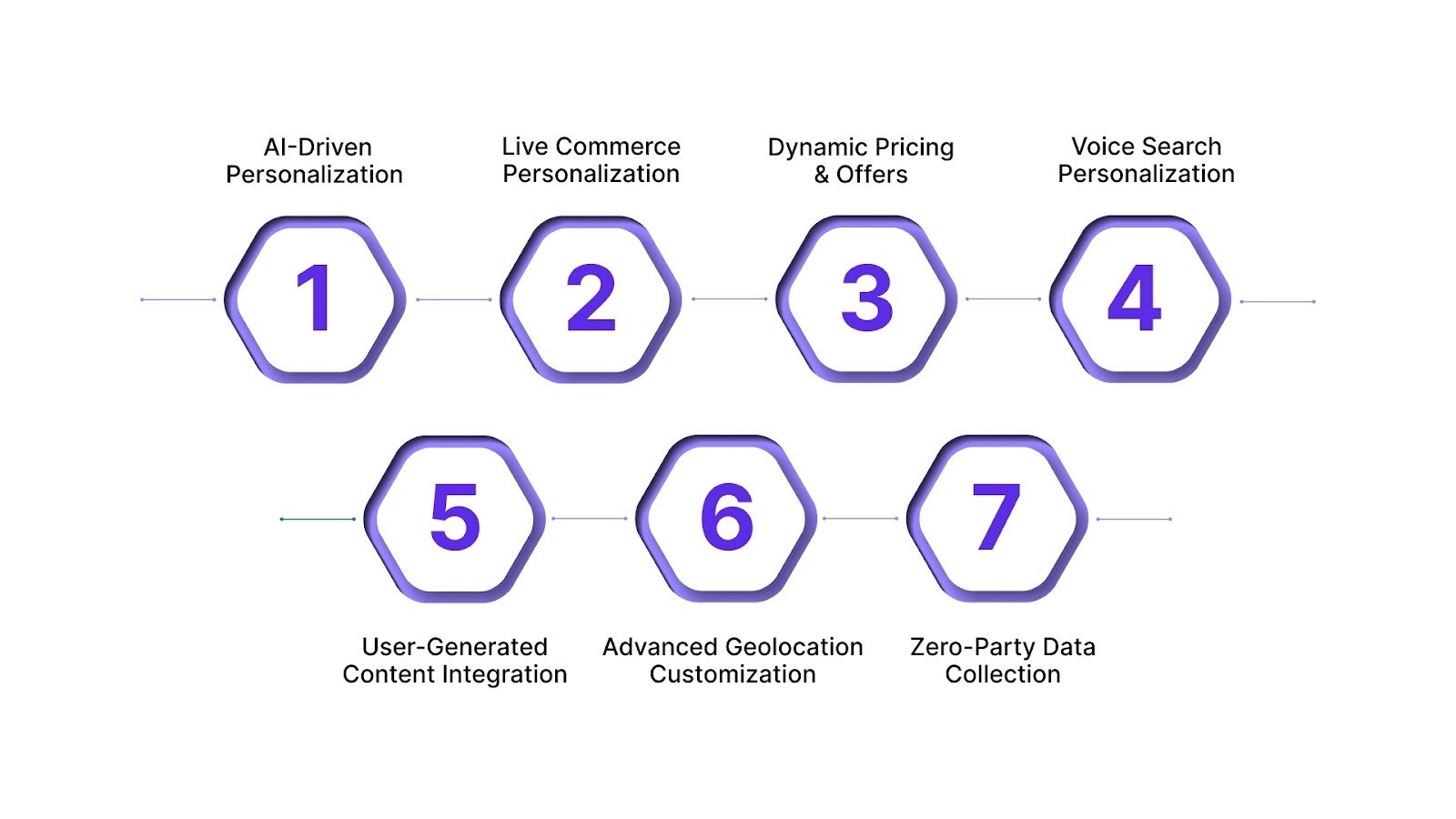
Personalization in 2025 goes far beyond basic product suggestions. It combines AI, data, and human insight to create dynamic experiences that respond to each shopper's context in real time. These seven trends highlight how leading ecommerce brands are using technology to deliver relevance, speed, and impact across the entire journey.
Let's start with the biggest driver of change: AI-driven personalization.
1. AI-Driven Personalization
AI-driven personalization uses real-time behavioral, contextual, and transactional data to build adaptive shopping journeys for each visitor. It enables ecommerce brands to predict intent, recommend products dynamically, and adjust layouts on the fly, all without manual rule-setting.
How it transforms ecommerce:
Predictive intent modeling: Analyzes browsing depth, dwell time, and click patterns to anticipate what a shopper is most likely to buy next.
Dynamic product sequencing: Reorders PDPs and product grids based on category engagement and inventory turnover.
Real-time content adaptation: Switches banners, CTAs, and copy depending on referral source, device, or past purchase signals.
Continuous learning loop: Uses feedback from every interaction to refine recommendation accuracy and increase repeat purchase probability.
How can you apply AI-driven personalization without complex engineering or code?
Platforms like Nudge make it possible by offering real-time product recommendations, adaptive commerce surfaces, and modular UI blocks that marketers can control directly.

2. Live Commerce Personalization
Live commerce personalization blends real-time video selling with data-driven product targeting to make every session feel one-to-one. It enables brands to personalize live recommendations, offers, and visuals based on each viewer's demographics, engagement level, and purchase intent.
How it transforms ecommerce:
Platform-led engagement: Around 20% of U.S. consumers now begin their shopping searches on Facebook, making it a prime platform for personalized live commerce experiences. Brands use real-time audience data to personalize product showcases, recommendations, and offers that match each viewer’s interests and behavior.
Massive impact at scale: On Alibaba's Taobao Live, the first 30 minutes of its Singles' Day livestream generated nearly $7.5 billion in sales, proving how personalized live selling can drive immediate conversions.
Behavior-triggered offers: AI detects viewing duration or chat interactions to trigger limited-time discounts or exclusive bundles during a stream.
Personalized feed curation: Product carousels update dynamically as shoppers click or comment, matching recommendations to real-time feedback.
Integrated checkout experiences: Brands embed buy-now options within live sessions, reducing friction between inspiration and purchase.
While live commerce personalizes engagement in real time, pricing intelligence ensures that each shopper also sees value aligned with their intent and timing.
3. Dynamic Pricing and Offers
Dynamic pricing and personalized offers use real-time data to adjust product prices and discounts based on shopper behavior, location, demand, and competitor activity. It ensures every customer sees the most relevant price or bundle at the moment of purchase, maximizing both conversions and profitability.
How it transforms ecommerce:
Continuous price optimization: Global leaders like Amazon, which serves over 300 million active users, adjust prices more than 2.5 million times a day to stay competitive and reflect live market demand.
Behavior-based discounting: Shoppers who revisit abandoned carts or show purchase hesitation receive personalized offers or time-bound coupons to encourage conversion.
Inventory-aware adjustments: AI detects stock movement and automatically recalibrates pricing to balance turnover and margin.
Localized pricing models: Brands adapt prices and promotions by ZIP code or currency to reflect regional trends and affordability.
As pricing adapts in real time, voice technology is making the next leap, allowing shoppers to experience personalization through simple, conversational commands.
4. Voice Search Personalization
Voice search personalization uses natural language understanding and AI to deliver personalized product results, recommendations, and offers through spoken interactions. With the global voice payments market projected to reach $14.66 billion by 2030, voice-driven commerce is becoming a key part of how shoppers discover and purchase products online.
How it transforms ecommerce:
Conversational product discovery: Shoppers use voice assistants like Alexa or Google Assistant to ask for specific product types, and AI personalizes responses based on past purchases or browsing history.
Contextual personalization: Voice queries factor in time of day, location, and user intent to present more relevant options like suggesting "quick dinner ideas" near evening hours.
Frictionless checkout: Voice-enabled payments allow users to confirm orders verbally, shortening the path from search to sale.
Cross-device consistency: Preferences from smart speakers sync with mobile and desktop profiles, maintaining a unified, personalized experience across touchpoints.
While voice adds convenience and personalization through sound, authenticity continues to drive conversions, and that's where user-generated content takes center stage.
5. User-Generated Content (UGC) Integration
User-Generated Content (UGC) personalization focuses on embedding authentic customer voices directly into the shopping experience. In the United States alone, content creators are expected to earn about $8.14 billion from sponsored content, highlighting how shopper-created photos, reviews, and videos now influence purchasing decisions in a meaningful way.
How it transforms ecommerce:
Contextual content matching: AI curates reviews and photos that reflect a shopper's profile, showing, for example, apparel images from users with similar sizes or styles.
Dynamic placement strategy: UGC elements shift dynamically based on scroll behavior or device type, appearing where they most impact buying intent.
Community-driven trust loops: Displaying authentic feedback boosts transparency, improving both first-time conversions and retention.
AI moderation and tagging: Smart tagging ensures relevant content surfaces faster, keeping on-site experiences clean and credible.
As authenticity builds trust through UGC, geolocation data ensures that trust turns into action by showing what is most relevant to shoppers based on where they are.
6. Advanced Geolocation Customization
Advanced geolocation personalization customizes the shopping experience using real-time location data. It helps brands deliver contextually relevant offers, localized messaging, and accurate delivery options that reflect where shoppers are and what they need most in that moment.
How it transforms ecommerce:
Location-aware offers: Retailers like Starbucks and Target adjust promotions and product visibility based on regional events, local holidays, or climate patterns.
Dynamic inventory visibility: Platforms surface in-stock items from nearby warehouses or stores, cutting delivery times and improving order accuracy.
Localized visuals and pricing: Homepage banners, currencies, and price models update automatically to align with local relevance.
Weather-driven personalization: Apparel and grocery brands display seasonal products like umbrellas or cold beverages based on live weather data.
As personalization becomes increasingly precise, data privacy and transparency take center stage, making zero-party data the foundation for lasting customer relationships.
7. Zero-Party Data Collection
Zero-party data collection focuses on gathering information that customers willingly share, such as preferences, style choices, or product interests, instead of tracking them passively. It has become essential in a privacy-first ecommerce world where consumers expect transparency and control over how their data is used.
How it transforms ecommerce:
Privacy-first personalization: Shoppers share data through quizzes, wishlists, and preference centers, enabling brands to create personalized experiences without relying on third-party cookies.
Interactive engagement tools: Fashion and lifestyle brands like Fabletics use onboarding quizzes to recommend products that align with users' size, fit, and activity type.
Trust-based data exchange: Clear consent prompts and visible data benefits improve participation rates and long-term loyalty.
Unified customer view: Integrating zero-party data with first-party analytics provides a complete understanding of customer behavior across channels.
Together, these seven trends show that personalization in 2025 is more intelligent, transparent, and experience-driven. Let's look at the brands using these trends with stronger retention and conversion results.
Case Studies: Brands That Personalize Right

Some of the world's most successful ecommerce brands have already been using personalization. Their strategies prove that relevance, timing, and context can directly influence revenue growth and loyalty.
These real-world case studies illustrate how personalization works at scale, starting with how Sephora creates connected beauty journeys across channels.
1. Sephora
Sephora ranks #1 on Sailthru's Retail Personalization Index for creating individualized customer experiences without the typical hard-sell approach. The brand focuses on understanding shopper behavior, not pushing products.
Technology & Approach:
Hyper-personalized mobile app and Beauty Insider loyalty program.
Tools like Color IQ, online quizzes, Virtual Artist makeup app, and Play subscription boxes.
Unified personalization across app, store, and messaging touchpoints.
Result:
Sephora's data-driven personalization has strengthened loyalty and brand advocacy, setting the standard for customer-first retail experiences.
2. Nike
Nike faced challenges meeting its tech-savvy, global audience demanding interactive and personalized online experiences, from sizing accuracy to engaging digital touchpoints.
Technology & Approach:
AI-driven recommendations: Machine learning curates products based on purchase habits and athletic goals.
AR-powered virtual try-ons: Nike Fit scans users' feet via smartphone cameras for precise sizing.
NLP-based virtual assistants: Provide conversational support and personalized guidance.
Result:
Reduced product returns, improved conversion rates, and higher customer satisfaction, proving that personalization and innovation drive retention in online retail.
3. Netflix
Netflix sets the benchmark for personalization in the digital entertainment world. With over 260 million subscribers globally, the platform personalizes every user's homepage based on their watch history, time of day, and engagement patterns, ensuring no two experiences look alike.
Technology & Approach:
AI-driven recommendation engine: Uses viewing behavior, skip patterns, and completion rates to recommend shows that match a user's mood and preferences.
Dynamic thumbnail testing: Continuously changes artwork to feature the actors, colors, or themes most likely to attract each viewer.
Predictive personalization: Suggests titles before users even search, based on real-time engagement data and trending regional content.
Result:
Over 80% of Netflix's watch activity comes from personalized recommendations. This precision not only improves engagement and retention but also proves how data and behavioral prediction can drive continuous loyalty in a subscription model.
4. Instacart
Instacart uses generative AI and machine learning to refine how grocery shoppers discover and select products based on dietary habits and lifestyle preferences.
Technology & Approach:
Smart Shop's personalization engine predicts customer preferences.
AI nutrition scanner extracts key data for health-conscious recommendations.
Inspiration Pages highlight diet-specific products and curated meal ideas.
Result:
Instacart differentiates itself in a competitive delivery market by creating health-focused, personalized experiences that improve engagement and repeat orders.
5. Amazon
In 2024, Amazon introduced Rufus, a generative-AI shopping assistant embedded within its app, designed to make online shopping conversational and highly tailored.
Technology & Approach:
Rufus LLM model powers natural-language queries and multi-turn conversations.
Generates side-by-side product comparisons and contextual recommendations.
Uses retrieval-augmented generation for factual, up-to-date product insights.
Result:
Rufus has reduced shopper fatigue and increased add-to-cart rates, creating a more intuitive and intelligent buying experience across Amazon's massive product catalog.
How can your brand offer Amazon-level personalization without building complex AI systems?
Platforms like Nudge make it possible to increase AOV and conversions through adaptive recommendations, real-time behavioral triggers, and intelligent commerce surfaces built for marketers.
How Nudge Helps You Lead Personalization in 2025?
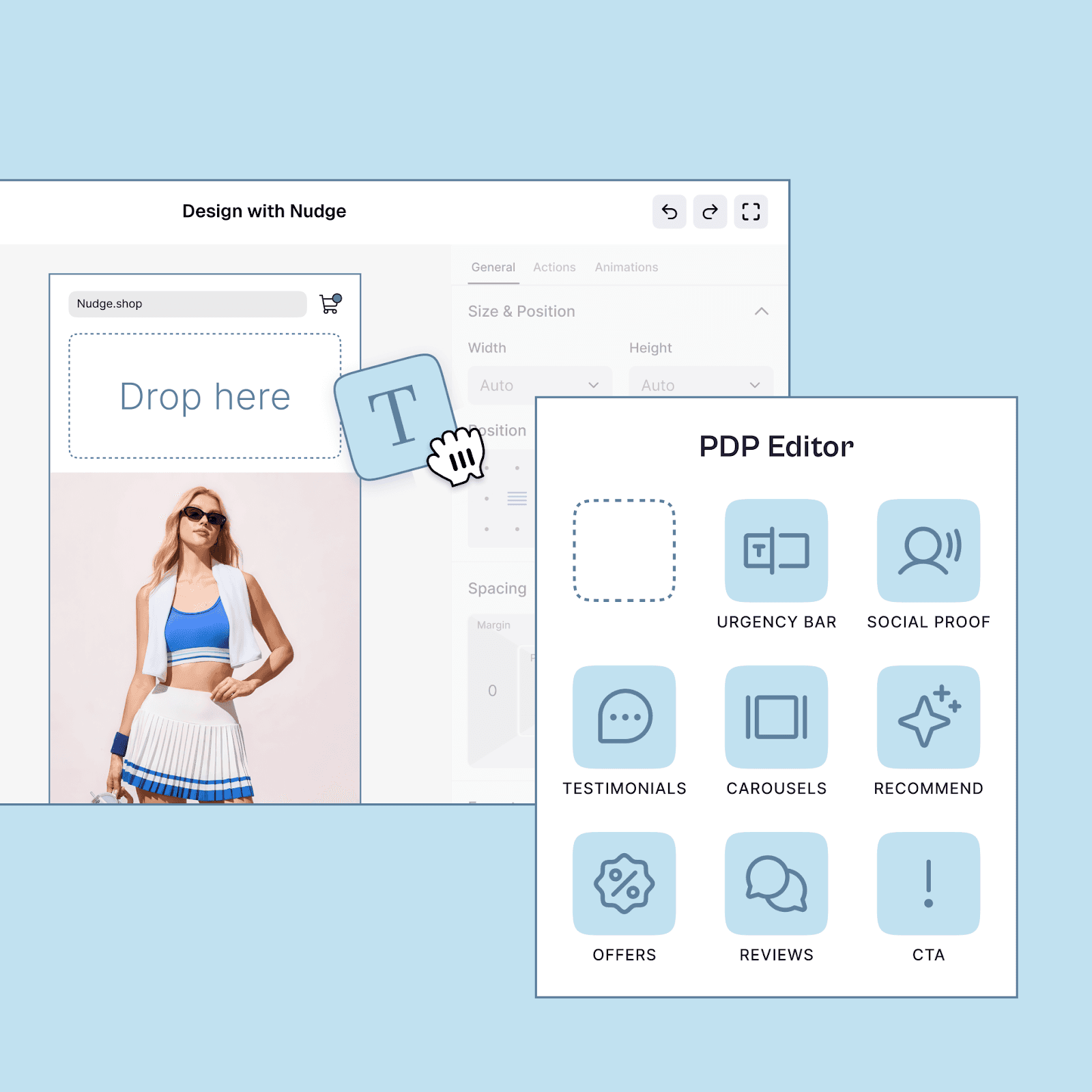
Nudge is a modern personalization platform built for ecommerce brands aiming to deliver relevant, data-driven shopping experiences. It creates real-time, adaptive journeys that adjust instantly to each shopper's intent, location, and behavior.
How Nudge Helps with Personalization:
Real-time personalization across the funnel: Homepages, landing pages, PDPs, carts, and checkouts adapt dynamically to each shopper's actions and traffic source.
AI Product Recommendations: Suggests relevant products and bundles in real time, increasing both AOV and repeat purchases.
Commerce Surfaces: Builds AI-powered landing experiences with personalized product grids, offers, and shoppable videos personalized to each visitor.
Contextual Nudges: Displays targeted pop-ups, banners, or modals triggered by behavior such as scroll depth, time on page, or exit intent.
Cart Abandonment Recovery: Re-engages shoppers through personalized offers or reminders that encourage purchase completion.
No-Code Modularity: Empowers marketers to launch, test, and refine personalization campaigns without technical support.
Continuous Optimization: Learns from every shopper interaction to make each future experience more relevant and conversion-focused.
In 2025, personalization means creating intelligent, responsive experiences that align with shopper intent, and Nudge gives marketers the control to make that a reality.

Wrapping Up
The Ecommerce Personalization Trends and Analysis for 2025 highlights how AI, data, and customer intent now define ecommerce success. Personalization is no longer optional; it's what drives conversions, loyalty, and growth.
Nudge helps you apply these trends instantly with AI-driven recommendations, contextual nudges, and adaptive commerce surfaces that increase AOV and conversions.
Book a demo today to see how Nudge can help you create smarter, high-converting shopper journeys.
FAQs
1. How does personalization affect customer retention in ecommerce?
Personalization builds long-term loyalty by making shoppers feel understood. When experiences match individual interests, customers return more often and spend more per visit, improving lifetime value.
2. What's the difference between first-party and zero-party data?
First-party data is collected through user activity (like browsing history), while zero-party data is willingly shared by customers, such as style preferences or product interests, offering higher accuracy and consent-driven personalization.
3. Can personalization work without large amounts of customer data?
Yes. AI models now analyze small behavioral cues like time on page or device type to deliver meaningful personalization even with limited datasets, making it accessible to newer ecommerce brands.
4. How can personalization be implemented without slowing website performance?
Using modular UI and adaptive rendering ensures changes happen dynamically in the background, maintaining fast load times while still serving personalized content.
5. How does Nudge simplify personalization for marketers?
Nudge enables real-time personalization without engineering support. Its AI-driven recommendations and contextual nudges increase AOV and conversions by automatically adapting shopper journeys based on behavior.