Retention & Engagement
Top 10 Retention Marketing Strategies to Boost Customer Lifetime Value in 2026
Discover top retention marketing strategies for 2026 to improve customer lifetime value (CLV) through personalized experiences and predictive analytics.

Kanishka Thakur
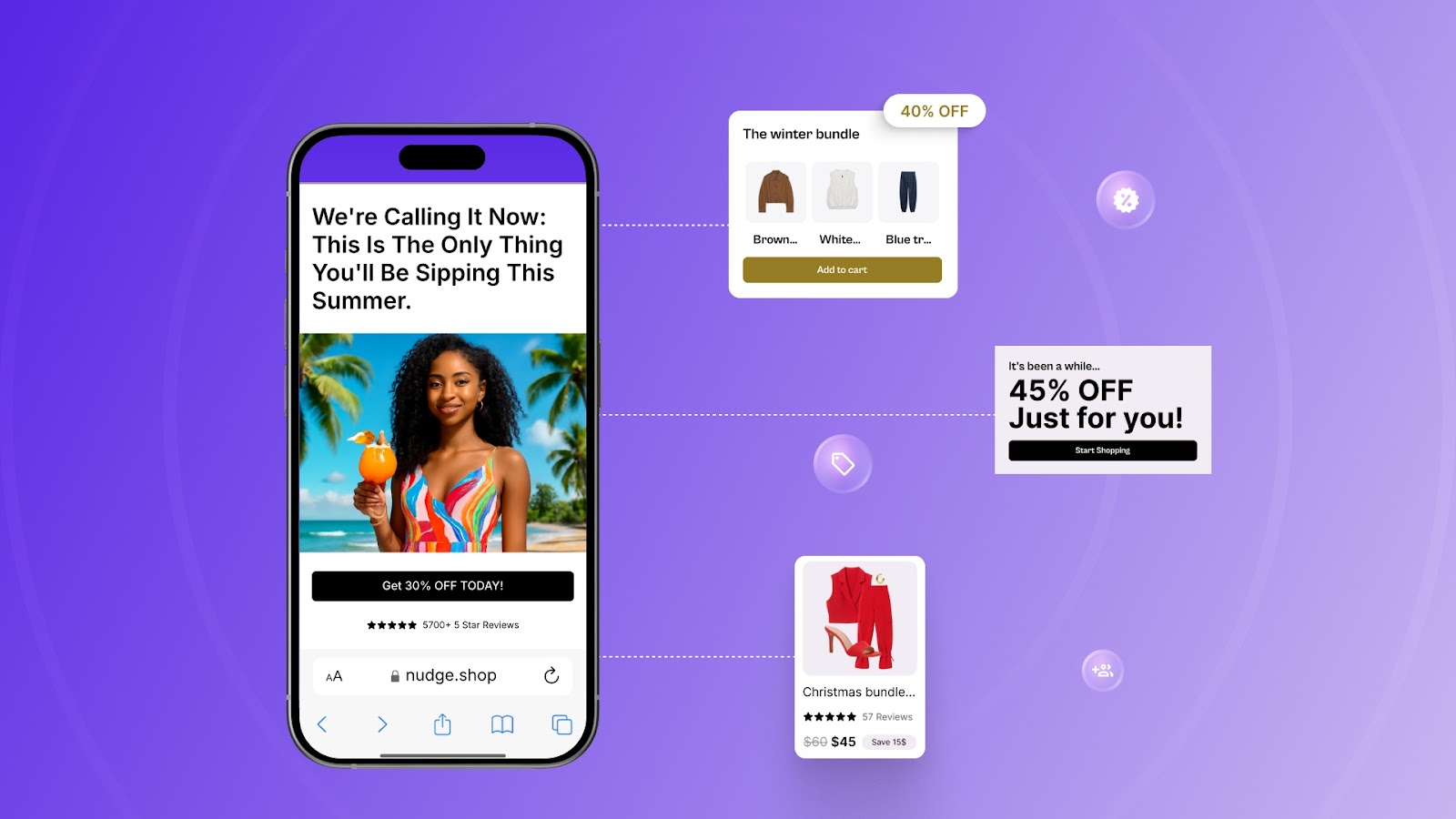





Marketers, growth teams, and UX specialists in these industries are increasingly turning to retention marketing strategies to increase their customer base and ensure those customers return for repeat purchases.
Personalization is at the heart of these strategies, as it allows brands to create unique experiences that resonate with customers on an individual level. In fact, in the apparel sector, repeat customers spent 67% more in months 31-36 of their shopping relationship compared to the first six months.
This article explores the most effective retention marketing strategies to implement in 2026 if your goal is to reduce churn, increase AOV, and improve overall conversion rates.
Key Takeaways
Predictive Lifecycle Nurturing helps anticipate purchase behavior, driving repeat purchases and reducing churn, ultimately increasing CLV.
AI-powered product recommendations increase AOV by suggesting highly relevant products at key touchpoints, leading to higher conversions.
Contextual nudges engage shoppers with timely, personalized messages, reducing cart abandonment and improving retention.
Personalized cart abandonment recovery messages bring back shoppers with unique offers, increasing conversion rates and enhancing LTV.
Funnel personalization optimizes the shopper journey by adapting to user intent, optimizing conversion rates, and increasing customer loyalty.
What is Retention Marketing in Ecommerce?
Retention marketing focuses on keeping existing customers engaged and encouraging repeat purchases, rather than just acquiring new customers. In the context of e-commerce, it’s about crafting strategies and experiences that enhance customer satisfaction and loyalty over time.
For growth teams, retention marketing is vital because acquiring new customers is often more expensive than retaining existing ones. By focusing on retention, e-commerce brands can increase CLV and lower customer acquisition costs (CAC), which ultimately drives profitability.
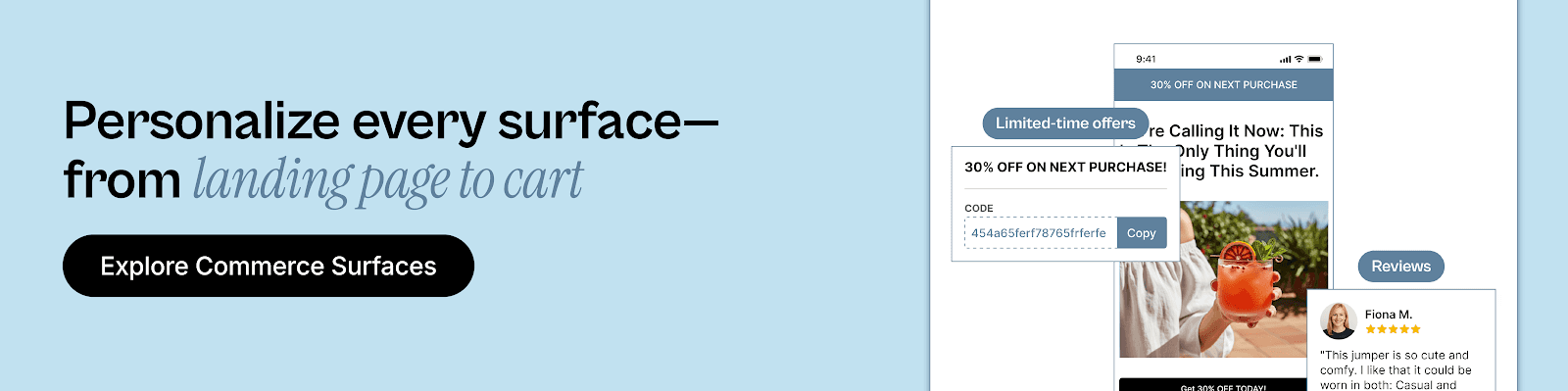
As retention marketing strategies advance in 2026, Nudge’s AI-powered Commerce Surfaces allow you to personalize experiences across the funnel, from landing pages to checkout. By embedding personalized offers and shoppable videos, you can adapt each customer interaction based on real-time behavior, improving engagement and conversion rates.
Now, let’s look into the different levels of retention marketing and how each one impacts your strategy.
Levels of Retention Marketing
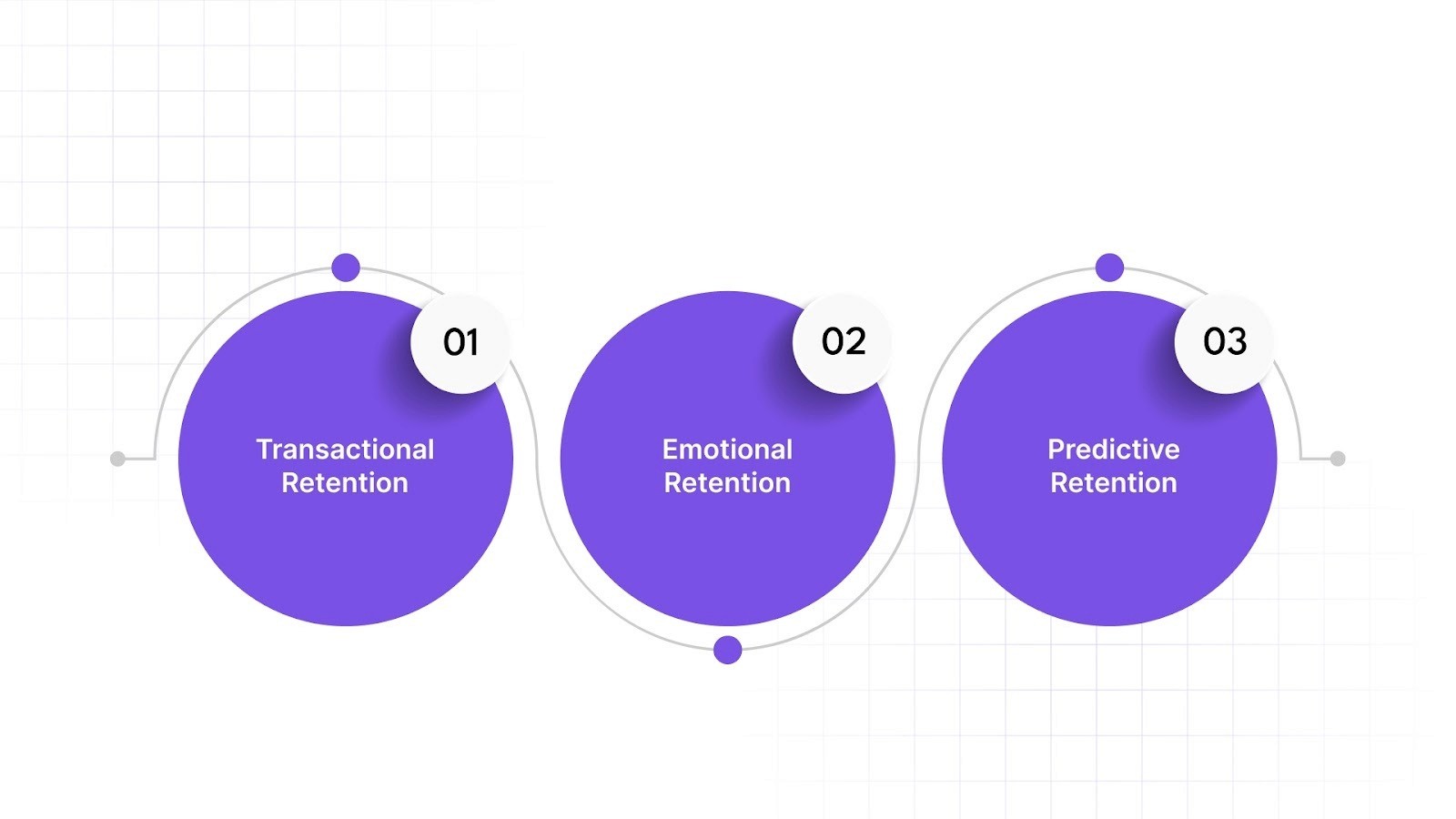
Effective retention marketing spans three crucial levels: transactional, emotional, and predictive retention. These levels help shape a comprehensive approach to engaging customers and keeping them loyal over time.
1. Transactional Retention
Transactional retention focuses on the behaviors that lead to repeat purchases, such as loyalty programs, exclusive offers, or product recommendations. UX and conversion specialists work to optimize the post-click experience, from the shopping cart to checkout, ensuring customers feel valued and are incentivized to return.
2. Emotional Retention
Emotional retention taps into customers’ feelings and brand loyalty. It's about creating a bond with customers that goes beyond just the transaction. Personalized recommendations and exclusive experiences can trigger positive emotions that lead to long-term loyalty.
3. Predictive Retention
Predictive retention uses data and insights to forecast when a customer may churn and how to engage them before that happens. Marketers use AI-driven tools and past behavior to automate retention actions, whether that’s offering discounts or personalized incentives.
Also Read: 8 Ecommerce Remarketing Strategies to Boost E-Commerce Conversions
Next, we’ll explore the four pillars that drive successful autonomous retention marketing in e-commerce.
The Four Pillars of Autonomous Retention Marketing in Ecommerce
Autonomous retention marketing uses AI and machine learning to automate and personalize retention efforts, improving efficiency and increasing results. These four pillars serve as the foundation for autonomous retention strategies in e-commerce.
1. Real-Time Awareness
Real-time awareness involves understanding a shopper's behavior and intent as it happens. With live shopper data, e-commerce marketers can offer recommendations, trigger timely discounts, or recover abandoned carts instantly.
2. Contextual Relevance
Contextual relevance ensures that personalized content, offers, and recommendations are aligned with the shopper’s current situation, be it browsing on mobile, coming from a paid ad, or viewing a specific product category. Growth teams rely on this to make sure their messages resonate with the customer at the moment it matters most.
3. Journey Autonomy
Journey autonomy means providing customers with a self-directed, yet personalized, shopping experience. From PDPs (Product Detail Pages) to customized recommendations, journey autonomy allows shoppers to explore and purchase without unnecessary friction.
4. Unified Customer Experience
A unified customer experience ensures consistency across all touchpoints such as on desktop, mobile, or in-app. UX specialists focus on providing seamless experiences that align with user behavior and personal preferences, ensuring that customers feel understood and valued.
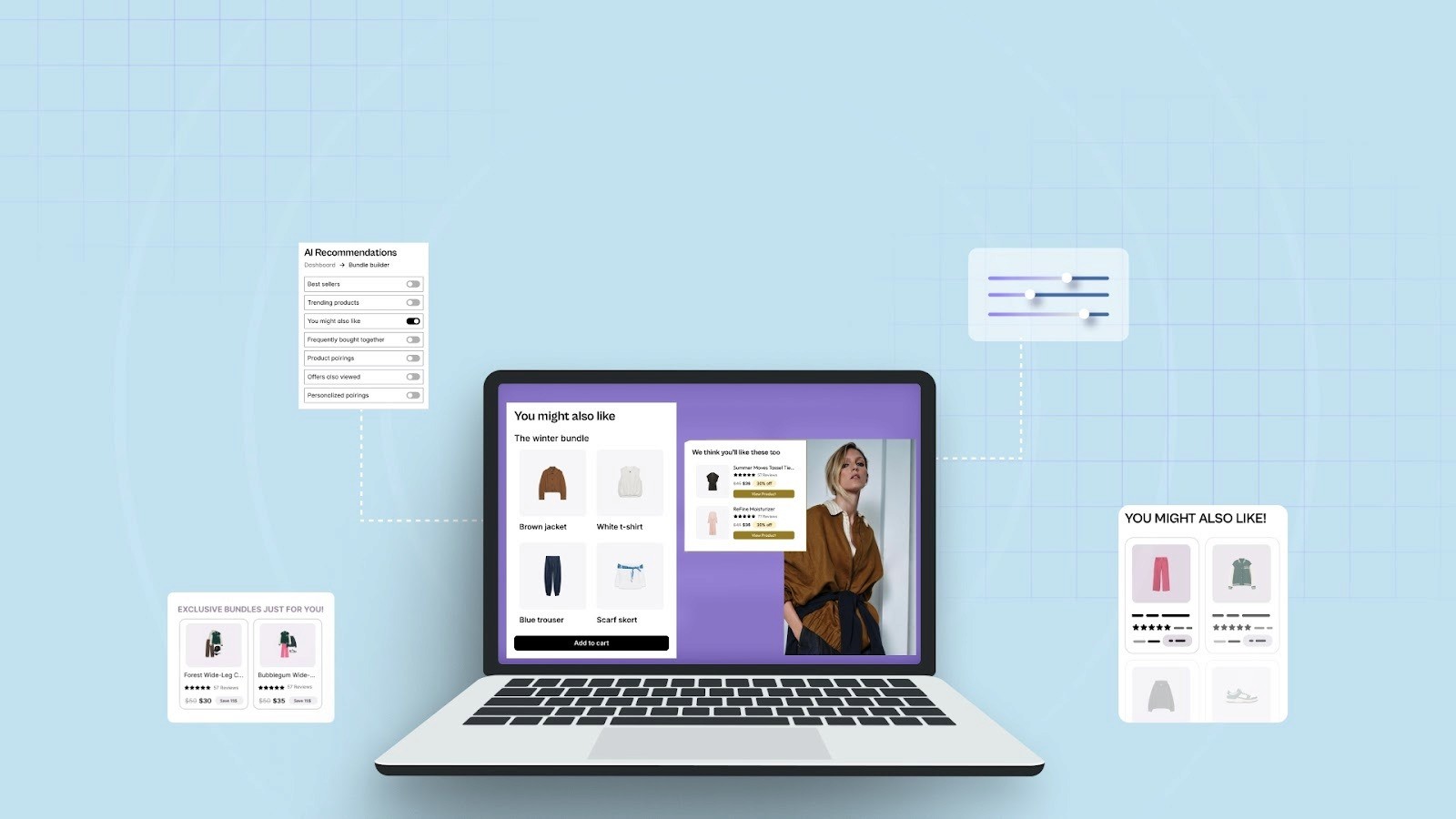
If you're looking to engage your customers with hyper-relevant suggestions and upsell bundles, Nudge’s AI Product Recommendations will create a more personalized and profitable shopping experience. By using real-time behavior and purchase history, Nudge delivers contextual recommendations that increase AOV and drive repeat purchases.
Next, let’s look at the benefits of retention marketing for e-commerce brands.
What Are the Benefits of Retention Marketing in Ecommerce?
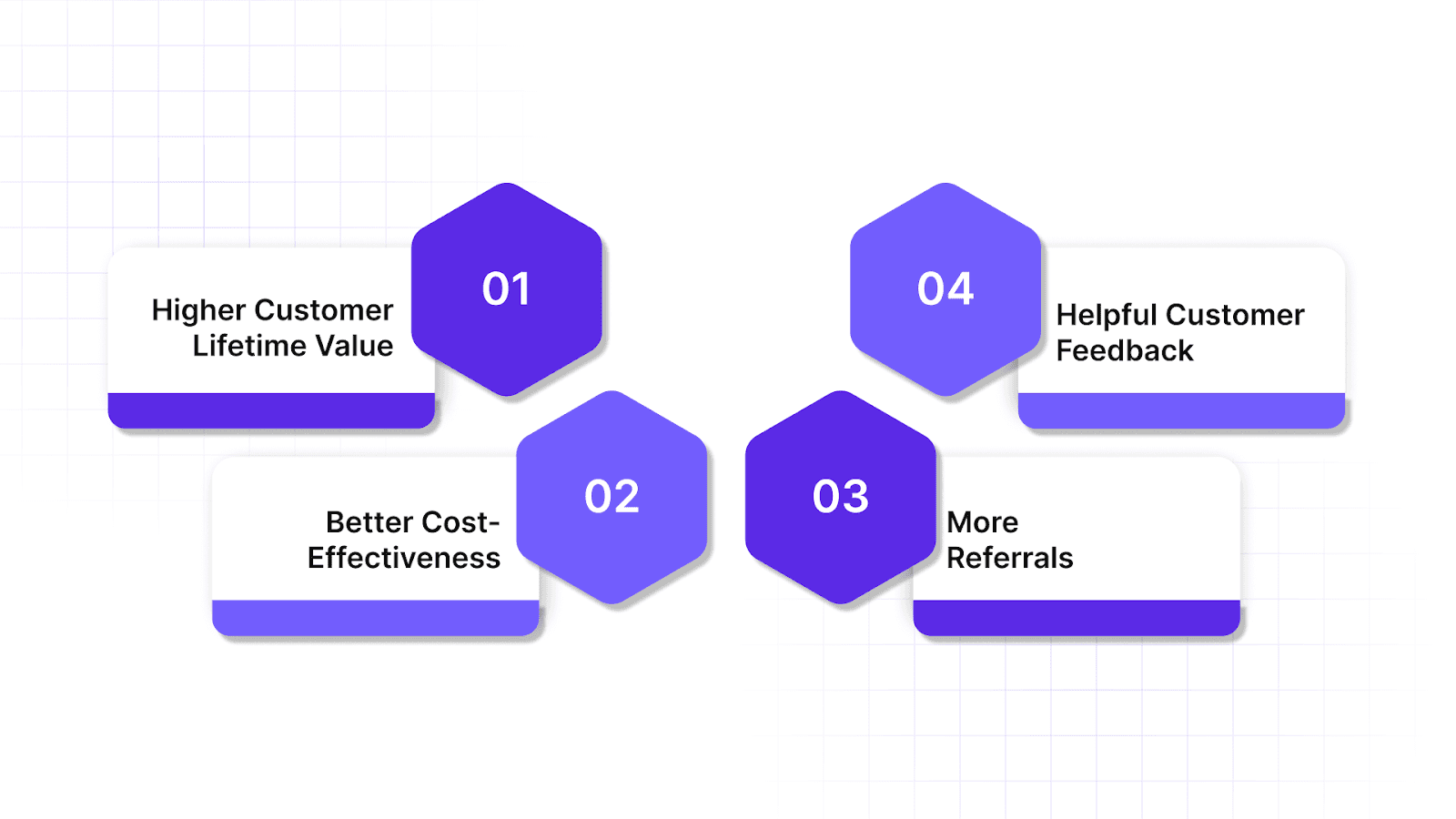
Brands can improve profitability, reduce churn, and increase customer loyalty by focusing on retention. Below are the key benefits of a strong retention marketing strategy:
1. Higher Customer Lifetime Value (CLV)
Retention marketing strategies, especially those centered around personalization, can significantly increase CLV by encouraging repeat purchases and higher spending. UX specialists who prioritize creating personalized shopping experiences can see a measurable increase in AOV and CLV.
2. Better Cost-Effectiveness
Retention marketing helps e-commerce brands save money by reducing the need for expensive customer acquisition strategies. By nurturing existing relationships, marketers can lower CAC and ensure that their marketing spend generates long-term value.
3. More Referrals
Happy, loyal customers are more likely to recommend your brand to others. Growth teams can capitalize on this by implementing referral programs or personalized incentives that encourage customers to share the brand with friends and family, thus expanding the customer base.
4. Helpful Customer Feedback
Retention marketing encourages communication and feedback from customers. By engaging with customers, e-commerce brands can learn about their needs and preferences, which helps improve products and services, leading to a better customer experience.
Also Read: The Ultimate Guide to Ecommerce Email Marketing Strategies
Now that we understand the benefits, let’s explore top retention techniques to increase customer lifetime value.
Top 10 Retention Marketing Strategies to Increase E-Commerce Customer Lifetime Value
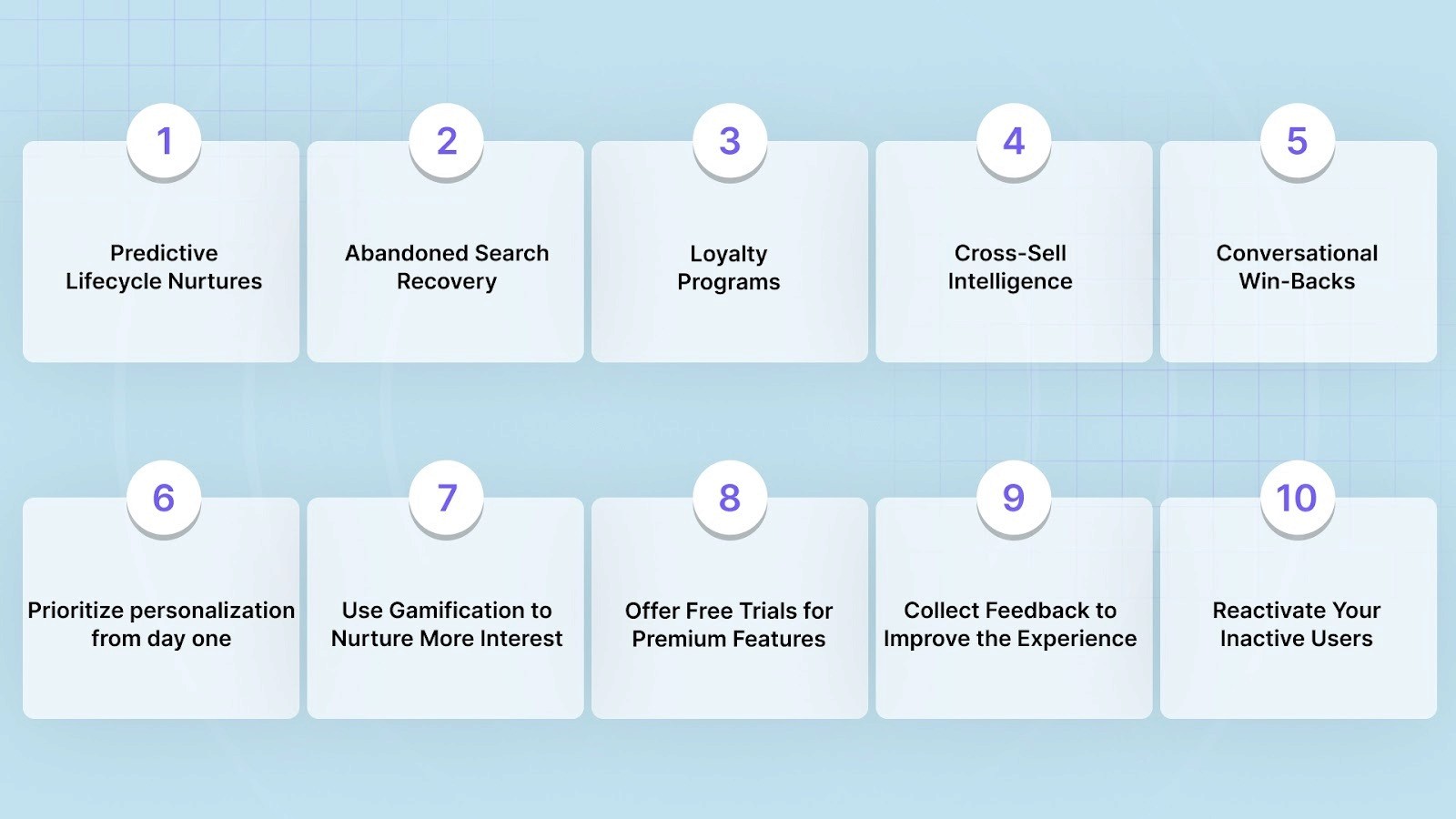
As e-commerce brands aim to improve retention and maximize customer lifetime value (CLV), here are some strategies to help you drive repeat purchases, lower customer acquisition costs (CAC), and ensure your customers keep coming back.
1. Predictive Lifecycle Nurtures
Predictive lifecycle nurturing uses data to anticipate when a customer may be ready for their next purchase and sends timely, personalized recommendations. This increases the chances of repeat purchases and enhances LTV.
Steps:
Use customer data to anticipate purchase behavior and lifecycle stage.
Automate specific offers and content based on predicted intent.
Create targeted campaigns that nurture long-term relationships.
2. Abandoned Search Recovery
Recover abandoned searches by offering product suggestions based on the shopper’s search history, keeping the shopper engaged and leading them back to the product they were originally interested in.
Steps:
Track abandoned searches using site analytics.
Show relevant product recommendations based on abandoned search terms.
Use timely offers (discounts, free shipping) to re-engage the shopper.
3. Loyalty Programs
Revamp traditional loyalty programs with personalized rewards, experiences, and tiered offers that encourage long-term engagement. Marketers can use loyalty programs as an incentive for customers to return again and again.
Steps:
Implement tiered loyalty programs with personalized rewards.
Offer exclusive early access to sales or special perks for loyal customers.
Incentivize repeat purchases with points, discounts, or exclusive products.
4. Cross-Sell Intelligence
Implement AI-driven cross-selling recommendations based on past purchases and browsing history. UX specialists can ensure that these recommendations are presented in context, increasing the likelihood of customers adding additional items to their cart.
Steps:
Use AI-powered algorithms to suggest complementary products.
Present relevant cross-sells at checkout or during post-purchase.
Personalize offers based on shopping history and current cart contents.
Nudge’s cart abandonment recovery strategies automatically trigger personalized nudges to re-engage shoppers who leave without completing their purchase. These offers, customized to the user’s cart content and previous browsing, can recover lost sales and improve retention by ensuring shoppers return and complete their transactions.

5. Conversational Win-Backs
Use AI-driven chatbots to engage with inactive customers, offering personalized win-back messages and incentives that encourage them to return. Conversational win-backs have proven highly effective in retaining high-value customers.
Steps:
Engage inactive customers through AI-driven chatbots.
Offer personalized incentives based on past purchases or browsing history.
Use conversational tools to re-engage and convert lost sales.
Also Read: 8 Ways to Reduce Customer Acquisition Costs
6. Prioritize Personalization from the Onboarding Period
Personalization doesn’t stop after the first purchase. By personalizing the onboarding process with targeted recommendations, growth teams can increase the chances of customers becoming repeat buyers right from the start.
Steps:
Customize the onboarding process with AI-driven product recommendations.
Guide new users through personalized shopping journeys based on initial preferences.
Automate onboarding to provide a seamless experience.
7. Use Gamification to Nurture More Interest
Gamify the shopping experience by adding rewards, challenges, and personalized achievements. This can encourage repeat engagement and create a fun, interactive way for customers to interact with your brand.
Steps:
Implement reward systems, badges, or challenges to encourage shopping behaviors.
Create competitive elements like leaderboards or point systems for repeat purchases.
Introduce interactive features that reward customer actions.
8. Offer Free Trials for Premium Features
Offering free trials or temporary access to premium features is a great way to increase conversions while showcasing your product’s full potential. Marketers can use this strategy to convert more users into long-term customers.
Steps:
Provide free trials for high-demand products or services to entice new customers.
Use personalized offers to encourage users to upgrade to paid features.
Automate follow-ups to convert trial users into paying customers.
9. Collect Feedback to Improve the Experience
Ask for customer feedback through surveys, reviews, or direct communication to improve the overall customer experience. This demonstrates that your brand values its customers, which increases loyalty and retention.
Steps:
Regularly collect customer feedback through surveys or reviews.
Use personalized incentives (discounts, loyalty points) for feedback submission.
Analyze data to improve product offerings and shopping experiences.
10. Reactivate Your Inactive Users
Use targeted campaigns to re-engage dormant users, offering personalized discounts, recommendations, or incentives to bring them back. These re-engagement strategies are essential for reducing churn and increasing LTV.
Steps:
Identify inactive customers through analytics and past behavior.
Offer targeted win-back campaigns with personalized recommendations or discounts.
Use time-sensitive promotions to encourage quick re-engagement.
With funnel personalization, Nudge ensures that every stage of the shopping journey, from the first visit to checkout, is optimized based on shoppers’ intent and past behavior. This seamless experience increases conversion rates and improves retention by keeping customers engaged throughout the entire process, ultimately improving CLV.
Let’s see how these techniques work with real-world examples of retention marketing in action.
3 Real-World Examples of Retention Marketing Strategies
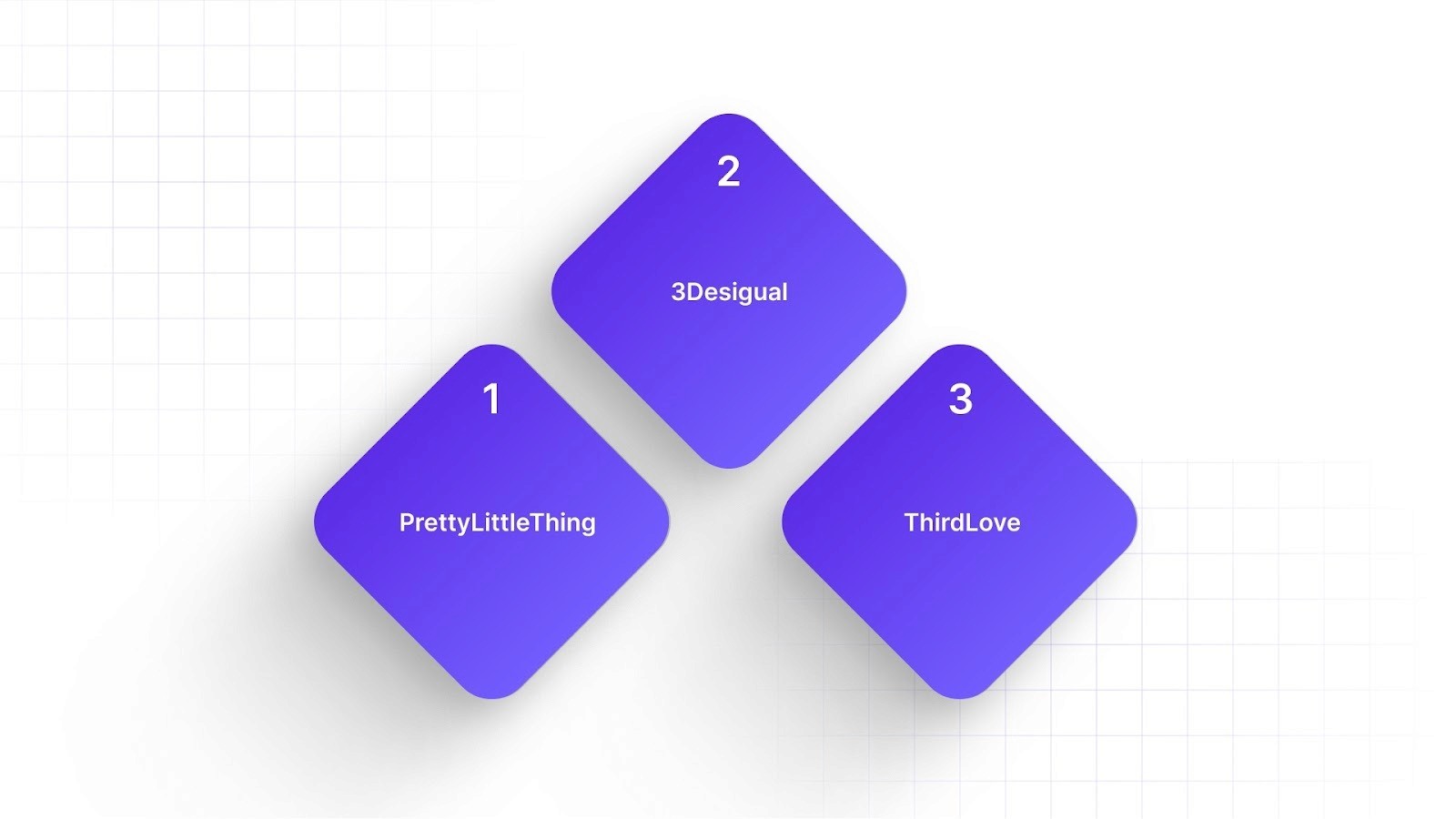
Here are some examples that highlight how personalized experiences can drive higher customer lifetime value (CLV) and retention.
1. PrettyLittleThing
PrettyLittleThing achieved a 133% lift in mobile push revenue by implementing Gen Z-specific journey optimization. The AI personalized the content to this demographic’s preferences, shorter messages, visual content, and time-sensitive offers, driving higher engagement and revenue.
2. 3Desigual
3Desigual can now send over 80 personalized campaigns to 72 countries with a 3-person marketing team. Thanks to AI templating and autonomous optimization, the brand automates localization and cultural adjustments without needing manual effort, ensuring relevant content reaches customers in each market.
3. ThirdLove
ThirdLove used personalized quizzes and real-time personalization to provide a customized shopping experience to over 3.5 million customers, generating $256K in incremental revenue in just a few months. Their data-driven approach to personalization significantly contributed to CLV and customer satisfaction.
Also Read: Proven Tips to Convert Leads Into Sales
Now, we’ll discuss how Nudge can help you apply these strategies to improve CLV and retention.
Choose Nudge’s Services to Improve Your E-Commerce Retention and CLV
As a marketer or growth team member in a high-growth e-commerce or DTC brand, your primary goal is likely to increase customer lifetime value (CLV). Nudge’s AI-driven features enable brands to implement personalized experiences at every step of the shopper journey, from landing pages and product recommendations to checkout and post-purchase engagement.
Here's how Nudge can seamlessly integrate into your retention marketing strategies and help you maximize CLV:
AI-Powered Commerce Surfaces: Nudge’s AI-powered Commerce Surfaces can personalize landing pages, PDPs, and shopping carts in real time. From shoppable videos to personalized offers and product grids, Nudge adapts the user experience based on ad source, location, and shopper behavior.
AI Product Recommendations: Nudge’s AI Product Recommendations system aligns with shopper intent, suggesting relevant products across various touchpoints, like cart, checkout, and PDPs, based on real-time data. By analyzing past behavior, purchase history, and category affinities, Nudge ensures that shoppers see custom bundles and upsell opportunities.
Product Experiences: This enables seamless retention marketing by offering personalized nudges and rewards that encourage repeat visits and purchases. Tailor each interaction based on real-time data and customer behavior, ensuring customers feel valued throughout their journey. This engagement strategy fosters long-term relationships, improving CLV and reducing churn.
Contextual Nudges: Personalized contextual nudges trigger real-time messages based on shopper behavior, including it’s scroll depth, exit intent, or time spent on-page. For UX specialists, contextual nudges help guide shoppers toward key actions like an add-to-cart prompt, special offer, or upsell.
Cart Abandonment Recovery: Nudge’s cart abandonment recovery strategies make it easy to recover lost sales by triggering personalized nudges when a shopper abandons their cart. Be it offering discounts or displaying relevant products based on previous views, Nudge helps you re-engage customers and drive them back to complete the purchase.
Funnel Personalization: With Nudge, you can ensure every touchpoint, from initial landing pages to the checkout page, is personalized to the shopper's preferences and intent. Growth teams can use data-driven insights to optimize user journeys.
Bundling & Recommendations: Nudge’s smart bundling and recommendation engine help increase AOV by offering personalized product bundles based on customer behavior. By cross-selling related products and building unique bundles from real-time inventory data, Nudge increases sales by recommending items that are relevant to the customer's current cart or previous purchase history.
1-1 Personalization: Nudge enables 1-1 personalization, adapting the shopping experience to each individual’s preferences, browsing history, and purchase behavior. By providing personalized content, product recommendations, and offers, growth teams can create a deeper connection with customers.
Higher CVR, AOV, LTV & Lower CAC: Nudge’s platform helps you achieve higher CVR, AOV, LTV, and lower CAC by delivering personalized experiences across every touchpoint in the funnel. For marketers, this means increased customer loyalty, reduced churn, and a greater return on investment.
Nudge can deliver AI-driven personalized experiences at every touchpoint, maximizing customer lifetime value and driving better results across the funnel.
Conclusion
From predictive lifecycle nurtures to gamification and personalized onboarding, the strategies outlined here are essential for marketers, growth teams, and UX specialists looking to optimize retention and maximize the effectiveness of their retention marketing strategies. The future of retention marketing is personalized, autonomous, and data-driven, offering endless opportunities to enhance CLV, increase AOV, and lower CAC.
As a marketer or growth team member in a high-growth e-commerce brand, you need personalized strategies that drive customer loyalty. Nudge offers AI-powered Commerce Surfaces to personalize the shopper journey, optimizing AOV and CLV. With contextual nudges and funnel personalization, you can re-engage shoppers and improve retention rates, all without developer bottlenecks.
Book a demo today to see how Nudge can upgrade your retention marketing and drive long-term growth.
FAQs
1. How does predictive lifecycle nurturing help reduce churn in high-growth e-commerce brands?
Predictive lifecycle nurturing uses customer behavior data to predict purchase timing, sending timely, relevant offers that reduce churn and encourage repeat purchases, increasing CLV.
2. What role does AI-powered product recommendation play in increasing AOV for DTC brands?
AI-powered recommendations suggest personalized products based on real-time shopper behavior, which directly drives AOV by cross-selling and upselling, increasing conversion rates.
3. How do contextual nudges improve customer retention for e-commerce marketers?
Contextual nudges trigger personalized messages based on shopper intent, ensuring timely engagement. This reduces abandonment, enhances experience, and improves retention by guiding decisions.
4. Why is personalization crucial for cart abandonment recovery in 2026?
Personalizing cart abandonment recovery messages with relevant offers or product suggestions based on browsing history increases the likelihood of conversion, lowering CAC and driving CLV.
5. How does funnel personalization increase conversion rates for growth teams in DTC brands?
Funnel personalization adapts each stage of the customer journey with content and recommendations. This reduces friction, guides customers, and increases conversion rates.