Ecommerce Personalization
Dynamic Personalization: The Key to Conversions in 2025
See why 76% of shoppers expect personalized experiences, and how dynamic personalization turns data into conversions and brand loyalty.

Kanishka Thakur
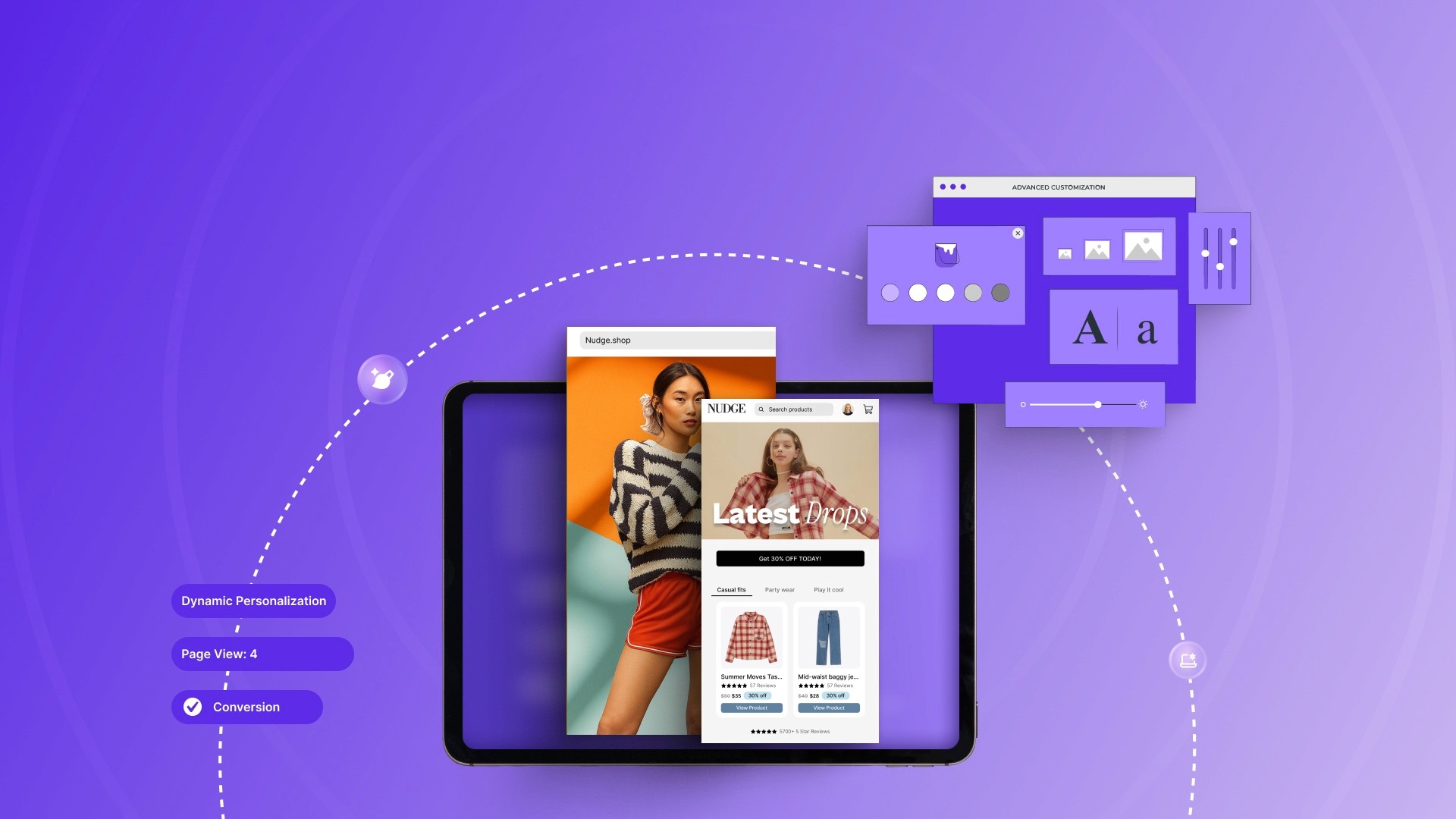





A one-size-fits-all website doesn’t cut it anymore for ecommerce and DTC brands. Shoppers expect experiences that feel personal, so much so that 76% of consumers get frustrated when brands don’t tailor content to their interests. Ignoring personalization isn’t just annoying for users; it can cost conversions and loyalty.
Dynamic website personalization solves this by adapting content, product recommendations, and offers in real time based on each visitor’s behavior, preferences, and context. The result? Shoppers see what matters most to them, feel understood, and are more likely to engage, buy, and return.
This article breaks down what dynamic personalization is, why it’s a conversion game-changer in 2025, and shares practical strategies and examples to make your site smarter and more customer-focused.
Overview
Dynamic personalization adapts content in real time, boosting relevance and engagement for ecommerce and DTC brands.
Personalization builds progressive user profiles, delivering context-aware recommendations across every touchpoint.
Implementing personalization requires unified first-party data, AI-driven segmentation, and multi-channel content.
Brands face challenges like fragmented data, poor logic, and privacy concerns, solvable with unified tools and strategy.
Nudge enables real-time, privacy-safe personalization, continuous optimization, and measurable growth across channels.
Why Should Ecommerce and DTC Brands Use Dynamic Personalization?
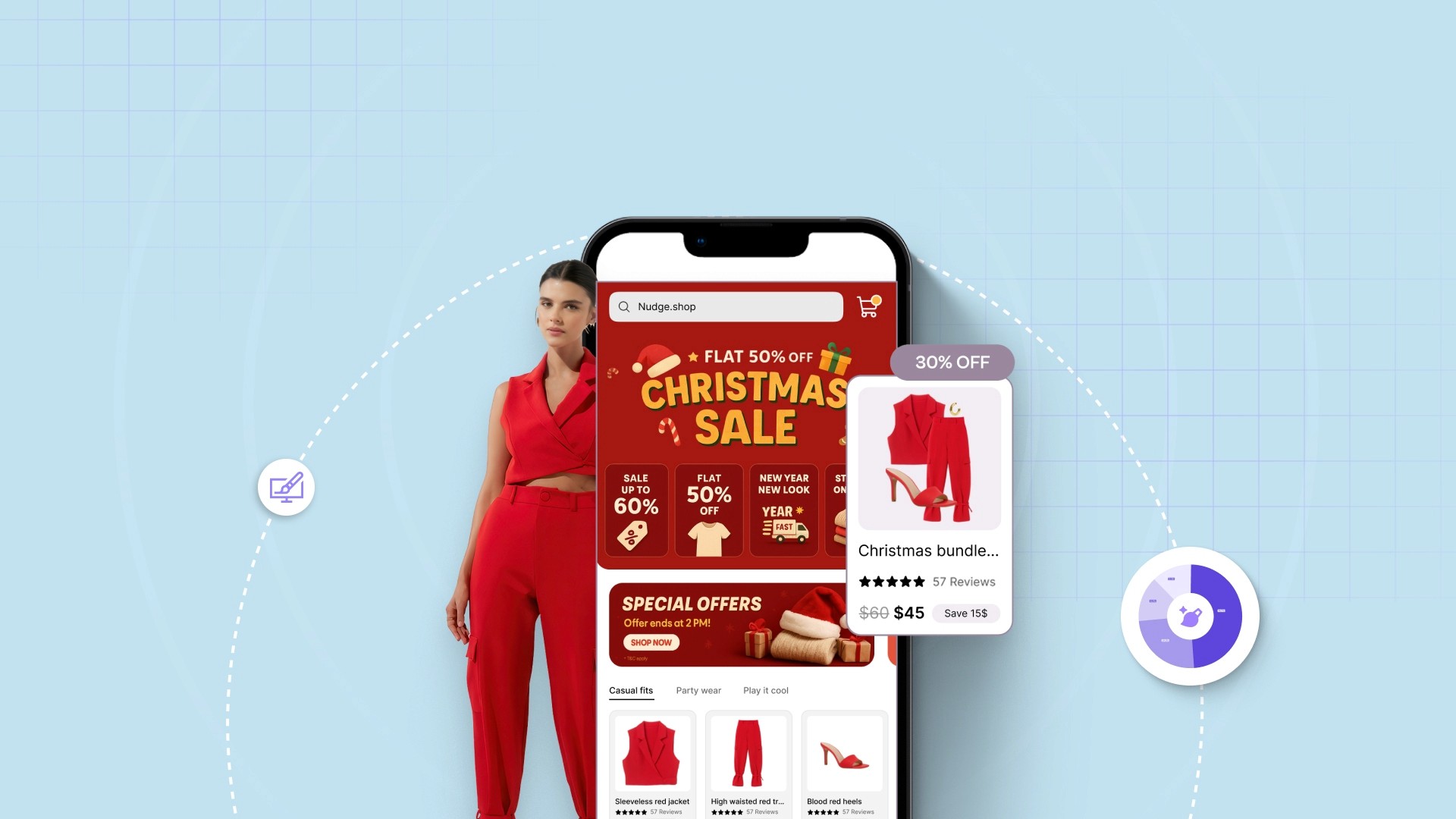
Dynamic personalization automatically adjusts content, offers, and experiences for each user in real time based on behavior, preferences, and context.
Unlike static personalization, it responds continuously as users interact, creating a seamless, relevant experience.
Key benefits:
Progressive learning: Builds user profiles over multiple sessions to anticipate needs and serve increasingly relevant content.
Contextual relevance: Adapts to device, location, time, and referral source, ensuring content always fits the user’s situation.
Behavior-driven value: Enhances navigation, suggests complementary items, or guides complex workflows, not just product promotion.
Operational scalability: Automated personalization can reach millions of users without manual intervention, with AI dynamically updating content and recommendations.
Dynamic personalization doesn’t just improve the user experience, it influences key business outcomes. Delivering the right content at the right time allows brands to uncover which experiences drive engagement.
They can also identify friction points, and make data-informed decisions to optimize campaigns, site design, and product recommendations. Over time, this creates a feedback loop that continuously improves customer interactions while supporting measurable growth.
Why it matters in 2025:
Reduce frustration and boost engagement: Most consumers get frustrated with impersonal experiences. Personalized interactions keep users engaged.
Drive conversions and revenue: Tailored recommendations and promotions increase average order value (AOV) and conversion rates.
Build loyalty: Personalized experiences strengthen relationships, encouraging repeat purchases and long-term retention.
Gain actionable insights: Behavioral data from personalization informs product, marketing, and UX decisions for continuous optimization.
Dynamic personalization is essential for ecommerce and DTC brands. By adapting experiences in real time, it increases conversions, strengthens loyalty, and turns behavioral data into smarter business decisions.
Implementing Dynamic Personalization in Your Strategy
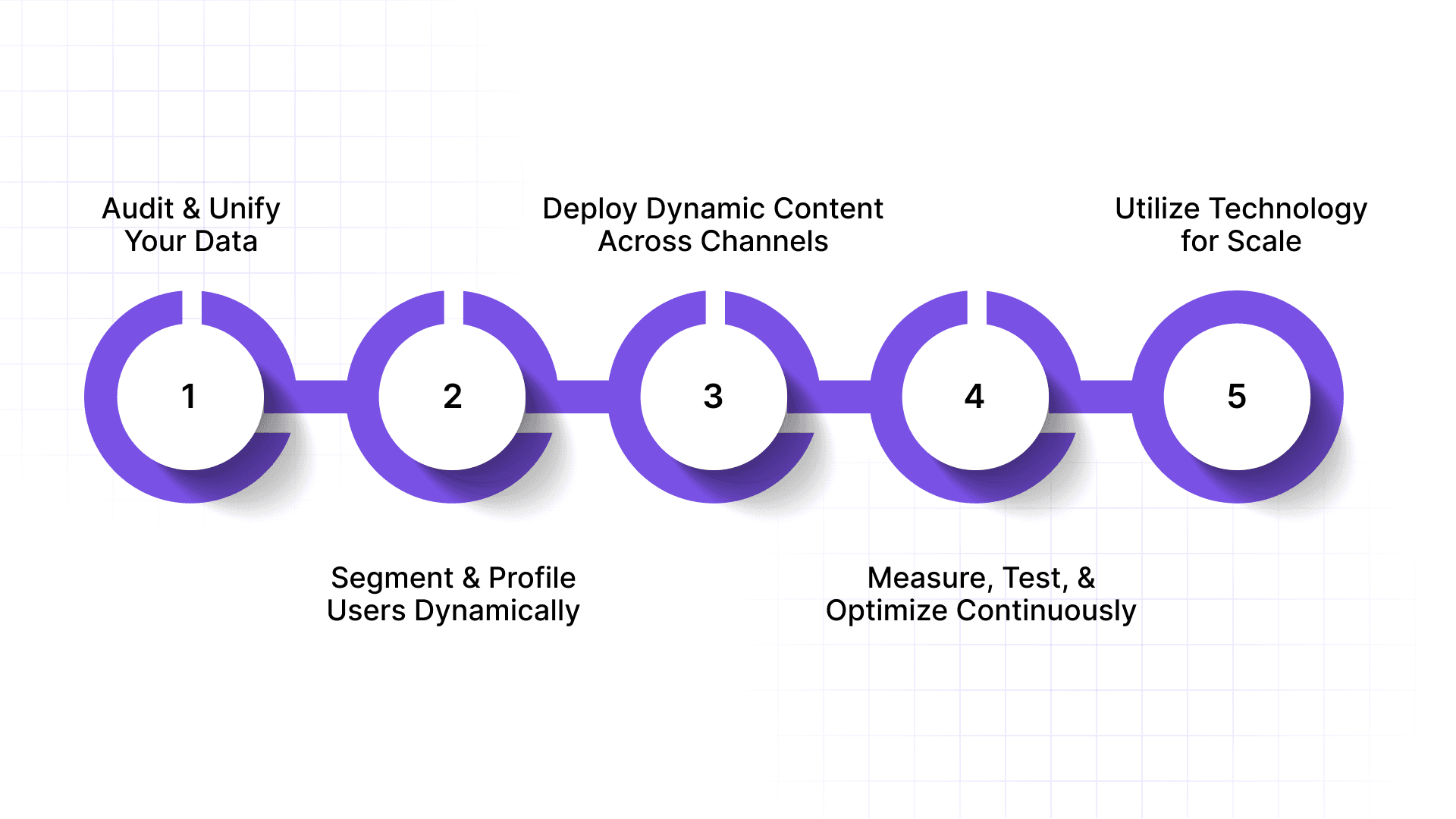
Dynamic personalization works best when it’s strategic, data-driven, and supported by technology. For ecommerce and DTC brands, implementing it effectively involves creating a seamless, adaptive experience that evolves with every interaction.
To achieve this, brands need a clear framework that combines data, technology, and continuous optimization:
1. Audit and Unify Your Data
Before personalization can succeed, brands must ensure their data is complete, accurate, and accessible:
Aggregate first-party data: Collect behavioral, transactional, and engagement data from websites, mobile apps, CRM platforms, email campaigns, and social media interactions.
Centralize and normalize: Consolidate these sources into a unified data layer or customer data platform (CDP) to create a single view of each user.
Ensure compliance and quality: Cleanse data for duplicates or inconsistencies, and adhere to privacy regulations like GDPR and CCPA to maintain user trust.
A comprehensive, accurate dataset provides the foundation for relevant, actionable personalization decisions.
2. Segment and Profile Users Dynamically
Personalization is only as strong as your understanding of your audience:
Define behavior-based segments: Identify groups based on browsing habits, purchase history, engagement frequency, or lifecycle stage.
Automate segment updates: Use AI or machine learning to adjust segment membership in real time as new behavior and interactions are recorded.
Map personalization rules: Determine how each segment sees content—product recommendations, messaging, discounts, or UX adjustments—ensuring relevance and impact.
Brands can deliver highly targeted experiences that evolve with users, avoiding one-size-fits-all content that fails to convert.
3. Deploy Dynamic Content Across Channels
Effective personalization requires consistent experiences across every touchpoint:
Multi-channel application: Apply personalization to websites, emails, landing pages, apps, and even social media interactions for a cohesive journey.
Real-time content swapping: Leverage feature flags, personalization engines, or CMS tools to deliver tailored experiences instantly without developer intervention.
Monitor performance continuously: Track user interaction with dynamic content to ensure relevance, detect friction, and adjust strategies promptly.
Users see content that feels timely, relevant, and contextually appropriate, reducing drop-offs and increasing engagement.
4. Measure, Test, and Optimize Continuously
Dynamic personalization is never static, it thrives on iteration:
Track meaningful KPIs: Monitor conversion rate, average order value, session duration, retention, and revenue per visitor to understand personalization impact.
Experiment rigorously: Use A/B or multivariate testing to compare content variations, segment rules, and recommendation logic.
Refine personalization logic: Update algorithms, rules, or segment definitions based on performance data and emerging trends.
Continuous measurement and optimization enable brands to improve experiences over time, identify what truly drives conversions, and scale effective personalization strategies.
5. Utilize Technology for Scale
Without the right tech stack, personalization can quickly become unmanageable:
AI-driven engines: Automate recommendations, predictive content, and segment updates to maintain relevance at scale.
Real-time analytics: Capture behavioral signals instantly to adjust content and offers dynamically.
Unified dashboards: Visualize performance across channels to inform strategy and enable rapid decision-making.
Automation and integrated tools allow brands to scale personalized experiences to thousands or millions of users while minimizing manual effort and maintaining consistency.
By following these steps, ecommerce and DTC brands can create adaptive, relevant experiences that engage users at every touchpoint. Dynamic personalization reduces friction in the customer journey, boosts conversions, strengthens loyalty, and provides actionable insights to continually optimize marketing strategies.
Also Read: How to Increase Conversion Rate: 8 Tactics for 2024

How Dynamic Personalization Works Across Marketing Channels
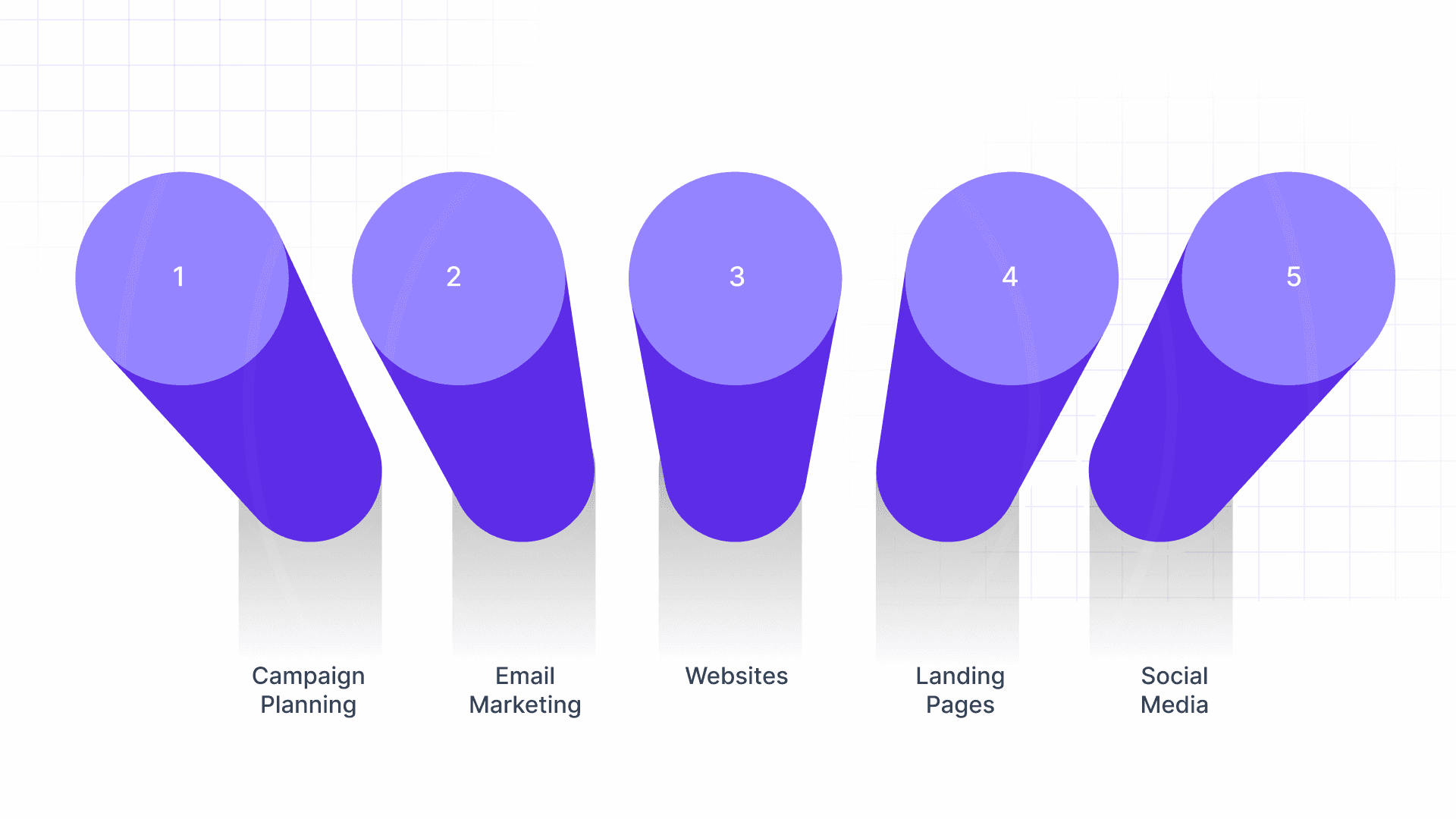
Dynamic personalization doesn’t just change what users see, it transforms how every digital channel works together. From the first impression to post-purchase engagement, each touchpoint becomes smarter, faster, and more relevant in real time.
Here’s how it comes to life across these key marketing channels:
1. Campaign Planning
Personalization starts before the first campaign goes live. With behavioral and intent data, brands can design adaptive campaigns that shift automatically based on user response.
Ads and creatives adjust in real time depending on engagement patterns.
Budget and bidding strategies evolve as conversion likelihood changes.
Offers or CTAs dynamically update to match user intent or browsing stage.
This ensures every campaign remains aligned with what customers actually want, not what was planned weeks ago.
2. Email Marketing
Dynamic personalization turns standard email campaigns into living, data-driven conversations. Instead of static blasts, each message adapts to the individual.
Content blocks update automatically based on user preferences or purchase history.
Abandoned cart or replenishment emails trigger at the perfect moment.
Promotions refresh dynamically based on inventory, season, or location.
It’s personalization at scale, where every email feels written just for the reader.
3. Websites
Your website is the heart of dynamic personalization. Every visitor leaves a trail of intent, including clicks, searches, scrolls, and that data shapes what they see next.
Homepage banners and product grids shift based on browsing or referral source.
Returning users get personalized greetings or restock reminders.
On-site recommendations evolve in real time with each interaction.
The result: visitors stay longer, engage more deeply, and convert faster.
4. Landing Pages
Static landing pages often lose visitors within seconds. Dynamic personalization keeps them hooked by continuing the conversation from the ad or email they came from.
Page headlines and imagery adapt to match ad copy or campaign context.
Product recommendations reflect browsing history or campaign themes.
CTAs vary based on user intent (e.g., “Buy now” vs. “Learn more”).
This continuity creates trust, and significantly improves conversion rates.
5. Social Media
On social platforms, personalization works best when it feels natural and contextual. Dynamic systems can fine-tune targeting, timing, and creatives in real time.
Ads dynamically adjust based on user interests, behavior, or location.
Personalized chatbots continue the experience with tailored conversations.
Interactive formats like polls or quizzes gather live feedback to fuel better personalization later.
Dynamic personalization keeps your brand visible and relevant without overwhelming users with repetition.
Overall, it creates a connected ecosystem, where each touchpoint reinforces the next. Campaigns learn from engagement, websites evolve with behavior, and emails, ads, and landing pages all respond in sync, driving measurable gains in engagement, conversions, and loyalty.
Also Read: How to Use Personalization for Upselling and Cross-Selling
Breaking Barriers to Effective Dynamic Personalization
Dynamic personalization sounds seamless in theory, but in practice, ecommerce and DTC teams often face operational, data, and cultural hurdles. From managing fragmented systems to ensuring compliance, the biggest roadblocks usually appear when scaling personalization beyond a few campaigns.
Here are some of the most common challenges, and how leading brands solve them:
Challenge | What happens | How to solve it |
1. Fragmented data sources | Behavioral data lives in analytics tools, transactional data in CRMs, and campaign data in marketing platforms, making it hard to build a single customer view. | Use data unification tools or CDPs to centralize first-party data. Establish clean data pipelines and standardized tagging across touchpoints. |
2. Poor personalization logic | Static rules or outdated segments lead to irrelevant recommendations or repetitive experiences. | Deploy AI-driven personalization engines that adapt in real time. Continuously retrain models with new behavioral and transactional inputs. |
3. Limited traffic or uneven sampling | Small brands or niche stores struggle to reach statistical confidence in A/B or dynamic tests. | Use adaptive testing models that reallocate traffic to stronger variants. Combine quantitative data with qualitative insights (e.g., heatmaps, session replays). |
4. Lack of internal alignment | Marketing, product, and tech teams often operate in silos, slowing personalization efforts. | Create cross-functional squads that share KPIs around engagement, conversion, and retention. Start with small wins to build momentum. |
5. Privacy and compliance pressures | With stricter consent and data regulations, brands risk overstepping privacy boundaries. | Rely on first-party data and consent-based tracking. Keep personalization transparent and user-controlled. |
6. Scaling across channels | Personalization that works on-site often breaks in emails or ads, causing inconsistency. | Use unified personalization platforms that connect web, app, email, and paid media experiences under one logic layer. |
When these challenges are addressed early, personalization becomes less about one-off campaigns and more about system-wide intelligence.
Brands move faster, deliver consistent experiences, and make personalization part of daily operations, not an occasional experiment.
Also Read: What Are Customer Touch Points? {Examples Inc}

How Nudge Powers Dynamic Personalization for Brands
In 2025, ecommerce growth depends on understanding each shopper in real time, not guessing what might work. Nudge helps brands deliver dynamic, data-driven personalization that adapts instantly to every user’s behavior, context, and intent, turning every interaction into a conversion opportunity.
Real-time personalization across the journey: Nudge adapts websites, apps, and campaigns instantly, from homepage to checkout. Teams can personalize layouts, offers, and recommendations in real time, without developer support, using live signals like browsing behavior or purchase intent.
AI-driven audience understanding: Nudge’s AI models learn from every interaction to predict intent and preferences. It automatically segments users and updates profiles on the fly, ensuring each visitor sees the most relevant experience from the first click.
Unified data and personalization analytics: All behavioral and transactional data flows into one analytics hub. Teams can track how personalization impacts KPIs such as conversions, order value, and engagement to refine what works and scale it.
Privacy-safe and bias-free personalization: Built on first-party, consent-based data, Nudge keeps personalization compliant and fair. Its bias-free algorithms ensure accurate, high-impact experiences across channels.
Continuous optimization and learning: Nudge measures every experience to drive constant improvement. With built-in A/B and multivariate testing, teams can optimize content, offers, and journeys in real time for sustained growth.
Nudge enables ecommerce and DTC brands to deliver personalization that feels human, adapts intelligently, and drives measurable business growth.
Book a demo to see how Nudge helps ecommerce brands personalize every interaction, optimize conversions, and scale smarter with real-time intelligence.
Frequently Asked Questions
1. How does dynamic personalization differ from static personalization in real-time user engagement?
Dynamic personalization continuously adapts content, offers, or experiences based on live user behavior, location, and context, unlike static personalization which relies on predetermined segments or one-time data points, enabling more relevant and timely interactions.
2. What technological components are critical to enabling scalable dynamic personalization across multiple channels?
Robust data pipelines, AI-driven decision engines, real-time analytics, and seamless integrations across web, mobile, email, and in-app platforms are vital for delivering cohesive, dynamic personalization at scale.
3. How can dynamic personalization reduce message fatigue while maintaining high user engagement?
By adapting frequency, timing, and content based on user responsiveness and engagement signals, dynamic personalization tailors touchpoints to individual tolerance levels, preventing burnout and enhancing lifetime engagement.
4. In what ways does dynamic personalization leverage contextual signals like device type or time of day to improve conversion?
These signals enable brands to adjust content presentation or offers dynamically, for example, mobile users might see simplified layouts or location-specific promotions, while time-sensitive deals capitalize on peak engagement periods.
5. How do privacy regulations affect the implementation and scope of dynamic personalization strategies?
Brands must implement privacy-compliant data governance frameworks, with real-time consent management and anonymization techniques to respect user preferences without limiting personalization efficacy.
6. What are the most effective KPIs for measuring the ROI and success of dynamic personalization programs?
Metrics such as real-time conversion uplift, engagement depth, session duration, repeat purchase rates, and reduction in churn provide comprehensive insights into dynamic personalization impact.
7. How can organizations foster collaboration between data science, marketing, and product teams to optimize dynamic personalization efforts?
Establishing cross-functional squads with shared goals, clear ownership of data and content pipelines, and agile workflows that integrate customer feedback accelerates innovation and improves personalization relevance.