CRO & Experimentation
Automated A/B Testing for Smarter Campaign Decisions in 2025
Discover how automated A/B testing with AI drives smarter, real-time campaign decisions, optimizing user experiences across channels.

Sakshi Gupta
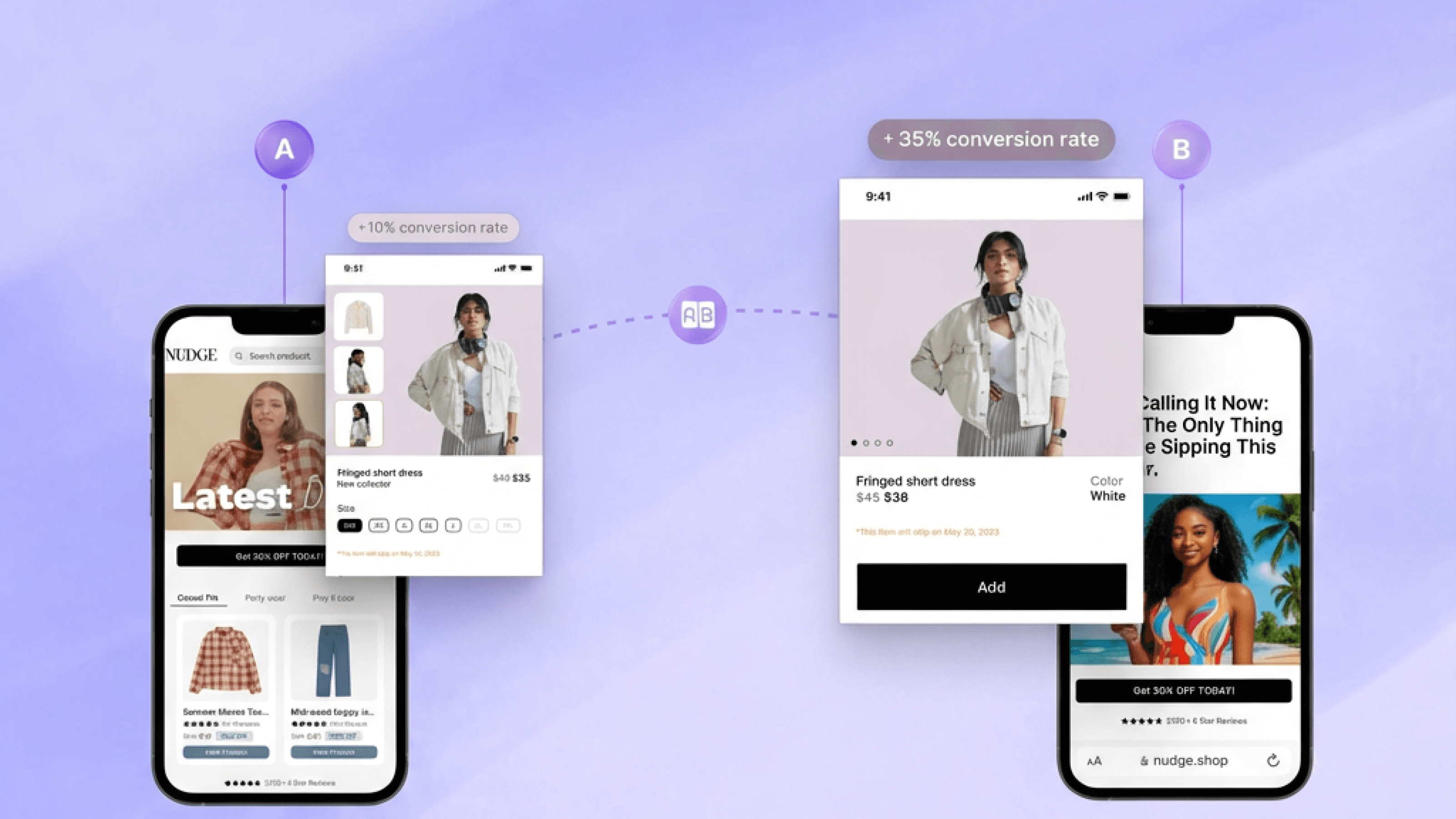





In ecommerce, guessing what customers want is no longer enough. Traditional A/B tests, like changing a button color or banner, can help, but often miss deeper insights. Automated A/B testing changes the game, using AI and real-time data to run experiments across campaigns and site experiences without manual oversight.
This can be seen in the instance of The Warehouse Group, which personalized homepage layouts for new, returning, and high-value shoppers during campaigns, automatically rotating variants and tracking engagement in real time. This dynamic testing approach boosted click-through rates by 7.8% and revenue per user by 4.4%.
This blog explores how automated A/B testing helps marketers make smarter, faster decisions, reduce guesswork, and run campaigns that continuously learn. It will help brands turn behavioral insights into measurable growth and higher engagement across every touchpoint.
Overview
AI-driven automated A/B testing adapts content in real-time across web, mobile, email, and on-site interactions for better campaign optimization.
Dynamic segmentation ensures the right frequency and channels for tests, optimizing user experience without overwhelming customers.
Continuous learning refines experiments, improving performance and personalization with each interaction.
Scalable, cross-channel testing enables consistent optimization and faster insights for ecommerce brands.
Nudge personalizes tests based on customer intent, learning from behavior to improve engagement and drive smarter decisions.
What Is Automated A/B Testing? Key Features
A/B testing compares two or more versions of a campaign element, maybe a subject line, product image, or homepage layout, to see which performs best. For years, this process was entirely manual: marketers set hypotheses, split traffic, waited for results, and then declared a winner. It worked, but it was slow, static, and reactive.
Traditional testing was built for predictable conditions. But in modern ecommerce and DTC, shopper behavior changes constantly, influenced by promotions, trends, even time of day. By the time a test “wins,” the customer context may have already shifted.
That’s where automated A/B testing changes the game. It replaces one-off experiments with a continuous, AI-driven learning loop that adapts in real time.
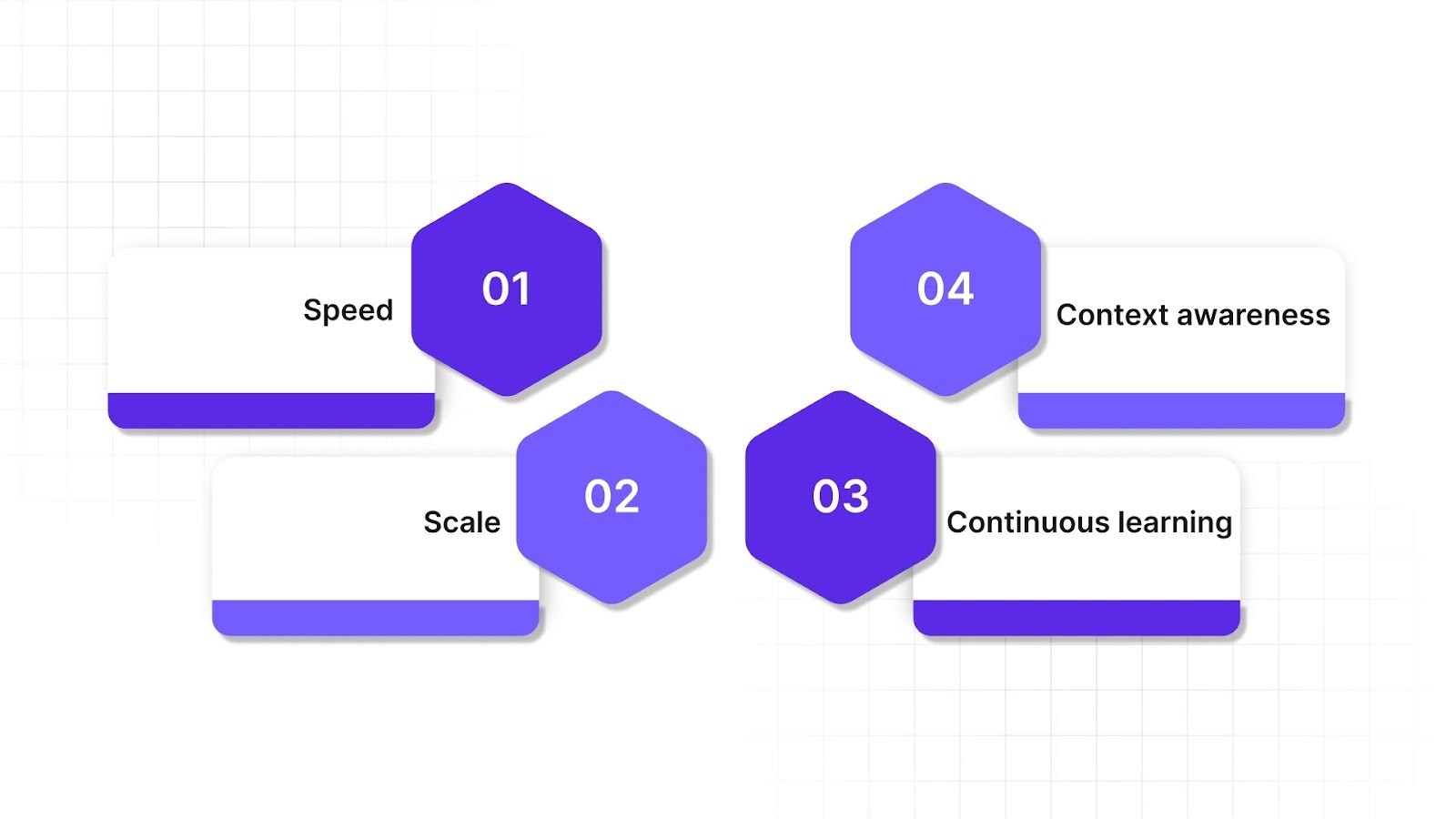
Here’s how it differs from traditional A/B testing:
Speed: AI tests and reallocates traffic dynamically, eliminating the waiting period for statistical significance.
Scale: Multiple variants can run simultaneously across surfaces like homepages, PDPs, email, and app screens.
Continuous learning: Instead of stopping when a winner is found, automated systems keep learning from every interaction.
Context awareness: Algorithms adjust performance based on changing conditions like device, time, or user intent.
For example, consider a DTC brand running three homepage variants during a weekend campaign, one highlighting bundles, another pushing gift sets, and a third emphasizing single-item discounts.
As traffic flows in, the AI sees new visitors responding best to bundles while loyal customers click gift sets. It automatically reallocates traffic to match these insights, optimizing conversions before the campaign ends, not weeks later.
How to Perform Automated A/B Testing the Smart Way
Automated A/B testing is all about learning fast and scaling what works. The smartest brands approach it as a continuous feedback loop, not a one-time campaign tactic.
Start with clear goals. Before launching any test, define what success looks like. Are you optimizing for higher add-to-cart rates, better retention, or increased revenue per visitor? Goals determine the kind of insights your AI model should prioritize.
Key areas to focus on:
Acquisition: Improve click-through rates on ad creatives or landing pages.
Conversion: Optimize product page layouts, CTAs, or bundle visibility.
Engagement: Test email or push message frequency and tone for different user cohorts.
Next, segment your audience. Automated testing tools can personalize test flows by audience type, like new vs. returning customers, high-LTV users, or those from specific campaign sources. This segmentation ensures that your “winning” experience is relevant to each user group, not just statistically superior overall.
Then, define clear success metrics. Automated systems need structured feedback. Whether your north star metric is revenue per session, average order value, or bounce rate, define it upfront so the AI can dynamically allocate traffic to high-performing variants in real time.
Automate the setup. With the right AI platform, you can auto-generate, deploy, and evaluate test variants without manual coding or data pulls. These tools use multi-armed bandit algorithms, adjusting traffic distribution automatically as soon as one variant starts outperforming the others.
Pro Tip: Combine creative flexibility with algorithmic precision. Let the AI handle traffic and optimization, but keep human oversight on brand tone and experience quality.
Before you hit “launch,” make sure your automated A/B test is set up for success:
Objective defined: What business goal are you optimizing for?
Audience segmented: Who are you testing on: new, returning, or VIP customers?
Metric selected: CTR, conversion rate, or AOV?
Automation configured: Is traffic distribution adaptive?
Learning loop active: Will the system keep testing as conditions evolve?
When done right, automated A/B testing turns optimization into a living process, one that learns, scales, and sharpens with every campaign cycle.
Smart Automation in Action: Campaign Monitor’s 31% Conversion Boost
ConversionLab, a Norwegian digital agency, wanted to improve the relevance of Campaign Monitor’s PPC landing pages. Despite strong ad performance, they suspected a key mismatch between the searcher’s intent and the landing page messaging.
Their hypothesis: aligning the landing page verb with the one used in the search query would make the page feel more relevant and drive higher conversions.
Using a dynamic text replacement (DTR), ConversionLab automated this process, each visitor saw a version of the landing page that mirrored their search phrasing in real time. For instance, a search for “design on-brand emails” produced a headline using “design,” while another search might use “create” or “build.”
After running an A/B test for 77 days across 1,274 visits, the dynamically personalized version outperformed the control, achieving a 31.4% lift in trial sign-ups.
This case demonstrates how automated A/B testing paired with real-time content adjustments can capture intent-level nuances and deliver measurable improvements in campaign performance, a key advantage for data-driven marketers in 2025.
Also Read: Top 10 E-Commerce Personalization Tools to Increase Conversions (2025)
High-Value A/B Tests Every Ecommerce Brand Should Run
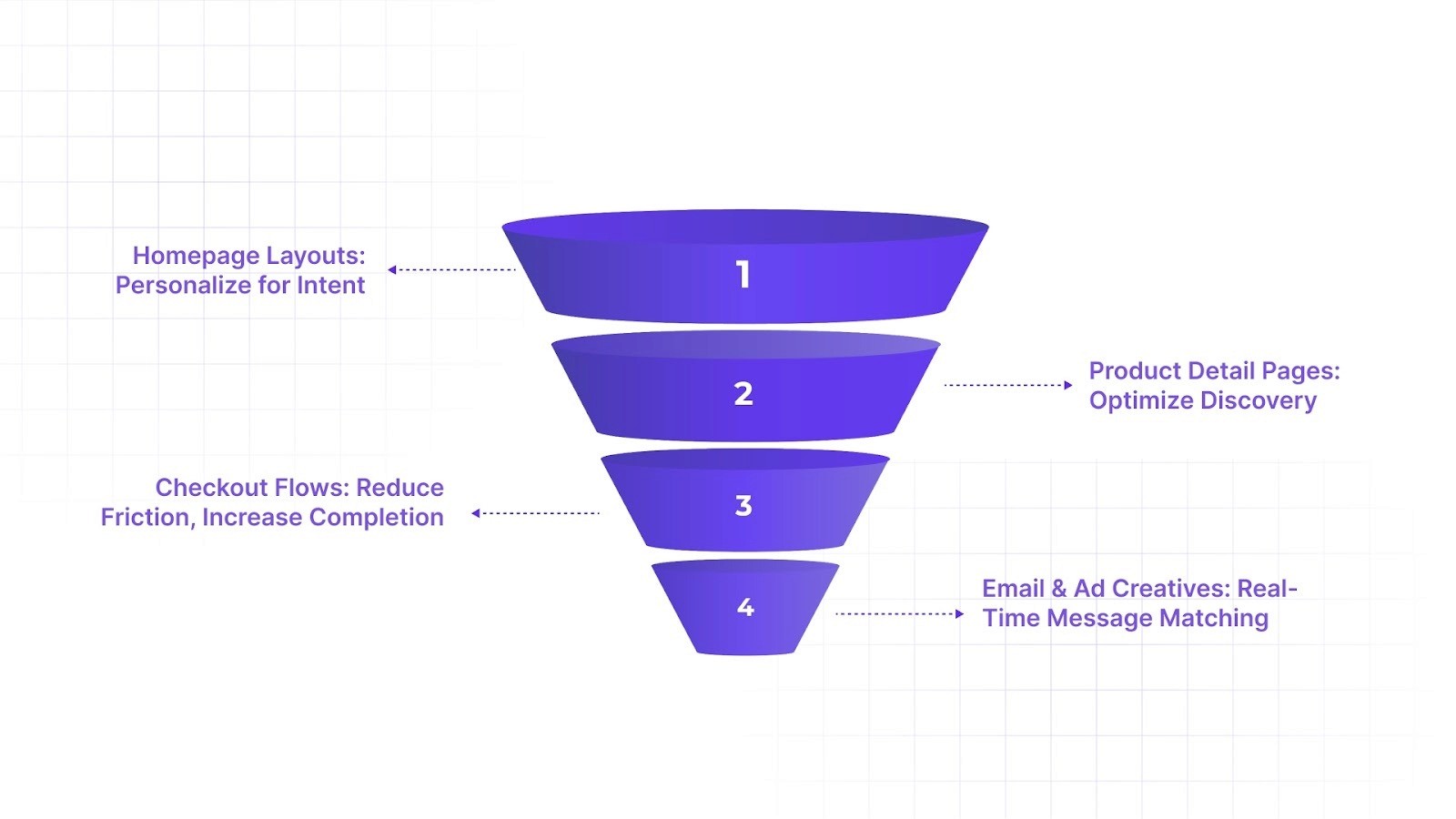
Not every experiment delivers a meaningful impact. The best automated A/B tests focus on high-leverage areas that directly shape customer decisions.
For ecommerce and DTC brands, automation unlocks a new layer of sophistication: tests that evolve dynamically as user behavior shifts, instead of relying on static hypotheses.
Here’s where automation creates immediate, measurable value:
1. Homepage Layouts: Personalize for Intent
Your homepage is no longer a fixed destination. It’s a dynamic entry point. Automated A/B testing can instantly adapt layouts based on user intent signals such as referral source, browsing history, or device type.
For example, a returning shopper from a paid campaign may see recently viewed items, while a new visitor sees trending collections or first-order offers.
Impact: AI systems continuously re-rank hero banners and product sections to highlight what’s performing best in real time, leading to compounding engagement gains.
2. Product Detail Pages (PDPs): Optimize Discovery & Urgency
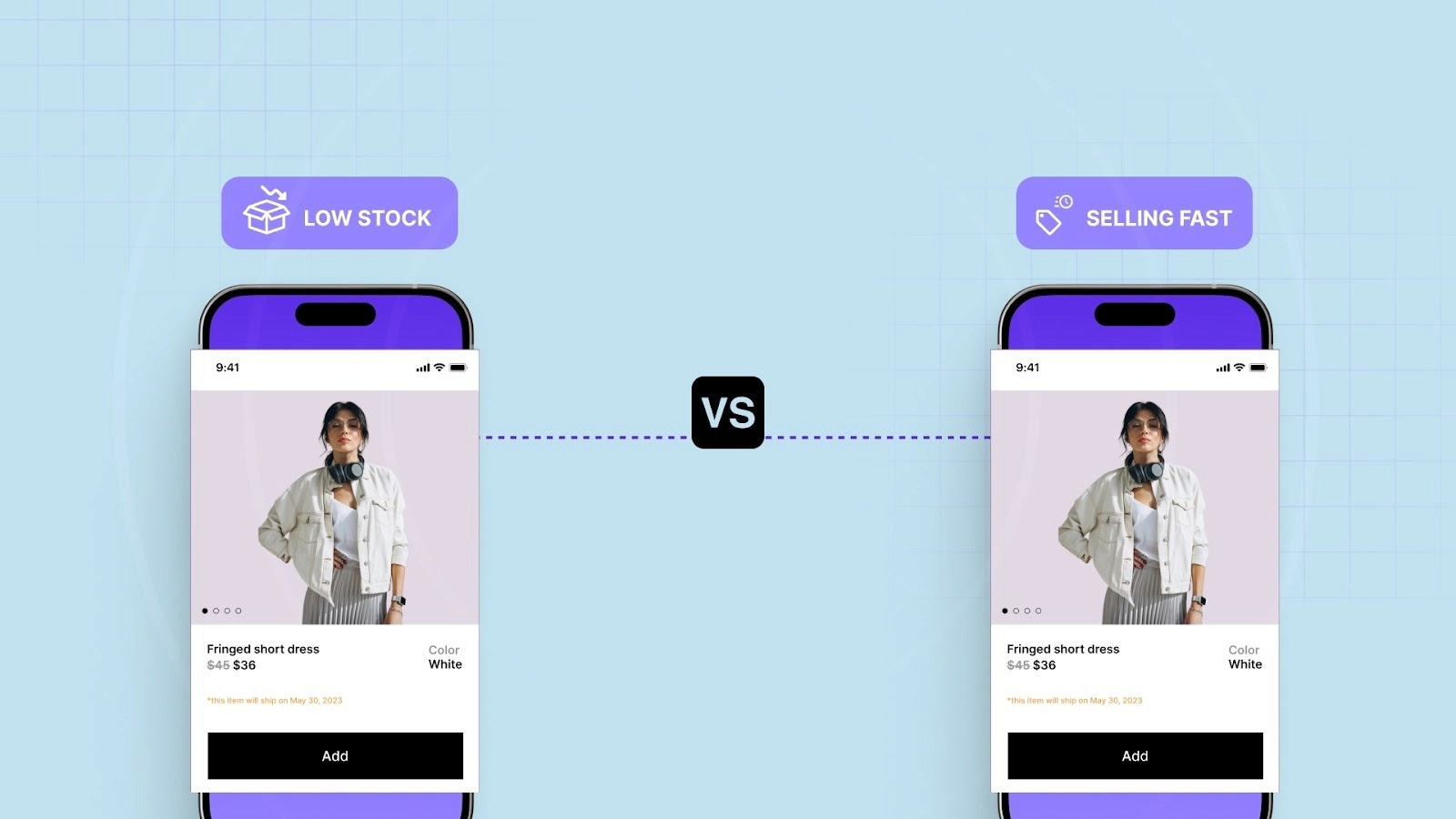
PDPs are often where purchase hesitation peaks. Automated testing tools can evaluate combinations of product recommendations, trust badges, and urgency cues (like stock indicators or timers).
Smart automation: The system detects which signals nudge conversions without overwhelming users. For example, testing between “Low Stock” and “Selling Fast” labels across customer segments.
Result: Better contextual alignment between messaging and buying intent, especially for mobile users who make faster decisions.
3. Checkout Flows: Reduce Friction, Increase Completion
Small changes in the checkout flow often yield the largest return. Automated testing allows brands to test micro-variants at scale, such as button copy (“Pay Securely” vs. “Complete My Order”), payment sequence, or the placement of incentive banners.
Continuous optimization: The AI can detect when friction increases (e.g., drop-offs at the payment step) and shift the winning flow to more users instantly.
Outcome: More consistent cart completion rates, without waiting for long test cycles.
4. Email and Ad Creatives: Real-Time Message Matching

Automated multivariate testing isn’t limited to your site. Integrated AI systems can test multiple creative formats and subject lines simultaneously, then route budget or impressions to the highest-performing versions by audience type.
For example, a lifestyle apparel brand might test 10 ad variations across channels; AI rapidly identifies which visuals convert best for lookalike audiences versus returning customers.
Value: Faster feedback loops, reduced creative waste, and higher ROI on paid media.
Automated A/B testing is about sustained growth through iterative learning. Each winning variant becomes a new baseline for further testing, building cumulative performance over time. The brands that excel don’t run isolated tests; they run living optimization programs that evolve alongside consumer behavior, technology, and creative strategy.
Also Read: How to Increase Conversion Rate: 8 Tactics for 2024

Breaking the Barriers to Continuous A/B Testing
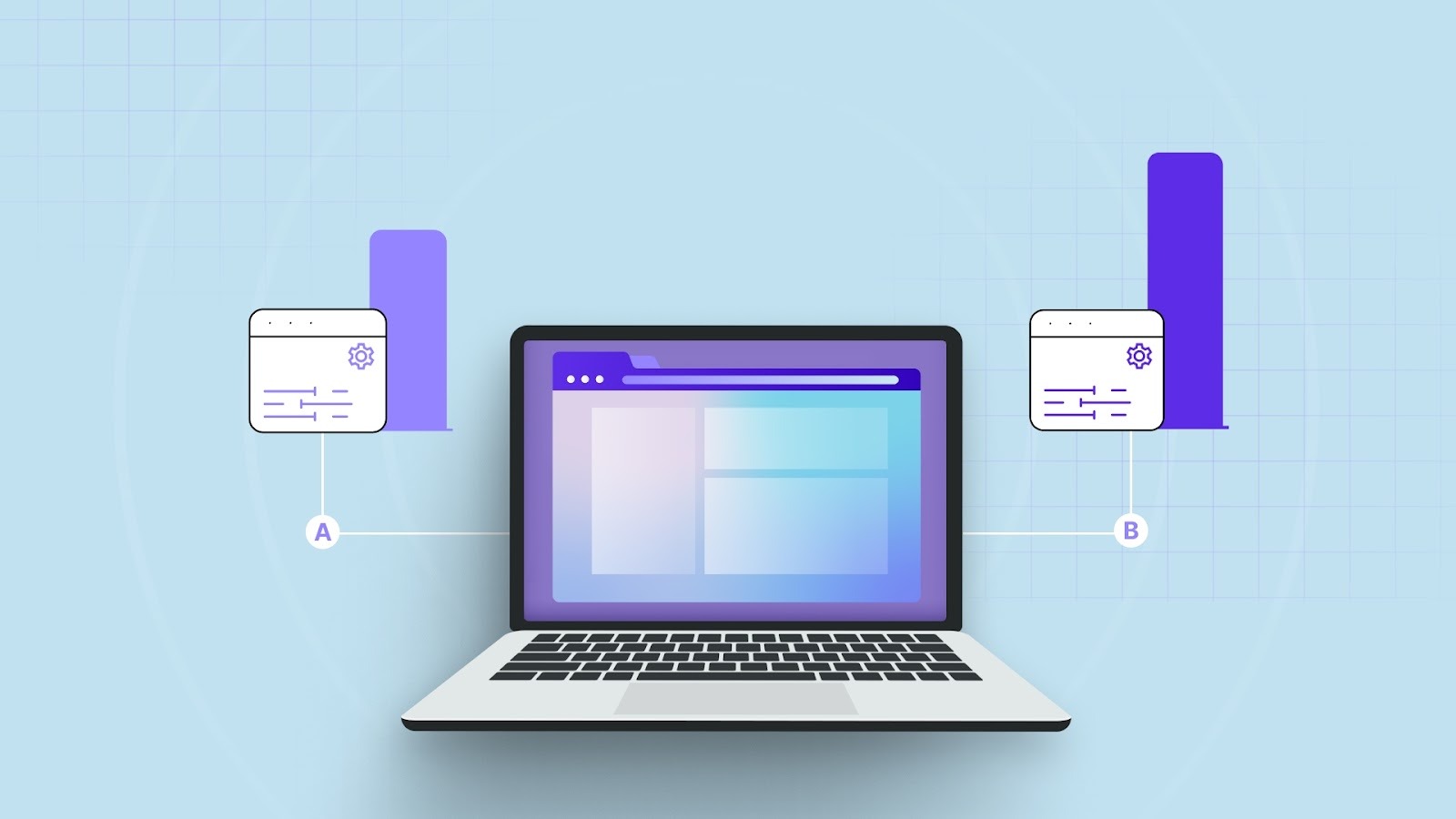
Automated A/B testing has reshaped how ecommerce and DTC brands optimize performance, turning experimentation from a manual, one-off process into a self-learning engine. But as automation scales, so do the complexities. From algorithmic bias to data drift and privacy limits, the shift from human-led to AI-driven testing introduces new operational and analytical hurdles.
To make automation work for you, not against you, it’s crucial to recognize where friction arises and apply structured solutions that keep tests reliable, explainable, and business-aligned.
Here are some common challenges and their corresponding solutions:
Challenge | Description | Smart Fix |
1. Data Overload | Too many tests create noisy data and short-term optimizations that hide real insights. | Centralize data and use AI dashboards to surface key KPIs like revenue per visitor or LTV. Tools like Amazon Personalize auto-flag valid results. |
2. Algorithmic Bias | Models overfit early traffic or favor certain segments, leading to false “winners.” | Use adaptive or Bayesian optimization to rebalance traffic and pair automation with human review. |
3. Lack of Transparency | Black-box AI makes it hard to see why variants win or lose. | Choose tools with explainable AI and experiment logs. Review key drivers regularly to capture learnings. |
4. Privacy Constraints | Cookie loss and privacy laws limit user-level data for personalization. | Rely on first-party and consent-based data. Use AWS Clean Rooms or secure frameworks for compliant sharing. |
5. Scaling Without Context | Automation can chase clicks over long-term metrics like retention or trust. | Set multi-objective goals that balance conversions with LTV or NPS. Add guardrails to retrain models when data drifts. |
The brands that win are those that blend machine precision with human oversight, creating a feedback loop that’s fast, explainable, and strategically sound.
Also Read: 10 Best eCommerce Personalization Apps for 2025
Building the Next-Gen A/B Testing Toolkit for 2025
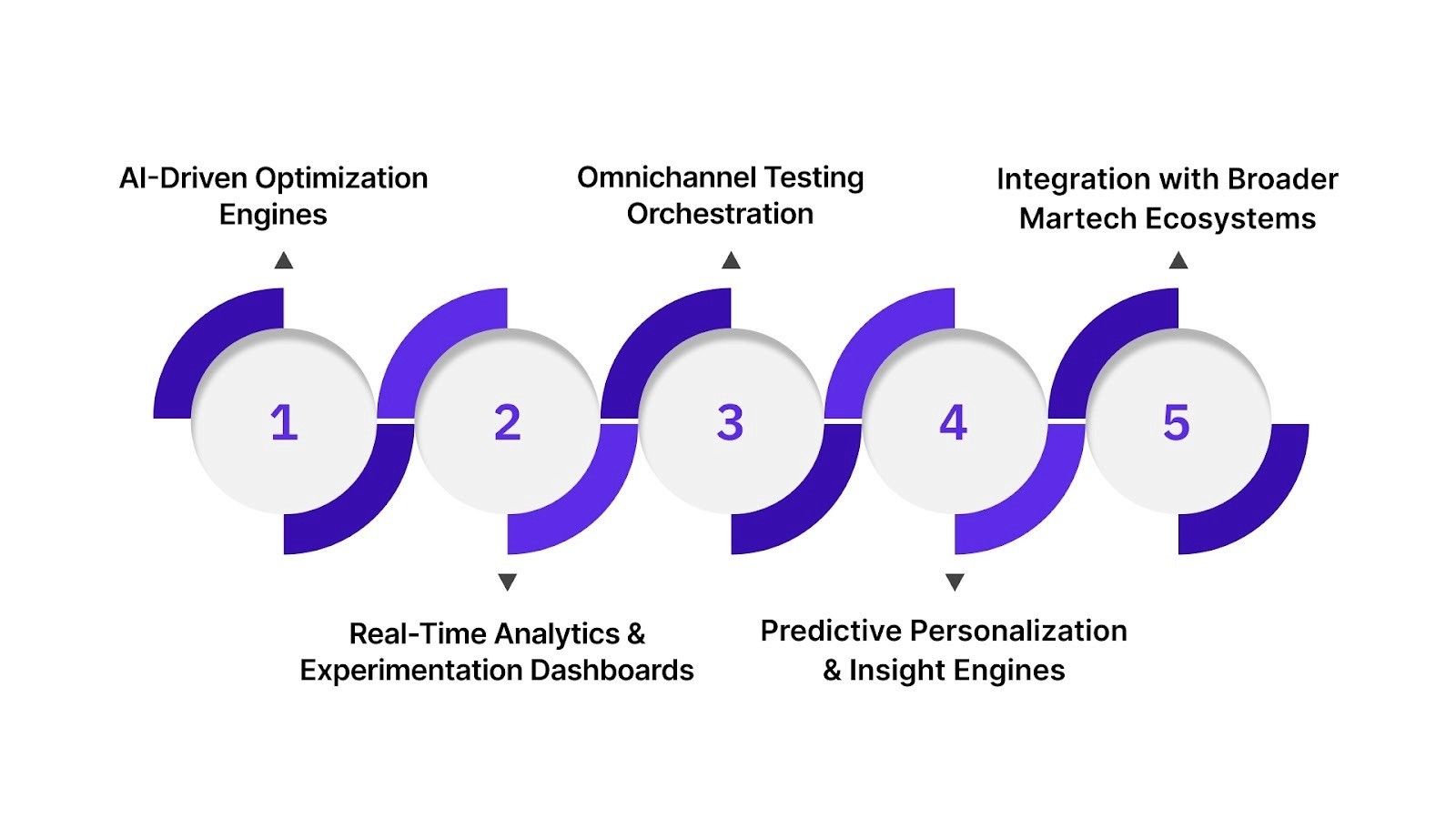
Automated A/B testing has evolved from isolated experiments into an integrated ecosystem, where machine learning, real-time data, and omnichannel orchestration work together to drive relevance and revenue.
In 2025, the most successful ecommerce and DTC brands aren’t just running tests; they’re operating experimentation as a system, one that continuously learns, adapts, and scales.
Below are the core technology pillars that make this possible:
1. AI-Driven Optimization Engines
Platforms like Nudge are redefining how brands approach testing. Instead of manually selecting variants or waiting for a test to end, AI models dynamically allocate traffic toward high-performing versions in real time.
These systems analyze interaction data as it streams in, identifying patterns invisible to human analysts, such as device-specific engagement or time-based conversion surges.
For ecommerce teams, this means fewer static experiments and more continuous optimization, where every session informs the next best experience automatically.
2. Real-Time Analytics and Experimentation Dashboards
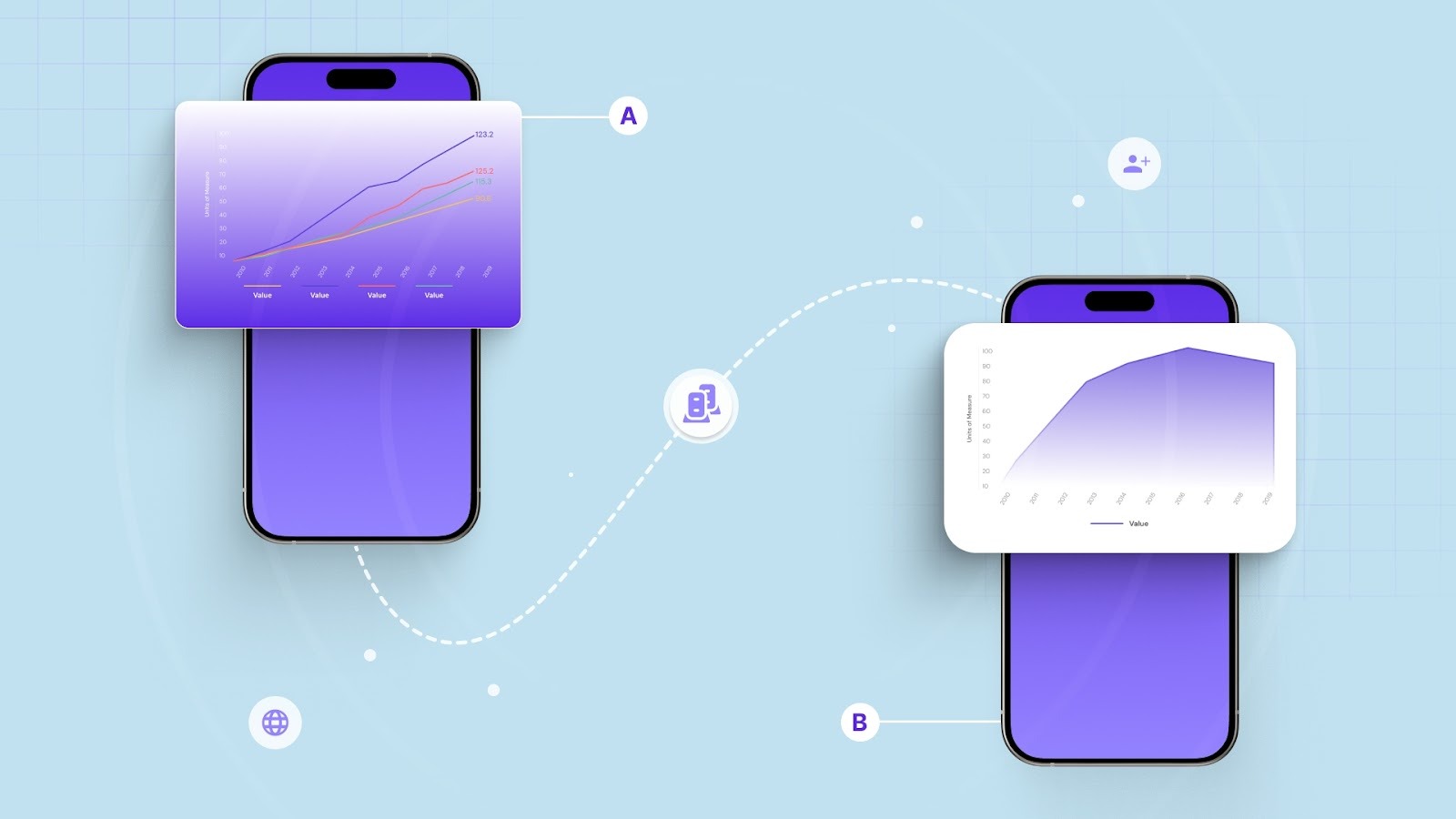
Automated testing is only as good as the data infrastructure supporting it. Modern experimentation platforms include real-time dashboards that visualize test outcomes, detect anomalies, and trigger mid-test adaptations.
For example, if a new checkout layout underperforms on mobile devices, the system can automatically redirect more traffic to competing variants while alerting marketers through anomaly detection alerts.
This closed feedback loop shortens reaction time and prevents wasted impressions, a critical edge during high-traffic seasons like Black Friday or product drops.
3. Omnichannel Testing Orchestration
A/B testing no longer lives only on the website. Automated frameworks extend across email, app, ads, and push notifications, ensuring consistent optimization across the full customer journey.
With centralized orchestration platforms, marketers can coordinate tests across channels. For instance, aligning a promotional email’s messaging with a website hero banner or mobile app pop-up.
AI systems then evaluate the combined impact across touchpoints, attributing conversions more accurately and helping brands identify where engagement truly happens.
4. Predictive Personalization and Insight Engines
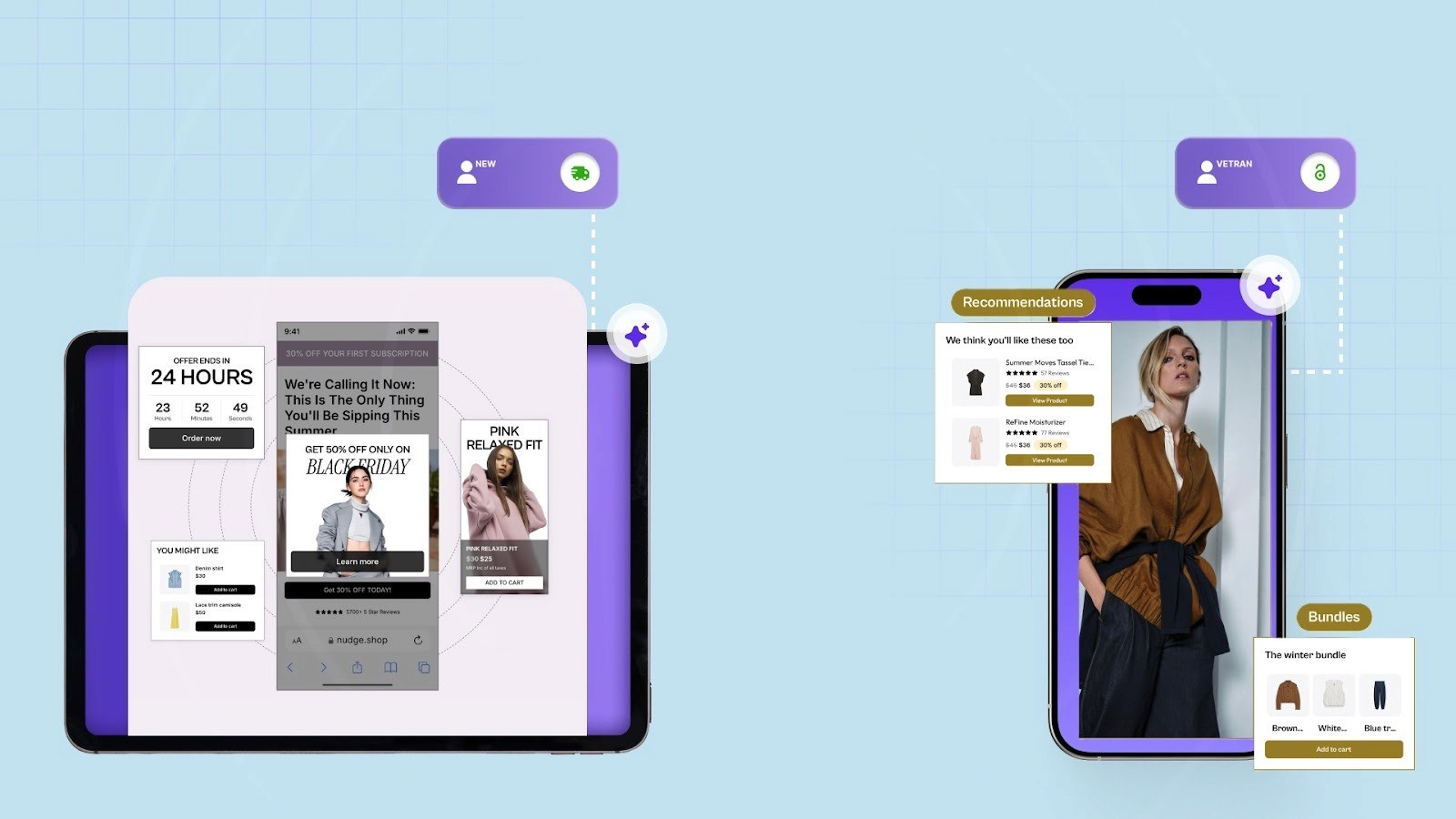
The most advanced automated A/B testing tools don’t just react to performance, they predict it. Predictive personalization systems use historical and contextual data to forecast which variants are likely to perform better for specific segments or moments.
For example, AI might predict that first-time visitors will respond better to “free shipping” offers, while loyal customers convert more on “exclusive access” prompts. These insights don’t just refine ongoing tests; they feed into future campaign design, improving ROI over time.
5. Integration with Broader Martech Ecosystems
Today’s automated experimentation doesn’t exist in isolation. The top-performing brands integrate their A/B testing stack with CRM, CDP, and analytics systems, connecting behavioral signals, purchase data, and customer feedback.
This integrated approach ensures that testing outcomes feed directly into audience segmentation, product recommendations, and retention campaigns, turning experiments into a continuous learning engine across the organization.
However, even the most sophisticated AI can’t define creative hypotheses or understand brand nuance. Automation doesn’t replace human creativity, it amplifies it.
Marketers still set the strategy, define what success looks like, and interpret the “why” behind performance shifts.
The technology simply removes manual friction, allowing creative and growth teams to focus on what they do best, building compelling experiences while AI optimizes delivery at scale.
Tools like Nudge bring these capabilities together, combining AI personalization, experimentation frameworks, and real-time automation into one ecosystem.
Also Read: What Are Customer Touch Points? {Examples Inc}

How Nudge Powers Automated A/B Testing for Smarter Campaign Decisions
In the fast-paced world of ecommerce, A/B testing is no longer a one-off task, it’s an ongoing process of continuous optimization. To keep up, brands need more than basic testing; they need AI-powered automation that adapts, scales, and learns over time. That’s exactly where Nudge comes in.
Designed specifically for ecommerce and DTC brands, Nudge uses AI and automation to make A/B testing smarter, faster, and more impactful.
Here’s how Nudge helps brands optimize campaigns in real-time:
Real-Time Experimentation Across Every Channel: Nudge uses A/B testing to optimize experiences dynamically across web, mobile, email, and on-site interactions. It runs experiments to continuously adjust content, offers, and messaging in real-time, ensuring that brands provide the most effective and relevant experiences.
AI-Powered Test Design & Intent Recognition: Nudge’s AI engine doesn’t just automate A/B tests; it enhances them by learning customer intent through behavioral signals. It designs experiments that anticipate what will resonate most with each user, whether it's discovery, urgency, or loyalty, leading to higher engagement and more effective campaigns.
Smart Segmentation and Frequency Control: Over-testing can overwhelm customers. Nudge ensures the right frequency and segmentation for each A/B test, using a data-driven approach to determine how often to test, and when, so your messaging feels relevant. The right test runs at the right time to optimize customer interactions without creating friction.
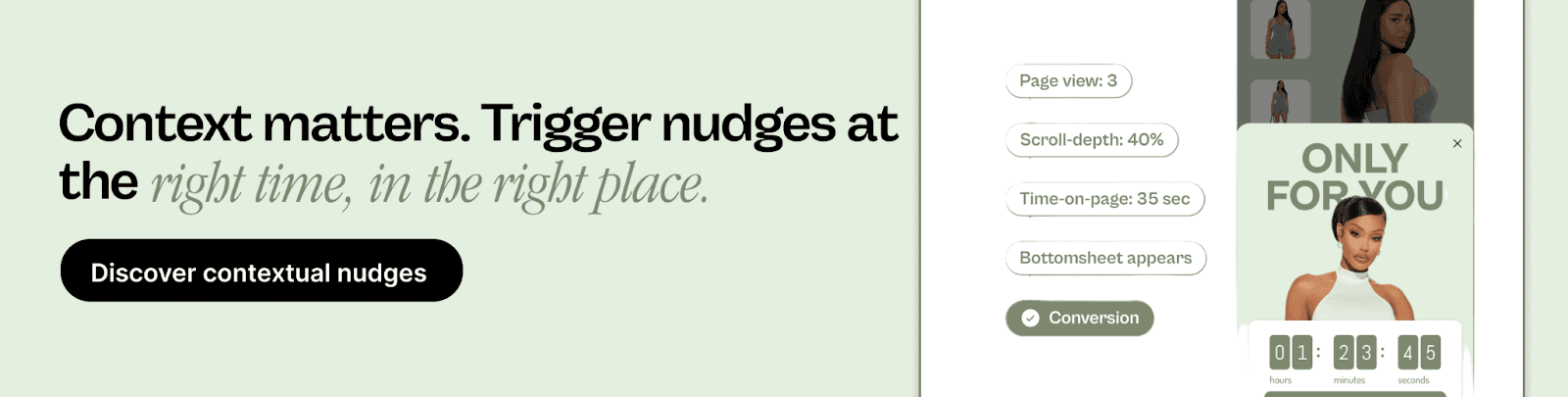
Contextual Variants that Drive Results: Nudge turns passive attention into active participation by testing and optimizing contextual elements like modals, banners, and prompts. These experiments are triggered by real-time behaviors like scroll depth, product views, or exit intent, delivering personalized test variations that encourage action at the right moment, without feeling intrusive.
Continuous Learning for Long-Term Optimization: Every A/B test interaction feeds back into Nudge’s AI to enhance personalization and testing accuracy. The more tests run, the more the system learns about customer preferences, continuously refining future experiments to improve performance across all touchpoints and ensuring that testing is always relevant, balanced, and impactful.
With Nudge’s AI-powered automated A/B testing, marketers can move beyond static, manual tests and embrace a dynamic approach that scales, adapts, and delivers smarter, data-driven results.
Book a demo to see how Nudge can help you drive smarter decisions and deliver personalized experiences that matter in 2025.
Frequently Asked Questions
1. How do heatmaps elevate your A/B testing strategy?
Heatmaps visually show where users click, scroll, and hover on different A/B test variants, revealing user behavior patterns that numbers alone miss. This helps you understand why one variant performs better and informs smarter design decisions to boost engagement and conversions.
2. How does automated A/B testing manage complex multivariate experiments across diverse customer segments efficiently?
Automated platforms use AI to dynamically segment audiences and concurrently test multiple variables. This approach intelligently allocates traffic to combinations showing early promise, enabling granular personalization insights with less manual intervention than traditional test designs.
3. What innovations in AI reduce testing duration without compromising statistical power?
Real-time monitoring algorithms adaptively modulate sample sizes and detect convergence faster using Bayesian inference and sequential testing. This allows marketers to end tests early when results hit confidence thresholds, accelerating speed-to-insight while controlling for Type I and II errors.
4. How can automated A/B testing unify cross-channel campaign data for holistic optimization?
Next-gen tools integrate data streams from websites, apps, emails, and social media, enabling cross-channel experiment tracking. Marketers gain comprehensive views of user journeys and can A/B test content, timing, and creatives cohesively, driving synchronized personalization strategies.
5. What mechanisms prevent false positives or data contamination in automated experimentation systems?
Platforms implement strict randomization, monitor traffic distribution in real time, and deploy anomaly detection to identify unusual patterns. AI-driven alerts support human oversight and help validate that experiments remain statistically sound and free from leakage.
6. How do privacy regulations shape the design of automated A/B tests?
Compliance frameworks built into platforms anonymize user data, manage consent signals, and restrict data retargeting as needed. Adaptive sampling techniques work within consent boundaries, ensuring personalization experiments respect user privacy while maintaining test validity.
7. Can machine learning models guide the selection of test variables and hypotheses in automated A/B testing?
Yes, models analyze historical experiment outcomes to identify high-impact changes and recommend next experiments. This data-driven prioritization helps teams avoid guesswork, focus effort on promising variations, and continuously optimize campaign performance.
8. How does automated A/B testing enable agile scaling for fast-moving SaaS and e-commerce businesses?
Integration with continuous deployment pipelines, parallel test execution, and real-time dashboarding empower rapid iterative testing without slowing product releases. Automated workflows free up teams for strategic analysis rather than low-level experiment management, maintaining innovation velocity.