AEO & GEO
What Is Answer Engine Optimization for Ecommerce in 2026?
Struggling to get AI to recommend your products? Learn what Answer Engine Optimization is and how it ensures your ecommerce brand is seen, trusted, and chosen.

Gaurav Rawat
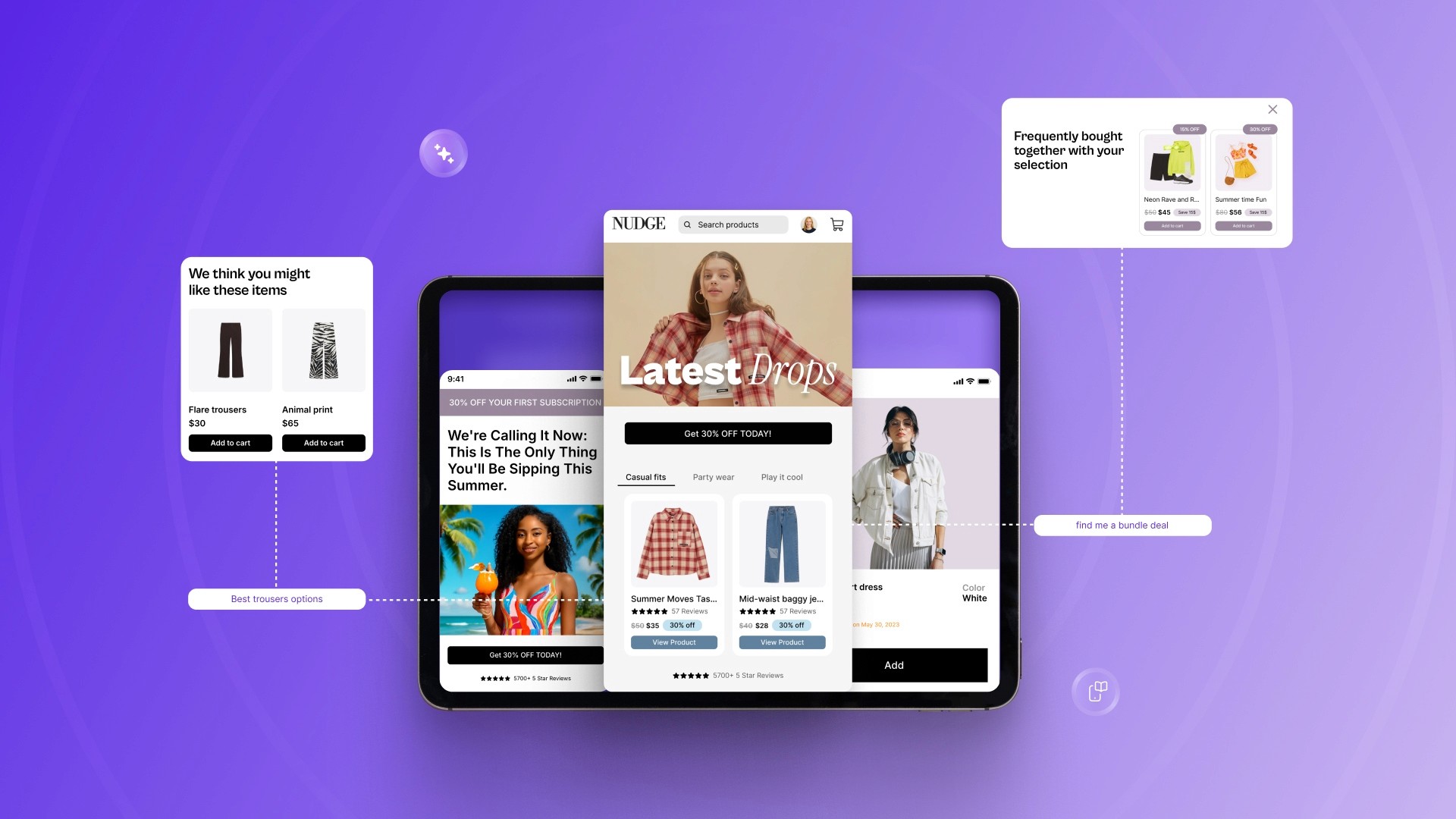





Shopping today doesn’t start with scrolling through pages of results anymore. It starts with a question. Shoppers now ask AI tools what to buy, which product fits their needs, or which brand they can trust. This shift is changing how ecommerce brands get discovered and chosen. Instead of competing for clicks, brands now compete to be the answer AI delivers.
Half of consumers use AI-powered search today, and it stands to impact $750 billion in revenue by 2028. That shift makes visibility inside AI responses just as important as ranking on search engines. If AI doesn’t clearly understand your products, they simply won’t show up when it matters.
In this blog, we’ll break down what Answer Engine Optimization is, why it matters for ecommerce, and how brands can adapt to stay visible, relevant, and chosen.
At a Glance
Answer Engine Optimization ensures ecommerce brands appear as the chosen source when AI answers shopper questions, not just on search result pages.
AEO requires structured product data, detailed use-case explanations, and clear content so AI can accurately interpret and recommend products.
Ecommerce content must prioritize decision-support, comparisons, and benefit clarity; generic, keyword-focused copy fails to influence AI recommendations.
Integrating AEO with GEO ensures brands are both selected by AI and framed effectively in responses, shaping perception and purchase decisions.
Tools like Nudge help track AI visibility, connect discovery to purchase, and optimize product pages for consistent presence and trust across AI surfaces.
What Is Answer Engine Optimization?
Answer Engine Optimization is the practice of structuring ecommerce content, product data, and on-site experiences so AI systems can confidently select your brand as the answer to a shopper’s question. In 2026, this goes far beyond ranking pages; it’s about being the source AI uses when shoppers ask, “Which product should I buy?” or “What’s the best option for my needs?”
For ecommerce brands, AEO means optimizing product pages, category logic, comparisons, and brand context. AI models can then understand intent, evaluate relevance, and surface your products as the most trustworthy choice. If your store isn’t built for AI interpretation, it simply won’t appear in the buying conversation, no matter how strong your SEO once was.
How AEO Differs From Traditional SEO?
In 2026, ecommerce brands face a new challenge: AI assistants answer shopper questions directly, bypassing search results. Ranking alone no longer guarantees visibility or influence in purchase decisions. AEO differs from traditional seo in the following way:
Aspect | Answer Engine Optimization (AEO) | Traditional SEO |
Primary Goal | Ensure AI understands your products to confidently recommend them in answers. | Rank higher in search results for specific keywords. |
Focus | Product benefits, use cases, and catalog context for accurate AI recommendations. | Keywords, meta tags, backlinks, and on-page optimization. |
User Impact | Shoppers see your brand in AI-generated answers before visiting your site, influencing decisions early. | Shoppers discover your site after searching; engagement depends on clicks. |
Success Metrics | AI mentions, recommendation frequency, and conversions driven by AI-assisted discovery. | Page rank, organic traffic, and click-through rate. |
Now that we’ve clarified how AEO differs from SEO, let’s check why it has become essential for ecommerce brands.
Why AEO Matters More Than Ever for Ecommerce?
Ecommerce brands have to stay a step ahead now so their brand can be the exact answer shoppers ask for. AEO also matters for ecommerce brands because:
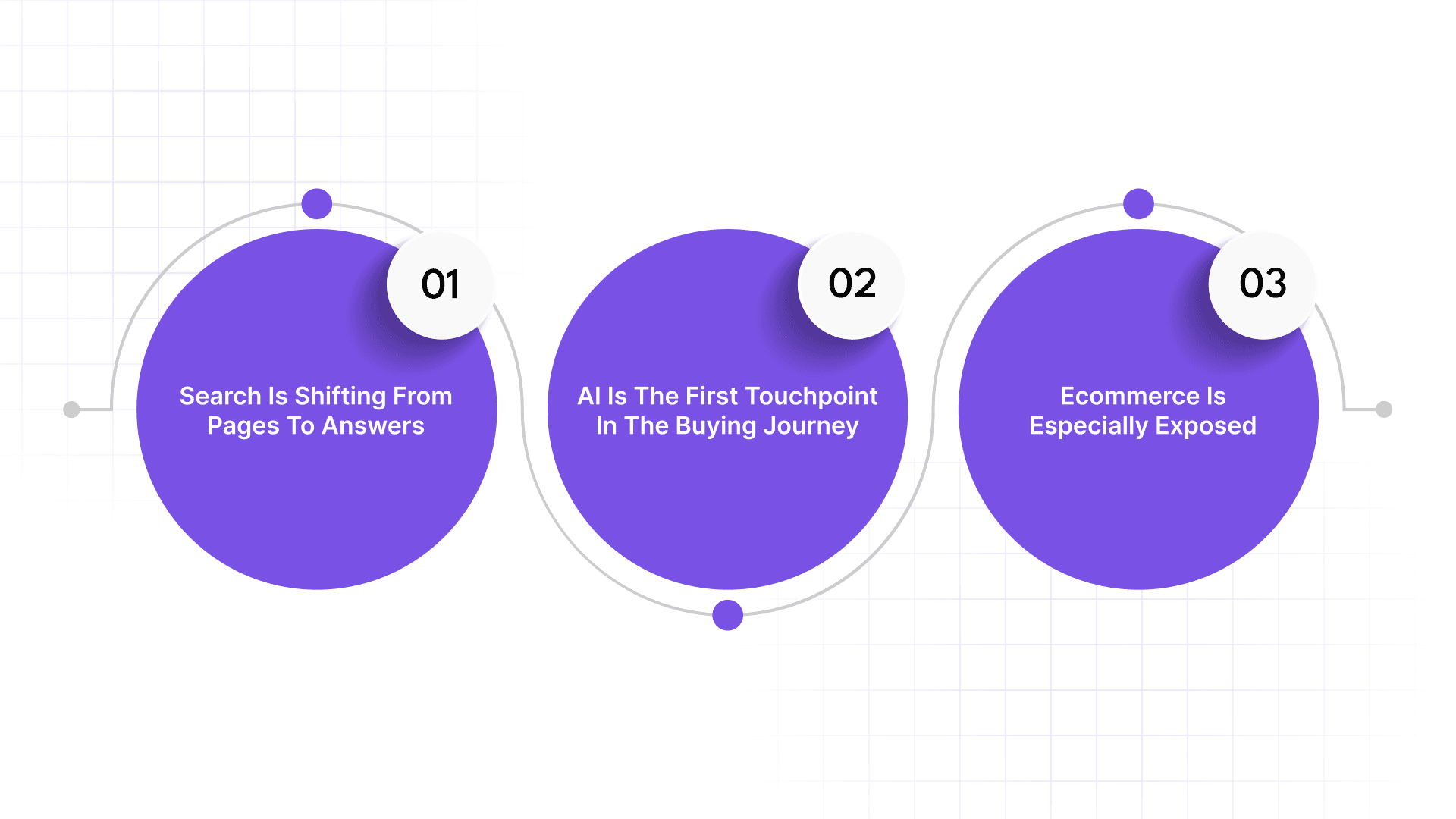
1. Search Is Shifting From Pages to Answers
Shoppers no longer scroll through search results. AI synthesizes product comparisons and recommendations directly, meaning only brands with structured content, detailed specifications, and use-case explanations appear in consideration sets.
2. AI Is Becoming the First Touchpoint in the Buying Journey
Consumers ask AI precise questions: “Which laptop handles video editing and gaming efficiently?” Brands that lack clear product context and comparison data miss being recommended early in the funnel.
3. Ecommerce Is Especially Exposed
AI influences discovery, validation, and checkout decisions. Without optimized product descriptions, inventory signals, and structured categories, brands risk being excluded from AI responses, losing trust and sales opportunities before engagement occurs.
Having explored why AEO is essential for ecommerce visibility, up next, we’ll examine how answer engines work in ecommerce.
How Answer Engines Actually Work?
AI answer engines determine which ecommerce and DTC brands shoppers see first. Understanding this process helps brands structure content across landing pages, PDPs, PLPs, shopping bags, and checkout to ensure visibility, trust, and conversions.
1. Intent Interpretation
AI identifies the shopper’s intent, whether it’s product comparisons, feature specifications, or best-in-category recommendations. Ecommerce brands that provide precise use-case content across their DTC funnels are more likely to appear in AI-generated responses.
2. Content Retrieval
Answer engines pull from product pages, category pages, FAQs, and support content containing complete specifications, pricing, and variant information. Structured data and consistent catalog hierarchy across Homepages, PLPs, PDPs, and shopping bags improve AI selection.

3. Contextual Reasoning
AI evaluates content depth, clarity of feature-to-benefit mapping, brand consistency, and inventory accuracy. DTC ecommerce stores demonstrating authority and reliable product data across every shopper touchpoint are prioritized in AI recommendations.
4. Answer Generation
AI synthesizes information into concise, actionable responses, often bypassing traditional search results. Brands with structured, authoritative content across their full ecommerce funnel appear more frequently in AI-powered answers.
With a clear understanding of how answer engines operate, let’s now explore where AEO actually appears across AI surfaces and how ecommerce brands can maximize visibility.
Where AEO Actually Shows Up on AI Surfaces?
In 2026, ecommerce brands must appear across all AI surfaces. Visibility depends on consistent product data, structured content, and authoritative signals in every AI-driven environment.
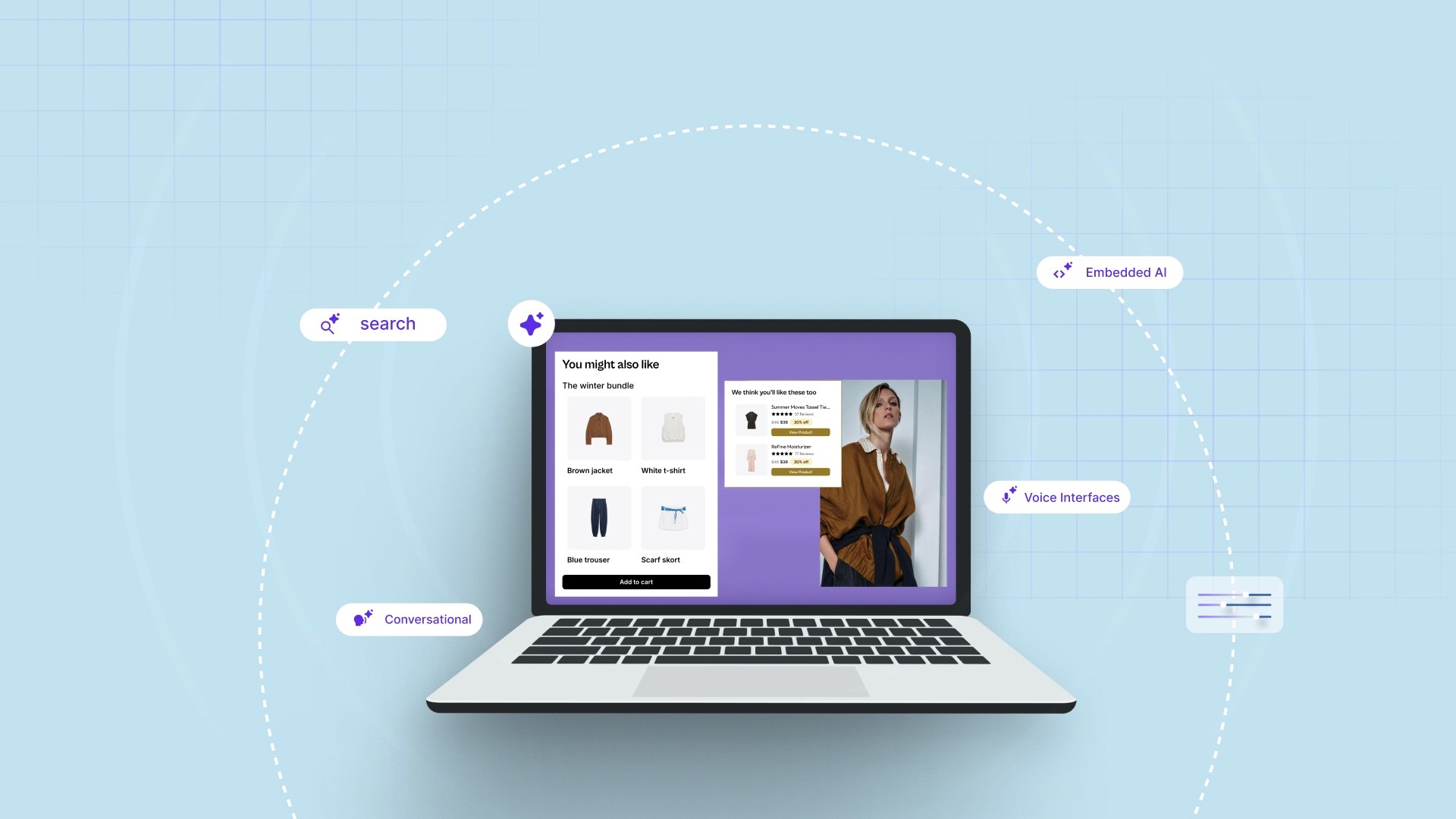
1. Search AI
Platforms like Google AI Overviews and Bing Copilot summarize product comparisons and recommendations directly in search results. Brands with structured schema and complete product data get featured prominently.
2. Conversational AI
ChatGPT, Claude, and Perplexity answer shopper questions about products, features, and pricing. Ecommerce brands with clear, authoritative catalogs are more likely to appear in recommendations.
3. Voice Interfaces
Alexa, Siri, and Google Assistant prioritize structured product information, real-time inventory, and clear specifications to respond accurately to voice queries from potential buyers.
4. Embedded AI
Browsers, shopping apps, and operating system assistants surface product suggestions and comparisons before users visit a website. Consistent, authoritative content ensures inclusion across all embedded AI touchpoints.
With AEO appearing across search, conversational, voice, and embedded AI surfaces, ecommerce brands must rethink their content strategy. Products need to be consistently visible, trusted, and recommended everywhere.
Also Read: 10 Proven Tactics to Boost AI Search Visibility in 2026
Why Ecommerce Brands Must Rethink Content for AEO?
As AI reshapes how shoppers discover products, ecommerce content must scale beyond traditional SEO tactics. Focus on:
Move Beyond Keyword-Driven Content: Thin or keyword-stuffed pages fail AI evaluation. Use structured details, clear use cases, and benefit-driven explanations.
Explain, Don’t Promote: Explain how products solve problems, who should use them, and why they outperform alternatives. Avoid vague claims or marketing hype.
Enable Faster Buyer Decisions: Help shoppers make choices with comparisons, trade-offs, and key benefits so AI can confidently recommend your brand.
With AI prioritizing clarity and context over keywords, ecommerce brands must rethink how their content is structured. Next, we’ll explore the core pillars that make AEO effective.
Core Pillars of AEO for Ecommerce
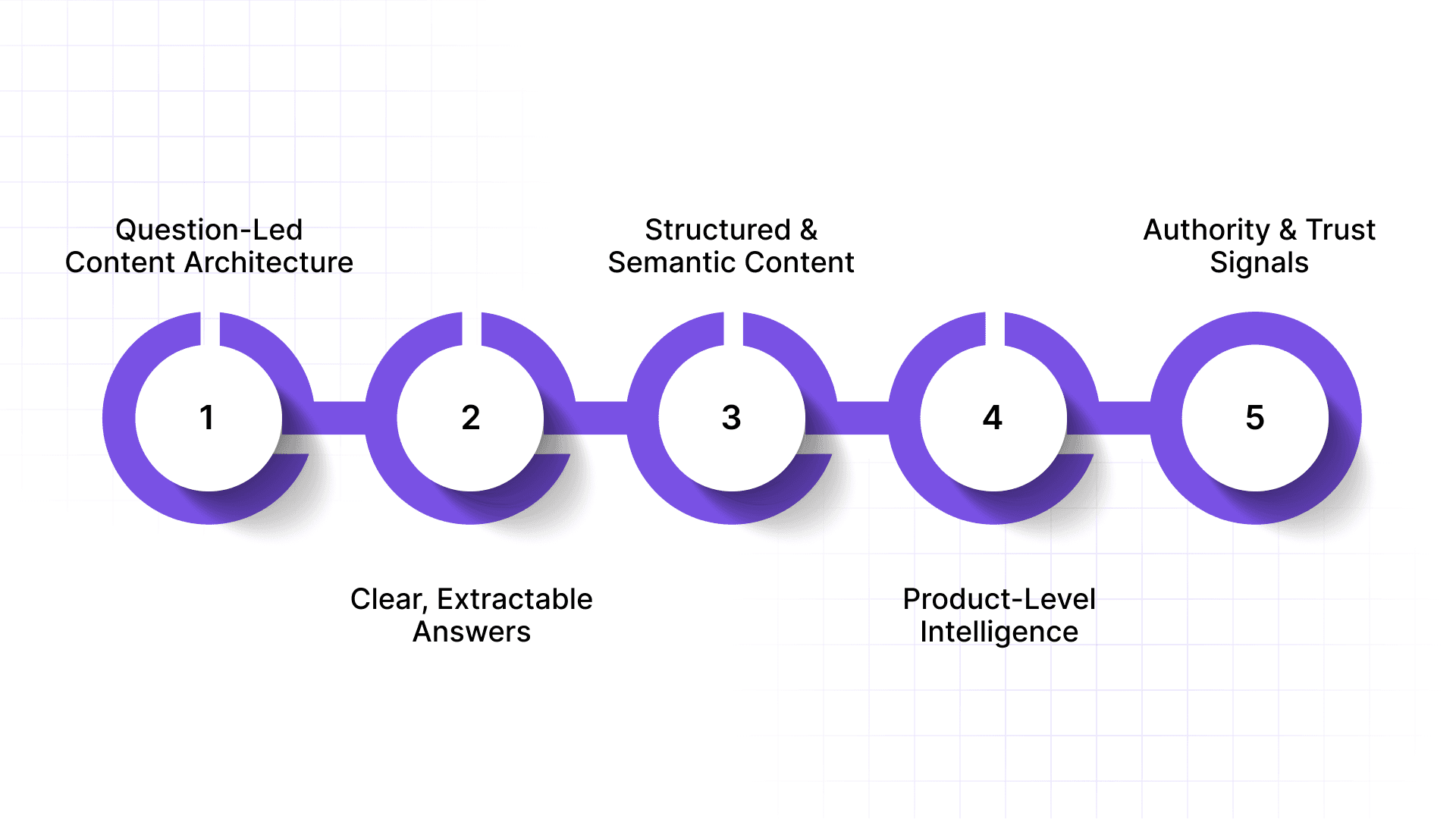
Building a strong AEO foundation requires ecommerce sites to structure content, products, and signals around buyer questions and AI-friendly clarity for maximum visibility:
Question-Led Content Architecture: Map every key page to real ecommerce buyer questions, including product comparisons, use cases, and decision-making queries, not just generic search keywords.
Clear, Extractable Answers: Lead each content section with concise, direct answers, then expand with context, examples, and product-specific details for AI comprehension.
Structured and Semantic Content: Use consistent headings, logical hierarchy, and structured schema so AI can interpret relationships between categories, products, features, and customer intent accurately.
Product-Level Intelligence: PDPs should include clear use cases, feature-to-benefit explanations, comparisons, and FAQs that resolve customer doubts and guide informed purchase decisions.
Authority and Trust Signals: Demonstrate depth, accuracy, and consistent internal information across your ecommerce site to signal credibility and reliability to AI systems effectively.
With these core pillars in place, ecommerce brands create AI-friendly content foundations. However, it is equally important to learn e-commerce-specific signals that ensure products are accurately recommended and trusted.
E-commerce-Specific AEO Signals on Critical Layer
AI systems evaluate ecommerce sites using detailed signals beyond content alone to determine whether a brand is trustworthy enough to appear in direct answers. These signals include:
Clearly Defined Product Attributes: Every product must list precise specifications, dimensions, materials, and use cases so AI can confidently compare and recommend.
Consistent Naming Across Pages: Product titles, category labels, and variant names should match exactly across all pages for AI to recognize and differentiate offerings.
Structured Pricing, Availability, and Variants: Clearly formatted pricing, stock levels, and variant options help AI identify the correct product for each shopper query.
Authentic Reviews and Social Proof: Verified customer ratings, testimonials, and usage examples signal reliability and increase AI confidence in recommending the product.
Reliable Inventory and Fulfillment Information: Up-to-date inventory status, shipping options, and delivery times ensure AI can accurately suggest available products to users.
These ecommerce-specific signals allow AI to distinguish dependable brands from others, directly influencing which products are recommended in answers. With these signals defined, the next step is building a comprehensive strategy that ensures every product and page is optimized for AI answers.

How to Build an AEO-Ready Ecommerce Strategy?
To win in ecommerce, brands must systematically structure content, pages, and product data. Here are the steps to take to build an AEO-ready e-commerce strategy:
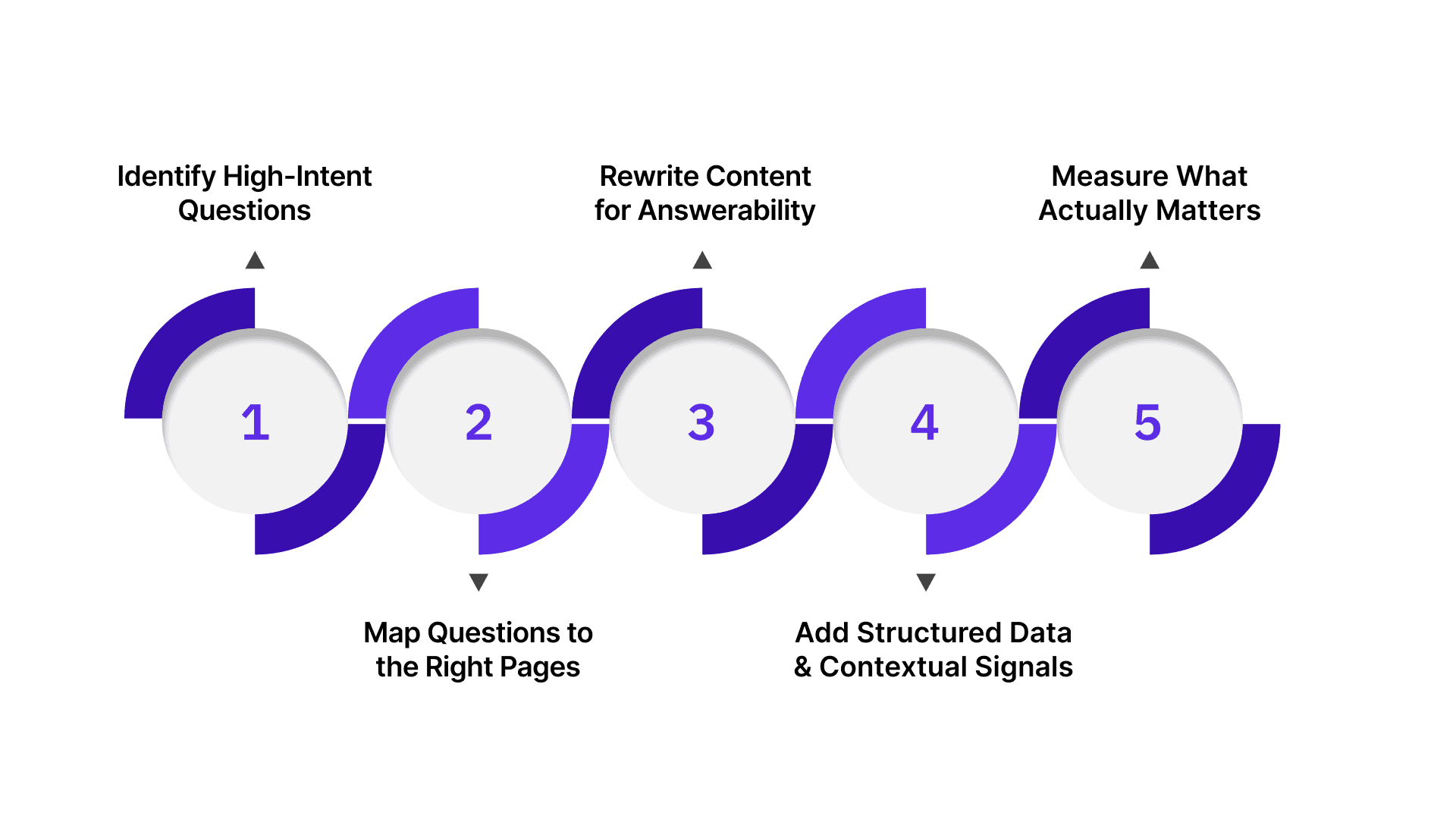
Step 1: Identify High-Intent Questions Across the Funnel
Capture exactly what shoppers are asking at every stage of the buying journey. AI surfaces your brand only when content aligns with real intent.
Key Actions to Implement:
Map questions across awareness, consideration, purchase, and post-purchase
Focus on comparisons, product fit, and benefits
Use reviews, chat logs, and search data to uncover gaps
Align content with shopper intent and AI relevance
Step 2: Map Questions to the Right Pages
Ensure every high-intent query is answered on the page best equipped to convert. Homepages introduce discovery, category pages compare options, PDPs explain features, and support pages drive post-purchase confidence.
Key Actions to Implement:
Align discovery questions to homepage messaging
Use category pages for feature or brand comparisons
Optimize PDPs for specific product use cases
Ensure support pages answer post-purchase concerns clearly
Step 3: Rewrite Content for Answerability
Create content that starts with direct answers, then expands into detailed explanations. Avoid marketing jargon. Focus on use cases, comparisons, and benefits so AI can confidently recommend your products.
Key Actions to Implement:
Begin with a concise answer to the question
Expand with examples, use cases, and FAQs
Highlight key differences between similar products
Remove promotional fluff that doesn’t aid decision-making
Step 4: Add Structured Data and Contextual Signals
Use schema markup, headings, and internal linking to clarify relationships between products, features, and categories. Contextual signals make your pages machine-readable and trustworthy for AI systems.
Key Actions to Implement:
Implement schema for products, reviews, and offers
Use consistent headings and terminology
Link related products and categories internally
Include inventory, pricing, and variant data clearly
Step 5: Measure What Actually Matters
Track outcomes that reflect AI influence, not just clicks. Measure visibility in AI answers, assisted conversions from AI recommendations, and brand mentions across generative and conversational platforms.
Key Actions to Implement:
Monitor citations in AI-generated responses
Track conversions assisted by AI interactions
Measure brand mentions on chat and voice interfaces
Use AI analytics tools to detect gaps and opportunities
With AEO steps optimized, ecommerce brands can easily ensure AI selects their products as answers. Up next, we’ll learn the difference between AEO and GEO (Generative Engine Optimization).
AEO vs GEO: The Key Difference
Although AEO and GEO work together to boost AI-driven search visibility, they serve distinct purposes: one ensures selection, while the other shapes how answers are presented. Let’s understand that through a table below:
Aspect | AEO | GEO |
Primary Goal | Ensure AI selects your product or brand as the most relevant answer to a shopper’s query. | Influence how AI structures, formats, and presents your answer within generated responses. |
Focus Area | Product clarity, content depth, structured data, and authority signals across pages. | Prompt design, content framing, contextual cues, and alignment with AI training patterns. |
Measurement Metrics | Visibility in AI answers, citations in generative outputs, and assisted conversions. | Consistency of messaging, positioning in multi-source outputs, and clarity of intent interpretation. |
Ecommerce Impact | Increases the chance your brand is mentioned, recommended, or summarized for shoppers. | Shapes how AI communicates your product’s value, features, and differentiators effectively. |
Distinguishing between AEO and GEO is essential, but missteps happen. Now, we’ll review the recurring errors ecommerce brands make in answering engine optimization.
Common AEO Mistakes Ecommerce Brands Make
Even the most data-driven ecommerce teams can go wrong. Misaligned content, incomplete product signals, or measuring the wrong metrics can prevent AI from surfacing your products across every touchpoint, from landing pages to checkout.
1. Treating AEO as a Technical Checklist
Focusing only on structured data, meta tags, or keywords ignores AI’s need for clear product answers, use-case explanations, and decision-support content. Without context-rich content, products won’t be selected or recommended in AI responses.
2. Publishing Content Without Depth or Clarity
Generic category pages and vague descriptions fail to differentiate products. AI favors detailed comparisons, benefit explanations, and real-world use cases that guide shopper decisions effectively.
3. Ignoring Product-Level Structure and Signals
Incomplete PDPs, missing feature-to-benefit mapping, specs, reviews, or inventory data, reduce AI trust. Structuring every product page ensures recommendations and AI-driven purchase paths are accurate and actionable.
4. Measuring Only Traffic Metrics
Clicks and pageviews don’t capture AI influence. True AEO success comes from citations in generative responses, assisted conversions, and brand mentions across conversational and voice interfaces.
Implementing AEO avoids these pitfalls and positions your ecommerce brand for AI-driven influence. Up next, let’s explore how Nudge can help ecommerce brands with AEO.
Also Read: 10 Proven Tactics to Increase AI Search Visibility in 2026
How Nudge Supports Ecommerce Brands in AEO?
Nudge helps ecommerce and DTC brands ensure every shopper journey, from landing to checkout, is personalized and optimized for AI-driven discovery. By tracking shopper behavior, ad context, source, location, and past interactions, Nudge ensures products are accurately surfaced, explained, and recommended across AI surfaces.
It bridges AI discovery with conversion paths, dynamically adapting every touchpoint to shopper intent, and turning insights into actionable, high-performing experiences.
Key Features of Nudge:
AI Search Visibility: Monitors which products AI surfaces, highlighting gaps and optimization opportunities in real time.
Shoppable Funnels: Converts AI-driven discovery into simplified purchase paths aligned with shopper intent.
Product Experiences: Enhances product pages with adaptive recommendations, FAQs, and contextual nudges to improve AI interpretation.
With Nudge, ecommerce brands maintain a consistent presence, trust, and influence across generative and conversational AI surfaces.

Conclusion
Answer Engine Optimization is the future of ecommerce discoverability. Structuring your content, product data, and brand signals ensures AI systems consistently select, interpret, and recommend your products, giving your brand unmatched influence across the buying journey.
Nudge takes this a step further by providing real-time AI search visibility, connecting discovery to purchase through shoppable funnels, and enriching product pages with adaptive recommendations. It helps ecommerce brands transform insights into action, ensuring they are accurately represented, trusted, and chosen across all AI-driven surfaces.
So, don’t let your products go unseen. Book a demo with Nudge today to dominate AI-driven discovery and drive measurable growth across every touchpoint in your ecommerce funnel.
FAQs
1. How does AEO impact post-purchase engagement and support?
AEO enables AI to surface relevant post-purchase information, including FAQs, troubleshooting, warranty, and product care. This improves customer confidence, resolves issues faster, and increases repeat engagement and long-term brand trust across AI-driven channels.
2. Can small ecommerce stores benefit from AEO, or is it only for large brands?
Yes. Small ecommerce stores can use AEO by providing structured product data, clear comparisons, and detailed use-case content. AI can then recognize, recommend, and surface their products alongside larger competitors, leveling the discovery playing field.
3. How do product reviews influence AI recommendations in AEO?
Structured and authentic product reviews provide AI with signals of trust and credibility. Positive, detailed reviews improve the likelihood of products appearing in answers while helping address common customer questions and comparison needs.
4. How frequently should ecommerce brands update content for AEO?
Ecommerce brands should review and refresh product descriptions, comparisons, FAQs, and structured data regularly. Frequent updates ensure AI recommendations reflect accurate information, inventory, and trends, maintaining relevance across conversational, search, and voice AI surfaces.