CRO & Experimentation
The Ultimate Guide to Conversion Analysis for Ecommerce Brands
Boost business growth with effective conversion analysis. Learn key metrics, conversion rate optimization, and practical strategies. Start improving your user engagement now!

Gaurav Rawat






Every click, scroll, and interaction on an ecommerce site provides insights into shopper behavior. Yet studies show the average ecommerce conversion rate is only 2.5% or higher. Many ecommerce and DTC brands struggle with low engagement abandoned carts, and missed sales because they fail to understand how visitors move through their site.
One solution to this challenge is conversion analysis, which maps user journeys, identifies friction points, and tracks key metrics like micro-actions, funnel progression, and repeat visits. By applying these insights, brands can optimize landing pages, product pages, category listings, carts, and checkout flows.
The result is a personalized shopping experience that guides visitors toward meaningful actions, boosts conversions, and increases repeat purchases. In this article, we explore how conversion analysis can help ecommerce brands improve engagement, sales, and long-term customer loyalty.
Key Takeaways
Conversion analysis identifies where users drop off and why, providing a roadmap to optimize each stage of the shopping journey.
Real-time insights allow brands like Target, Sephora, and L’Oreal to improve user experience and increase completed orders.
Personalized experiences, such as targeted recommendations and contextual nudges, guide visitors toward purchase.
Tracking metrics like stage-wise conversion, cart abandonment, and micro-conversions highlights opportunities for optimization.
Continuous monitoring ensures your ecommerce site adapts to changing shopper behavior, driving higher conversions and revenue.
What Is Conversion Analysis in Ecommerce?
Conversion analysis is more than tracking numbers. It acts as a performance engine for e-commerce brands, helping turn website traffic into measurable outcomes such as purchases, sign-ups, or other key actions.
By examining visitor behavior across landing pages, product pages, carts, and checkout, conversion analysis identifies friction points, highlights opportunities, and provides actionable insights to improve performance.
This data-driven approach ensures that every element of your site, from CTAs to checkout flows, is designed to increase engagement and drive conversions.
Who Benefits Most from Conversion Analysis?
E-commerce Marketers and Growth Managers: Focus on improving acquisition and conversion by analyzing campaigns, reducing drop-offs, and increasing ROI.
Lifecycle and Retention Teams: Enhance post-click engagement by tailoring experiences to different stages of the customer journey.
UX and Conversion Specialists: Optimize product pages, carts, and checkout flows to remove friction and guide visitors toward purchase.
Product Managers and Designers: Support marketing teams with insights to improve usability and page performance.
With Nudge, you can apply conversion analysis insights across landing pages, product pages, carts, and checkout flows. AI-driven recommendations, contextual nudges, and personalized upsell bundles based on cart contents and purchase history help increase average order value and conversions.

Also Read: How Nudge’s Behavioral Nudges Enhance E-commerce Conversions
After understanding beneficiaries, the next question comes is why it is important for ecommecre.
Why Conversion Analysis Matters in Ecommerce?
Tracking visitors is not enough. Shoppers make quick decisions, and without understanding their journey, brands risk losing potential revenue. Conversion analysis ensures that every interaction contributes to business goals and maximizes ROI.
Maximize ROI on Every Visit: Each visitor interaction, from product views to add-to-cart actions, drives revenue when optimized.
Reduce Drop-Offs: Identify and fix friction points to keep shoppers engaged and guide them to purchase.
Increase Conversion rates: Small improvements in CTAs, product recommendations, or checkout flows can significantly boost sales.
Lower Customer Acquisition Costs: Better conversions from the same traffic reduce marketing spend and improve efficiency.
Create a Seamless User Experience: Optimized flows guide visitors smoothly from discovery to checkout, ensuring satisfaction and repeat purchases.
Next, let’s look at the strategic steps ecommerce brands can follow to implement conversion analysis effectively.
Strategic Steps to Implement Conversion Analysis
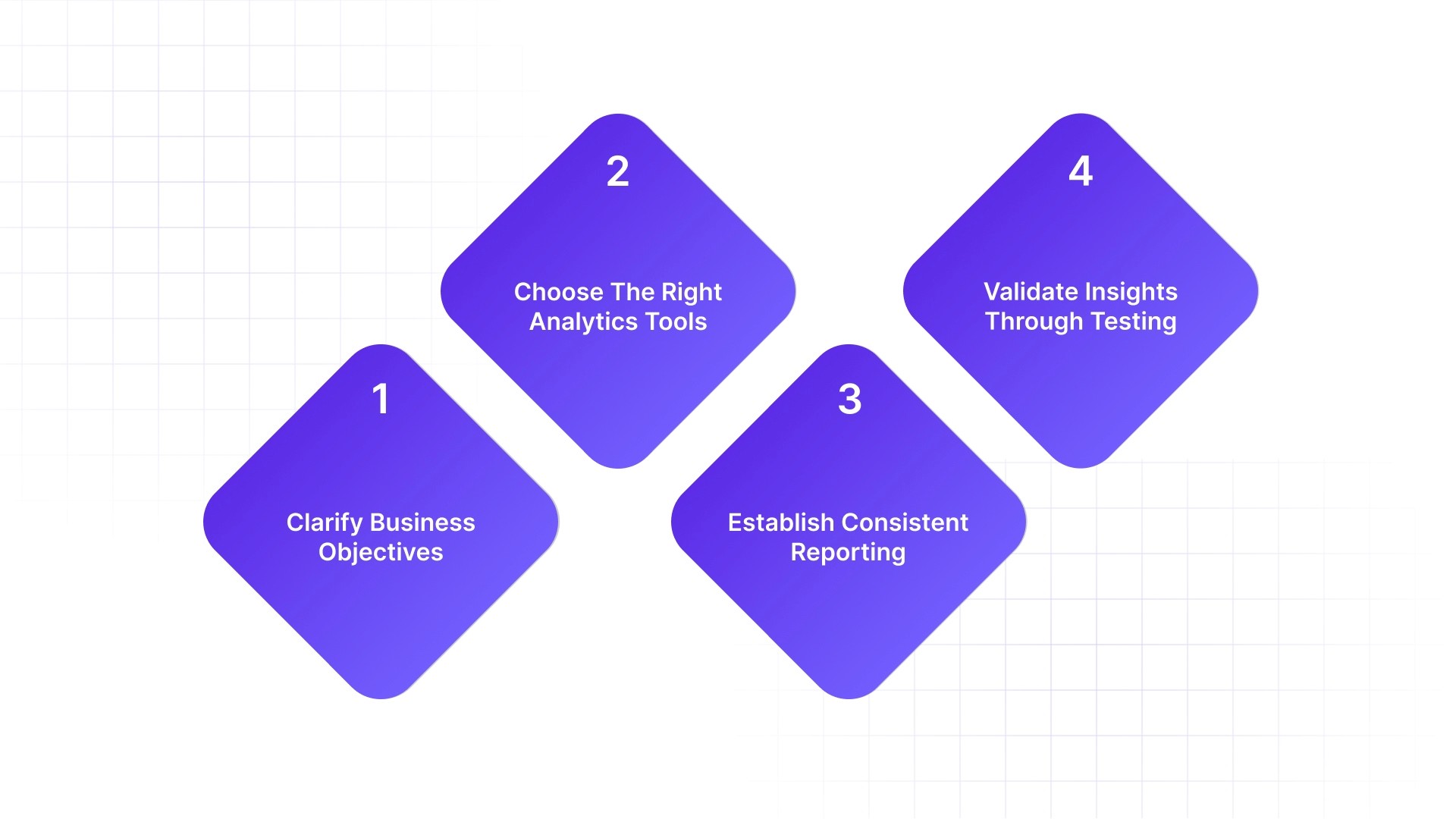
Conversion analysis helps e-commerce and DTC brands turn data into actions that improve engagement, reduce drop-offs, and drive revenue. Here’s how high-growth brands can implement it effectively:
Step 1: Clarify Business Objectives
Define the conversions that matter most for your brand, whether it’s a purchase, signup, or engagement metric.
For example, a grocery delivery brand like Instacart may track completed orders as the key conversion, while a fashion and apparel brand like Zara might focus on adding items to the cart as a micro-conversion to guide later purchases.
Step 2: Choose the Right Analytics Tools
Combine quantitative analytics, like Google Analytics, with qualitative tools, such as Hotjar, to capture user behavior.
A beauty and personal care brand like Sephora could use heatmaps to see which product categories attract the most attention, while monitoring cart abandonment to identify friction points during checkout.
Step 3: Establish Consistent Reporting
Track and segment data by traffic source, device, or marketing campaign. Retail brands like Amazon can monitor mobile versus desktop performance to optimize user actions for different devices, while analyzing the effectiveness of promotional campaigns on conversion rates.
Step 4: Validate Insights Through Testing
Conduct A/B testing, usability studies, or customer surveys to confirm hypotheses. A fashion brand like H&M could test different “Complete the Look” popups to increase cross-sell conversions, or gather shopper feedback on checkout flow issues to reduce drop-offs.
After following these steps, brands can improve brand loyalty and can adopt best practices while staying aware of common challenges.
Best Practices and Challenges in Conversion Analysis
Recognizing these challenges helps ecommerce brands prioritize improvements, optimize shopper journeys, and boost conversions across all touchpoints.
Aspect | Best Practices | Common Challenges |
Define Conversions | Set clear goals like purchase, signup, or add-to-cart events. Track both major and micro-conversions. | Unclear metrics or ignoring small actions like newsletter signups. |
Data Collection | Combine quantitative and qualitative tools: Google Analytics, Hotjar, Nudge for AI-driven insights. | Fragmented data or lack of integration across platforms. |
Segmentation & Reporting | Segment by traffic source, device, geography, or campaign. Generate regular trend reports. | Overwhelming unsegmented data, making insights hard to act on. |
Testing & Validation | Run A/B tests, usability studies, and surveys. Test CTAs, landing pages, checkout flows, and recommendations. | Limited testing resources or ignoring real-time shopper behavior. |
Optimization & Action | Adjust product recommendations, page layouts, and CTAs. Use Nudge for AI-driven personalization. | Delayed implementation or generic changes that don’t reflect shopper intent. |
Continuous Improvement | Monitor KPIs regularly and refine strategies based on trends and shopper behavior. | One-off analysis instead of ongoing optimization, leading to stagnant conversions. |
Dynamic Price | Adjust recommendations, promotions, and inventory-related nudges in real-time to reflect current availability. | Rapid changes in pricing or inventory can misalign personalization and reduce conversions. |
SKU-Level Segmentation Complexity | Use AI-driven segmentation tools to handle large SKU catalogs and create precise targeting. | Thousands of individual SKUs make segmentation difficult, increasing the risk of irrelevant recommendations. |
Seasonal or Campaign-Driven Cohort Volatility | Adapt campaigns and segments dynamically to seasonal trends or campaign-driven changes in user behavior. | Rapid shifts in shopper behavior during holidays, sales, or campaigns can make static segments obsolete, reducing engagement and revenue. |
Also Read: Why Calculating Customer Retention Rate is Critical for Your Business
Next, let’s explore the testing methods that transform analysis into actionable improvements.
4 Conversion Testing Methods for Effective Conversion Analysis
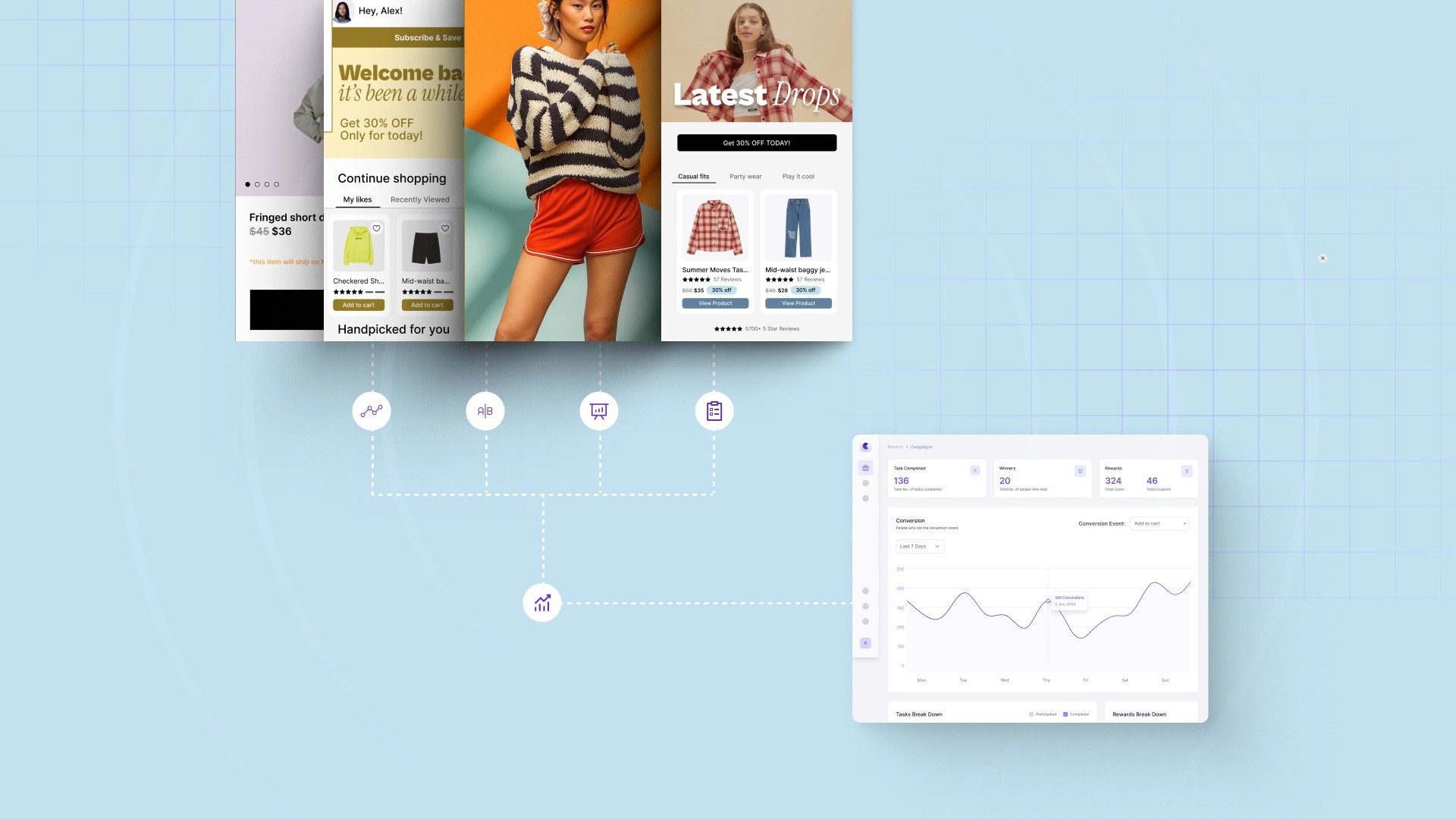
To get the most out of conversion analysis, it’s essential to test and understand how visitors interact with your site. The right methods help identify friction, improve engagement, and increase conversions.
1. Usability Testing
Observe how shoppers navigate your site to pinpoint obstacles in the journey. Identify confusing layouts, broken links, or complex checkout steps, like with Zappos simplifying its product filtering to reduce drop-offs and make browsing easier.
2. A/B Testing
Compare different versions of pages, calls-to-action, or offers to see which drives better results. Use data-backed decisions to improve conversion rates, for instance, Glossier tests different “Add to Cart” button colors and placement to increase purchases.
3. Heatmap Analysis
Visualize where visitors click, scroll, and spend time on your pages. Heatmaps reveal which elements grab attention, including how Nike tracks clicks on promotional banners versus product grids to optimize content placement.
4. Customer Surveys
Gather direct feedback to understand shopper intent, preferences, and pain points. These insights complement behavioral data, like Sephora collecting post-purchase feedback to improve product recommendations and checkout experiences.
Also Read: How to Start Onsite Personalization That Actually Drives Conversions
By combining these testing methods with Nudge, you can turn conversion analysis insights into actionable improvements. AI-driven recommendations, contextual nudges, and real-time personalization allow you to optimize landing pages, product pages, carts, and checkout flows for every visitor.
Top 5 Conversion Analysis Tools for E-commerce
Choosing the right conversion analysis tool can make a major difference in how your e-commerce pages perform. The right platform helps you understand visitor behavior, spot friction points, and optimize every interaction to drive conversions and revenue.
Below are the top 5 tools that stand out for their capabilities, ease of use, and measurable impact on e-commerce performance.
1. Nudge
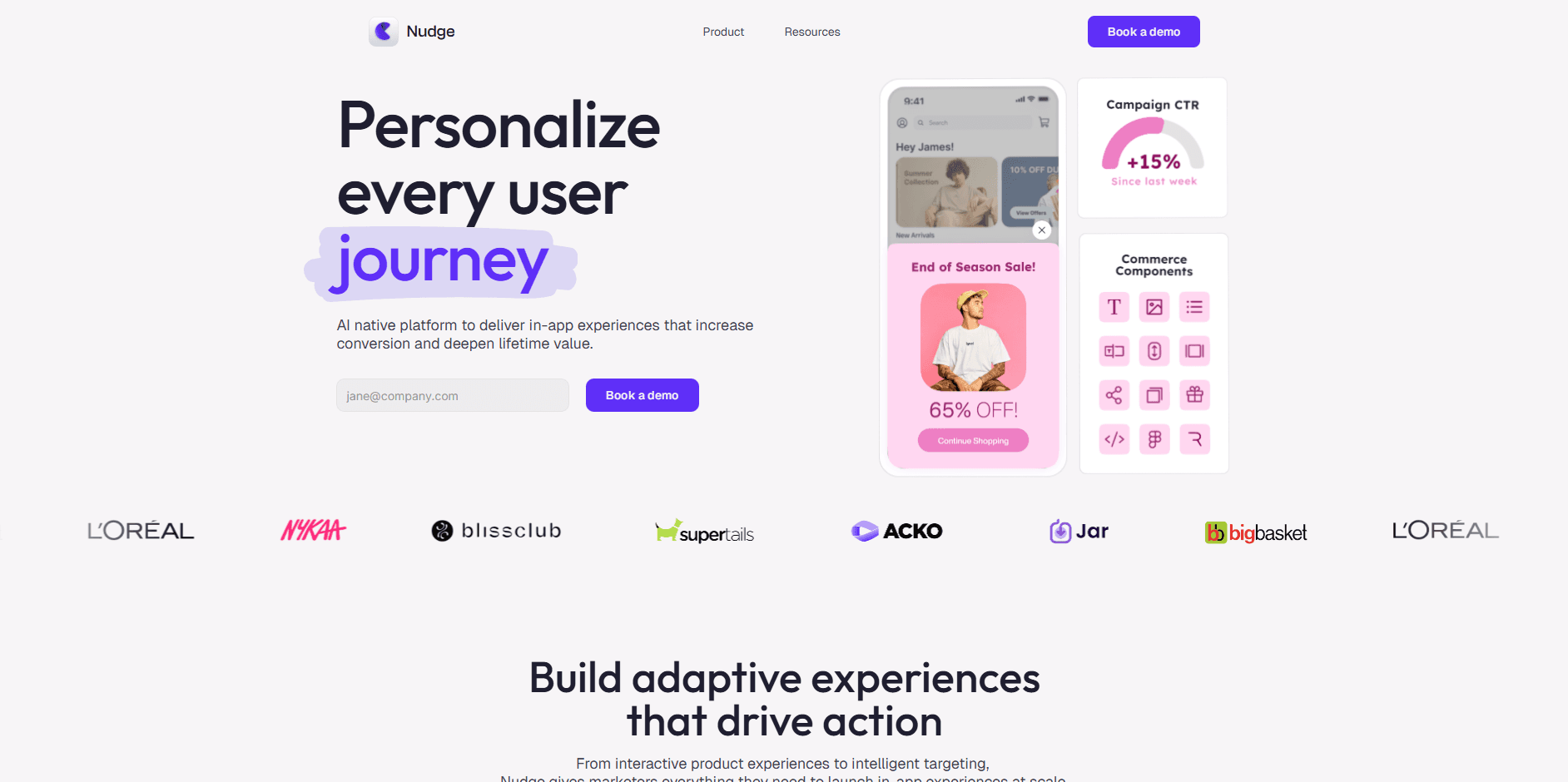
One standout tool is Nudge. It is an AI-powered platform that turns conversion insights into immediate action. It allows brands to personalize landing pages, product pages, carts, and checkout flows with contextual nudges, product recommendations, and dynamic content. Real-time analytics show which campaigns and segments are performing best, enabling teams to continuously refine experiences.
Nudge’s seamless integration with existing marketing and analytics tools makes it easy to optimize conversions without relying on developers.

2. Hotjar
Hotjar is ideal for understanding how visitors interact with your site. Heatmaps visualize clicks, taps, and scroll behavior, while session recordings show the full journey of individual users.
Feedback polls and surveys help collect qualitative insights directly from shoppers. By combining quantitative and qualitative data, Hotjar empowers brands to identify problem areas, test solutions, and increase conversions.
3. Crazy Egg
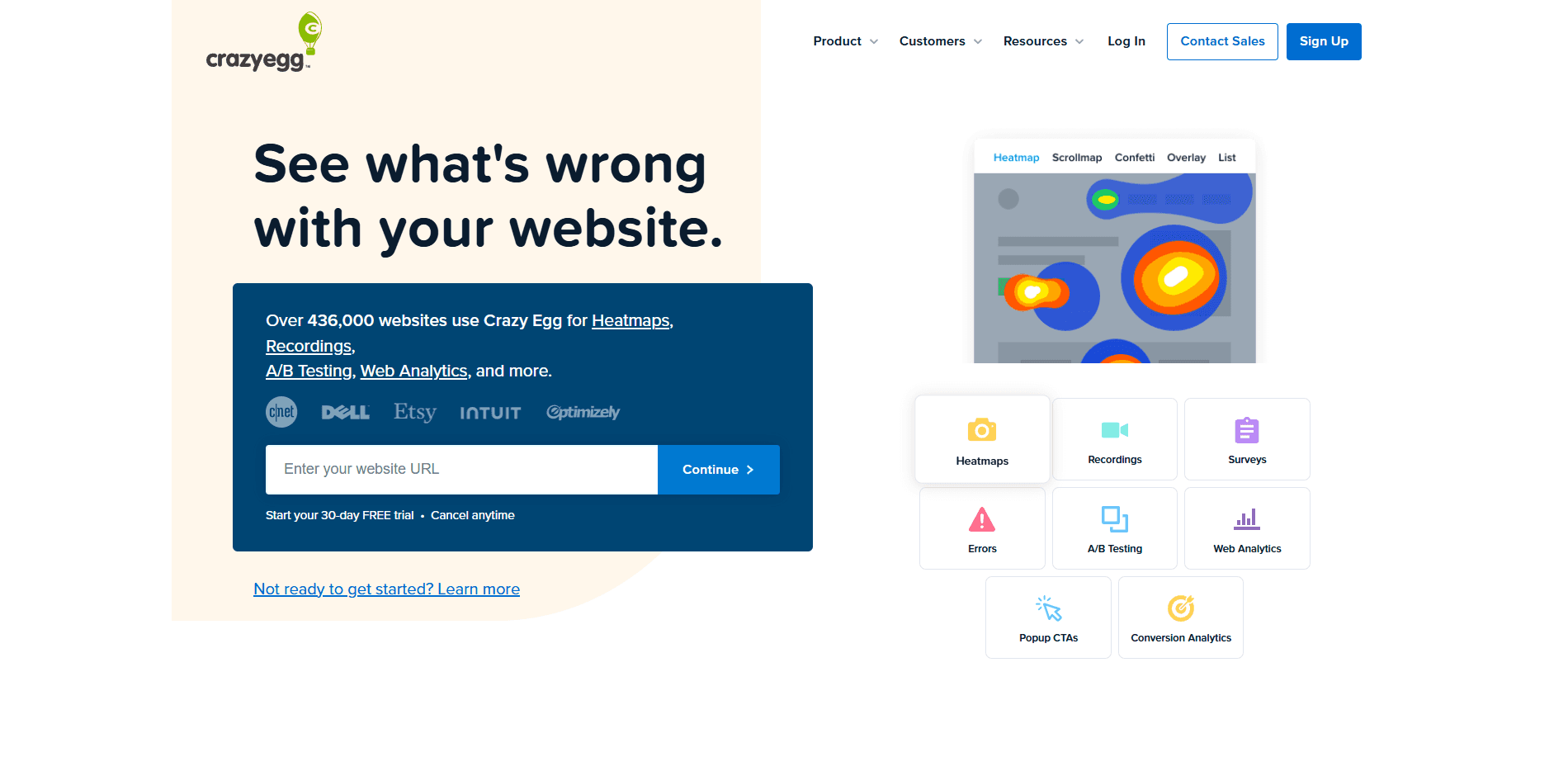
Crazy Egg provides a full suite of visual analytics tools, including heatmaps, scroll maps, and A/B testing capabilities. Its reporting identifies which elements grab attention and which are ignored, helping e-commerce teams optimize page layouts, calls to action, and product displays.
The snapshot reports from Crazy Egg make it simple to see trends over time, supporting continuous conversion improvements.
4. FullStory
FullStory records every user interaction, from clicks and scrolling to navigation paths. Its AI-powered insights highlight friction points and drop-offs, showing why visitors leave without converting.
It allows teams to segment behavior by device, location, or traffic source, helping brands optimize experiences for different customer groups and improve overall site performance.
5. Mouseflow
Mouseflow tracks visitor sessions in real time and provides heatmaps, session replays, and conversion funnels. E-commerce teams can observe how users navigate pages, where they hesitate, and which elements cause drop-offs.
By understanding these patterns, brands can adjust page layouts, copy, and product placements to remove obstacles, shorten the path to purchase, and maximize conversions.
How Conversion Analysis Drives Actionable Ecommerce Strategies? Practical Applications
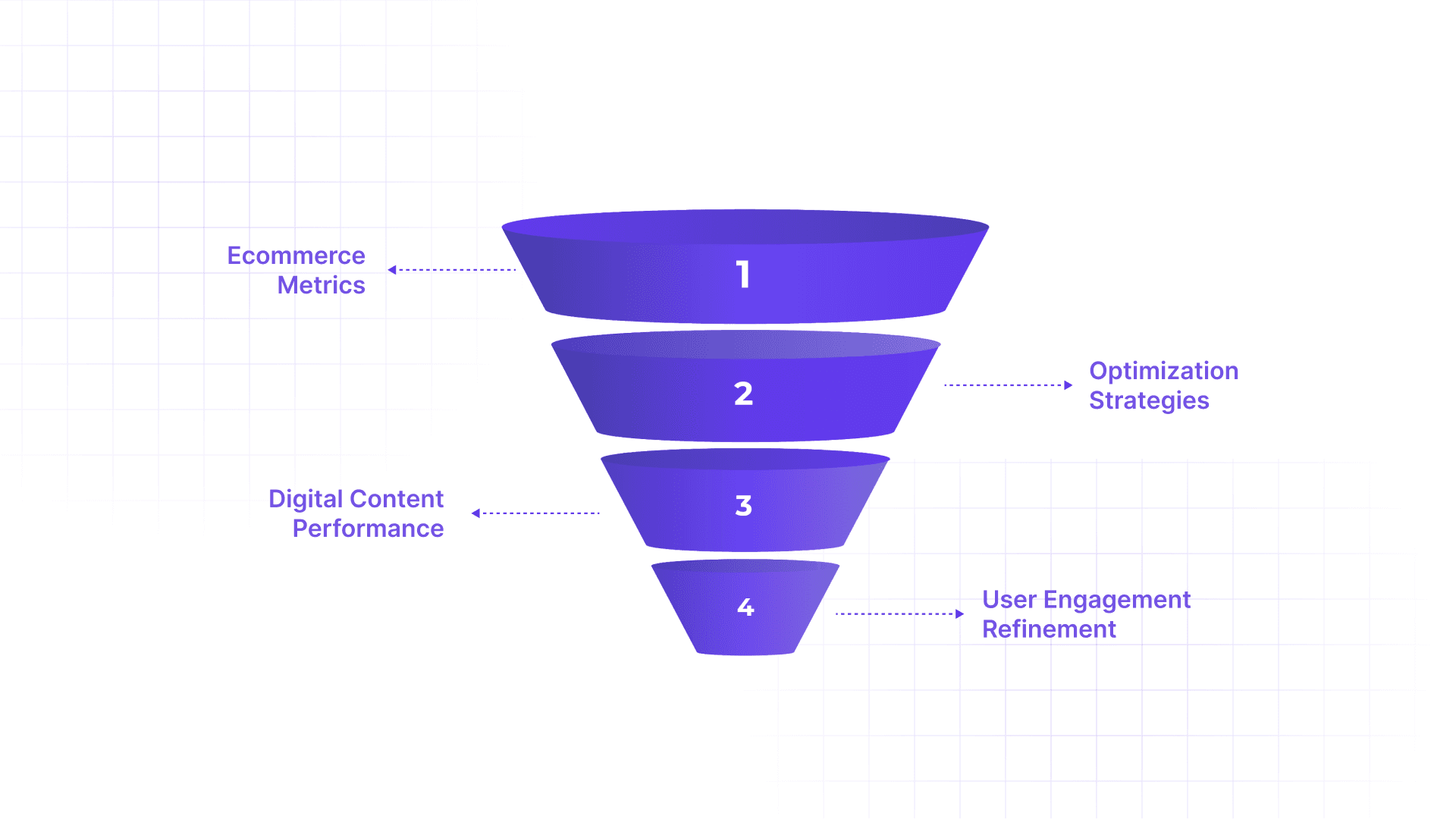
The practical applications of conversion analysis span metrics, strategies, content, and user engagement.
Each insight has the potential to influence decisions across your site from product discovery to checkout and ensure that every visitor interaction works toward higher conversions.
Here’s how e-commerce brands can apply conversion analysis effectively:
Ecommerce Metrics: Track key micro-actions such as add-to-cart clicks, cart abandonment, repeat visits, and funnel progression to understand where visitors drop off and which touchpoints drive the most value.
Optimization Strategies: Use insights to refine landing pages, product recommendations, and checkout flows, ensuring that each step aligns with shopper intent and reduces friction.
Digital Content Performance: Evaluate how blogs, videos, and landing pages influence conversions, helping brands prioritize content that drives action and engagement.
User Engagement Refinement: Implement personalization and contextual nudges to guide shoppers, reduce drop-offs, and encourage repeat purchases, making every interaction meaningful and conversion-focused.
By applying conversion analysis with a strategic, hands-on approach, e-commerce brands can move beyond generic campaigns and make every visitor experience more relevant, engaging, and profitable.
Turn Conversion Analysis into Action with Nudge
Many e-commerce brands struggle to act on insights from conversion data, leaving opportunities on the table. Modern shoppers expect personalized experiences, and every interaction counts toward engagement, retention, and revenue.
Nudge helps you turn conversion analysis insights into actionable improvements across your site, driving measurable results at every stage of the funnel.
Here is how Nudge brings conversion analysis to life
AI Product Recommendations: Highlight offers and bundles that match shopper intent, encouraging faster decisions and higher conversions
Contextual Nudges: Show popups, banners, and messages based on scrolling, exit intent, or engagement to reduce drop-offs
Commerce Surfaces: Apply insights seamlessly across landing pages, product pages, category listings, carts, and checkout for a consistent, personalized experience
1-1 Personalization: Tailor every interaction to individual users, boosting engagement and repeat purchases
Cart Abandonment Recovery: Re-engage visitors who leave mid-purchase to increase checkout completions and revenue
Omnichannel Compatibility: Ensure smooth, relevant experiences across desktop, mobile, and other platforms
Funnel Analysis: Understand the exact paths visitors take from landing pages to checkout and identify drop-off points.
Behavioral Insights: Monitor clicks, scroll depth, bounce rates, and engagement to uncover patterns and opportunities for improvement.
No-Code Deployment: Launch and test changes without relying on developers, speeding up optimization cycles.
Continuous Improvement: Regularly update experiences based on real-time insights to match evolving shopper behavior.
With Nudge, conversion analysis moves from insight to impact. Every visitor sees content shaped to their behavior, helping your brand optimize engagement, reduce friction, and drive measurable ecommerce growth.
Conclusion
Top e-commerce and DTC brands know that conversion analysis is not just about tracking metrics. It is about understanding user behavior, identifying friction points, and optimizing experiences to guide shoppers smoothly through every stage of their journey. When done well, this naturally improves engagement, retention, and conversions.
Shoppers today expect relevant, timely, and personalized experiences. Nudge helps turn conversion analysis insights into actionable recommendations, contextual prompts, and tailored experiences across your site and apps, all without needing developers.
Book a demo today to discover how smart conversion analysis can turn casual visitors into loyal customers.
FAQs
1. How does conversion analysis help ecommerce brands increase sales?
Conversion analysis tracks how visitors move through your ecommerce site, identifying drop-offs and opportunities to improve engagement. This helps brands optimize campaigns, reduce friction, and boost conversions.
2. Which ecommerce pages should I focus on for conversion analysis?
Key pages include landing pages, PLPs, PDPs, carts, and checkout. Tracking smaller interactions like recommendations, popups, and CTAs also uncovers valuable micro-conversions.
3. How can conversion analysis help improve customer retention?
By identifying friction points and personalizing the shopping journey, conversion analysis encourages repeat purchases and strengthens long-term loyalty.
4. How often should ecommerce brands conduct conversion analysis?
Regularly, such as after campaigns, product launches, or website updates. Frequent tracking ensures optimization efforts align with evolving user behavior.
5. Can marketers use conversion analysis insights without developer support?
Yes. Tools like Nudge allow marketers to apply real-time personalization, testing, and optimization without coding, making it easy to act on insights immediately.