Product & Features
ChatGPT Ads Are Here: What OpenAI’s Launch Means for the Future of Commerce
OpenAI’s introduction of ads inside ChatGPT isn’t just a monetization move — it’s confirmation that AI conversations have become a primary discovery and decision layer. This post breaks down what ChatGPT ads signal for commerce brands, why intent now lives inside AI interfaces, and how teams should rethink visibility and conversion in an AI-first world.

Kanishka Thakur
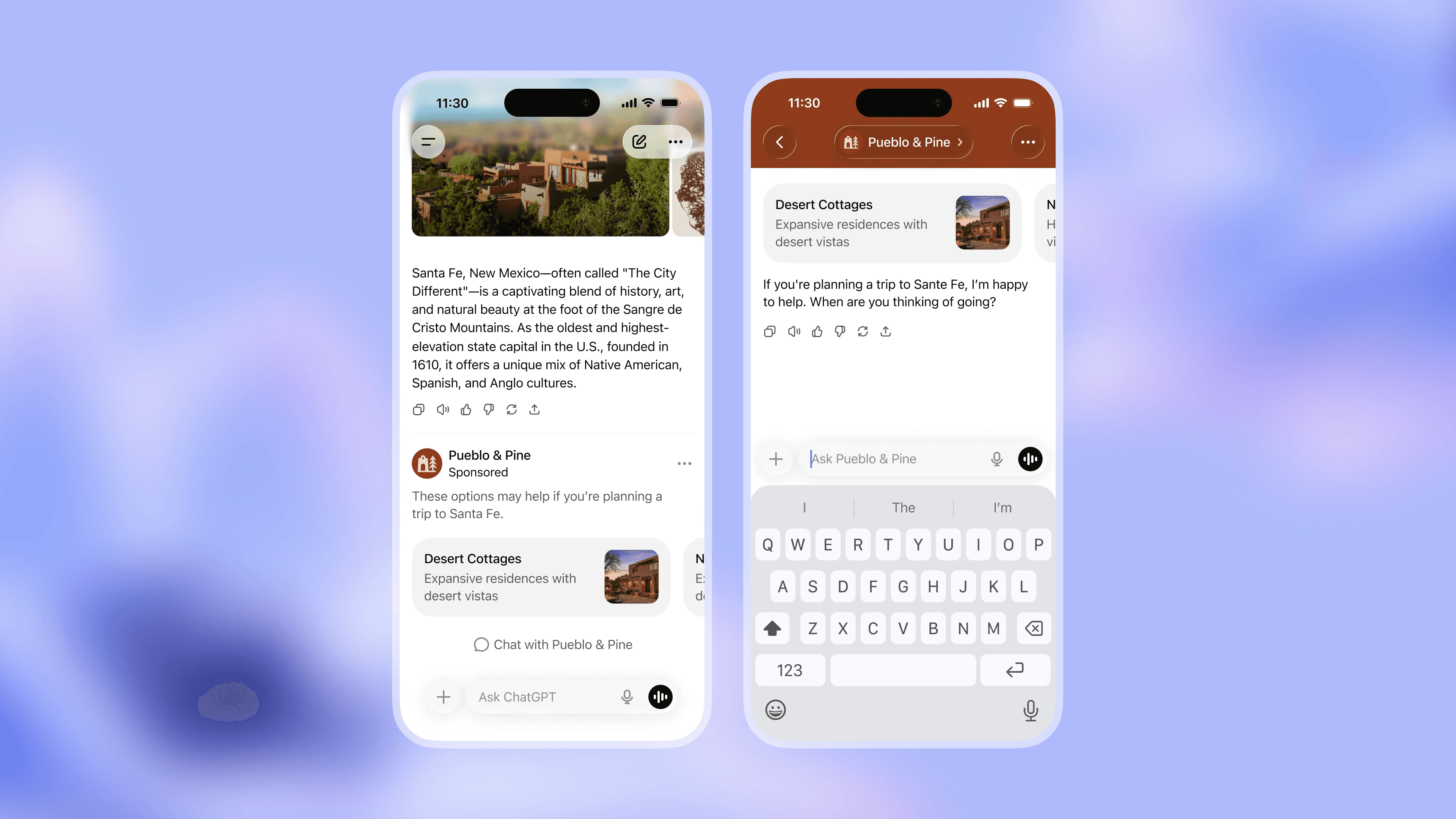





OpenAI’s decision to introduce ads inside ChatGPT marks a clear inflection point in the evolution of AI interfaces.
For the first time, conversational AI is being treated not just as a utility or productivity layer, but as a durable distribution surface, one with enough commercial intent to support advertising at scale.
This isn’t about slapping banners into a chat window. It’s about acknowledging where discovery and decision-making are already happening.
Why Ads in ChatGPT Matter
We see advertising as a way to expand access to AI tools while maintaining trust and transparency.” — Sam Altman, CEO, OpenAI
According to OpenAI, ads are being introduced with a specific set of constraints: they won’t influence model responses, won’t train the underlying models, and will be clearly labeled. The goal is to expand access to high-quality AI tools while keeping user trust intact.
That framing is important, but the broader implication matters more.
People don’t use ChatGPT the way they use search engines or social feeds. They use it to:
Ask nuanced questions
Compare options
Pressure-test decisions
Narrow down what to buy and why
In other words, intent lives inside the conversation.
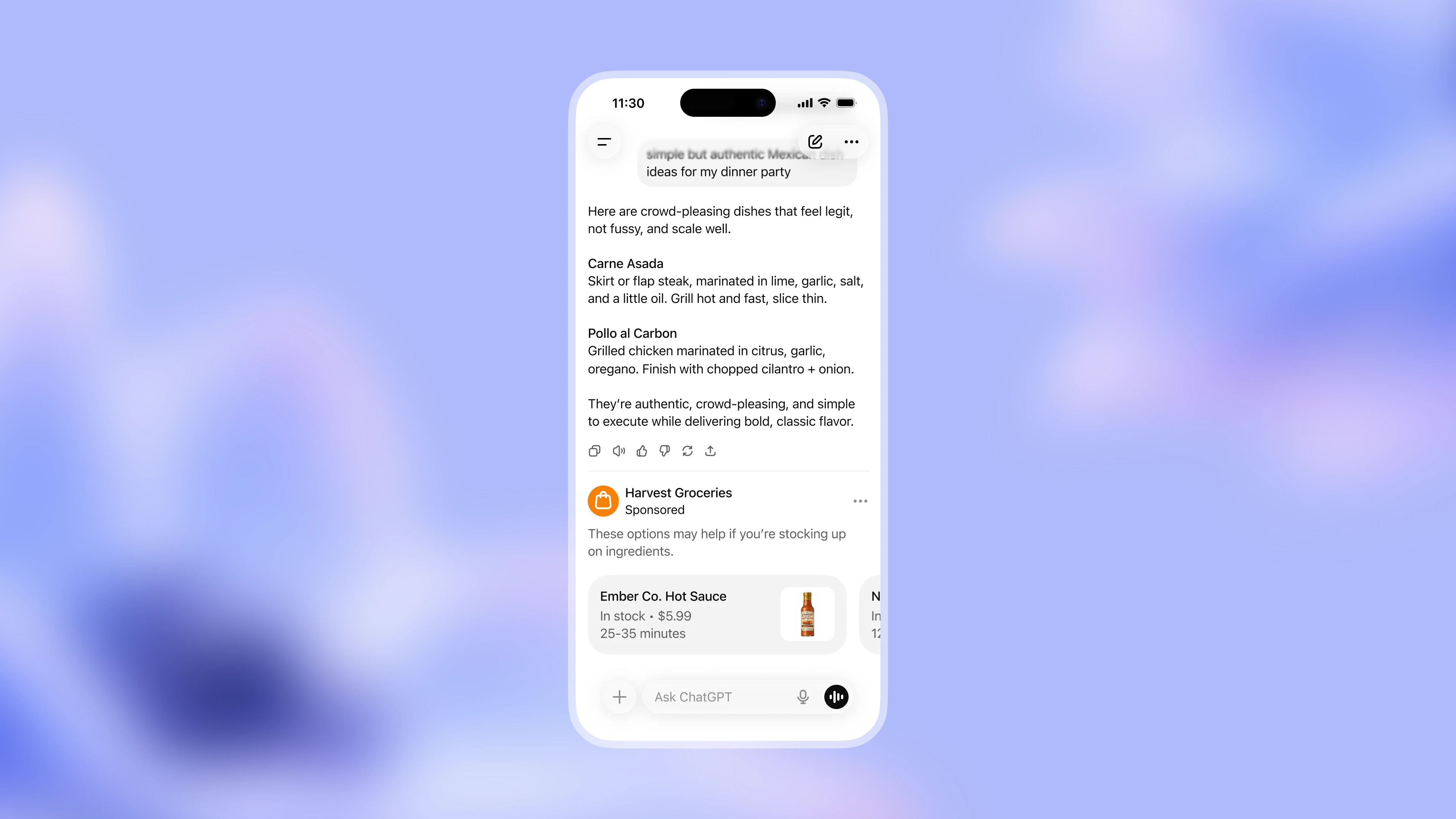
Ads are showing up not at the top of a funnel, but inside the moment where users are actively reasoning through choices.
Paid Follows Intent, Not the Other Way Around
Historically, advertising followed attention:
Search ads followed keywords
Social ads followed feeds
Marketplace ads followed product grids
ChatGPT ads follow something different: contextual intent.
They appear alongside answers users already trust, inside a flow where relevance matters more than clever copy or aggressive bidding.
This changes the unit of optimization.
Winning here isn’t about outspending competitors. It’s about:
Being legible to the model
Aligning with the user’s underlying question
Reinforcing the reasoning the AI is already providing
Paid visibility and organic understanding start to converge.
What This Means for Commerce Brands
For commerce teams, this launch signals a deeper shift:
AI is now a primary discovery layer: Shoppers are increasingly starting product research inside AI systems, not on category pages or search results.
Ads don’t replace recommendations, they sit on top of them: If your brand isn’t already understood, trusted, and contextually relevant, paid placement alone won’t carry conviction.
The handoff matters more than ever: What happens after an AI-driven touchpoint, where the user lands, what they see, how fast they can act now directly impacts performance.
This is no longer just an advertising problem. It’s a discovery-to-conversion problem.
What This Changes for CMOs & Growth Teams
1. AI becomes a first‑class acquisition channel
ChatGPT ads confirm that discovery is shifting upstream into conversational interfaces. AI visibility now needs the same rigor as SEO or paid search.
2. Paid and organic collapse closer together
If your brand isn’t already understood and trusted by the model, paid placement alone won’t drive conviction. Relevance and clarity become prerequisites for performance.
3. Post‑answer experience is the new conversion lever
What the user lands on after an AI interaction directly impacts ROI. Generic PDPs will underperform against context‑matched, shoppable experiences.
Where Nudge Fits In
At Nudge, we’ve been building for this exact shift.
As AI systems increasingly shape how shoppers discover and evaluate products, brands need two things:
Visibility inside AI-driven answers and recommendations
Experiences that pick up where the AI leaves off and convert that intent
Nudge helps commerce teams understand how their brand and products show up inside AI interfaces and then turn that discovery into shoppable, personalized experiences instead of generic landing pages.
Ads inside ChatGPT are not the headline.
They’re the confirmation that AI has become the front door to commerce and that discovery, decision, and conversion now need to be designed as one continuous system.