User Engagement
How Can Data-Driven Strategies Boost Customer Engagement?
Struggling to connect with customers? Use data-driven strategies and AI to personalize touchpoints, improve retention, and boost conversions.

Sakshi Gupta
Jan 7, 2026
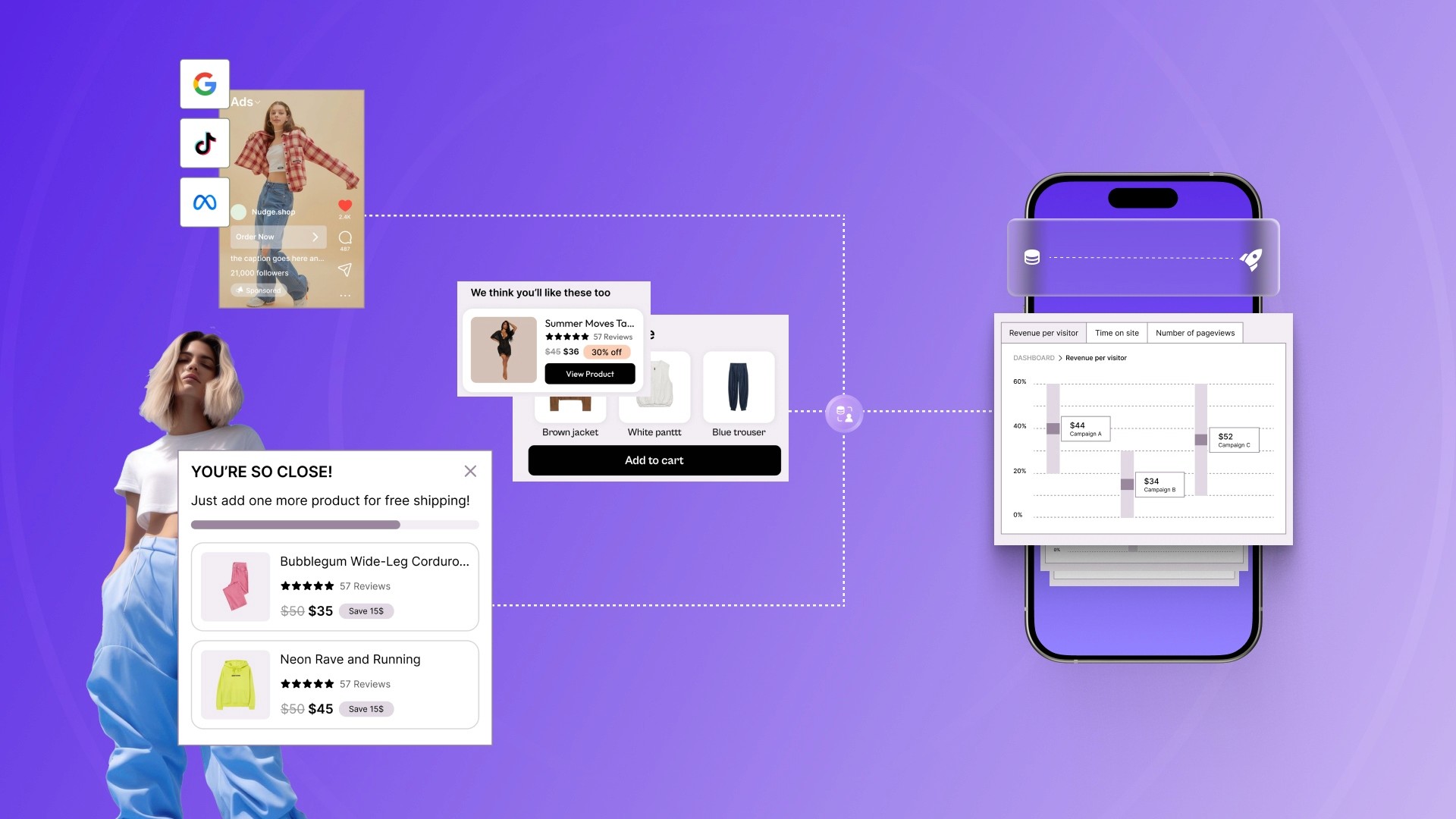
These days, simply offering a great product isn’t just enough. You need to connect with your customers on a deeper level. With so much information available online, customers now expect personalized, real-time experiences that feel relevant to them.
In fact, Gartner’s Marketing Leaders Survey even shows that over 80% of businesses believe they will compete mainly on customer experience (CX). This means that understanding your customers’ needs and delivering tailored experiences is a must. That’s when making data-driven strategies becomes essential.
In this blog, we will discuss how data-driven customer engagement can help you create those personalized experiences. You’ll learn how using real-time data and AI-powered tools can boost satisfaction, reduce churn, and ultimately drive more sales for your business.
Overview
Data-driven engagement uses real-time customer data to personalize experiences. It boosts satisfaction, conversions, and retention by shifting from generic marketing to tailored interactions.
AI-powered tools deliver personalized recommendations and content across all touchpoints. It enhances customer engagement and drives higher conversion rates.
Behavioral targeting and predictive analytics help brands anticipate customer actions, optimize inventory, and create personalized offers to improve retention and reduce churn.
Omnichannel engagement ensures a seamless, consistent experience across all platforms, enhancing customer trust and increasing repeat purchases.
Real-time feedback loops allow for quick campaign optimizations, improving engagement and conversions based on live performance data.
What is Data-Driven Customer Engagement?
Data-driven customer engagement refers to using real-time data to optimize every touchpoint in the customer journey. This means utilizing behavioral insights, contextual signals, and historical data to craft experiences that resonate with individual shoppers.
The importance of data-driven engagement lies in its ability to shift from a one-size-fits-all marketing approach to one that adapts dynamically to each customer’s needs and preferences. With data at your fingertips, you can optimize product recommendations, tailor your messaging, and increase customer satisfaction. This leads to higher sales and retention rates.

The Role of AI and Automation in Engagement
AI is changing e-commerce by analyzing data in real-time to personalize customer experiences at scale. It helps deliver the right content, product recommendations, and messages at the right time, making each interaction more relevant. Besides, AI-driven recommendations increase conversion rates (CVR) by suggesting products based on previous actions.
Automation tools also allow marketers to test and optimize campaigns without waiting for development cycles. This saves time and keeps strategies aligned with real-time data.
Also Read: Proven Tips to Convert Leads Into Sales
Key Data Points Driving Engagement
To successfully drive customer engagement, it’s essential to understand which data points matter most. This includes:
Behavioral Data: Insights into how customers interact with your website: what they click on, how long they stay, and where they drop off.
Contextual Signals: Information like the customer’s location, device type, and campaign source helps tailor the experience.
Real-Time Activity: Tracking customer behavior during a session allows you to make immediate adjustments, such as offering a discount when a user abandons their cart.
By integrating these data points, you can create a seamless experience that’s always relevant to the user. Now that we have enough context about data-driven customer engagement, let’s look into some core strategies.
Also Read: Guide to Understanding and Reducing Abandoned Baskets
8 Core Strategies for Data-Driven Customer Engagement
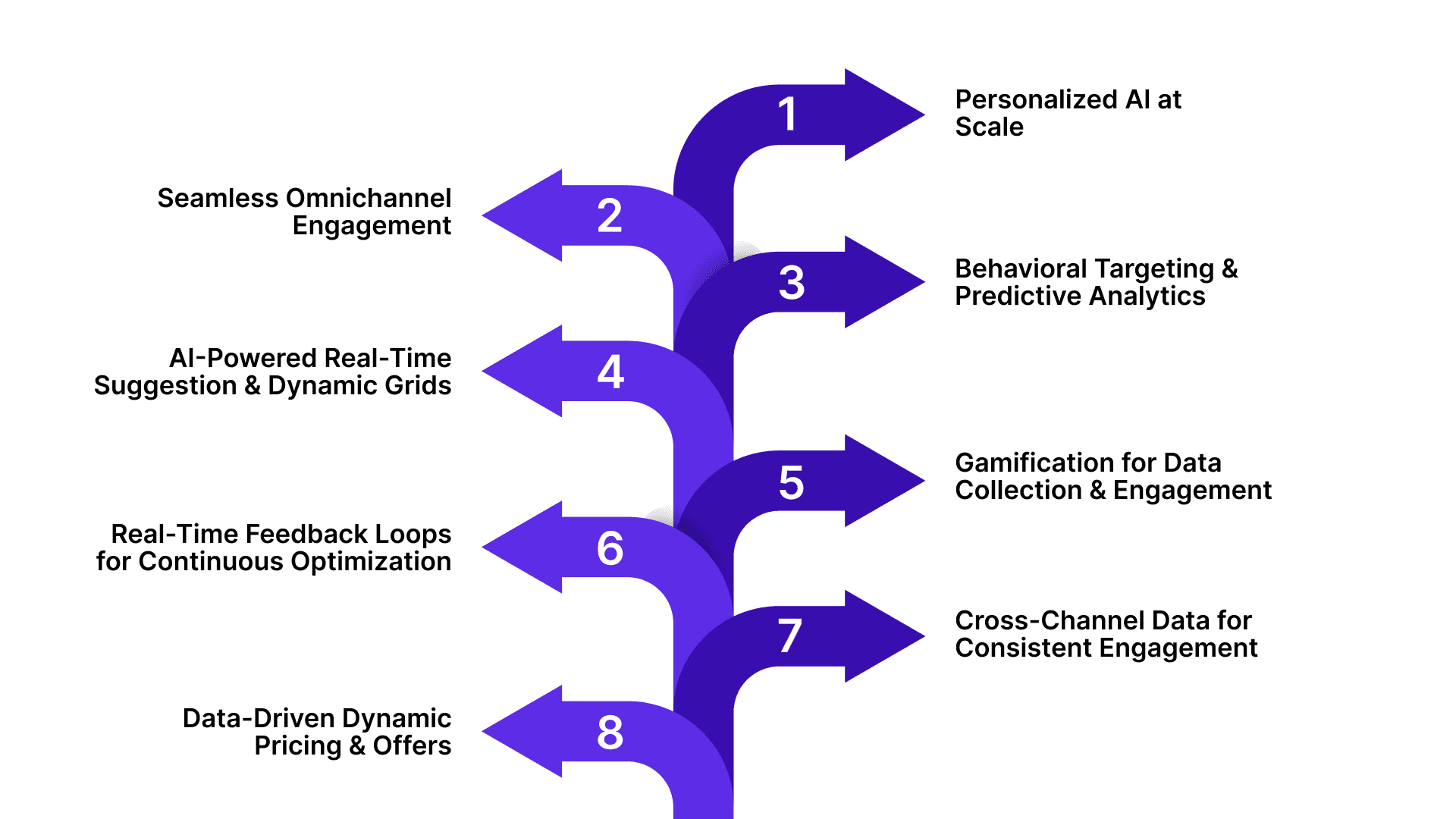
Modern ecommerce growth comes from precision, not volume. These eight strategies show how to turn real-time shopper behavior into revenue with smarter, data-led engagement.
1. AI-Powered Personalization at Scale
AI is smarter than you imagine. It allows ecommerce brands to tailor every touchpoint. For example, Nudge’s AI allows e-commerce brands to dynamically personalize not just product recommendations but also content, banners, and offers across homepages, PDPs, and checkout, creating a seamless, tailored experience for every shopper.
This precision cuts decision fatigue, lifts CVR, and helps each visitor see products truly aligned with their needs.
Execution Steps That Move Metrics:
Map behavioral triggers (dwell time, category hops, cart adds) to recommendation logic.
Sync product tags with your AI engine for relevance accuracy.
Place AI widgets on high-impact zones (homepage hero, mid-PDP, cart).
Use AI-driven cross-sells to lift AOV and bundle conversions.

2. Omnichannel Engagement for Seamless Experiences
Omnichannel engagement ensures shoppers move effortlessly between channels, app to web, email to PDP, social to checkout, without losing context.
Consistent messaging and synchronized offers boost trust, reduce friction, and drive higher repeat purchase rates across customer segments.
Execution Steps That Move Metrics:
Unify customer identity across CRM, email, app, and ads.
Trigger channel-specific nudges (browse→email, cart→push, checkout→SMS).
Maintain synchronized promo logic to avoid pricing mismatches.
Build device-aware journeys for shoppers switching between mobile and desktop.
3. Behavioral Targeting and Predictive Analytics
Behavioral and predictive models allow you to predict what shoppers might do next: whether they’ll abandon their cart, make a purchase, or churn. Learning this detail is essential because 32% of customers will stop supporting a brand they once loved after just one bad experience.
By reacting in real-time with personalized nudges, you can reduce drop-offs, recover abandoned carts, and proactively improve retention before customers disconnect.
Execution Steps That Move Metrics:
Use browse-abandon triggers for personalized PDP reminders.
Identify high-churn cohorts and push retention offers early.
Predict repurchase cycles for consumables and automate reminders.
Build propensity models for high-value shoppers to guide premium upsells.
4. Real-Time AI Recommendations and Dynamic Product Grids
Dynamic product grids adapt instantly to a shopper’s behavior, recent views, scroll depth, cart items, and category interest, reshaping the page to surface items with the highest purchase probability.
This keeps users engaged and increases session-to-conversion efficiency.
Execution Steps That Move Metrics:
Create category-specific recommendation rules for accuracy.
Prioritize high-margin or high-velocity SKUs in dynamic grids.
Refresh recommendations after every shopper action (click, filter, add-to-cart).
Test placement impact (above fold vs mid-scroll) to optimize CTR.
5. Gamification for Data Collection and Engagement
Gamification encourages shoppers to volunteer preference data through interactive experiences: quizzes, spin wheels, missions, or reward challenges.
This first-party data sharpens personalization, increases on-site engagement, and drives repeat visits through reward anticipation.
Execution Steps That Move Metrics:
Use quizzes to capture preference data before recommending products.
Tie rewards to high-value actions (reviews, referrals, profile completion).
Add progress bars to increase completion rates in onboarding flows.
Segment users based on quiz outcomes to personalize future offers.
6. Real-Time Feedback Loops for Continuous Optimization
Real-time feedback loops allow teams to continuously optimize campaigns. For example, Nudge’s AI model learns with every shopper interaction, refining recommendations and content delivery, ensuring your engagement strategies scale and remain effective over time.
This continuous optimization eliminates guesswork and ensures you scale only what actually drives conversions.
Execution Steps That Move Metrics:
A/B test hero banners, pricing displays, or CTA placements weekly.
Monitor micro-metrics (scroll rate, PDP engagement, funnel drop-offs).
Use heatmaps and click maps for layout improvements.
Roll out winning variants automatically to maximize revenue impact.
7. Using Cross-Channel Data for Consistent Engagement
Cross-channel data integration ensures every user action, email click, ad view, app login, and PDP visit feeds into a unified profile.
This prevents fragmented experiences, supports precise targeting, and ensures every shopper receives context-aware communication regardless of channel.
Execution Steps That Move Metrics:
Merge CRM, email, and analytics data to eliminate identity conflicts.
Trigger automated flows based on combined cross-channel signals.
Run suppression logic to avoid over-messaging active customers.
Use unified customer scoring to fuel segmentation and targeting.
8. Dynamic Pricing and Special Offers Based on Customer Data
Dynamic pricing adjusts discounts, urgency badges, and offers based on demand, inventory movement, customer intent, and browsing patterns.
This ensures high-intent users see compelling incentives while protecting margin for shoppers who don’t need discounts to convert.
Execution Steps That Move Metrics:
Offer time-sensitive deals to users showing strong purchase signals.
Use intent scoring to decide who should receive discounts vs. none.
Trigger exclusive pricing for loyal or high-frequency buyers.
Sync pricing logic with inventory levels to push slow-moving SKUs.
Combined, these strategies build a commerce engine that converts smarter, scales faster, and keeps customers engaged long after the first purchase.
Overcoming Challenges in Data-Driven Customer Engagement
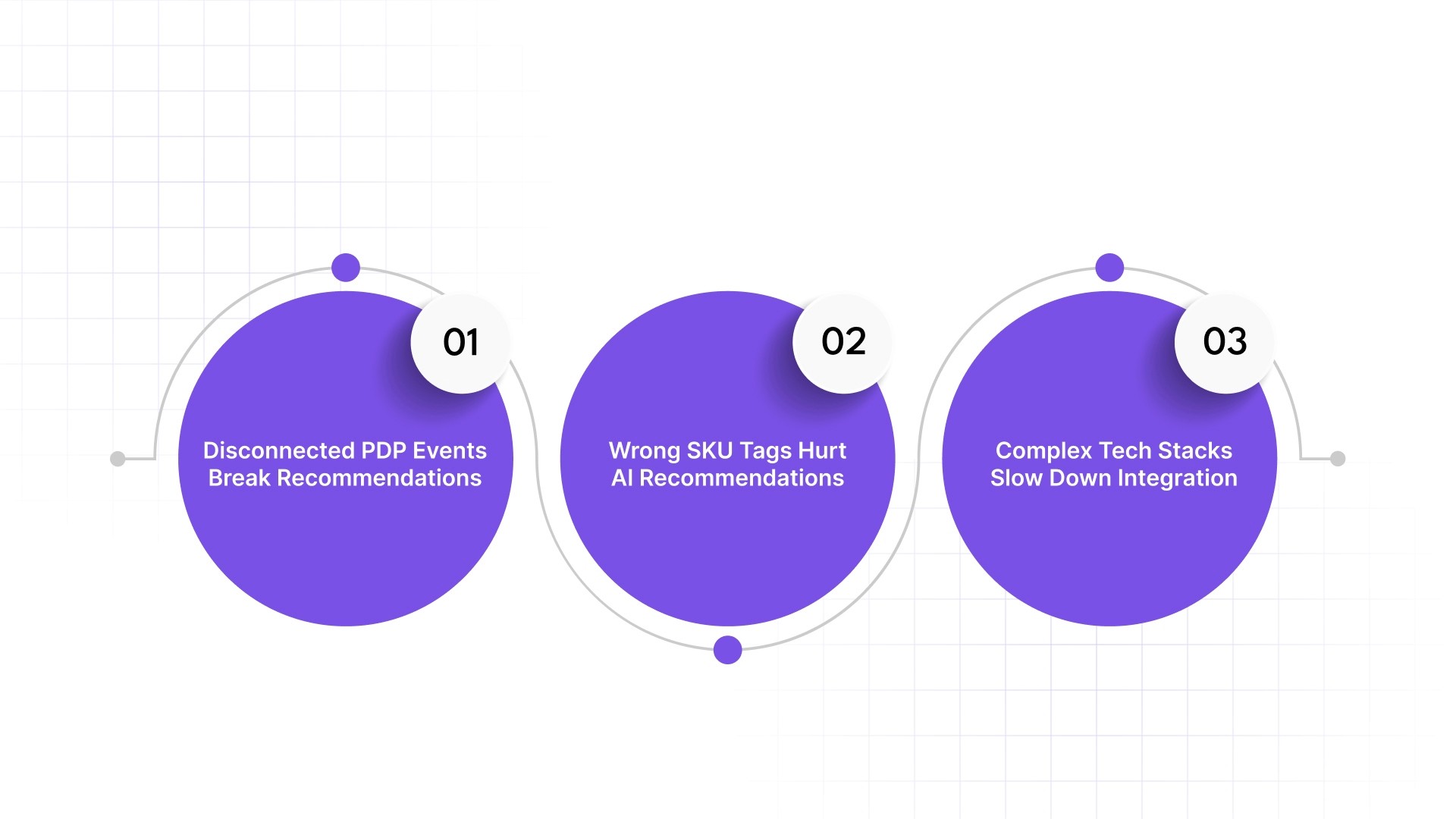
Data-driven engagement can transform your e-commerce business, but there are significant challenges along the way. Let’s explore the common roadblocks and how to overcome them for a seamless, personalized experience:
1. Disconnected PDP Events Break Recommendations
When product page events aren’t connected to your CRM, your product recommendations can become irrelevant or break entirely. This results in missed sales and a poor customer experience.
Integrating PDP events with your CRM system ensures that product recommendations are timely and relevant to the customer's journey.
2. Wrong SKU Tags Hurt AI Recommendations
Incorrect SKU tags can confuse AI algorithms, leading to irrelevant product suggestions. This misalignment can frustrate customers and impact engagement.
Regularly reviewing and correcting your SKU data ensures that AI-driven recommendations match the customer’s needs and preferences, boosting personalization and customer satisfaction.
3. Complex Tech Stacks Slow Down Integration
In e-commerce, a complex tech stack makes it harder to connect key systems like CRM, inventory, and analytics. This leads to delays in processing customer data and poor personalization.
Simplifying your tech stack with integrated solutions ensures faster data flow and enables more effective personalization across your store’s platforms.
Addressing these challenges is important for accessing the full potential of your data-driven strategies. Now let's have a look at advanced tactics and tools for data-driven engagement.
Advanced Tactics and Tools for Data-Driven Engagement
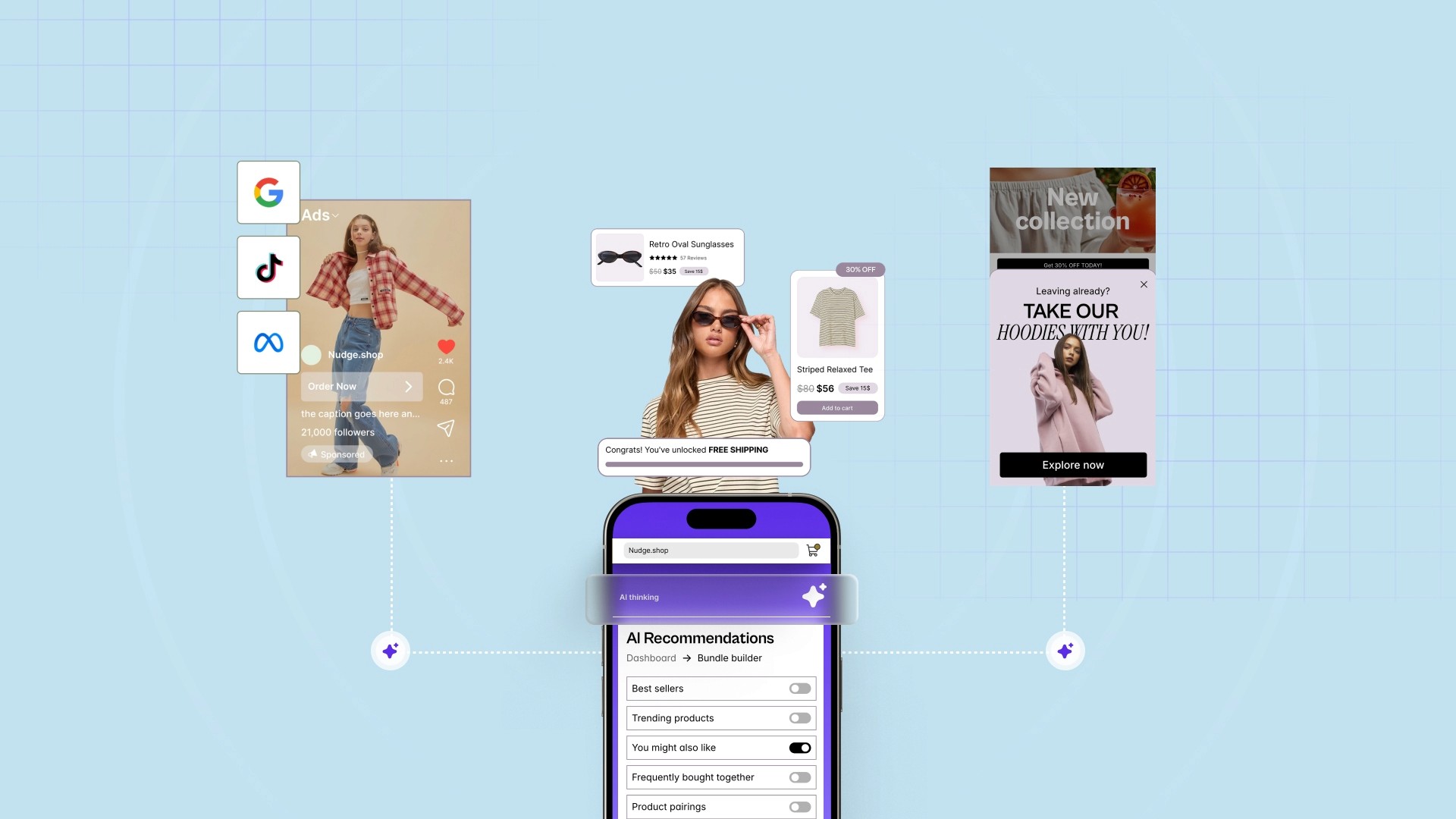
Implementing advanced tactics and tools like AI-powered segmentation, voice and visual search, and predictive analytics is essential. These strategies help you connect with customers in meaningful ways and anticipate their needs before they arise.
1. AI-Powered Customer Segmentation
AI-powered segmentation allows brands to divide their customer base into highly specific groups based on behaviors, preferences, purchase history, and demographics. This enables personalized targeting, improving engagement and driving conversions.
In e-commerce, AI-powered segmentation helps tailor product recommendations and offers, improving conversion rates and customer retention, leading to a higher ROI. By automating the process, AI ensures your campaigns are more relevant and effective, aligned with customer needs.
2. Voice and Visual Search for Enhanced Engagement
Voice and visual search are revolutionizing e-commerce by offering customers a more intuitive, hands-free online shopping experience. By optimizing your site for voice search, customers can easily find products by speaking their queries.
Similarly, integrating visual search allows users to upload images to find similar products. E-commerce brands that implement voice and visual search can enhance product discovery, reduce bounce rates, and increase average order value (AOV), ultimately driving more sales and improving overall engagement.
3. Predictive Analytics for Future Trends
Predictive analytics uses historical data to forecast future customer behavior, helping businesses stay ahead of trends. By analyzing patterns like seasonal demand or purchasing habits, brands can predict what products will be in demand, optimize inventory, and adjust marketing strategies accordingly.
For e-commerce, predictive analytics helps optimize inventory, improve stock availability, and better target promotions, leading to increased conversions, reduced marketing spend, and improved ROI.
By integrating these advanced tools into your data-driven engagement strategy, you’ll enhance personalization, improve user experience, and stay ahead of market trends.
Also Read: Top 10 Website Personalization Tools for 2025
How to Measure the Success of Your Data-Driven Engagement Strategy?
In ecommerce, success is defined by how effectively you turn that data into revenue outcomes. Track CVR, AOV, LTV, RPR, and Funnel Drop-off Rates to see whether your engagement strategy is genuinely influencing shopper behavior. These metrics reveal if your nudges, recommendations, and journeys are reducing friction, boosting e-commerce conversions, and increasing overall buying frequency.
Metrics & Actions That Actually Move Ecommerce Performance:
Audit journey-level CVR (homepage → PDP → cart → checkout) to pinpoint where engagement breaks.
Use heatmaps + session replays to detect hesitation zones, dead clicks, and ignored content modules.
Track cohort-based LTV to see how personalization impacts repeat purchases across first-time vs. returning buyers.
Benchmark micro-interactions (recommendation widget CTR, quiz completions, exit-intent saves) to refine what drives incremental revenue.
When data drives every touchpoint, ecommerce stops relying on guesswork and starts compounding results. The brands that win are the ones that turn insight into action; consistently, precisely, and at scale.

Why Nudge is the Perfect Solution for Data-Driven Engagement?
Nudge makes it simple to implement data-driven engagement at scale with real-time AI-powered personalization across all touchpoints. It seamlessly integrates with your e-commerce platform, automating personalized content and product recommendations based on real-time shopper behavior.
By analyzing data such as browsing history, purchase patterns, and user interactions, Nudge delivers highly relevant recommendations that keep customers engaged and drive conversions, ensuring that every touchpoint is optimized for maximum impact.
Here’s how Nudge can help:
Real-Time Personalization: Personalize homepages, PDPs, and checkout based on user intent.
AI Product Recommendations: Deliver tailored product suggestions to increase sales.
Contextual Nudges: Trigger dynamic pop-ups and offers to boost conversions.
No Dev Bottlenecks: Marketers can launch, test, and optimize campaigns instantly.
Nudge ensures your engagement strategies stay relevant, effective, and scalable, helping you drive conversions with smarter, personalized experiences.
Conclusion
Data-driven strategies are key to creating personalized experiences that keep customers engaged and coming back. By using AI, predictive analytics, and real-time insights, you can boost conversions, increase customer retention, and improve lifetime value.
Nudge makes it easy to implement these strategies. With real-time AI-driven personalization, Nudge helps you deliver tailored experiences for each customer. This improves engagement and makes every interaction more relevant and effective.
Want to see how Nudge can help your brand grow? Book a demo today and start improving your customer engagement with smarter, data-driven solutions.
FAQs
1. What tools can help brands implement data-driven personalization?
Tools like Nudge, Google Analytics, HubSpot, and Salesforce enable brands to implement data-driven personalization by analyzing customer behavior, automating content, and delivering tailored product recommendations across all touchpoints for enhanced engagement.
2. What are the key benefits of using predictive analytics in customer engagement?
Predictive analytics helps e-commerce brands forecast customer behavior, identify buying patterns, and personalize experiences. This leads to improved conversion rates, more relevant offers, and higher customer lifetime value (LTV) by anticipating needs.
3. What role does real-time feedback play in optimizing customer engagement strategies?
Real-time feedback allows brands to make immediate adjustments to campaigns, offers, and experiences. It helps optimize user interactions, increases engagement, and ensures personalized responses, resulting in better customer satisfaction and higher conversion rates.
4. How does predictive analytics help e-commerce brands optimize inventory and demand forecasting?
Predictive analytics uses historical data to forecast product demand, ensuring better inventory management. By predicting trends, brands can avoid stockouts, optimize supply chain processes, and align stock levels with customer purchasing behavior.