AEO & GEO
Best AI SEO Tools for 2026
Explore the top AI SEO tools for 2026 that can streamline optimization, boost rankings, and automate tasks. Learn how AI can shape the future of SEO strategies.

Gaurav Rawat






In 2026, e-commerce and DTC brands face a growing challenge: how to deliver personalized, high-converting shopping experiences across every step of the funnel. From homepages and landing pages to PDPs, carts, and checkout, each moment is an opportunity to boost conversions, increase average order value (AOV), and reduce cart abandonment.
However, with changing customer expectations and mounting competition, staying ahead requires more than just basic optimization. 68% of digital marketers now use AI-based SEO tools for content strategy and keyword targeting, proving that automation and real-time personalization are no longer optional.
This blog will explore the best AI SEO tools for 2026, tools that help e-commerce and DTC marketers dynamically personalize every shopper journey. Whether you’re optimizing landing pages or recovering cart abandoners with targeted nudges, we’ll show you how AI-driven SEO tools can enhance your approach and drive better results.
Quick Recap
Nudge Optimizes Shopper Experiences: As an integral part of your AI optimization strategy, Nudge personalizes every touchpoint on your site, enhancing shopper journeys and driving higher conversions in real time.
AI Search Visibility Tracking: Understand how AI search engines reference your brand, improving your SEO strategy and boosting visibility across AI platforms.
Prompt-Specific Funnels: Build shoppable flows based on real-time user queries, aligning SEO intent with personalized conversions, ensuring your brand connects with the right shopper at the right moment.
Competitive Benchmarking & Integration: Track your AI search presence, monitor competitor performance, and integrate real-time AI insights to optimize product pages and content.
What is an SEO Tool?
An SEO tool is a platform designed to help improve your website’s visibility across search engines like Google, Bing, and others. These tools are essential for increasing your online presence and driving more organic traffic. SEO tools offer a variety of functions depending on the area you need to focus on. Here are some of the core capabilities:
Keyword Research: Helps you identify high‑value keywords for your content.
Competitor Analysis: Lets you analyze traffic and backlinks from competitors.
Content Optimization: Assists in crafting content that ranks higher in search results.
SEO Workflow Automation: Automates tasks like reporting, audits, and optimization suggestions.
Technical SEO: Helps monitor and improve the technical health of your website, such as site speed and mobile-friendliness.
While some SEO tools offer a comprehensive suite of services, others specialize in one area and excel at it.
Now that we know what an SEO tool is, let’s address the big question: Can AI really replace traditional SEO strategies?
Can AI Replace SEO?
AI is changing the way SEO works, but it won’t replace it. While AI tools can automate parts of the process, the core principles of SEO remain unchanged. AI can help streamline keyword research, optimize content, and improve reporting, but it can't create high-quality content that truly connects with an audience.
Google’s algorithms still prioritize content that provides real insight and authority in answering user queries. Even with AI’s impressive ability to analyze data, it doesn’t yet fully understand the nuances of human behavior and intent as well as well-crafted content does.
The future of SEO lies in combining AI’s power with human expertise to create trustworthy, valuable content that drives real results.
Also Read: Ultimate Guide To Best Landing Page Optimization Tools For E-commerce
Next, let’s check out the best AI SEO tools for 2026 and see how they’re helping digital marketers stay ahead of the curve.
Best AI SEO tools for 2026
As AI continues to change the digital marketing environment, choosing the right AI SEO tools in 2026 will be crucial for e-commerce brands looking to stay ahead of the competition. Here’s a list of the best AI SEO tools to use in 2026.
Quick Glance: Best AI SEO tools for 2026
Tool | Key Features | Best For |
Nudge | AI Search visibility tracking, competitive benchmarking, prompt-specific funnels, shoppable guides & product cross-references | E-commerce brands looking to enhance AI search visibility, personalize shopper journeys, and drive higher conversions in real time. |
SEMrush | Competitor analysis, keyword research, AI search visibility, content optimization, PPC insights. | All-in-one SEO solution for detailed analysis and AI search visibility. |
Ahrefs | Site analysis, keyword research, rank tracking, backlink analysis, content explorer. | Comprehensive site analysis and keyword research with powerful backlink features. |
Surfer SEO | Content optimization, AI-driven content editor, Google Docs & WordPress integration, SEO audits. | Content creators and SEO professionals focused on detailed optimization and AI assistance. |
Clearscope | Content scoring, keyword recommendations, content decay, competitor insights, keyword research. | Content creators and SEO professionals focused on keyword depth and content performance tracking. |
SE Ranking | Comprehensive suite for keyword research, SEO monitoring, backlink analysis, automation, AI insights. | Agencies, freelancers, and teams with multiple clients seeking a well-rounded SEO solution. |
Writesonic | AI article writer, real-time SEO integration with Ahrefs & Semrush, brand voice customization, content personalization. | E-commerce marketers seeking fast, AI-powered content creation and SEO optimization. |
AirOps | Automated SEO workflows, AI writer, CMS integration with Webflow, AI model access, visibility analysis. | Large teams and agencies needing SEO workflow automation and advanced content generation. |
Indexly | Instant indexing, bulk indexing, LLM indexing toolset, page inspect, improves site visibility. | Website owners, especially e-commerce sites, looking for faster indexing and improved search performance. |
1. Nudge
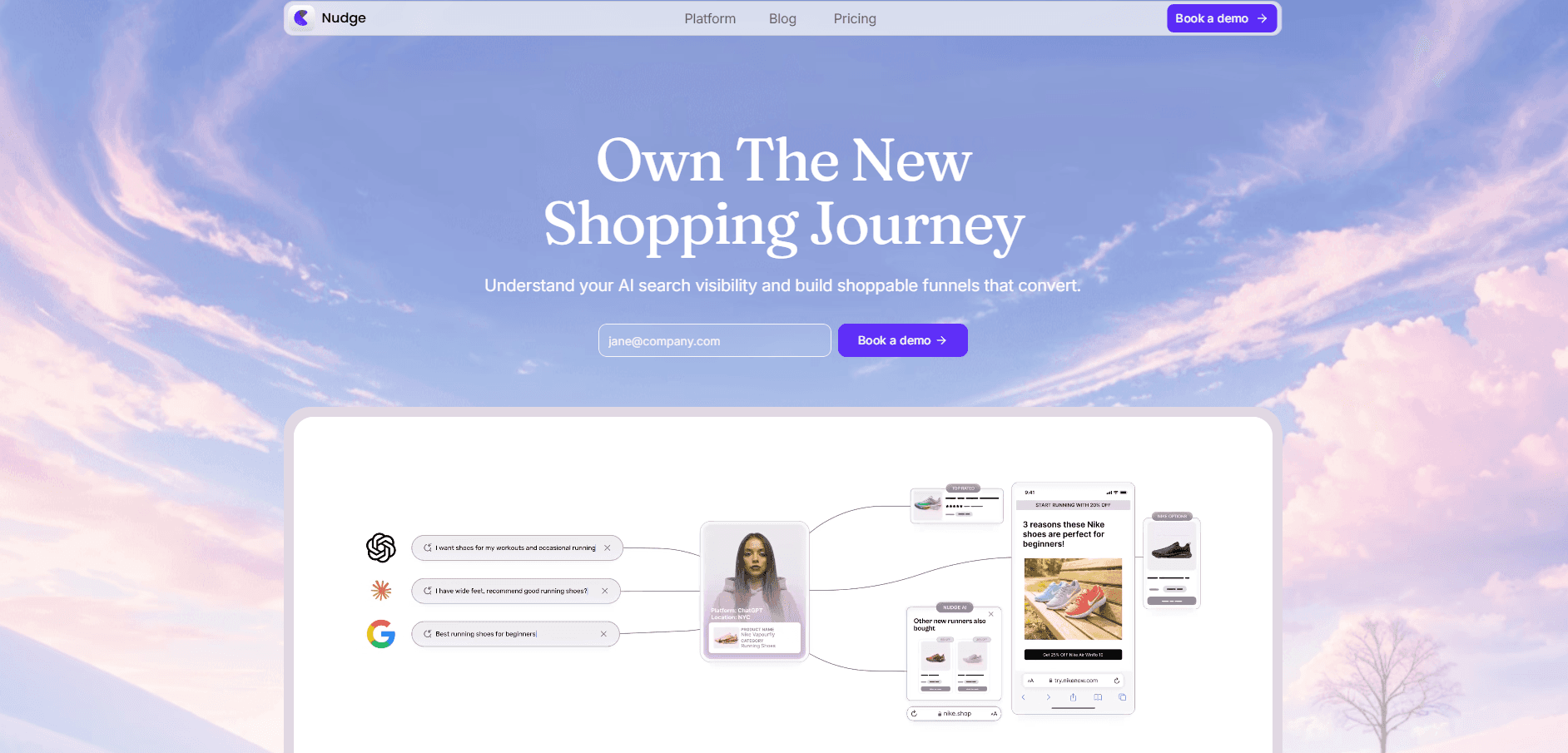
Nudge stands as a critical part of your AI optimization strategy because it complements AI tools, enhancing AI search visibility and driving conversions by personalizing each shopper’s journey in real time. It focuses on turning insights from AI platforms into actionable, high-converting experiences across your e-commerce site.
Key Features:
AI Search Visibility: Monitor which AI assistants are referencing your brand and products, giving you a next-gen visibility metric beyond traditional search rankings.
Competitive Benchmarking: Compare your AI presence and brand citations against competitors, providing insights to stay ahead in the evolving AI landscape.
Prompt-Specific Funnels: Build shoppable flows aligned with the exact questions users are asking AI, bridging SEO intent with real-time, personalized conversions.
Shoppable Guides & Product Cross-References: Helps AI-powered platforms recommend your products within assistive answers, enhancing discoverability and driving traffic to your product pages.
Nudge helps e-commerce brands optimize AI-driven experiences and convert visibility into action, ensuring higher engagement, more conversions, and stronger brand presence in the AI-powered future of search.
2. SEMrush
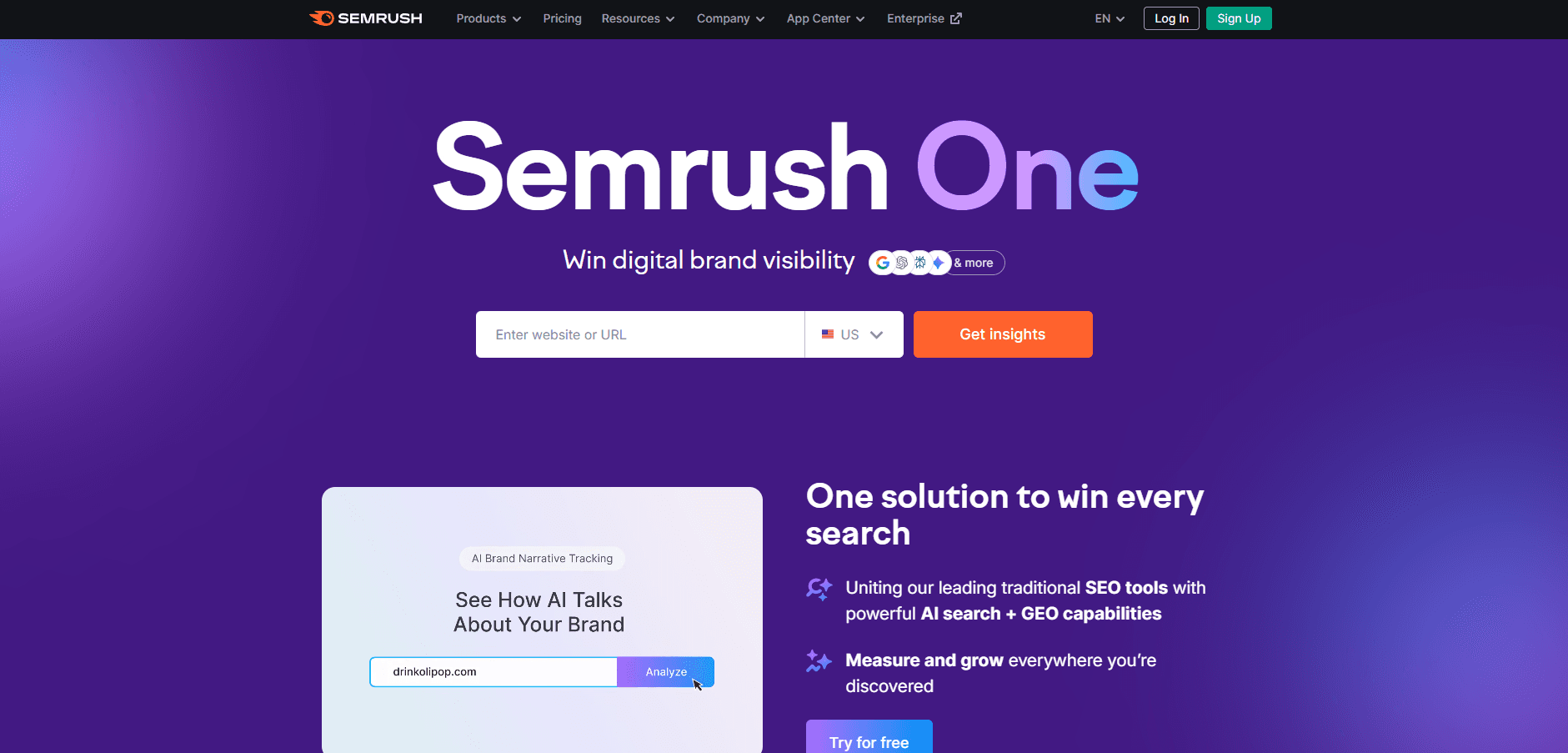
Semrush covers everything from keyword research to competitive analysis, content optimization, and now, AI search visibility. Whether you’re tracking your own site or analyzing competitors, Semrush provides in-depth insights to improve your SEO strategy.
Key Features:
Competitor Analysis: Analyze competitors’ organic search traffic, keywords, and backlinks to identify SEO opportunities.
Keyword Research: Discover high-value keywords for national and local campaigns, backed by data-driven insights.
AI Search Visibility: Monitor how your brand is mentioned in AI-generated search answers, including across platforms like ChatGPT and Google AI.
Content Optimization: Tools like ContentShake help optimize your content for better rankings and engagement.
Domain Overview: Provides in-depth insights into any website’s SEO performance, including traffic trends and keyword rankings.
PPC Insights: Analyze PPC campaigns to ensure your strategy aligns with both paid and organic search goals.
Semrush is a powerhouse for marketers looking to combine traditional SEO strategies with AI-driven insights, offering a comprehensive solution to manage and optimize your entire SEO process.
3. Ahrefs
Ahrefs is a top-tier SEO tool known for its powerful site analysis and competitor tracking capabilities. Originally focused on SEO, it’s evolving into a broader marketing platform that supports various search engines and large language models (LLMs).
Key Features:
Site Explorer: Analyze competitor websites in-depth, including their organic search performance, backlinks, and top pages.
Keyword Research: Discover high-potential keywords, topics, and search volume for your niche (though some prefer other tools for this).
Rank Tracking: Track keyword rankings across different search engines.
Backlink Analysis: Review your site’s backlinks, competitor backlinks, and discover link-building opportunities.
Content Explorer: Find popular content by search volume and social shares.
Ahrefs is a versatile tool, widely trusted by SEO professionals for its in-depth site analysis and comprehensive keyword research.
4. Surfer SEO
Surfer SEO is a content optimization tool designed to help marketers, bloggers, and SEO professionals improve their content’s visibility and ranking on search engines. It is ideal for those looking to write SEO-focused blogs with detailed content briefs, on-page SEO recommendations, and powerful integration capabilities.
Key Features:
Content Optimization Reports: Generate reports for target keywords, optimizing your content to match top-ranking pages and improve keyword relevance.
Content Editor & AI Assistance: Surfer’s content editor allows you to write content with AI-driven suggestions for SEO optimization, ensuring better rankings and improved user experience.
Integrations with Google Docs & WordPress: Easily integrate with platforms like Google Docs to enable a seamless workflow for drafting and editing content.
Comprehensive SEO Audits: Surfer analyzes the top-ranking content and gives you actionable suggestions, including keyword density, headings, word count, and more.
Surfer SEO is an excellent tool for content optimization, making it an invaluable asset for improving a website's SEO and creating high-quality, optimized content.
Also Read: Top 10 Visibility Tactics to Boost AI Search Visibility (2026)
5. Clearscope
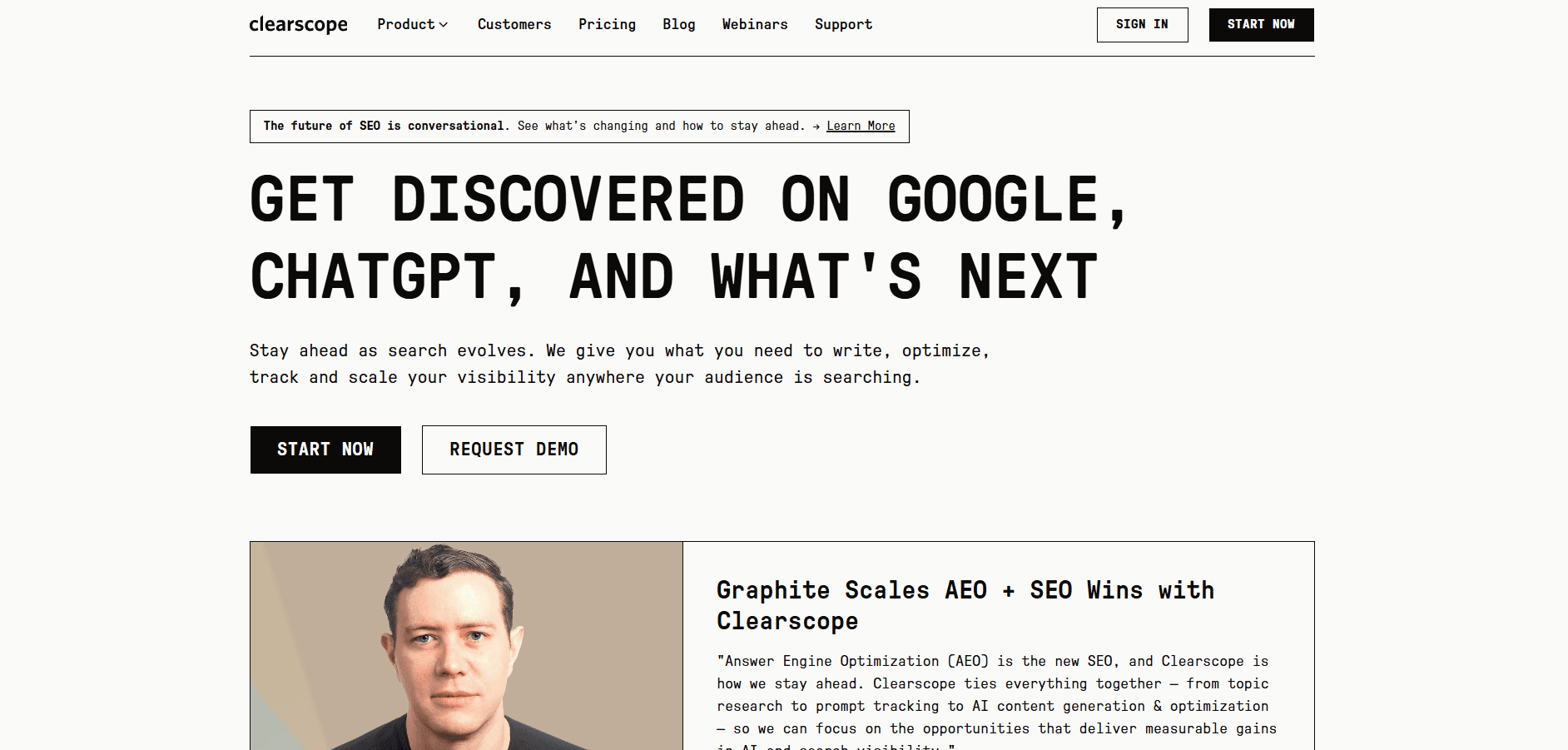
Clearscope is a leading content optimization tool that improves the quality and depth of SEO-focused content. Clearscope goes beyond content optimization by adding keyword research and tracking content decay, making it a powerful tool for continuous content improvement.
Key Features:
Content Scoring: Rates your content’s keyword usage and overall topic coverage.
Keyword Recommendations: Provides a list of related keywords for deeper topic coverage.
Competitor Insights: Shows competitor article outlines to guide content creation.
Content Decay: Tracks the performance of existing content and identifies articles that are losing rankings.
Keyword Research: Assists with discovering high-value, relevant keywords to target.
Clearscope is a premium tool that helps content creators enhance their SEO efforts, providing insights to craft content that ranks higher and performs better.
6. SE Ranking
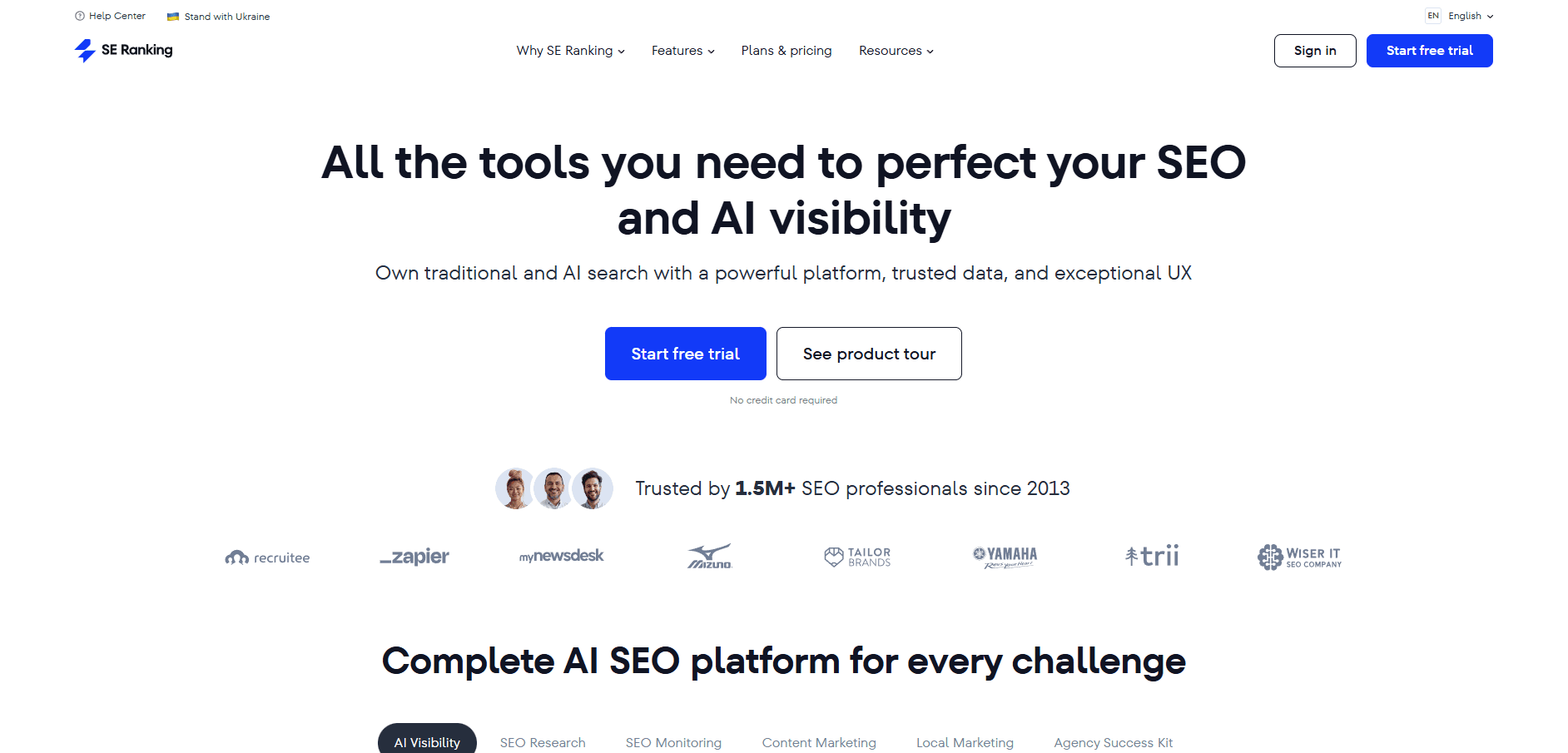
SE Ranking is an all-in-one SEO suite designed primarily for agencies, freelancers, and content marketing teams managing multiple clients. It offers a comprehensive set of features that cover everything from keyword research to SEO monitoring.
Key Features
Comprehensive SEO Suite: Keyword research, website monitoring, competitive research, backlink analysis, and more.
Client Management: Built for agencies, it allows tracking and reporting on multiple websites in one place.
Automation Features: Streamline workflows with built-in automation for easier client management.
AI Insights: Helps generate SEO reports and tracks performance across AI search engines.
Pro Plans for Agencies: Offers advanced features like LLM tracking, API access, and dedicated customer support.
SE Ranking is an ideal tool for agencies and teams managing multiple client sites, offering a well-rounded SEO solution that grows with your business needs.
7. Writesonic
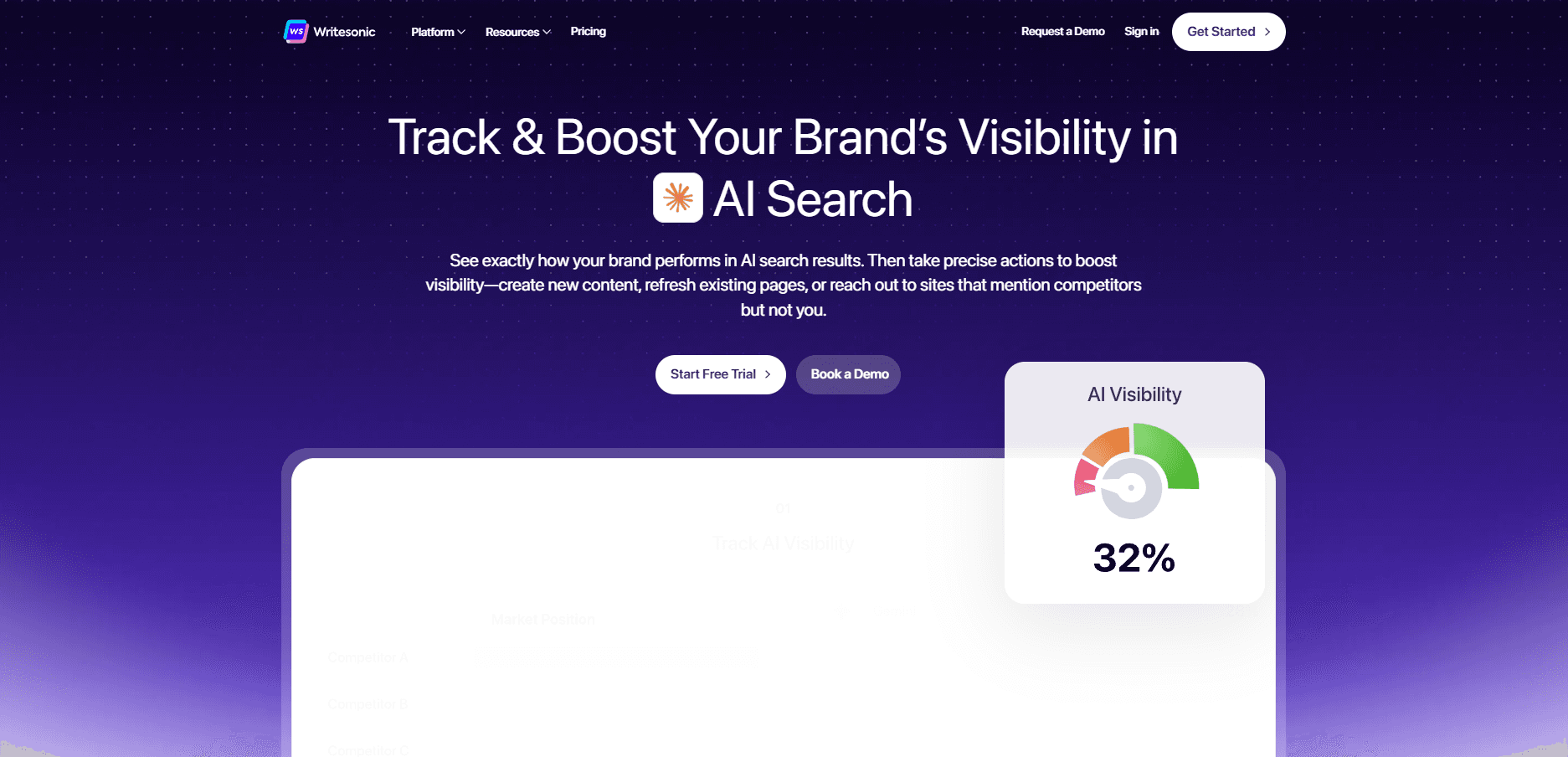
Writesonic is an all-in-one content creation and AI SEO platform designed to help businesses streamline their SEO workflows. With real-time data streaming from tools like Semrush, Ahrefs, and Google Search Console, Writesonic speeds up SEO research and content generation, making it an excellent choice for e-commerce marketers.
Key Features:
AI Article Writer: Generate high-quality, SEO-optimized content using GPT-4 and other LLMs.
Real-time SEO Integration: Seamless connection to tools like Ahrefs and Semrush for immediate SEO insights.
Brand Voice Customization: Upload your brand guidelines to ensure content matches your unique tone.
SEO Optimization: Get AI-driven suggestions to enhance your content for better visibility.
Content Personalization: Tailor articles to specific audiences and regions with Writesonic’s flexible content tools.
Writesonic stands out as a versatile tool for e-commerce businesses, helping them create SEO-optimized content quickly while maintaining brand consistency across campaigns.
Also Read: 11 Best Strategies for Ecommerce Search Personalization
8. AirOps
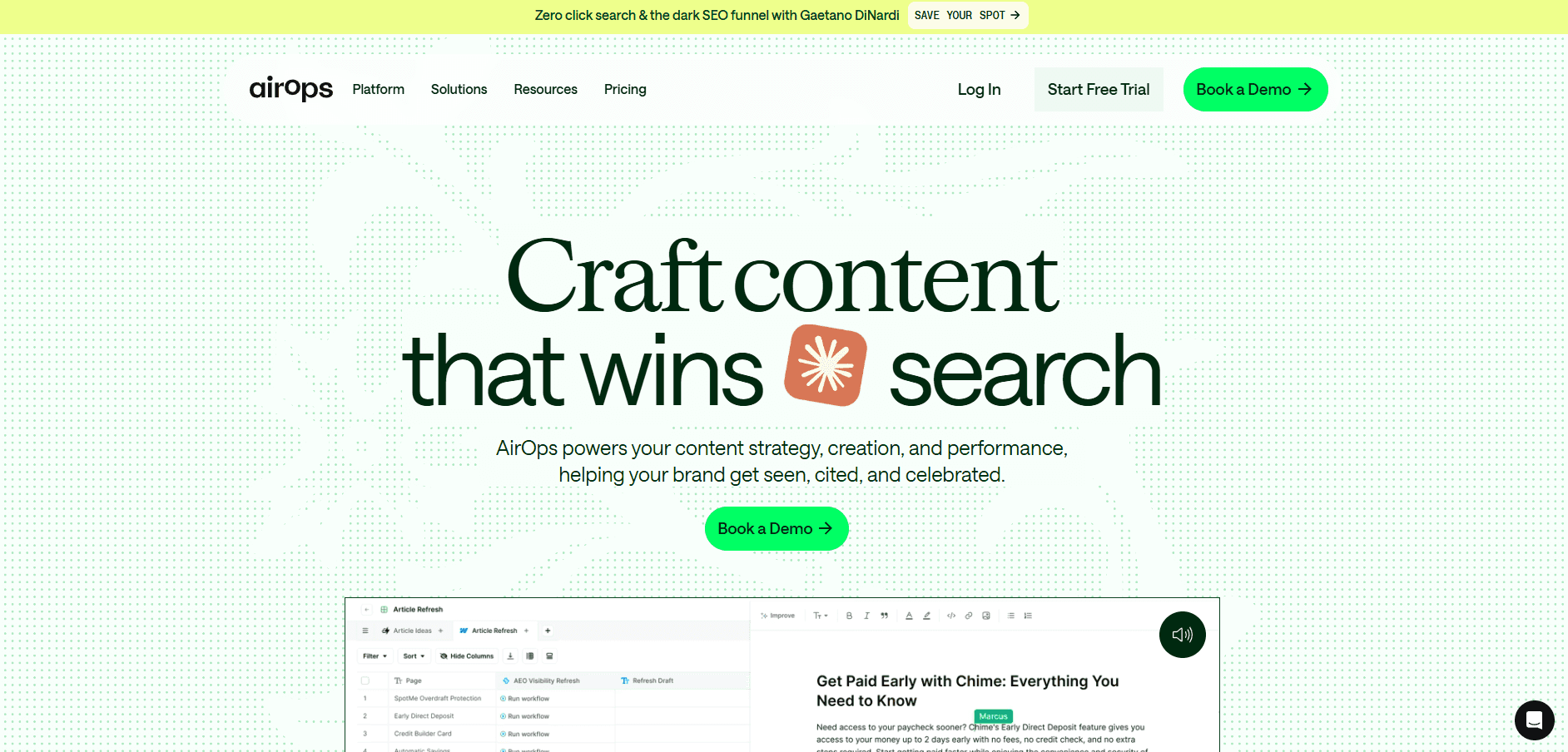
AirOps is an advanced SEO workflow automation tool designed for large teams and agencies. By integrating with existing tools like Semrush and CMS platforms like Webflow, AirOps automates complex SEO tasks and streamlines content production.
Key Features
Automated SEO Workflows: Create custom workflows to automate your SEO tasks, saving time and increasing efficiency.
AI Writer: Generate content at scale based on your brand guidelines, streamlining the content creation process.
CMS Integration: Directly ship pages to your website from AirOps, with seamless integration to platforms like Webflow.
Answer Engine Visibility: Analyze your site’s ranking in AI search engines with this free tool to assess visibility.
AI Model Access: Gain access to over 30 AI models (GPT, Claude, Llama, Perplexity, Gemini) for enhanced automation.
AirOps is an essential tool for advanced SEO teams looking to scale content production and automate complex workflows, making it a powerful asset for large agencies and enterprise-level businesses.
9. Indexly
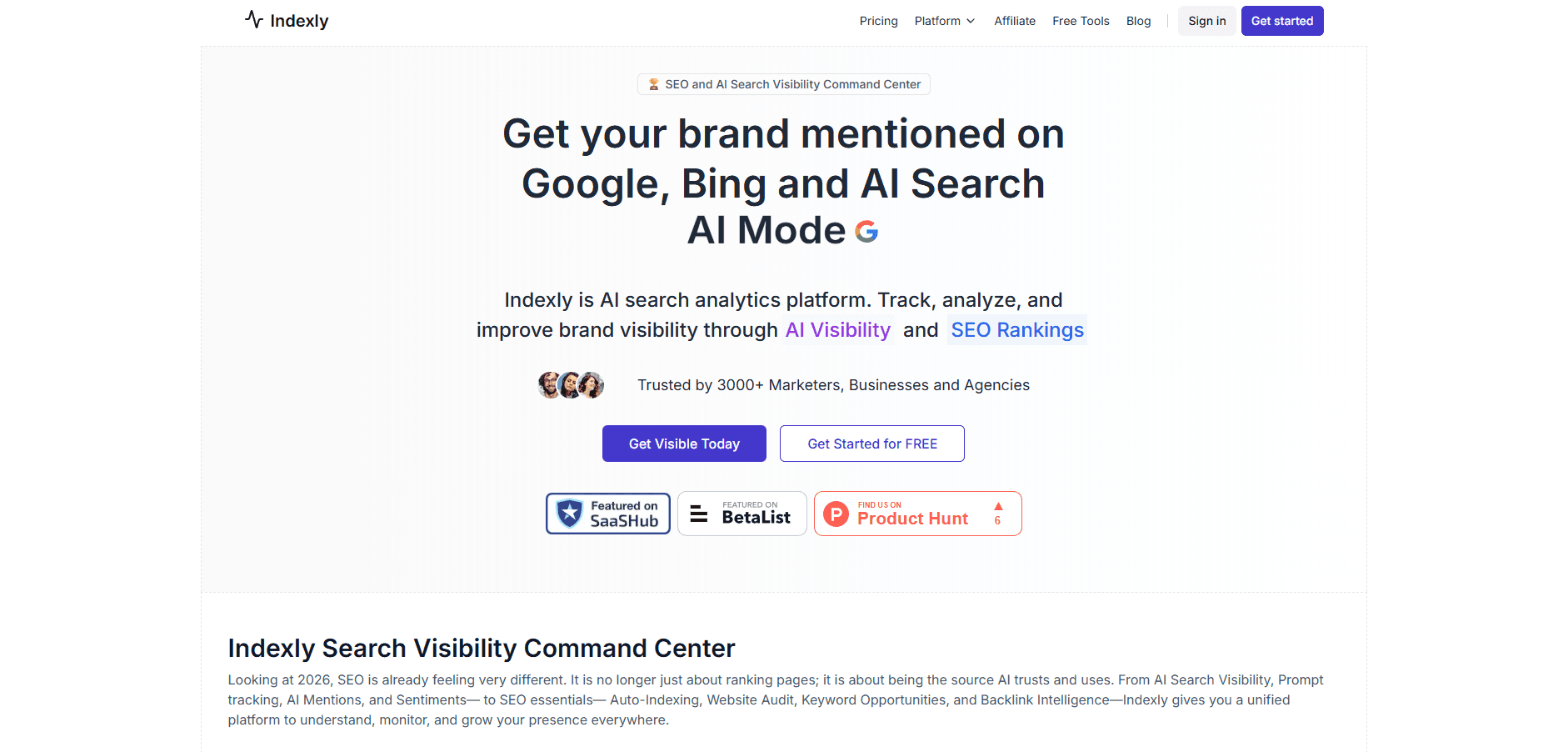
Indexly is designed to help website owners, especially e-commerce sites, get their pages indexed faster by search engines. It’s perfect for those looking to improve their site’s visibility and performance without breaking the bank.
Key Features
Instant Indexing: Get your pages indexed in hours, not days. It’s an efficient solution for websites that need quick visibility.
Bulk Indexing: Submit multiple URLs at once, ideal for e-commerce sites with large product inventories.
Page Inspect: Track the indexing status of all your pages in one easy-to-read report.
LLM Indexing Toolset: A unique tool that tracks the indexability of large language models (LLMs), keeping up with advanced SEO needs.
For website owners and e-commerce sites looking to speed up indexing and improve their search engine presence, Indexly helps save time and enhance visibility.
Integrating these AI SEO tools into your strategy can future-proof your SEO efforts, boost your search rankings, and deliver more personalized experiences that drive conversions.
With the right tools in hand, here’s how you can use AI for SEO, focusing on strategies tailored specifically for e-commerce and DTC brands.

How to Use AI for SEO: Actionable Strategies for E-commerce and DTC Brands
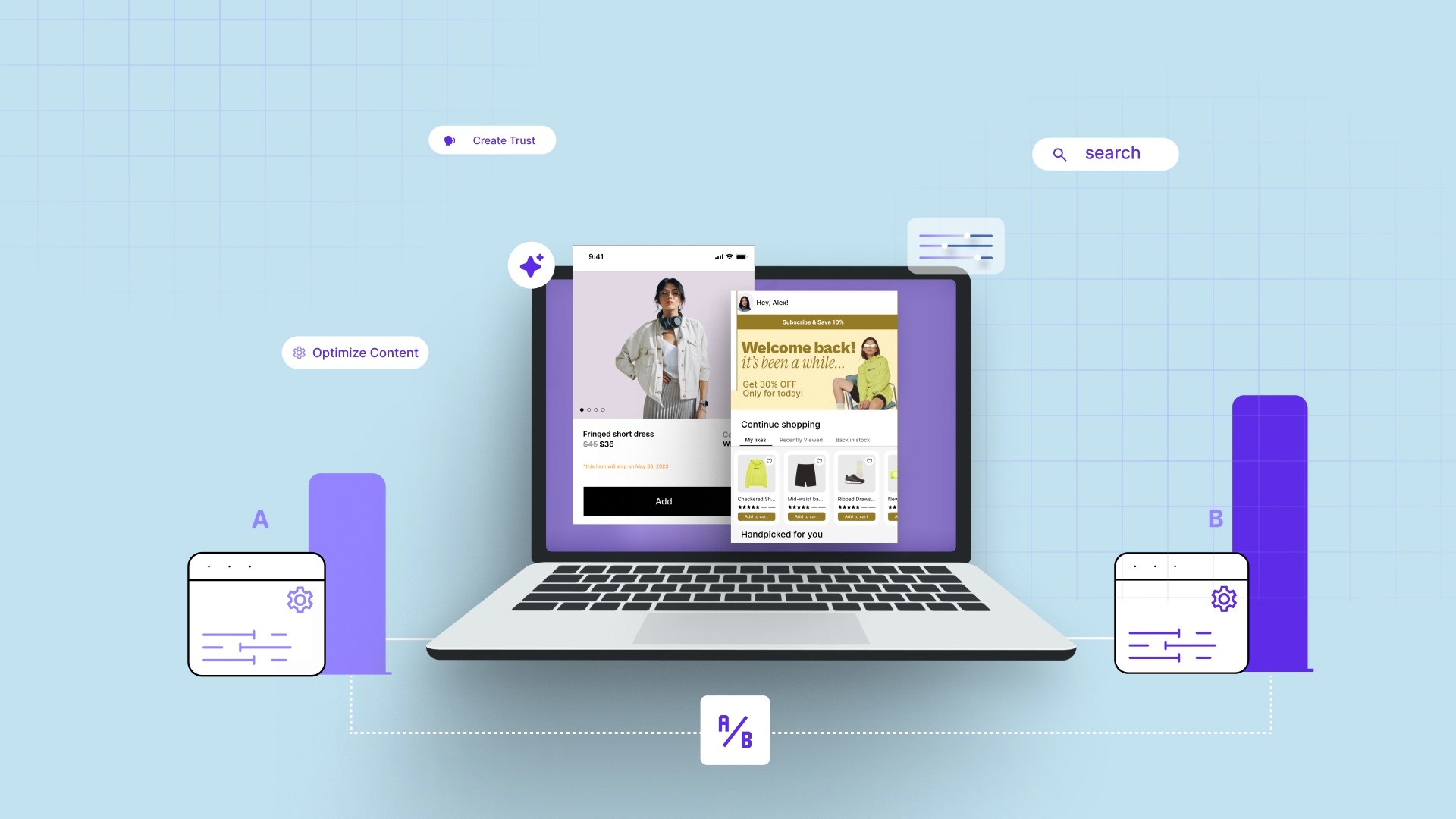
In 2026, utilizing AI in your SEO strategy creates smarter, more efficient, and personalized shopping experiences that drive conversions. Here’s how to integrate AI into your SEO strategy to get real, measurable results.
1. Align SEO Tools with Your Digital Commerce Strategy
Optimize Product Page Visibility (PDP SEO): AI tools like Nudge can dynamically adjust your PDP content to each shopper’s intent, campaign source, and behavior. This allows for continuous optimization based on real-time data, making your pages more relevant for every visitor.
Support Landing Pages & PLPs: Ensure that your landing pages and product listing pages (PLPs) are personalized based on user behavior. Tools like Nudge, Semrush, and Writesonic can suggest the best content structure and keywords for higher engagement.
Uncover Intent Signals: AI helps uncover behavioral intent by analyzing past searches, click patterns, and abandoned carts. Tools like Nudge help map intent to keywords, making your SEO strategy more targeted and effective.
Integrate with Analytics to Personalize Shopper Journeys: AI tools like Nudge use campaign data to personalize the shopper journey from landing pages through checkout. When combined with SEO/traffic insights from tools like SEMrush, this enriched data fuels smarter real‑time personalization and helps brands adapt experiences that resonate with individual shoppers.

2. Consider Search Intent to Optimize Content
AI allows you to go beyond basic keyword research. It helps you understand the ‘why’ behind user queries, making it easier to create content that truly resonates with your target audience. Here’s how to do it:
SERP Analysis: Conduct a quick analysis of the top-ranking results to understand user intent. This will guide your content creation, making sure it aligns with what searchers are truly looking for.
Keyword Research Tools: Use tools like Semrush or Ahrefs to identify keywords that reflect clear user intent. These tools offer features that categorize keywords into informational, transactional, or navigational, helping you create content that addresses specific user needs.
3. Optimize for E-E-A-T (Experience, Expertise, Authority, Trust)
Even with AI-driven content, it’s critical to align with Google's E-E-A-T guidelines to rank higher and gain the trust of both users and search engines. Here’s how to do it:
Author Credentials & Bio: Add an author bio on your e-commerce website to enhance credibility. Share relevant qualifications and expertise, especially when writing about complex products or industries.
Content Social Proof: Integrate social media mentions, reviews, or case studies to reinforce your content’s authority. Google values content from authoritative sources with real-world backing.
4. Use AI SEO Tools for Content Optimization Tasks
AI can be an invaluable assistant for content optimization. Here’s how to use it effectively:
Content Structuring: Use AI tools like Surfer SEO to structure your content. These tools help you create outlines, suggest keywords, and ensure your content aligns with ranking factors like search intent and keyword density.
Writing Short-Form Content: AI excels at generating concise, optimized definitions, FAQs, and conclusions. Writesonic is perfect for writing product descriptions or FAQs that are SEO-friendly and easy for customers to understand.
5. Continuously Test and Optimize with AI Experimentation
AI is not a set-it-and-forget-it solution. You must constantly iterate to stay ahead. AI-powered experimentation tools can help:
A/B Testing: Use AI for continuous testing of product pages, landing pages, and checkout flows. Tools like SEMrush’s Content Toolkit use AI to test variations of your web pages in real-time, offering insights into which version converts better.
User Behavior Insights: Nudge provides real‑time behavioral analytics integrated with your commerce data, helping you see where shoppers engage, hesitate, or drop off. These insights feed into personalization that improves engagement, conversion rates, and search relevance by aligning content and experiences to actual user behavior.
These actionable strategies show how AI tools can boost SEO performance and improve the overall user experience on your e-commerce platform.
Conclusion
In 2026, AI is the future of SEO and e-commerce personalization. By adopting the tools from our list of the best AI SEO tools, you can increase conversions, boost AOV, and enhance LTV while adapting to the shifting expectations of today’s savvy shoppers.
Nudge’s AI-powered personalization layer doesn’t just help you track and optimize for AI visibility. It takes things a step further by actively enhancing every touchpoint on your site, ensuring each shopper’s journey is tailored to their behavior and intent in real time.
FAQs
1. How does AI boost SEO for e-commerce websites?
AI automates content optimization, refines keyword targeting, and personalizes user experiences in real time, helping e-commerce sites rank higher, engage visitors, and drive conversions.
2. What are the top AI SEO tools for e-commerce?
Key AI SEO tools for e-commerce include Nudge, Semrush, Surfer SEO. These tools optimize content, improve search visibility, and personalize user journeys.
3. How does AI personalization enhance product pages (PDPs)?
AI personalizes PDPs by adjusting content, recommendations, and layouts based on shopper behavior, increasing relevance, engagement, and conversion rates in real time.
4. How do I improve my brand's AI SEO?
To improve your brand's AI SEO, focus on creating content that aligns with AI-generated responses. Use tools like Nudge to personalize experiences in real-time, enhance product page visibility, and optimize content based on AI behavior and search intent.
5. How do I decide what prompts & topics I want to rank on?
AI tools like Semrush and Ahrefs help identify high-impact prompts and topics by analyzing search trends, AI-driven queries, and competitor strategies. This allows you to focus on the most relevant and trending topics that align with your audience’s intent.