Comparisons
Nudge vs. Fermat Commerce: AI-Driven E-Commerce Optimization Compared
Explore how Nudge and Fermat Commerce optimize e-commerce with AI. Learn their key features and how they drive conversions, personalization, and growth.

Gaurav Rawat
Jan 20, 2026
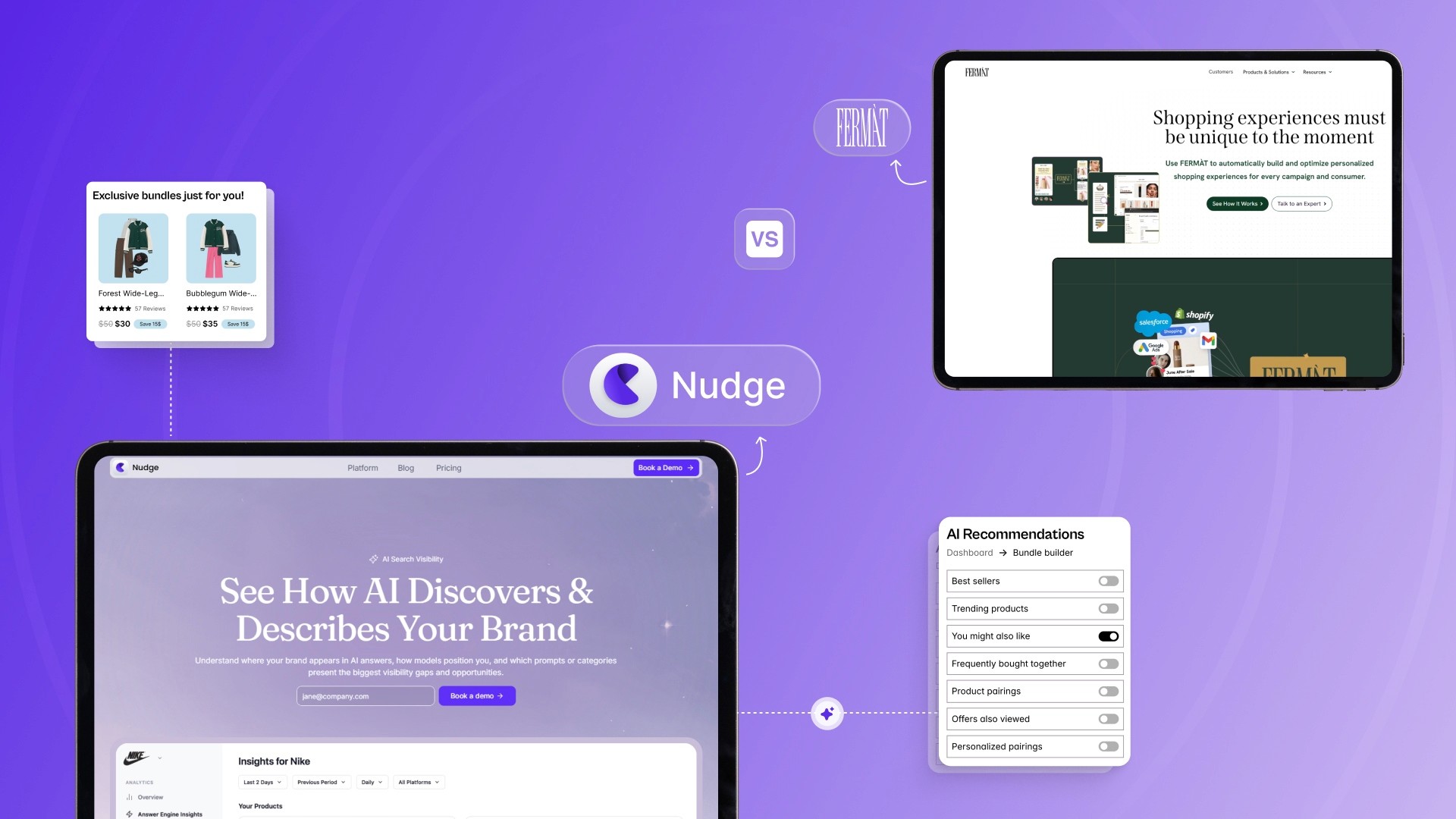
For e-commerce brands heavily reliant on paid traffic, the challenge is clear: bringing in clicks is only half the battle. Once those visitors land, the journey often falls short: static, impersonal shopping experiences lead to high drop-off rates, low conversion rates (CVR), and ultimately wasted ad spend.
As e-commerce marketers and growth managers, you need platforms that optimize every step of the shopper journey in real time. Enter Nudge and Fermat Commerce: two AI-driven platforms designed to enhance AI visibility and personalization.
This blog will compare how Nudge and Fermat Commerce approach these challenges, from dynamic content and real-time recommendations to conversion-boosting features. Let’s get started.
Quick Recap
AI-Powered Personalization: Nudge offers real-time personalization across the entire shopper journey, while Fermat focuses on AI-generated funnels, lacking full personalization.
Comprehensive Shopper Journey Optimization: Nudge optimizes the full funnel, including product grids, dynamic nudges, and cart abandonment recovery, whereas Fermat’s optimization ends at funnel creation.
No Developer Bottlenecks: Nudge enables marketers to launch, test, and iterate without developer support, while Fermat requires manual adjustments and lacks speed.
Visibility vs. Conversion: Nudge excels in AI search visibility and competitive benchmarking for commerce brands and also being able to connect them to prompt-mapped funnels.
Understanding AI-Driven E-Commerce Optimization
AI-driven optimization understands your customers in real time and tailors their shopping experience to meet their needs, turning data into dynamic, personalized shopping journeys that engage customers at every step.
Why AI-Powered Personalization is Crucial:
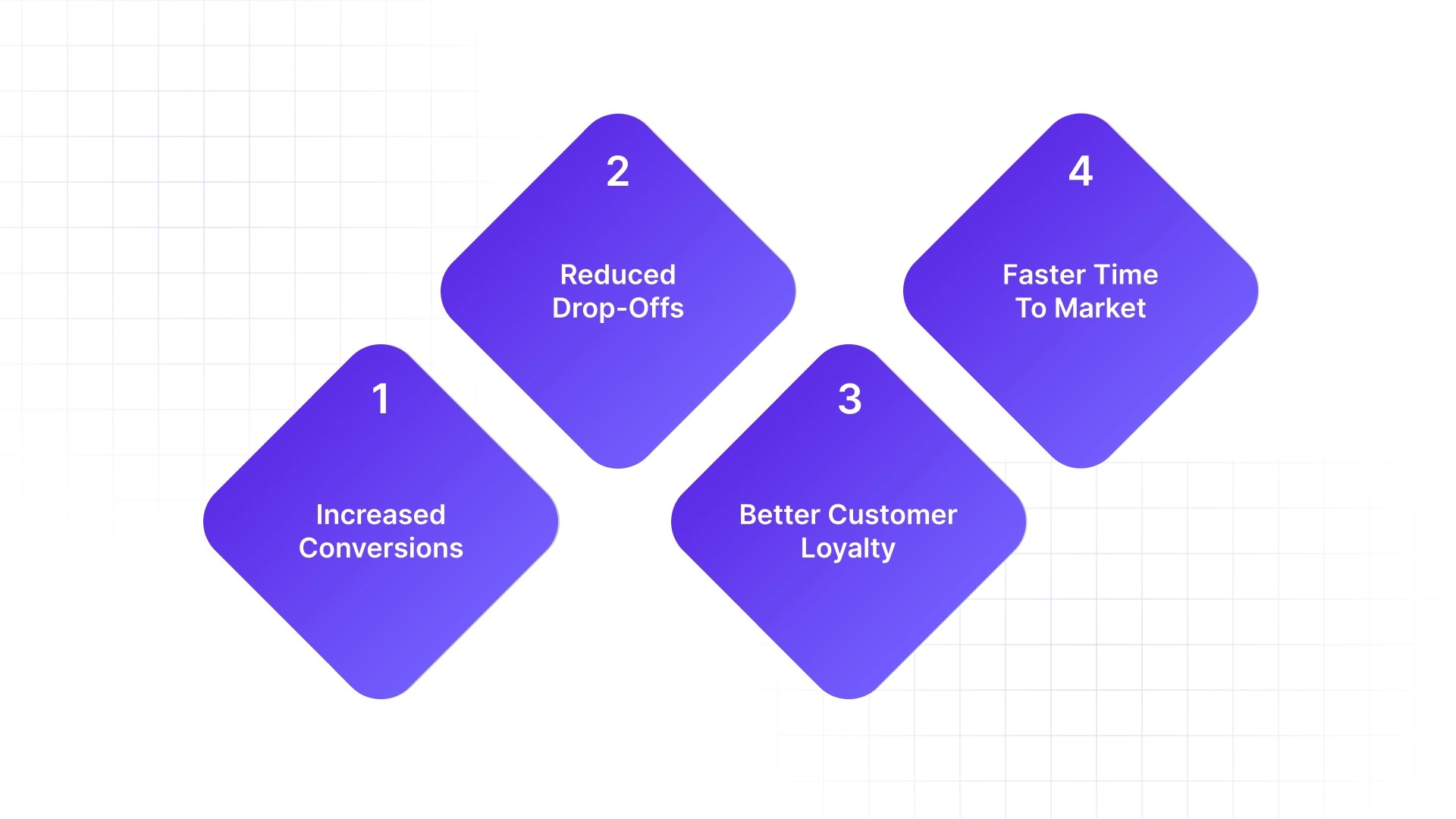
Increased Conversions: By offering what shoppers want at the right time, you make it easier for them to complete a purchase.
Reduced Drop-Offs: Personalized experiences keep shoppers engaged, minimizing the chances they’ll leave the site before making a purchase.
Better Customer Loyalty: Consistently delivering personalized, relevant experiences builds trust and encourages repeat visits.
Faster Time to Market: Unlike traditional systems, AI enables faster changes to product pages, offers, and content without waiting for lengthy development cycles.
AI-driven optimization helps e-commerce brands make smarter decisions, improve customer experiences, and drive sustainable growth at scale.
With a clear understanding of AI optimization, let’s explore how Nudge and Fermat Commerce approach these challenges in their unique ways.
Nudge vs. Fermat Commerce: An Introduction
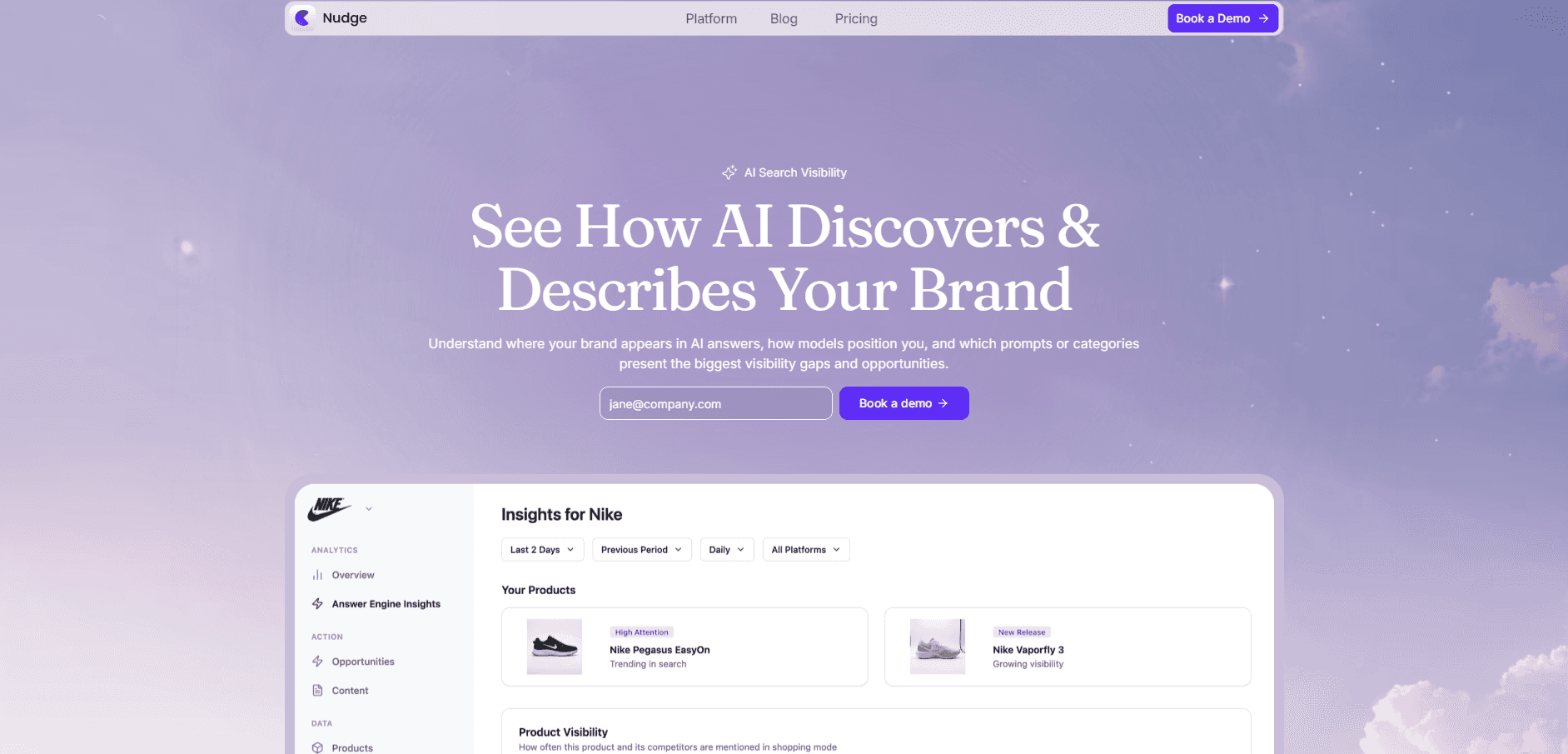
Both Nudge and Fermat Commerce utilize AI-driven technology to optimize the e-commerce experience, but they take different approaches to AI visibility and personalization.
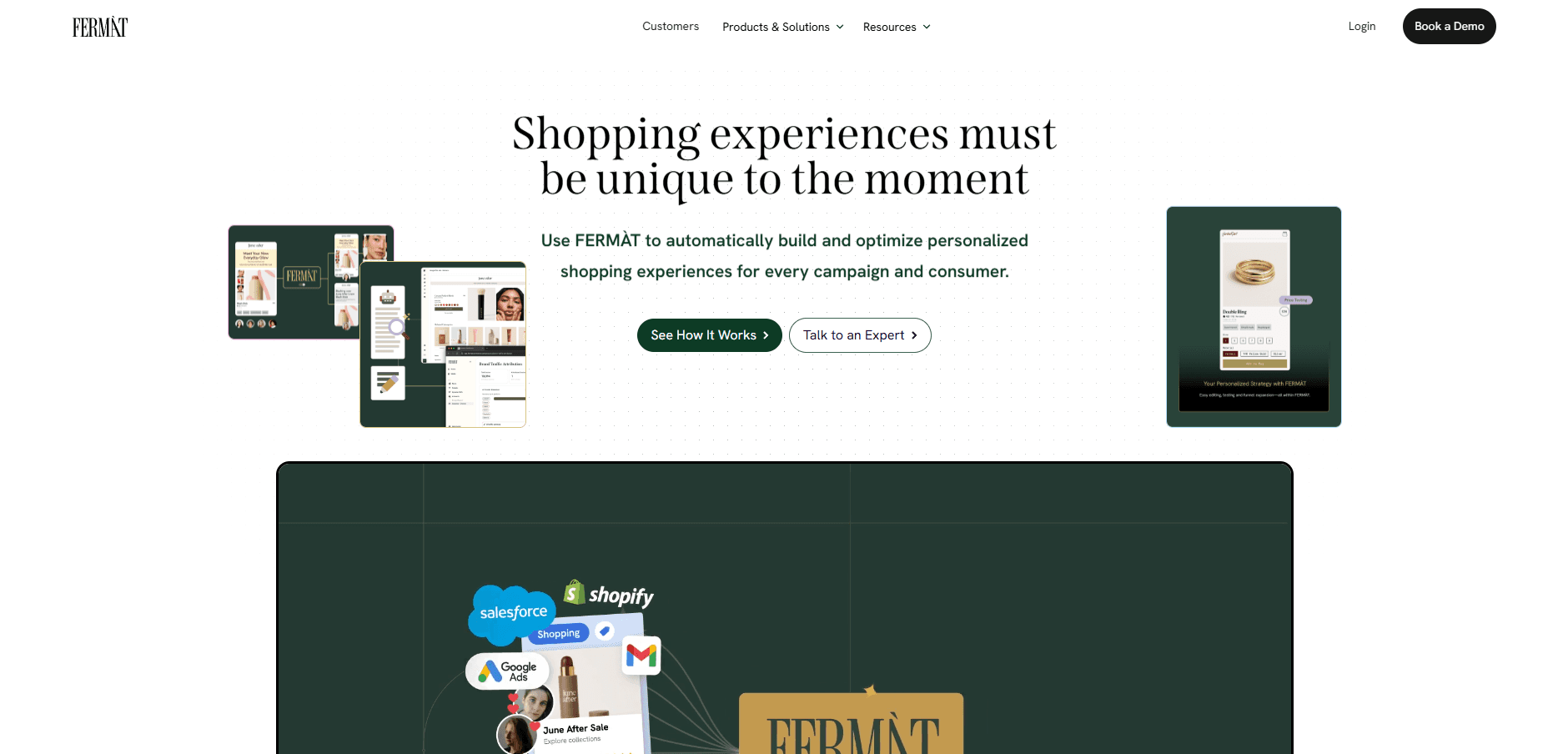
Fermat Commerce focuses on AI search visibility and optimizing how your brand ranks in search engines powered by AI. While it offers valuable insights into search performance and visibility, it does not provide the same level of personalization and journey optimization as Nudge.
Nudge goes beyond just tracking AI visibility by actively personalizing every stage of the shopping journey, from landing pages to checkout. It adapts based on real-time shopper behavior, making each interaction more engaging and conversion-friendly.
Also Read: Top Fermat Commerce Competitors in 2025
With Nudge, brands don’t just track AI mentions; they optimize the entire funnel in real-time, ensuring better conversion rates and a more dynamic customer journey.
Now that we know what each platform brings to the table, let’s break down the key features that set them apart.
Key Features Comparison: Nudge vs. Fermat Commerce
Both Nudge and Fermat Commerce offer powerful AI-driven tools for e-commerce optimization. Here’s a breakdown:
Comparison Table: Nudge vs. Fermat Commerce
Feature | Nudge | Fermat Commerce |
Real-Time Personalization | Yes | No |
Commerce Surfaces (Product Grids, Offers, Videos) | Yes | No |
AI Product Recommendations | Yes | No |
Contextual Nudges (Pop-ups, Banners) | Yes | No |
Cart Abandonment Recovery | Yes | No |
No Developer Bottlenecks | Yes | No |
Continuous Learning (AI Adaptation) | Yes | No |
AI-Generated Funnels | Yes | Yes |
Custom PDPs | Yes | Yes |
Bundle Builder | Yes | Yes |
Omnichannel Funnel Creation | Yes | Yes |
Nudge
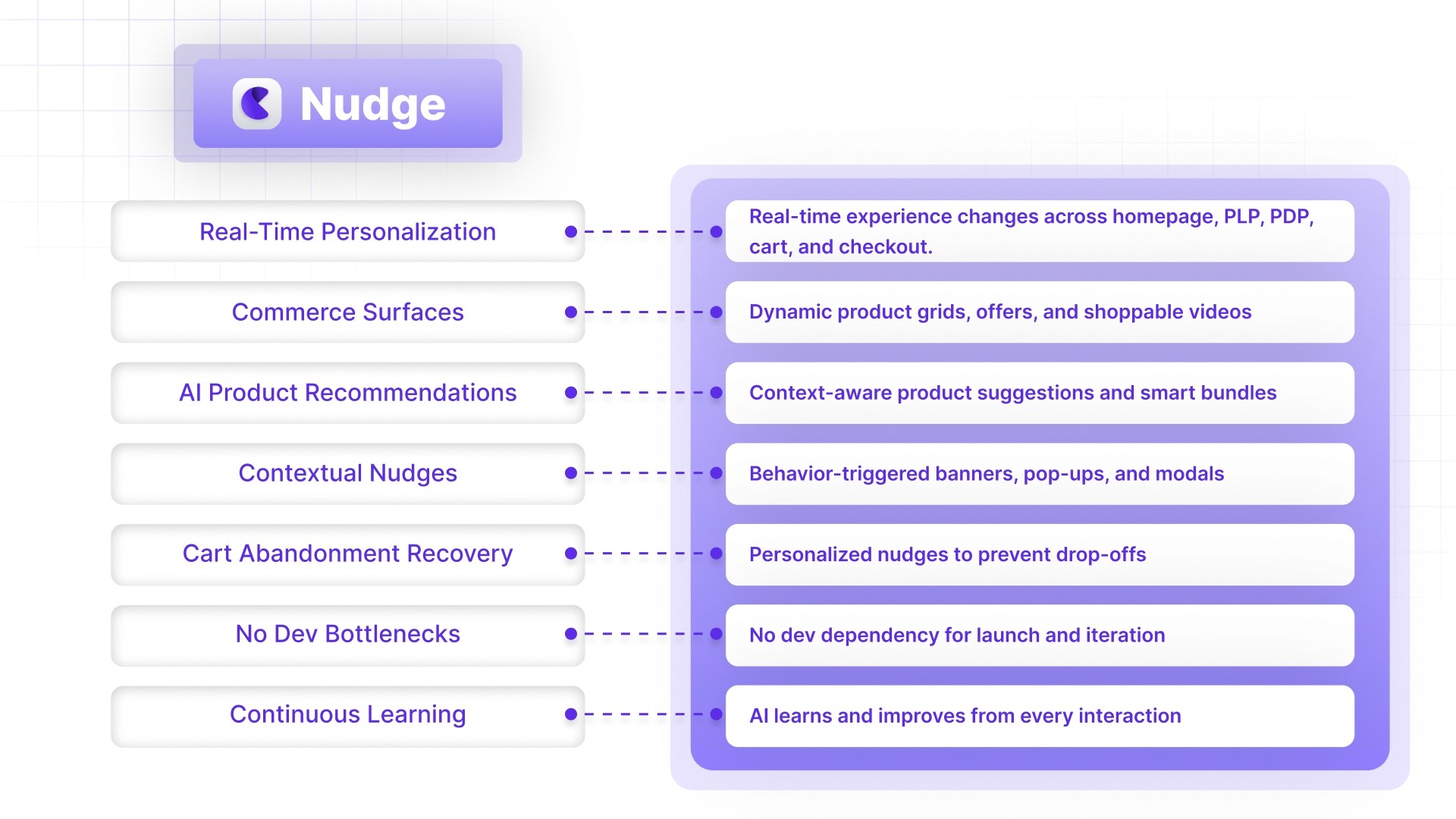
Real-Time Personalization Across the Funnel: Homepages, PDPs, PLPs, carts, and checkout adapt to each shopper’s behavior and intent in real time.
Commerce Surfaces: Dynamically creates personalized product grids, offers, and shoppable videos, enhancing engagement at every stage of the journey.
AI Product Recommendations: Context-aware recommendations and smart bundles that align with shopper behavior and inventory.
Contextual Nudges: Dynamic banners, pop-ups, and modals triggered by real-time behaviors (e.g., exit intent, scroll depth) to boost conversions.
Cart Abandonment Recovery: Personalized offers or nudges that recover abandoned carts and increase retention.
No Dev Bottlenecks: Marketers can launch, test, and iterate without needing developers, freeing up engineering resources.
Continuous Learning: Nudge’s AI adapts and optimizes experiences based on every shopper interaction.
Fermat Commerce
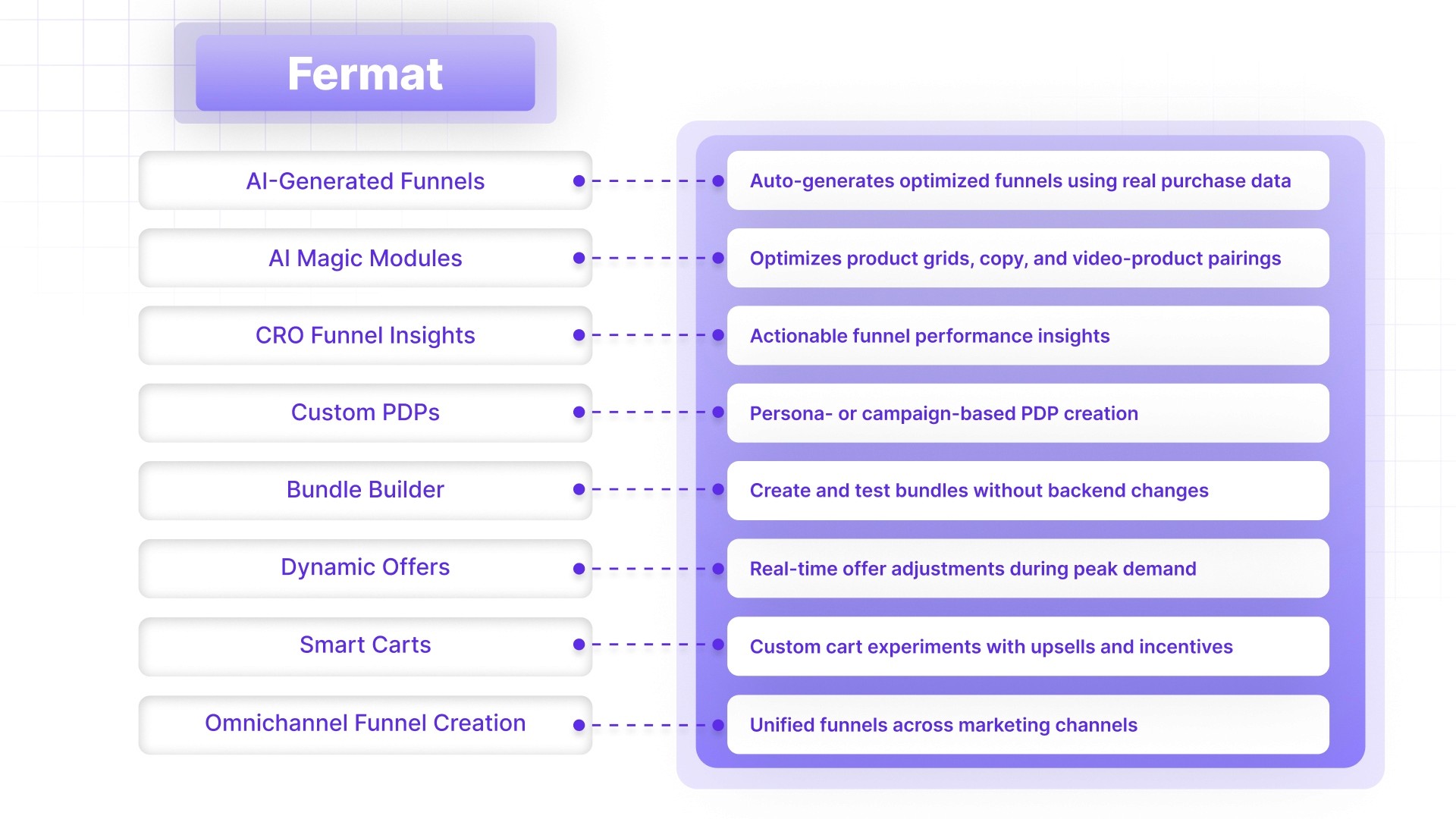
AI-Generated Funnels: Using real purchase data, Fermat creates optimized product descriptions, layouts, and funnels tailored to each user.
AI Magic Modules: Optimizes product grids, landing page copy, and video-product pairings to increase AOV and reduce time-to-launch.
CRO Funnel Insights: Provides actionable insights into funnel performance, helping businesses identify opportunities for optimization.
Custom PDPs: Allows brands to create tailored PDPs based on customer personas or specific campaigns.
Bundle Builder: Facilitates the creation and testing of product bundles without requiring backend changes.
Dynamic Offers: Enables businesses to create and adjust offers in real time to improve conversion rates during peak periods.
Smart Carts: Allows experimentation with custom cart features like upsells, shipping thresholds, and purchase incentives.
Omnichannel Funnel Creation: Seamlessly integrates funnels across multiple marketing channels, ensuring cohesive customer experiences.
While both Nudge and Fermat Commerce provide valuable AI-driven solutions for e-commerce, Nudge excels by offering full funnel personalization, real-time optimization, and the ability to optimize every shopper journey.
Fermat Commerce, while strong in post-click funnel optimization, lacks the comprehensive personalization and conversion-focused features that make Nudge a more holistic solution for e-commerce growth.

With the features laid out, let’s look at the pros and cons of each platform to see where they truly shine and where they fall short.
Pros and Cons: Nudge vs. Fermat Commerce
Choosing between Nudge and Fermat Commerce depends on your growth goals and how you want to personalize the shopping experience.
Nudge
Pros | Cons |
|
|
Fermat Commerce
Pros | Cons |
|
|
How Nudge Stands Out Among Competitors
In a competitive market where several platforms claim to optimize e-commerce experiences, Nudge truly sets itself apart through AI-driven personalization, real-time optimization, and its ability to enhance the entire shopper journey. Here's why Nudge is the superior choice:
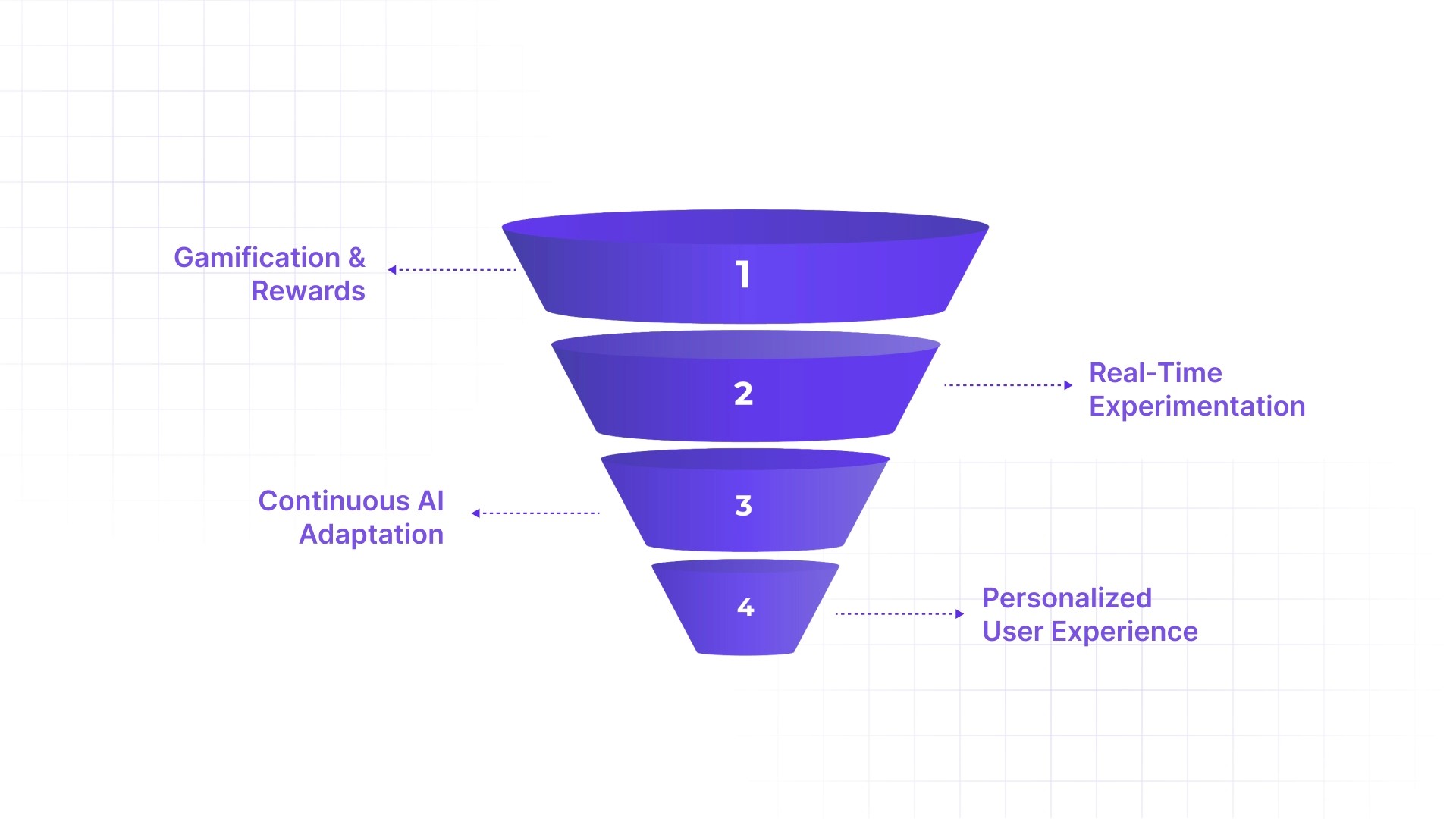
Gamification and Rewards: Nudge’s gamification features, like quizzes and scratch cards, boost engagement and repeat purchases. Fermat doesn’t offer gamification, which limits its long-term engagement potential.
Real-Time Experimentation: Nudge enables marketers to run real-time A/B tests, making rapid adjustments without dev support. Fermat lacks this agility and relies on manual changes for experimentation.
Continuous AI Adaptation: Nudge’s AI continuously learns and adapts based on shopper interactions, ensuring relevance. Fermat doesn’t integrate real-time AI learning into its optimization process.
Personalized User Experience: Nudge offers full-funnel personalization, from homepages to checkout. Fermat personalizes only product pages, limiting its effectiveness on overall conversions.
From product discovery to checkout, Nudge ensures a dynamic, real-time experience that is both engaging and conversion-friendly. Whether it’s through AI product recommendations, real-time experimentation, or gamification, Nudge provides the tools brands need to maximize conversions and boost customer loyalty.
Suggested Read: Mastering Data-Driven Personalization for Success
After weighing the pros and cons, it’s time to take a closer look at how Nudge and Fermat Commerce stack up in terms of pricing.
Pricing Comparison: Nudge vs. Fermat Commerce
Understanding cost structures can help you evaluate value vs. investment when choosing an AI-driven e‑commerce optimization platform. Here’s how Nudge vs. Fermat Commerce compares.
Nudge Pricing Overview
Plan | Price | Key Inclusions |
Starter | $499 / month | Track up to 100 high‑intent shopping prompts; monitor up to 25 products; receive up to 8 actionable insights per week. |
Enterprise | Custom Pricing | Custom prompt coverage and SKU tracking; tailored strategy support; enterprise guidance for large catalogs. |
Nudge Starter is designed for commerce teams that want clear AI visibility insights and actionable recommendations without operational complexity. Enterprise pricing is tailored for large brands that need deep prompt coverage, SKU tracking, and strategic guidance.
Fermat Commerce Pricing Overview
Fermat does not publicly list fixed prices on its website. Pricing is provided after consultation with their team based on your traffic volume, feature needs, and usage tier.
Plan Type | Pricing Model | Notes |
Custom Pricing | Based on business size and needs | Fermat provides pricing after understanding traffic, features, and goals. |
Nudge ties pricing to measurable visibility insights, personalization, and optimization, giving brands a clearer picture of ROI potential. This transparency allows teams to plan their budgets without having to request a quote first.
Fermat’s pricing is bespoke and consultation‑based, meaning you need to request a quote based on your scale and requirements. The pricing can be more flexible, but requires deeper discussion to assess feature vs. cost impact.

Conclusion
As e-commerce brands continue to evolve, the need for AI-driven personalization has never been more crucial. While Fermat Commerce focuses on AI-generated funnels and post-click optimization, Nudge stands out by offering full-funnel personalization.
Nudge transforms the entire shopper experience, from landing pages to checkout, ensuring higher conversions, AOV, and LTV.
Ready to move beyond basic AI visibility? Book a demo today and see how Nudge’s real-time personalization can optimize your customer journey and maximize conversions without waiting on developers.
FAQs
1. What makes Nudge different from other AI visibility platforms?
Nudge goes beyond visibility tracking by personalizing the entire shopper journey, optimizing each stage with real-time data. In contrast, Fermat Commerce focuses on post-click funnel optimization and AI-generated funnels but lacks full-funnel personalization.
2. How do Nudge and Fermat Commerce improve conversion rates and AOV?
Nudge enhances conversions with real-time personalization, dynamic recommendations, and cart abandonment recovery. Fermat focuses on AI-generated funnels and custom PDPs, but lacks personalized on-site experiences that drive higher CVR and AOV.
3. Can small e-commerce businesses benefit from Nudge?
Yes, Nudge is scalable for brands of all sizes. Whether you're a small business or enterprise, Nudge offers flexibility without needing extensive developer resources. Fermat, though powerful, may require more manual adjustments that could be less ideal for small businesses.
4. What is the pricing structure for Nudge and Fermat Commerce?
Nudge offers a Starter plan at $499/month, including real-time personalization and actionable insights, while Enterprise pricing is custom. Fermat offers custom pricing based on traffic and feature needs, requiring consultation for a detailed cost.
5. How do Nudge and Fermat adapt to modern shopping behavior?
Nudge uses AI-driven insights to continuously optimize the shopper journey, ensuring it evolves with real-time shopper behavior. Fermat offers AI-generated funnels, but it doesn’t provide the same real-time personalization that adapts as shoppers' needs shift.