AEO & GEO
Best Generative Engine Optimization Tools for AI in 2026
Discover the best AI tools for generative engine optimization in 2026. Learn how these tools are changing content creation and digital marketing strategies.

Kanishka Thakur
Jan 19, 2026

As AI continues to redefine digital marketing, e-commerce brands and DTC marketers face a crucial challenge: optimizing generative engines for better content visibility and relevance. In 2026, the tools you use and the strategies you apply will determine your competitive edge.
For many, the struggle isn’t about creating content; it’s about making that content stand out when AI engines generate billions of results. Generative Engine Optimization (GEO) is no longer a nice-to-have but a necessity. Methods like adding relevant statistics, citations, and quotations can boost visibility in AI responses by up to 40%.
This blog will guide you through the best AI tools for generative engine optimization in 2026. Let’s get started.
Quick Recap
Generative Engine Optimization: Nudge tracks AI search rankings and optimizes content & pages to enhance AI GEO insights to get both discoverable on AI search and convert that intent into revenue.
GEO Increases Conversions: By optimizing content for AI responses, AI GEO tools ensure your brand gets in front of high-intent shoppers, driving higher conversions.
Seamless Integration is Crucial: Select AI GEO tools like Nudge that integrate with your existing SEO stack for smooth data flow and actionable insights.
Boosted Conversions: With AI Search Visibility & Shoppable Funnels, Nudge increases discoverability on AI search engines & post-click conversion.
What is Generative Engine Optimization (GEO)?
Generative Engine Optimization (GEO) is the practice of refining your content to ensure it ranks well in AI-generated responses, such as those from Google AI Overviews, ChatGPT, and Perplexity. GEO is tailored for AI-driven platforms that generate real-time, context-based answers.
To succeed in GEO, your content must align with how large language models (LLMs) process information. This requires a focus on:
Clear structure: Ensure content is logically organized, with headings, subheadings, and relevant sections for better AI comprehension.
Contextual accuracy: Provide clear, reliable context that makes it easy for AI to use your content when answering related queries.
Trust signals: Include verifiable sources, statistics, and citations to indicate that your content is credible and trustworthy.
Unlike traditional SEO, where the goal is to rank higher in search results, GEO focuses on getting AI engines to recognize and reference your content in user-generated AI responses.
Now that we've covered what GEO is, let's explore why it's becoming an essential strategy for staying competitive in the advancing digital space.
Why GEO is the Future of SEO
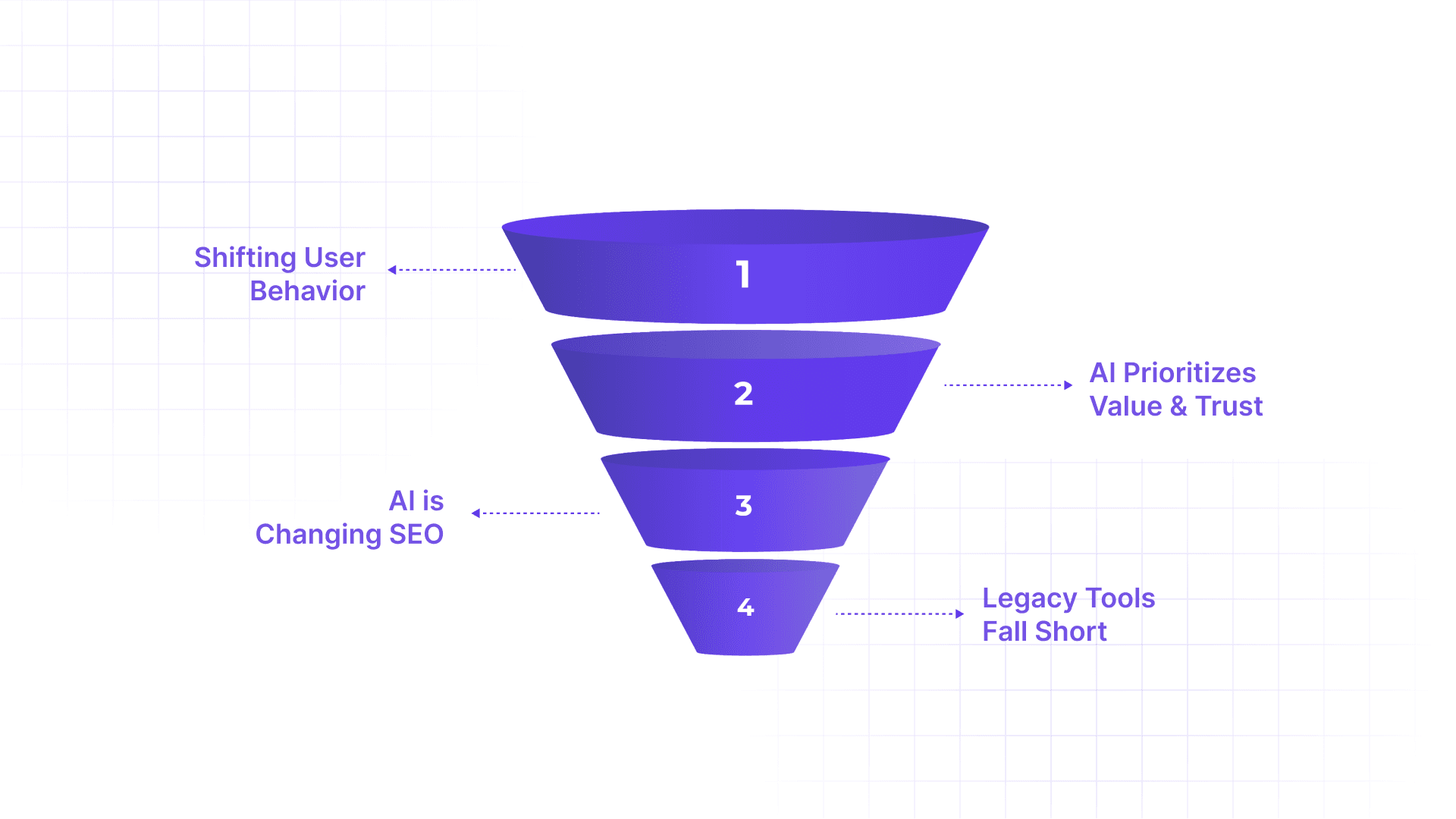
Generative Engine Optimization (GEO) may seem like a passing trend, but when you take a closer look at where search is headed, it’s clear that GEO is here to stay. Here's why:
Shifting User Behavior: More users are relying on AI-generated responses to get answers directly from search results, bypassing websites entirely. Traditional SEO, focused on ranking and clicks, can’t keep up with this shift.
AI Prioritizes Value and Trust: Unlike traditional SEO, which rewards backlinks and ranking positions, AI search engines prioritize content that is valuable, well-structured, and trustworthy.
AI is Changing SEO: As AI continues to advance, content needs to do more than rank; it needs to capture attention and serve relevant, factual answers. Traditional SEO strategies focused on links and keywords are becoming less effective.
Legacy Tools Fall Short: Search engines powered by AI prioritize semantic relevance and factual accuracy, which legacy SEO tools can’t fully address. Most older SEO tools still focus on metrics that matter less in AI-driven searches, like keyword density and backlink quantity.
The shift to AI-driven search is inevitable, and GEO is essential for staying relevant and competitive.

To make the most of GEO, it's crucial to use the right tools. Here's a look at the best AI tools for generative engine optimization in 2026.
Best AI tools for Generative Engine Optimization in 2026
As AI continues to shape the future of digital marketing, utilizing the best AI tools for Generative Engine Optimization (GEO) is crucial for staying competitive and enhancing your content's visibility in AI-driven search results. Here’s a list of the best AI tools for generative engine optimization in 2026.
Quick Glance: Best AI tools for generative engine optimization in 2026
Tool | Best For | Key Features | Pricing |
Best for tracking AI visibility, competitive benchmarking, content optimization, creating post-click shoppable funnels mapped to real user prompts |
|
| |
Peec AI | Best for tracking AI visibility and sentiment analysis for competitive benchmarking. | - Cross-AI brand performance tracking - Competitor benchmarking - Source and citation tracking - Global multi-region monitoring |
|
Profound | Best for enterprise-level content optimization and AI visibility tracking across large datasets and multiple AI systems. | - AI visibility tracking - Prompt volume insights - AI-optimized content workflows - Agent analytics |
|
Athena HQ | Best for agencies looking to monitor brand sentiment and AI performance across multiple platforms for clients. | - Prompt volume tracking - Competitive analysis - Content gap identification - Team collaboration tools |
|
Scrunch AI | Best for improving AI-readability and increasing brand citations in AI-generated responses. | - Brand mentions and citations tracking - Competitor insights - AI bot crawl logs - Clear report exports |
|
Gauge | Best for businesses needing daily tracking of AI-generated answers and competitive visibility analysis. | - Daily monitoring of AI answers | Custom pricing |
Ahrefs Brand Radar | Best for monitoring brand visibility across both AI-driven and traditional search engines with AI share-of-voice tracking. | - Monitors brand visibility across AI & search - Share-of-voice tracking - Cited URL tracking - Competitive benchmarking |
|
SEMrush AI Toolkit | Best for integrating AI search insights into your overall SEO strategy while tracking AI-generated content performance. | - AI visibility score - Prompt tracking |
|
Otterly | Best for tracking AI mentions and brand visibility in AI platforms like ChatGPT, Perplexity, and Gemini on a budget. | - AI link & mention monitoring |
|
1. Nudge
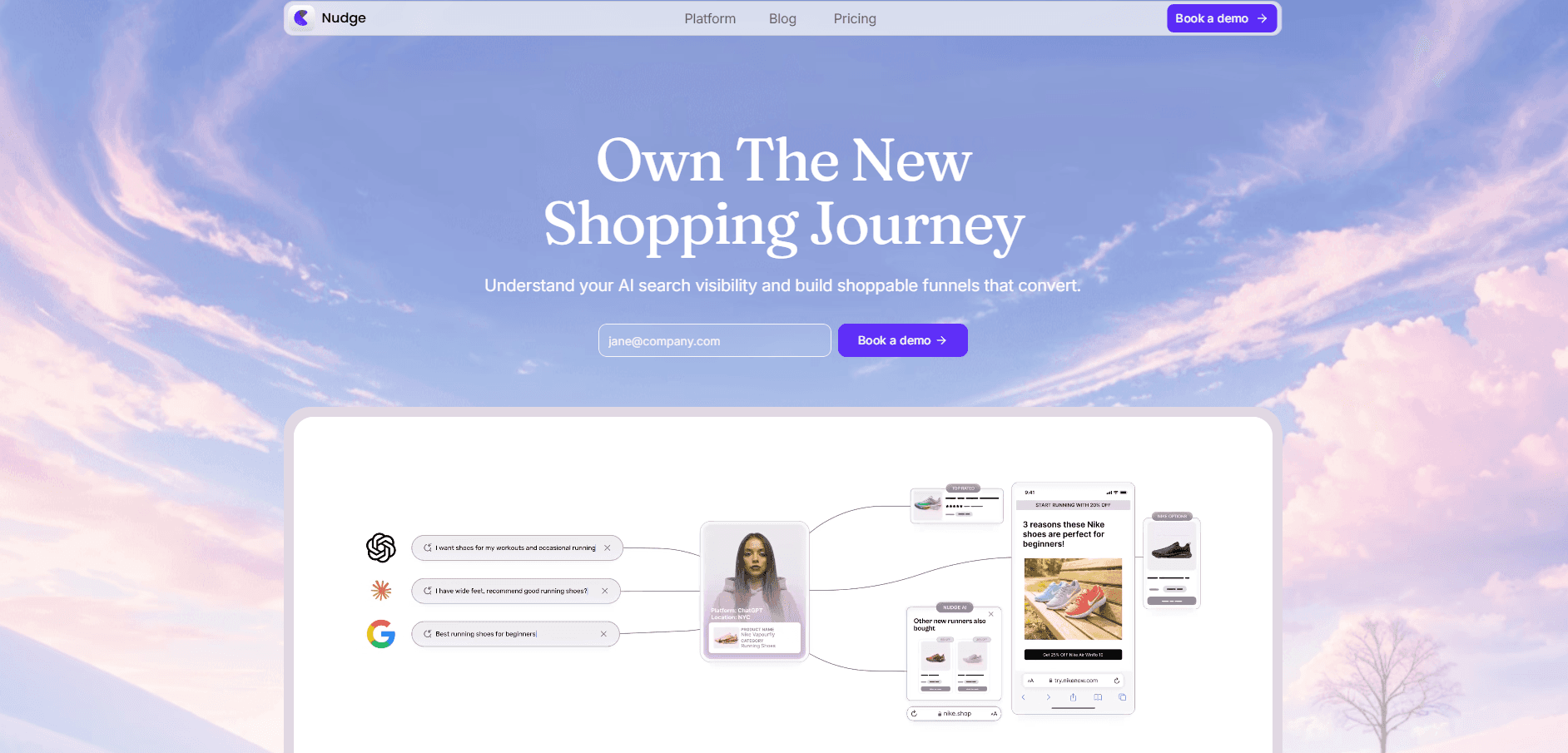
Nudge is an AI GEO platform for commerce brands. It helps your brand and products get recommended across AI engines (ChatGPT, Perplexity, Gemini), and automatically generates shoppable funnels optimized for real user prompts.
Key Features:
Generative visibility monitoring
Brand & SKU Mentions Tracking: See how often GPT, Perplexity, and Google AI mention your brand and which SKUs get recommended or ignored.
Topic, Category & Query Intelligence: Understand and track the exact prompts, buying-intent questions, and category queries where you appear vs. disappear.
Competitive Benchmarking: See which competitor brands AI recommends over yours and why. Compare visibility, positioning, and product signals across key shopping queries.
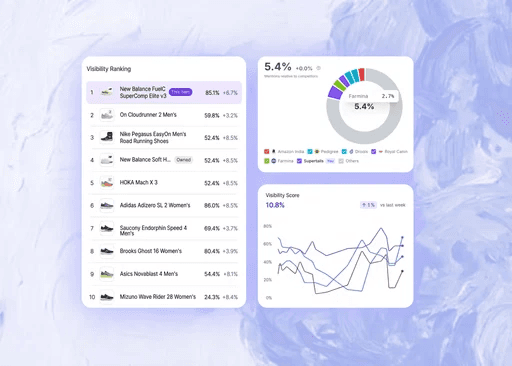
Map high-impact prompts to shoppable pages, then generate answer-ready product cards with price, availability, and deep links. Our funnels are designed to match generative answer patterns and accelerate from discovery to cart.

Nudge offers invaluable tracking and analysis for brands looking to understand and action their AI search visibility.
2. Peec AI
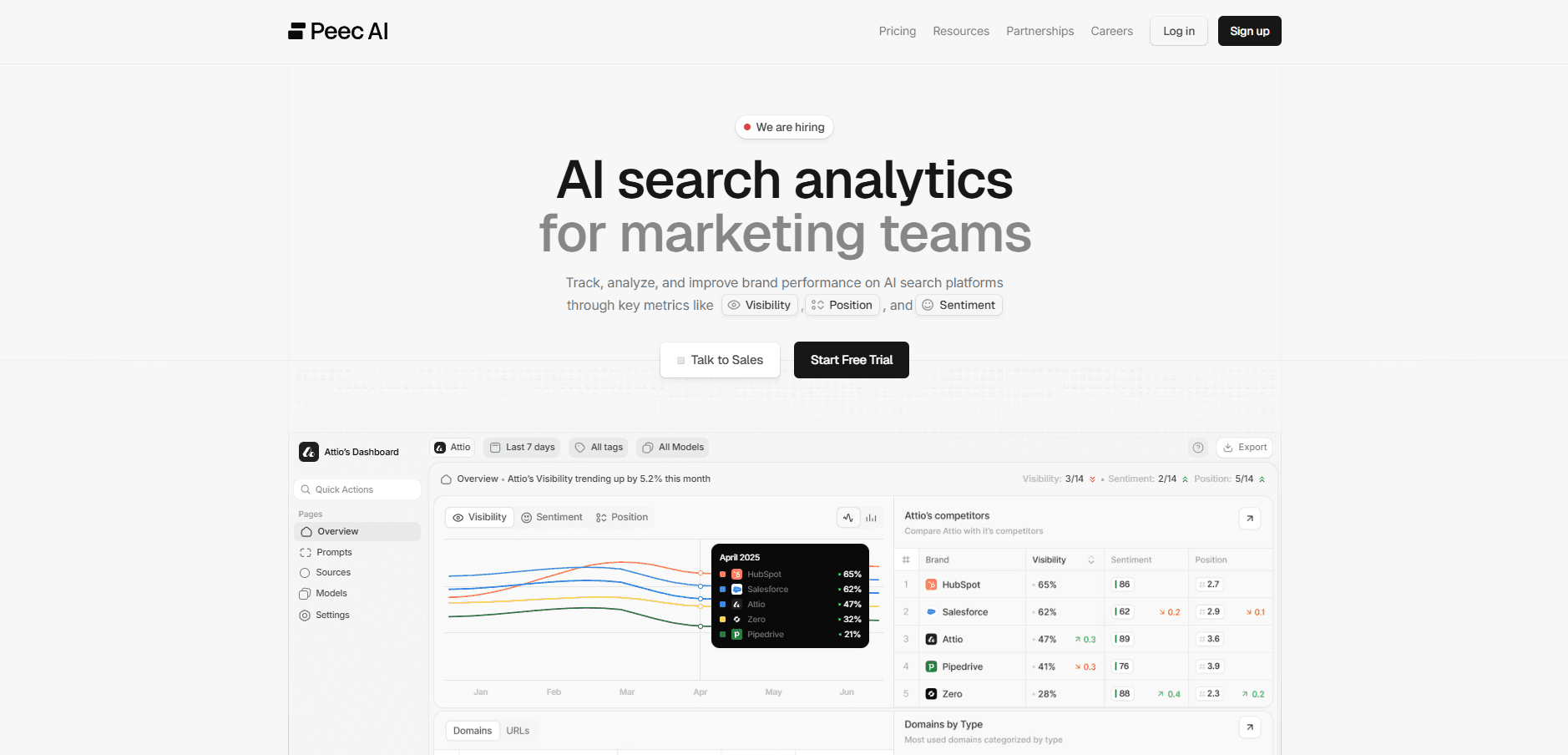
Peec AI is a powerful tool designed to track brand visibility, sentiment, and performance across multiple AI search engines. It provides detailed insights into how a brand is mentioned, what user queries trigger these mentions, and compares visibility against competitors.
Key Features:
Cross-AI Brand Performance Analytics: Tracks visibility, sentiment, and brand position across major AI search engines.
Competitor Benchmarks: Compares brand performance against competitors, helping to assess strengths and weaknesses.
Source and Citation Origin Identification: Identifies where mentions and citations are originating, helping to measure media impact.
Multi-Language & Multi-Region Monitoring: Supports global clients by tracking visibility and sentiment across different regions and languages.
Client-Ready Exports: Allows agencies to generate clean, exportable reports for clients with geographical insights.
3. Profound

Profound is a powerful AI visibility tool designed for enterprise-level SEO and content management. Ideal for large teams or brands, it specializes in tracking AI-generated responses and brand visibility across multiple AI systems.
Key Features:
AI Visibility Tracking: Monitors brand visibility, citations, and share-of-voice across major AI engines.
Prompt Volume Insights: Identifies user questions that drive AI mentions, helping teams focus on high-impact queries.
AI-Optimized Content Workflows: Provides ready-to-use templates for creating AI-optimized content quickly and efficiently.
Agent Analytics: Tracks which AI crawlers access your site, and how frequently they do so, for better optimization insights.
Real-Time Performance Tracking: Provides performance data across both AI engines and traditional search engines to ensure comprehensive strategy alignment.
4. Athena HQ
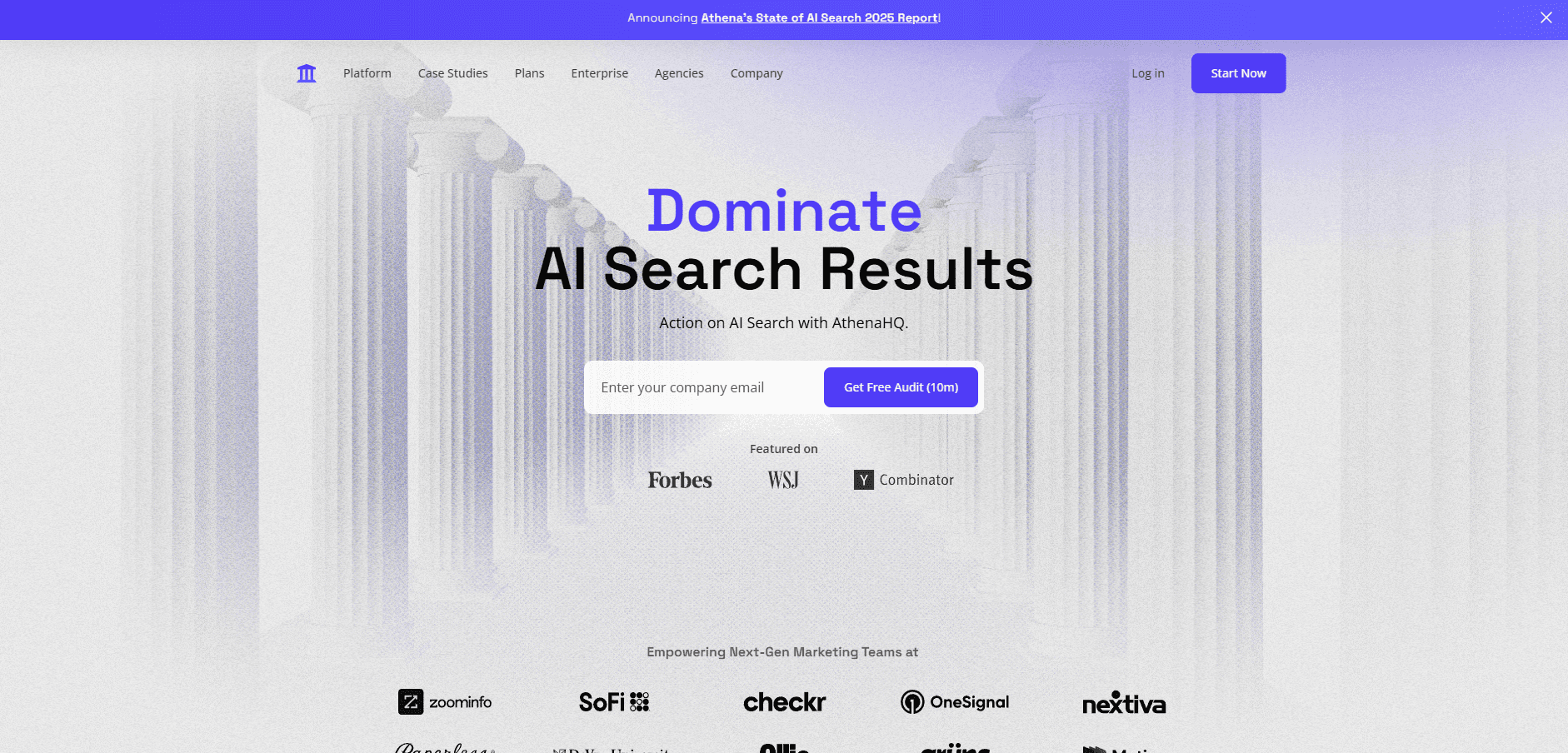
AthenaHQ is designed for agencies that want to provide clients with a clear view of how their brand appears across AI search engines and generative platforms. It offers real-time tracking and actionable insights, allowing teams to monitor citations, prompt data, and content representation across AI surfaces.
Key Features:
Prompt Volume Tracking: Identify which user queries trigger brand mentions or content citations, helping you understand what people are searching for in real-time.
Action Center: Spot content gaps, get recommendations for updates, and publish or refresh GEO-optimized content to ensure consistent brand representation.
Competitive Analysis & Blind-Spot Detection: Gain insights into how competitors are performing and uncover any missed opportunities or content blind spots.
Multiple-Team Support: Manage several clients or contributors with role-based access control, making it easier for agencies to collaborate efficiently.
Pricing: Self-serve plan starts at $295/month (3,500 credits), with custom enterprise pricing available.
AthenaHQ is essential for agencies looking to gain full visibility of their clients' AI search performance, track sentiment, and make data-driven decisions to optimize content across generative engines.
Also Read: Top 10 Visibility Tactics to Boost AI Search Visibility (2026)
5. Scrunch AI
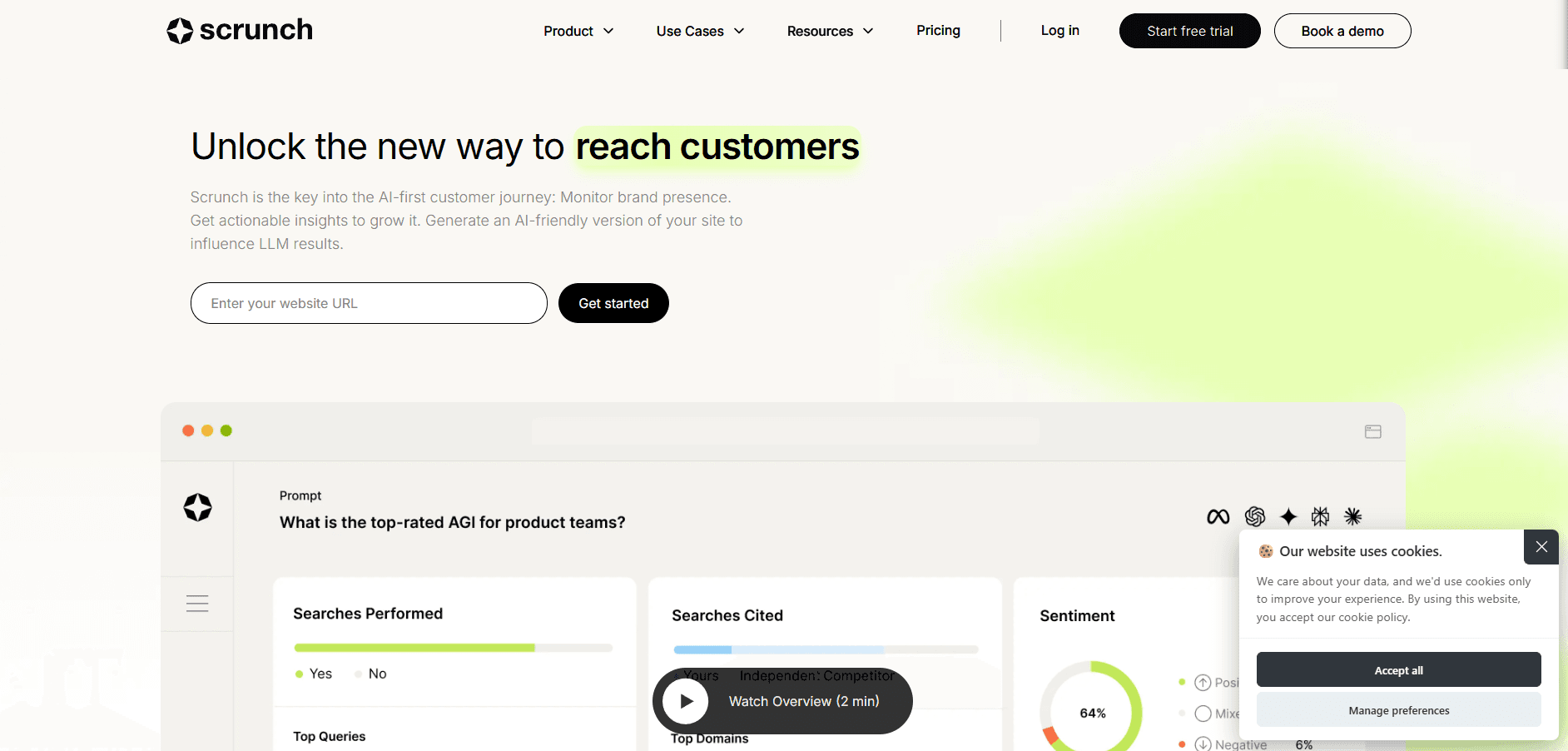
Scrunch AI is an essential tool for monitoring how your brand is represented across Large Language Models (LLMs) and AI-powered answer engines. Its focus is on improving your content’s AI-readability, increasing its chances of citation in generative responses.
Key Features:
Tracks Brand Mentions and Citations: Scrunch AI monitors how your brand is mentioned across major AI platforms.
Surface Prompts & Questions: See which queries trigger your content to appear in AI responses.
Competitor Insights: Identify competitors that appear alongside your brand in the same AI answers.
Logs AI-Bot Crawls: Understand which of your web pages were picked up by AI models.
Clean Report Exports: Easily export clear, understandable reports for clients.
Scrunch AI helps ensure your content remains relevant and optimized for the AI-driven world, enhancing brand visibility and positioning in generative responses.
6. Gauge
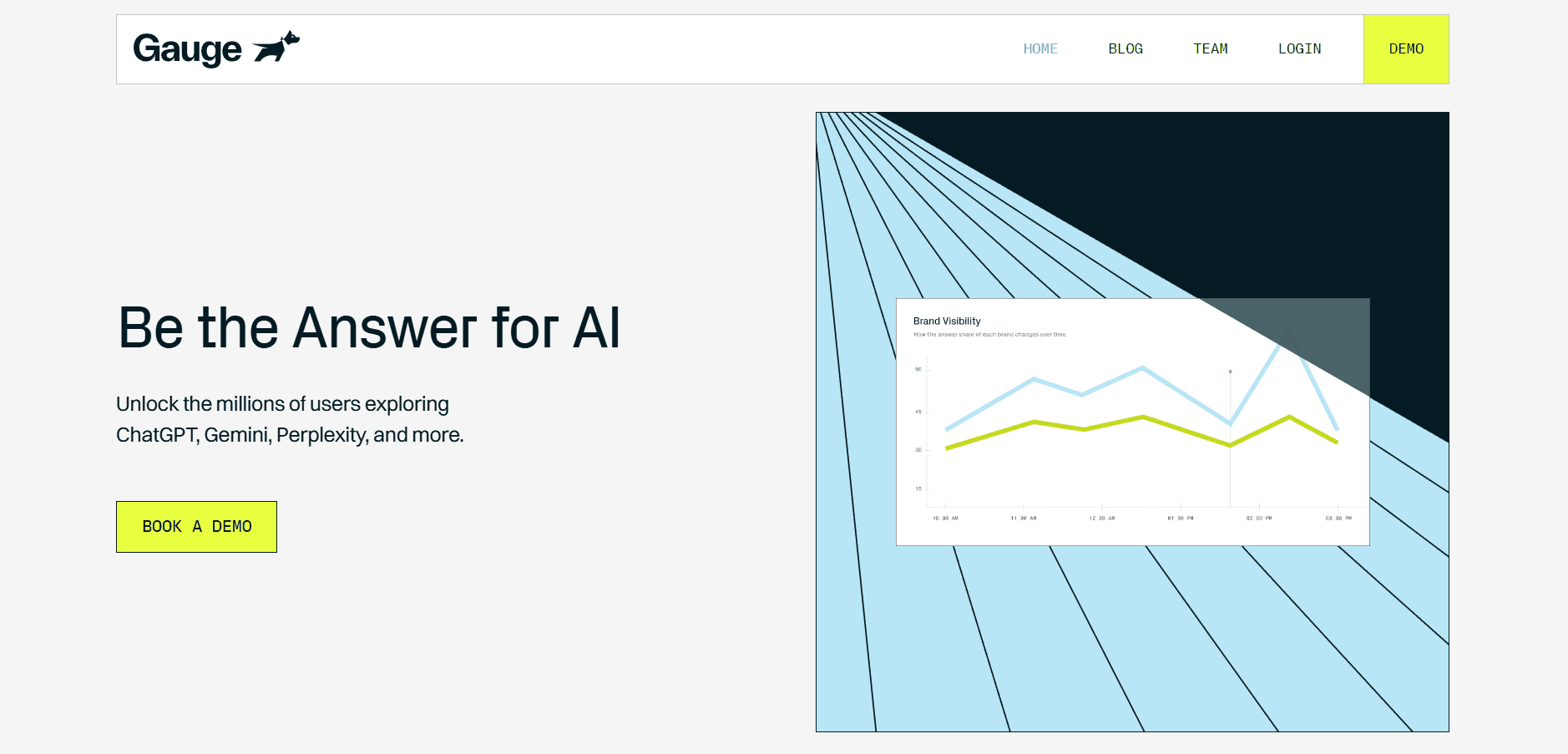
Gauge is a powerful tool designed for businesses seeking to understand how they are represented in AI-generated responses. It provides daily monitoring of AI answer engines like ChatGPT, Perplexity, Gemini, and Google AI, helping track citations and spot where competitors are getting favored.
Key Features:
Daily Monitoring of AI-Generated Answers: Gauge continuously tracks AI answers across major platforms, ensuring that your brand stays visible where it matters most.
Citation Intelligence: Understand which sources AI engines prefer by analyzing the citations in the answers. This insight helps you optimize content strategy.
Gap Analysis: Gauge highlights missed opportunities by identifying prompts where your brand should be mentioned but isn’t, giving you actionable steps to fill those gaps.
Competitive Visibility Tracking: Keep an eye on your competitors by seeing who AI engines favor in key answers, so you can stay ahead of the game.
With Gauge, businesses can refine their content strategy to ensure they appear in critical AI-driven answers, gaining a competitive edge in the digital space.
7. Ahrefs Brand Radar
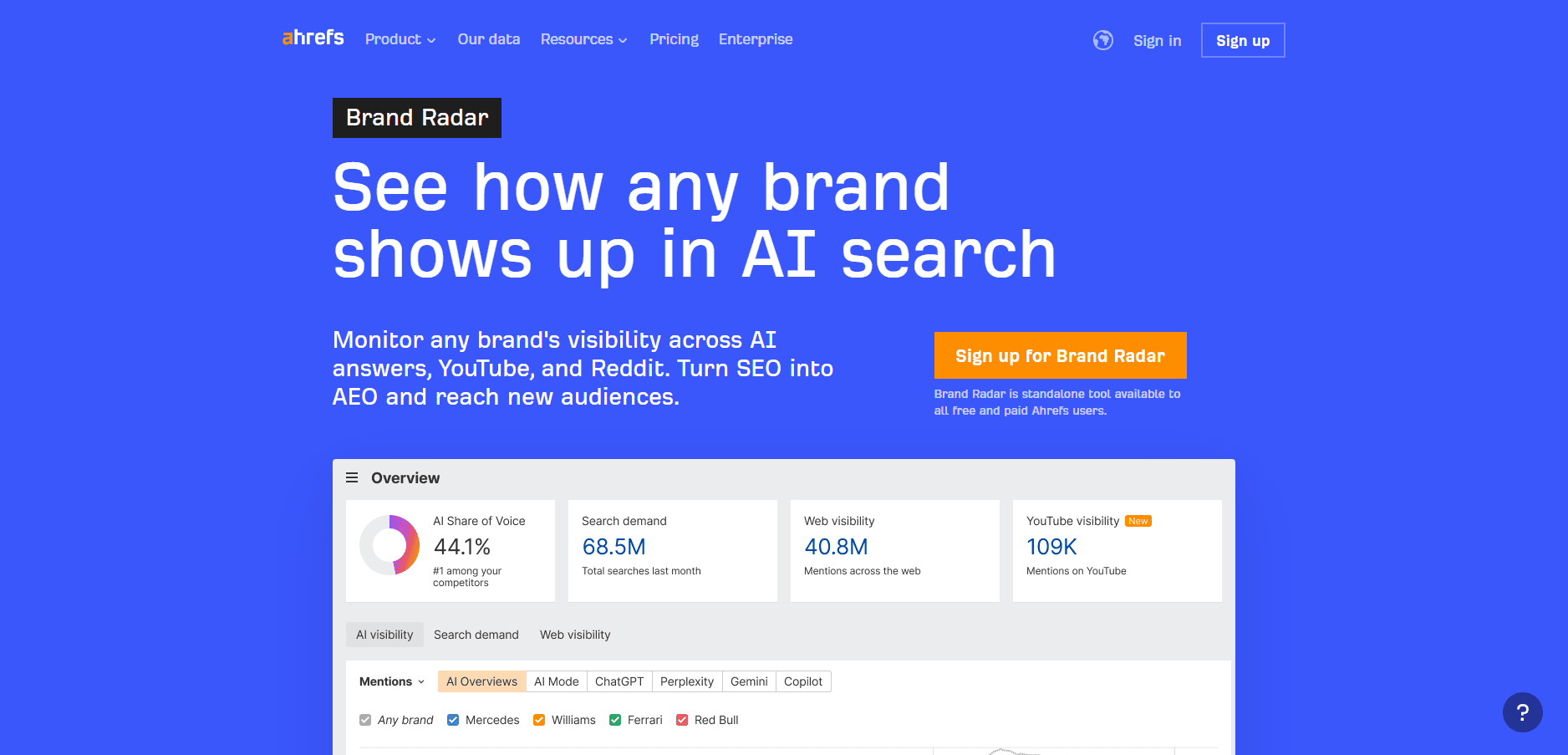
Ahrefs Brand Radar is a specialized tool designed to track a brand’s visibility across both AI-powered answer engines and traditional search results. It’s particularly useful for monitoring how brands perform in emerging AI platforms like ChatGPT and Copilot, alongside classic search engines.
Key Features:
Monitors Brand Visibility Across AI and Traditional Search: Tracks brand mentions across platforms like ChatGPT, Gemini, Copilot, Perplexity, and conventional search engines.
AI Share-of-Voice and Search Demand Tracking: Monitors changes in search demand and share-of-voice over time, helping identify trends.
Cited URL Tracking: Shows which URLs are being cited in AI-generated responses, offering insights into which content is getting the most traction.
Visibility Gap Identification: Highlights where a brand's content is lacking visibility, helping teams focus efforts on high-value areas.
Competitor Benchmarking: Compares your brand’s performance against competitors in both AI search and classic search engines, ensuring you stay competitive.
Ahrefs Brand Radar offers an invaluable way to measure brand performance across both AI and traditional search, making it a must-have tool for marketers looking to stay ahead of the curve in generative engine optimization.
8. SEMrush AI Toolkit
The SEMrush AI Toolkit is for agencies that already use SEMrush and want to integrate AI search insights without additional platforms. It allows you to track the performance of AI-generated content, monitor prompt effectiveness, and address any SEO issues that could hinder AI crawlers.
Key Features
AI Visibility Score: Measures how often a brand appears in AI-generated answers, giving insights into its AI presence.
Prompt Tracking: Tracks the specific questions that trigger your content in AI search results, allowing you to refine your content strategy.
Competitive Benchmarks: Offers comparisons of your brand's AI-search visibility and traditional search rankings, helping you measure your performance against competitors.
AI-Search Site Audits: Identifies issues that might be blocking crawlers or AI engines, ensuring that your content remains discoverable.
Exportable Reports: Provides easy-to-understand reports that can be shared with clients for transparent, actionable visibility updates.
The SEMrush AI Toolkit is an essential tool for agencies looking to track and optimize their AI visibility while integrating GEO insights into their SEO strategy.
9. Otterly
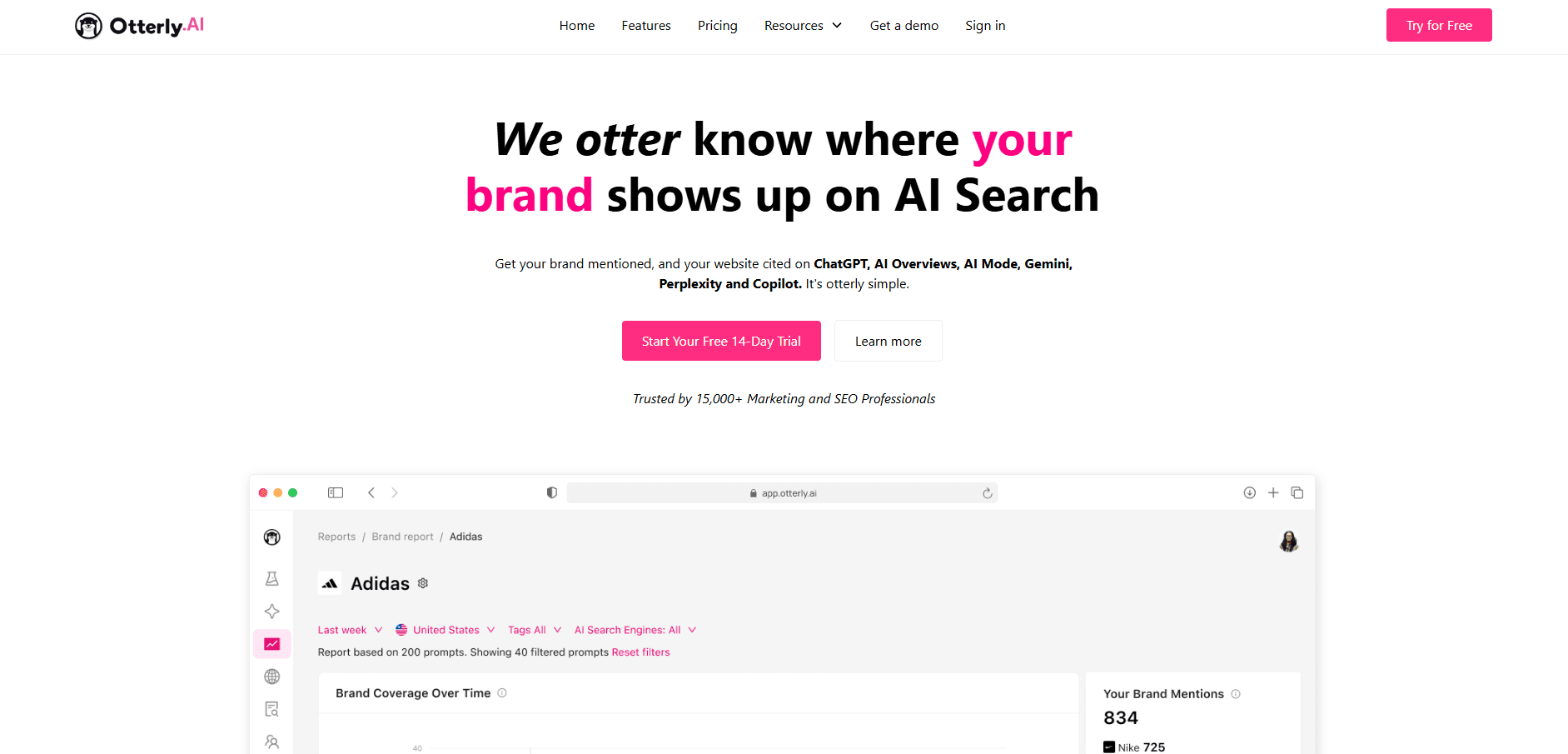
Otterly is a simple yet effective tool for brand mention tracking across popular generative AI platforms like ChatGPT, Perplexity, and AI Overviews. It provides marketers with an easy-to-use dashboard that helps track how and where their brand is mentioned in AI-generated content.
Key Features:
AI Link & Mention Monitoring: Tracks brand mentions and links across major AI platforms like ChatGPT, Gemini, and Perplexity.
Country-Level Reporting: Offers granular insights into brand visibility based on geographic regions.
Weekly Automated Summaries: Delivers weekly updates summarizing brand visibility and mentions in a digestible format.
GEO Audit Tool: Identifies gaps and performs visibility health checks to ensure optimal brand presence.
Prompt & Keyword Analysis: Converts SEO insights into AI-specific prompts, linking AI and SEO strategies.
Otterly is a valuable, budget-friendly tool for marketers who want an easy way to track AI visibility and brand mentions, providing insightful data to improve their AI presence.
Investing in these tools improves your AI-generated search performance and enhances the entire shopper experience, ensuring your brand remains visible and competitive in 2026 and beyond.
Now that we've identified the top tools, let's learn how to choose the right one for your e-commerce business and maximize your GEO strategy.
How to Evaluate GEO Tools for Your Needs
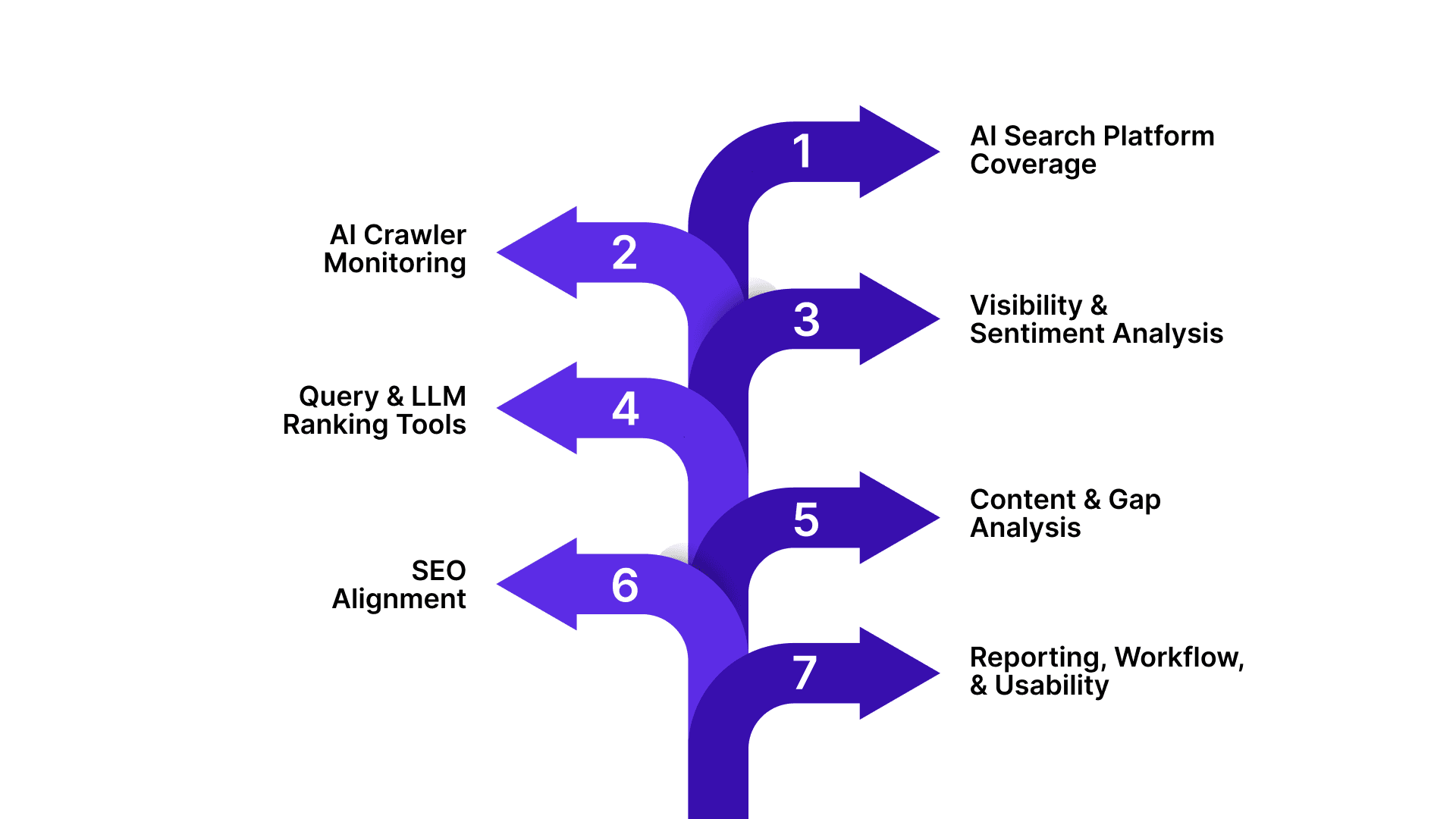
Whether you’re focusing on GEO, SEO, or both, the right marketing analytics tools should integrate seamlessly with your current workflows. For e-commerce brands looking to boost conversion and enhance shopper engagement, here’s what to keep an eye on when evaluating GEO tools:
AI Search Platform Coverage: Choose a tool that consolidates AI visibility across multiple platforms like Google AI, Perplexity, and Meta AI into one comprehensive report. Avoid scattered data from multiple sources.
AI Crawler Monitoring: A strong tool will show how AI engines interpret your product pages, cart, and checkout. This is critical when optimizing for Answer Engine Optimization (AEO) and troubleshooting any issues affecting GEO performance.
Visibility and Sentiment Analysis: Look for tools that track where your brand appears in AI-generated responses, how often it’s mentioned, and the sentiment associated with those mentions. Understanding this helps fine-tune messaging across touchpoints.
Query and LLM Ranking Tools: These tools show which search prompts lead to your brand’s content being featured in AI results. They also reveal how your content ranks across different AI engines, enabling data-driven adjustments to stay ahead of competitors.
Content and Gap Analysis: These tools highlight where competitors appear in AI results and where there are opportunities to fill gaps. This is key to creating content that puts you in front of high-intent shoppers.
SEO Alignment: Ensure the tool integrates with your SEO stack, including Google Search Console, SEM tracking, and rank tracking tools. This ensures your GEO work is aligned with your overall SEO strategy, making sure all your optimization efforts are connected.
Reporting, Workflow, and Usability: Choose tools that provide clear dashboards and exportable reports. Tools that integrate with your existing marketing setup keep your workflows efficient and easy to manage.
By focusing on these features, you can choose the right GEO tool to enhance your e-commerce experience. This will help you drive better insights and deliver personalized, optimized experiences that improve conversions.

Conclusion
As AI and Generative Engine Optimization (GEO) continue to grow, e-commerce brands must adopt tools that enable real-time, data-driven optimization. The best AI tools help improve visibility, track AI-generated responses, and personalize each shopper's journey across the entire funnel.
By incorporating these tools into your strategy, you can drive higher conversions, enhance customer engagement, and future-proof your e-commerce business for 2026 and beyond.
At Nudge, our AI-powered personalization layer dynamically optimizes your product pages, recommendations, and shopper interactions, delivering smarter, more relevant experiences and boosting your bottom line without requiring development cycles.
FAQs
1. What is Generative Engine Optimization (GEO)?
GEO focuses on optimizing content for AI-powered platforms like Google AI, Perplexity, and Meta AI, ensuring visibility in AI-generated answers and improving your brand’s presence across AI systems.
2. How do AI visibility tools help e-commerce brands?
AI visibility tools track where your brand appears in AI-generated responses, helping you optimize your content for a higher share of voice, improved visibility, and stronger engagement across AI engines.
3. How does Nudge enhance AI visibility & conversion for e-commerce?
Nudge helps with AI visibility tracking, content optimization, adjusting product pages, recommendations, and content mapped to real prompts and queries.
4. Can AI GEO tools integrate with my existing e-commerce platform?
Yes, many AI GEO tools like Nudge integrate with your e-commerce platform and analytics tools, ensuring seamless tracking of AI-generated content visibility and real-time optimization across your site.
5. What should I look for in a GEO tool?
Look for AI search platform coverage, visibility tracking, and real-time performance insights to ensure your content ranks effectively across AI engines. Integration with existing marketing workflows is key to smooth operations.